 admin
admin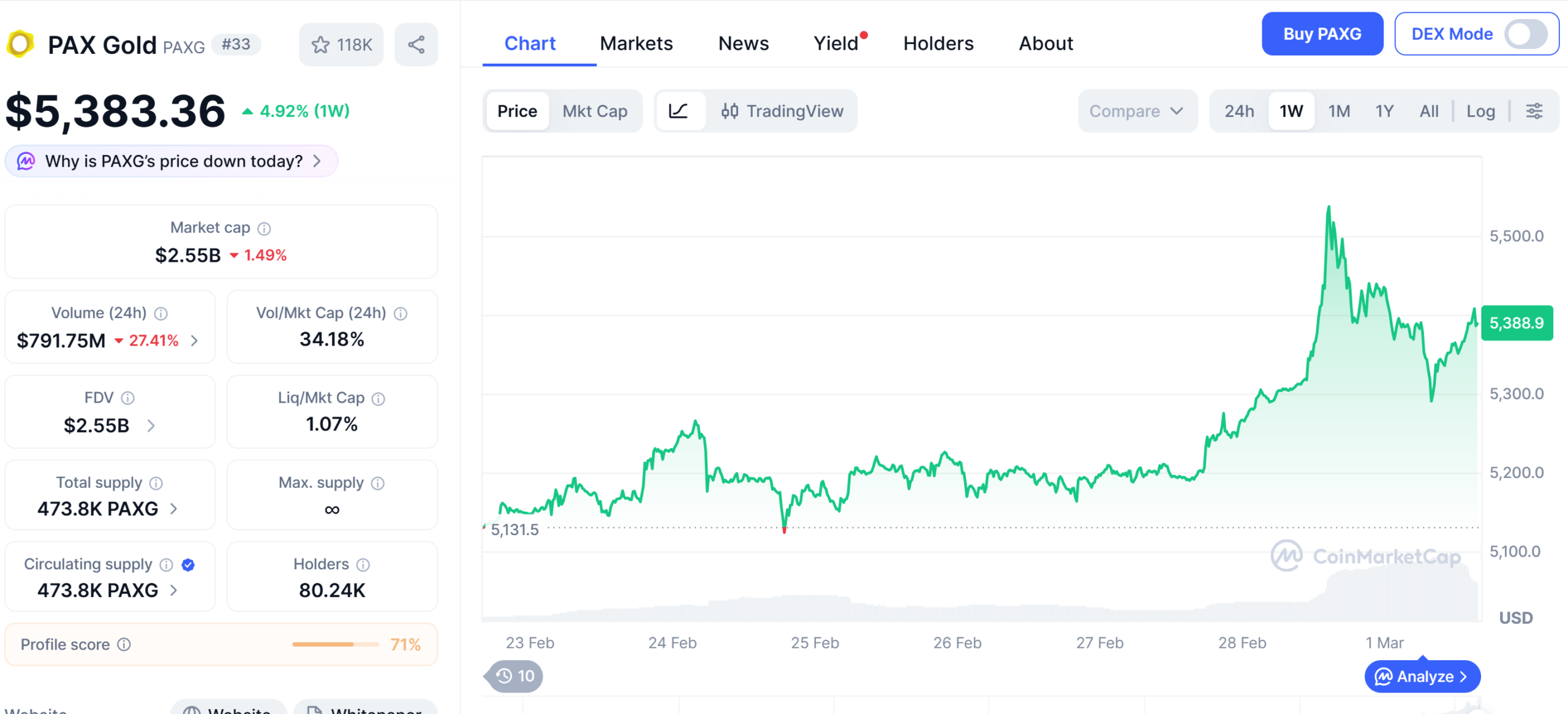
The global landscape of precious metals trading is undergoing a fundamental shift as price discovery for gold increasingly migrates to blockchain-based networks during the hours when traditional financial institutions are shuttered. According to Iggy Ioppe, the Chief Investment Officer at liquidity infrastructure firm Theo and former CIO at Credit Suisse, tokenized gold assets have become the definitive source for market sentiment and price formation over the weekend. This transition highlights a growing reliance on decentralized finance (DeFi) infrastructure to provide 24/7 liquidity and transparency in a market that has historically been constrained by the operating hours of centralized exchanges.
In the traditional financial system, the Chicago Mercantile Exchange (CME) serves as the primary hub for gold futures. However, CME gold futures cease trading at 5:00 pm ET on Friday and do not resume until 6:00 pm ET on Sunday. During this 49-hour interval, regulated futures markets remain inactive. While some private over-the-counter (OTC) deals occur in Asian markets, these transactions are largely opaque and not reported to the public in real-time. Consequently, tokenized gold assets—most notably PAX Gold (PAXG) and Tether Gold (XAUt)—have emerged as the only continuously available and publicly visible trading venues for gold. Ioppe noted that on-chain markets are now responsible for virtually 100% of weekend price discovery, providing a critical service to investors who require real-time data during periods of traditional market dormancy.
The Mechanics of Weekend Price Formation
The significance of this shift is most apparent when traditional markets reopen on Sunday evening. Market data suggests that when CME futures trading resumes, the opening prices frequently align with the movements that have already taken place on blockchain-based exchanges. This "gap risk"—the potential for a significant price difference between Friday’s close and Sunday’s open—has historically been a source of uncertainty for institutional traders. By monitoring tokenized gold, market participants can now observe how global events influence gold prices in real-time, effectively eliminating the "black box" of weekend trading.
The role of market makers and cross-venue liquidity providers is central to this ecosystem. These participants engage in arbitrage, ensuring that the prices of digital gold tokens remain closely pegged to the underlying value of physical bullion. When the CME reopens, these traders use the information gathered from the blockchain to position themselves, leading to a convergence between the two markets. Ioppe emphasized that while many institutions currently treat these on-chain signals as informational rather than a basis for aggressive active positioning, the correlation between weekend blockchain moves and Sunday evening CME openings is becoming too consistent to ignore.
Rapid Expansion of the Tokenized Gold Sector
The emergence of blockchain as a price discovery tool coincides with a period of explosive growth for tokenized real-world assets (RWAs). Over the past year, the market capitalization of tokenized gold has surged from approximately $1.6 billion to $4.4 billion, representing a 177% increase. This growth rate has significantly outpaced the broader gold market and even the most prominent spot gold exchange-traded funds (ETFs).

The expansion is not merely limited to market value; the investor base is also widening. Data indicates that the number of unique wallets holding tokenized gold has nearly tripled, with more than 115,000 new participants entering the space within a twelve-month period. This influx represents roughly 25% of all net inflows into the RWA sector, exceeding the combined growth of other tokenized assets such as corporate bonds, stocks, and non-U.S. Treasuries.
Trading volume has followed a similar upward trajectory. In 2025, tokenized gold recorded an estimated $178 billion in total volume, with a peak of $126 billion occurring in the fourth quarter alone. At these levels, tokenized gold has become the second-largest gold investment product globally by trading volume, trailing only the industry-standard SPDR Gold Shares (GLD). This liquidity is a crucial factor for institutional adoption, as it allows for larger entries and exits without causing excessive slippage.
Chronology of Geopolitical Influence on Weekend Markets
The utility of 24/7 gold trading was recently demonstrated during a period of heightened geopolitical volatility in the Middle East. On a recent Saturday, while traditional commodity exchanges were closed, tensions escalated following reported strikes involving U.S. and Israeli forces against Iranian targets. In the absence of a traditional venue to hedge against this risk, investors turned to the blockchain.
- Friday, 5:00 PM ET: CME gold futures close for the week at a stable price point.
- Saturday morning: News of military escalations begins to circulate globally.
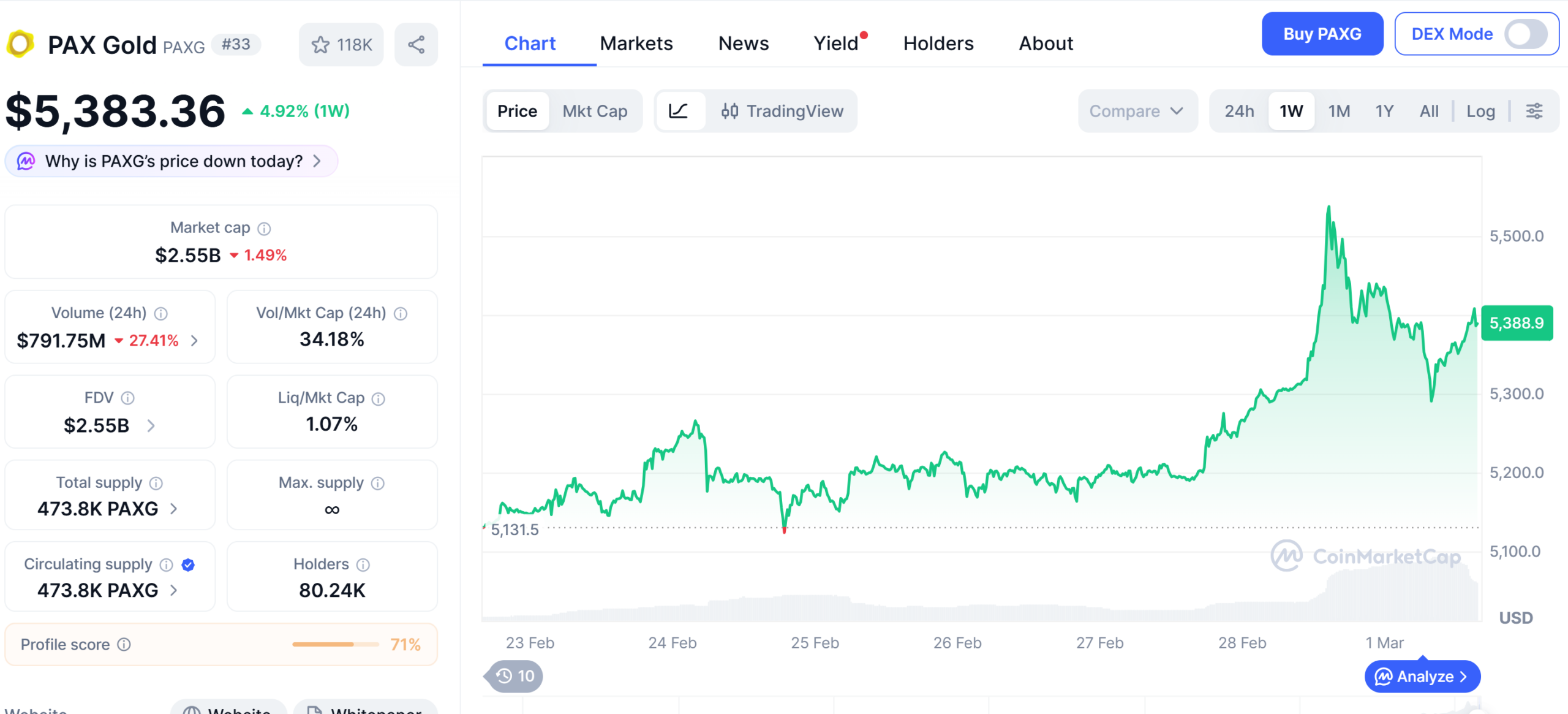
- Saturday afternoon: Trading volume for PAXG and XAUt surges. PAXG prices neared $5,536, and XAUt climbed above $5,450 as investors sought a safe haven.
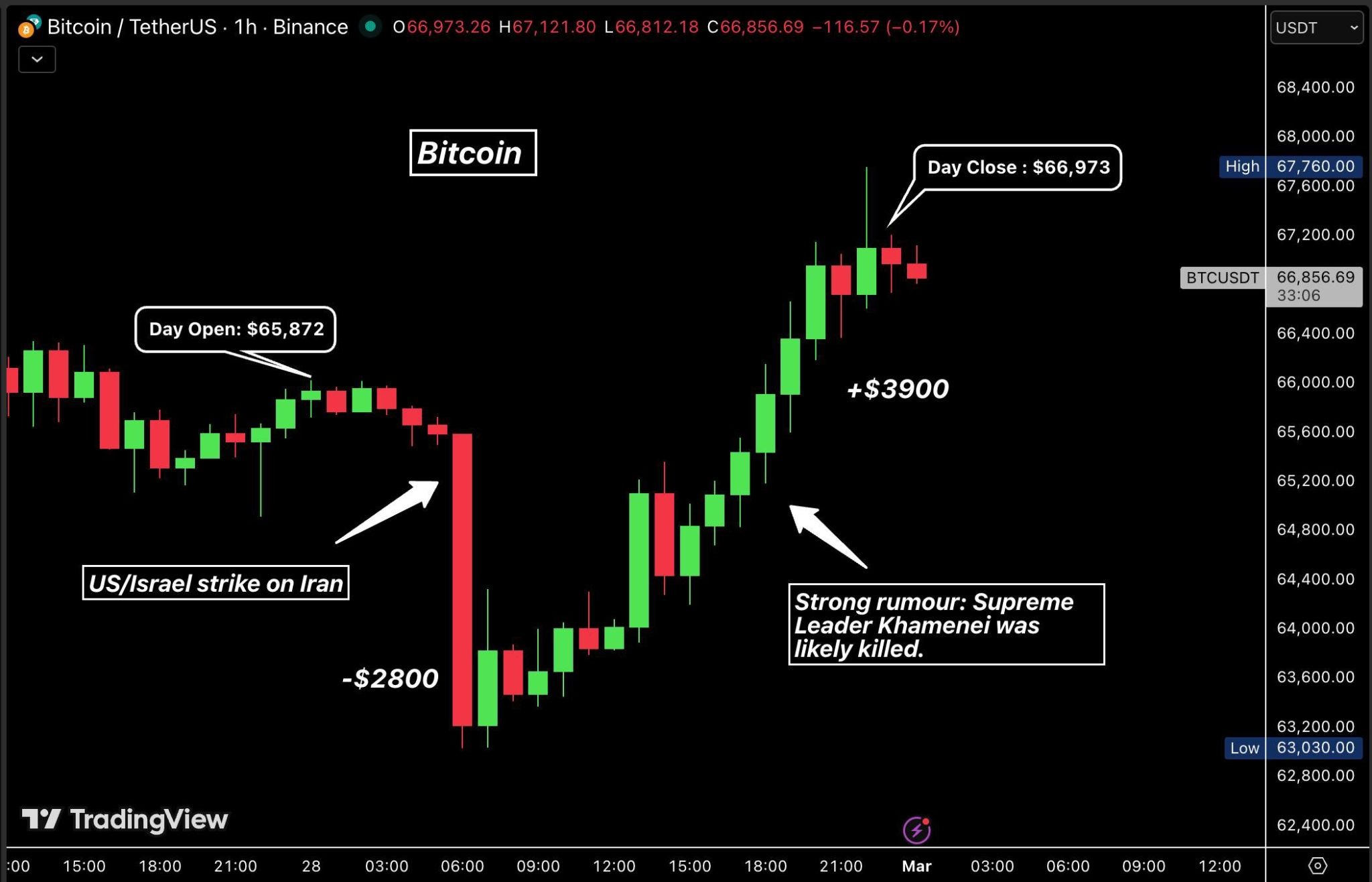
- Saturday evening: Concurrently, high-risk assets like Bitcoin (BTC) and Ether (ETH) experienced downward pressure, illustrating a clear flight to quality within the digital asset ecosystem.
- Sunday, 6:00 PM ET: The CME reopens. The opening "gap" reflects the price levels established on-chain over the previous 24 hours.
This timeline underscores the practical risk management advantages of tokenization. In a traditional setting, a geopolitical crisis occurring on a Saturday would leave a gold investor unable to adjust their position until Sunday night, potentially facing significant losses or missed opportunities. Tokenized markets allow for immediate rebalancing, providing a level of agility that was previously impossible.
Institutional Participation and Macro Strategies
While retail investors were the early adopters of tokenized gold, the current market is increasingly dominated by professional entities. Macro and cross-asset desks at major financial institutions have begun integrating on-chain gold data into their risk models. These desks monitor the "gap risk" ahead of the CME reopen to prepare for potential volatility.
Furthermore, crypto-native macro traders are utilizing tokenized gold for more than just price exposure. Because these tokens exist on-chain, they can be used as collateral in decentralized lending protocols, integrated into hedging strategies, or utilized in yield-generating products. This "money lego" aspect of tokenized gold adds a layer of utility that traditional ETFs or physical bullion cannot match. For instance, a trader can hold PAXG to maintain gold exposure while simultaneously using that asset as collateral to borrow stablecoins for other investments, all without ever leaving the blockchain environment.

Barriers to Universal Adoption
Despite the rapid growth and clear advantages of tokenized gold, several obstacles remain before it can fully integrate with or replace traditional systems. The most significant challenge is the disparity in liquidity. While $178 billion in annual volume is substantial, it remains a fraction of the trillions of dollars that flow through the global gold futures and OTC markets. Large institutional trades—those involving hundreds of millions of dollars—cannot yet be executed on-chain without moving the price significantly.
Regulatory fragmentation also presents a formidable hurdle. Different jurisdictions have vastly different rules regarding the custody, accounting, and capital requirements for tokenized assets. While the European Union’s Markets in Crypto-Assets (MiCA) regulation and various initiatives in Asia are providing more clarity, the United States continues to grapple with the classification of these assets. Until a unified global regulatory framework is established, many conservative institutional funds will remain on the sidelines.
Additionally, the technical risks associated with blockchain—such as smart contract vulnerabilities or exchange hacks—remain a concern for risk-averse investors. Although providers like Paxos and Tether undergo regular audits and hold physical gold in secure vaults to back their tokens, the digital wrapper itself introduces a layer of technology risk that does not exist in the physical gold market.
Future Outlook: Parallel Markets and RWA Integration
The most likely trajectory for the gold market is one of convergence and coexistence. Ioppe suggests that for the foreseeable future, tokenized and traditional markets will exist in parallel, each serving a distinct function. Traditional ETFs and futures will likely remain the primary vehicles for large-scale institutional "buy and hold" strategies and heavy industrial hedging, while tokenized gold will serve as the engine for 24/7 price discovery, retail accessibility, and DeFi integration.
As the infrastructure for Real-World Assets continues to mature, the lessons learned from gold tokenization are expected to be applied to other commodities and financial instruments. The ability to trade assets 24/7 with instant settlement (T+0) is a powerful value proposition that challenges the T+2 settlement cycle of the traditional financial world.
The rise of tokenized gold is a harbinger of a broader movement toward the "on-chaining" of the global economy. By providing a transparent, continuous, and accessible market, blockchain technology is effectively filling the gaps left by traditional finance, ensuring that price discovery never sleeps—even when the world’s major exchanges do. As liquidity deepens and regulatory frameworks stabilize, the distinction between "digital" and "traditional" gold may eventually disappear, leaving behind a single, unified, and always-on global market.