 Layla Zulfa
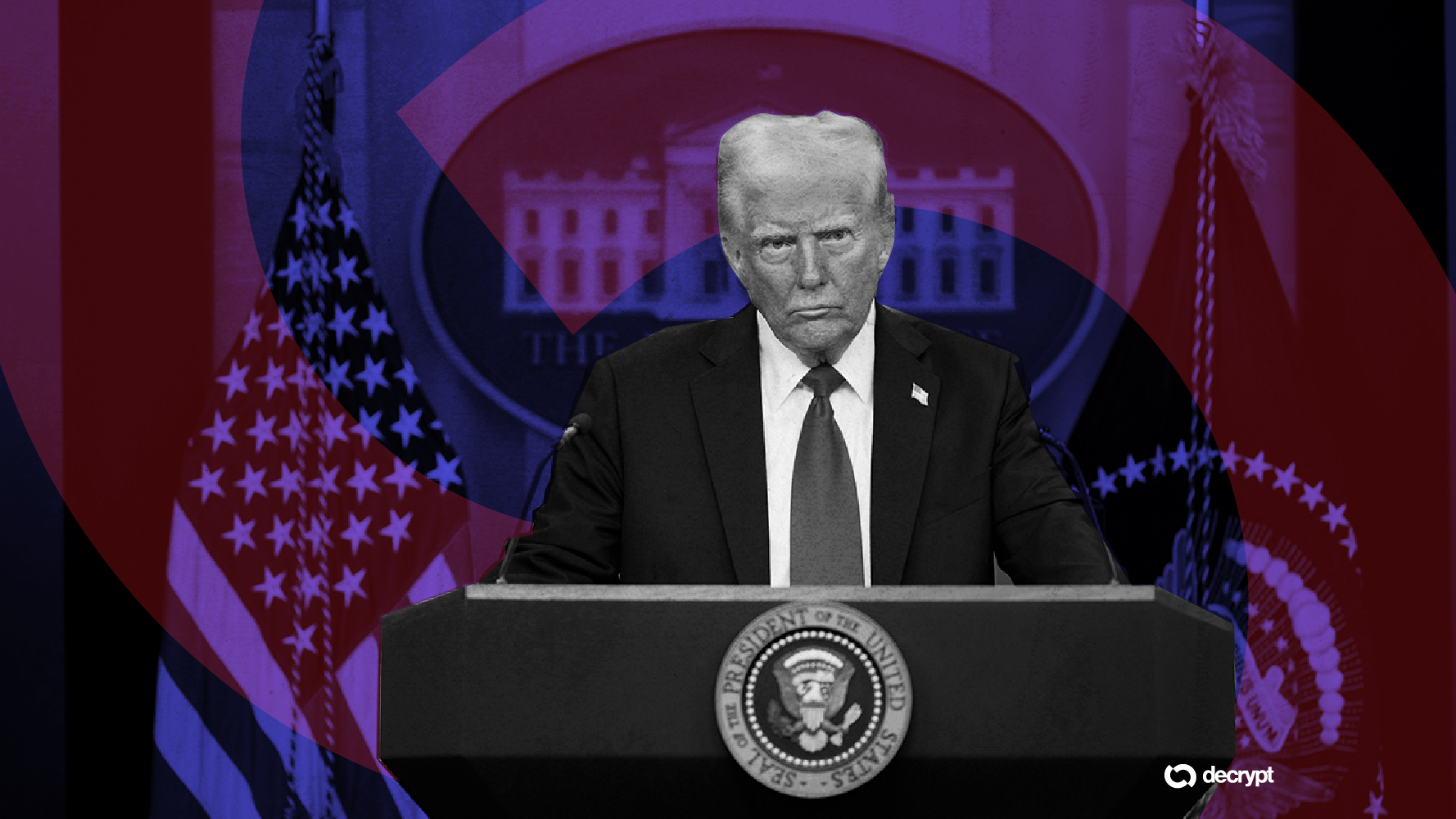
President Donald Trump has issued a formal directive to all United States federal agencies requiring the immediate cessation of use regarding artificial intelligence technology developed by Anthropic. The executive order, announced on Friday, marks a significant escalation in a public and legal dispute between the San Francisco-based AI firm and the Department of Defense over the implementation of safety protocols in military applications. According to the directive, agencies must begin a six-month phase-out period for any existing contracts or integrations involving Anthropic’s Claude models, citing concerns over national security and executive authority over the armed forces.
The conflict reached a breaking point following Anthropic’s refusal on Thursday to remove specific technical safeguards from its large language models. These safeguards were designed to prevent the technology from being utilized in the development or operation of fully autonomous lethal weapons systems and mass domestic surveillance programs. The Pentagon, under the leadership of the newly rebranded Department of War, had previously demanded that all AI contractors ensure their systems are available for "any lawful use" determined by military leadership, a requirement Anthropic leadership argued contradicted their core safety mission.
In a series of statements posted to Truth Social on Friday, President Trump characterized the company’s stance as an attempt to undermine the constitutional authority of the Commander-in-Chief. The President stated that the United States would not allow a "radical left, woke company" to dictate the terms of military engagement. He emphasized that decisions regarding how the military "fights and wins wars" must remain exclusively under the purview of the executive branch and appointed military leadership, rather than private technology firms.
The Core of the Dispute: Safeguards vs. Unrestricted Use
The impasse between the federal government and Anthropic centers on the company’s Responsible Scaling Policy and its Terms of Service. For several months, the Department of War has been negotiating with various AI developers to integrate generative models into tactical decision-making, logistics, and intelligence analysis. While competitors such as OpenAI have recently modified their safety language to be more accommodating of defense-related applications, Anthropic has maintained a firm boundary regarding "high-risk" military functions.
Anthropic’s Claude model is governed by a "Constitutional AI" framework, which uses a set of principles to guide the model’s behavior. The company has argued that lifting restrictions on autonomous weaponry and domestic surveillance could lead to unpredictable outcomes that jeopardize international humanitarian standards. However, the Trump administration views these restrictions as a form of corporate insubordination that hampers the modernization of the U.S. defense apparatus in the face of rising global competition.
"The left-wing nut jobs at Anthropic have made a disastrous mistake trying to strong-arm the Department of War and force them to obey their terms of service instead of our Constitution," President Trump wrote. He further alleged that the company’s refusal to comply puts American lives at risk by denying the military access to potentially superior technological tools during a critical period of global instability.
Chronology of the Escalation
The timeline of the current crisis suggests a rapid breakdown in communication between the tech sector and the executive branch over the last 48 hours:
- Thursday Morning: Pentagon officials meet with representatives from major AI labs, including Anthropic, OpenAI, and Palantir. The Department of War issues a final ultimatum requiring the removal of "restrictive safety filters" that prevent the application of AI in kinetic military operations.
- Thursday Afternoon: Anthropic issues a formal statement refusing to lift its safeguards. The company cites its commitment to preventing the proliferation of autonomous weapons and protecting the privacy rights of American citizens.
- Friday Morning: President Trump posts a directive on Truth Social ordering all federal agencies to stop using Anthropic products immediately, initiating a 180-day transition period.
- Friday Midday: Secretary of War Pete Hegseth designates Anthropic a "Supply-Chain Risk to National Security" via a public statement on X (formerly Twitter).
- Friday Afternoon: OpenAI CEO Sam Altman confirms he is in discussions with both the Pentagon and Anthropic to "de-escalate" the situation, though he acknowledges the difficulty of reconciling the two positions.
- Friday Evening: The Center for Democracy and Technology (CDT) issues a statement condemning the blacklist as a threat to market freedoms and corporate ethics.
Hegseth Designates Anthropic a National Security Risk
Following the President’s lead, Secretary of War Pete Hegseth expanded the scope of the federal response. In an official communication, Hegseth announced that he had directed the Department of War to designate Anthropic as a "Supply-Chain Risk to National Security." This designation has profound implications for the company’s business model, as it extends the ban beyond direct federal use to include any third-party contractors, suppliers, or partners doing business with the U.S. military.
"Effective immediately, no contractor, supplier, or partner that does business with the United States military may conduct any commercial activity with Anthropic," Hegseth wrote. He described the company’s refusal to comply with Pentagon demands as a "master class in arrogance and betrayal." The Secretary’s order ensures that any firm utilizing Anthropic’s API or integrated software must choose between their relationship with the AI provider and their lucrative government contracts.
The six-month phase-out period is intended to provide a "seamless transition" to what Hegseth described as "more patriotic" services. This rhetoric suggests a move toward domestic AI providers who are willing to sign "unrestricted use" agreements, potentially benefiting firms that have already aligned their corporate policies with the administration’s defense priorities.
Industry Reactions and Mediation Efforts
The sudden blacklisting of one of the world’s most prominent AI companies has sent shockwaves through Silicon Valley. OpenAI CEO Sam Altman, whose company has also faced scrutiny regarding its ties to the military, has reportedly stepped in to act as a mediator. In a report by CNBC, Altman stated that he is working to find a middle ground that allows for robust safety protocols while satisfying the government’s requirement for operational flexibility.
However, industry analysts suggest that de-escalation may be impossible given the ideological nature of the dispute. The Trump administration has increasingly framed the development of AI as a component of "national greatness" and has little patience for what it perceives as ideological constraints placed on technology by "Silicon Valley elites."
Conversely, civil liberties groups have rallied to Anthropic’s defense. Alexandra Givens, President and CEO of the Center for Democracy and Technology (CDT), characterized the administration’s move as a dangerous precedent. "The President is wielding the full weight of the federal government to blacklist a company for taking a narrowly-tailored, principled stance to restrict some of the most extreme uses of AI," Givens said. She argued that retaliating against companies for setting ethical boundaries undermines basic market freedoms and chills the ability of the private sector to engage in honest dialogue with the government about the risks of emerging technology.
Data and Economic Implications
The economic impact of the ban is expected to be substantial. While the exact value of Anthropic’s federal contracts is not public, the company has been a significant player in the government’s push to modernize its digital infrastructure. In the 2025 fiscal year, federal spending on AI and related technologies surpassed $15 billion, with a significant portion allocated to large language model integration across the Department of State, the Department of Energy, and the intelligence community.
The broader "Supply-Chain Risk" designation could affect billions in private-sector revenue. Many major defense contractors, including Lockheed Martin and Raytheon, have been exploring the use of Anthropic’s models for data synthesis and logistics. Forcing these entities to decouple from Anthropic’s ecosystem within six months could result in significant technical debt and project delays.
Furthermore, Anthropic’s valuation, which was recently estimated in the tens of billions of dollars following investments from tech giants like Amazon and Google, may face downward pressure if the company is permanently locked out of the world’s largest single customer: the United States government.
Analysis of Broader Impacts
The decision to blacklist Anthropic marks a pivotal moment in the relationship between the U.S. government and the technology industry. For decades, the relationship has been defined by a degree of mutual dependence, with the government relying on private innovation to maintain its military edge. However, the current administration’s insistence on "unrestricted use" signals a shift toward a more dirigiste approach, where the state demands total compliance from tech providers.
This move also has implications for the global AI arms race. By removing safeguards, the U.S. military may gain short-term advantages in deploying autonomous systems, but critics warn this could trigger a "race to the bottom" where ethical considerations are discarded by all global powers to remain competitive. There is also the risk of "technological balkanization," where companies are forced to choose between serving Western governments or maintaining a global, safety-oriented brand.
The administration’s focus on "patriotic AI" suggests that future government procurement may prioritize political and ideological alignment over purely technical specifications. This could lead to the emergence of a new tier of defense-focused AI companies that operate under different regulatory and ethical standards than those serving the general public.
As the six-month phase-out period begins, the legal community anticipates a flurry of litigation. Anthropic may seek to challenge the executive order on the grounds of administrative procedure or First Amendment rights related to corporate speech and the right to set terms of service. However, given the broad powers granted to the presidency regarding national security and military procurement, the path to a legal reversal remains uncertain.
For now, the federal government is moving forward with its transition. The Department of War has already begun identifying alternative providers capable of meeting its "unrestricted" requirements, signaling a new era where the boundaries between private technology and state power are increasingly blurred.