 admin
admin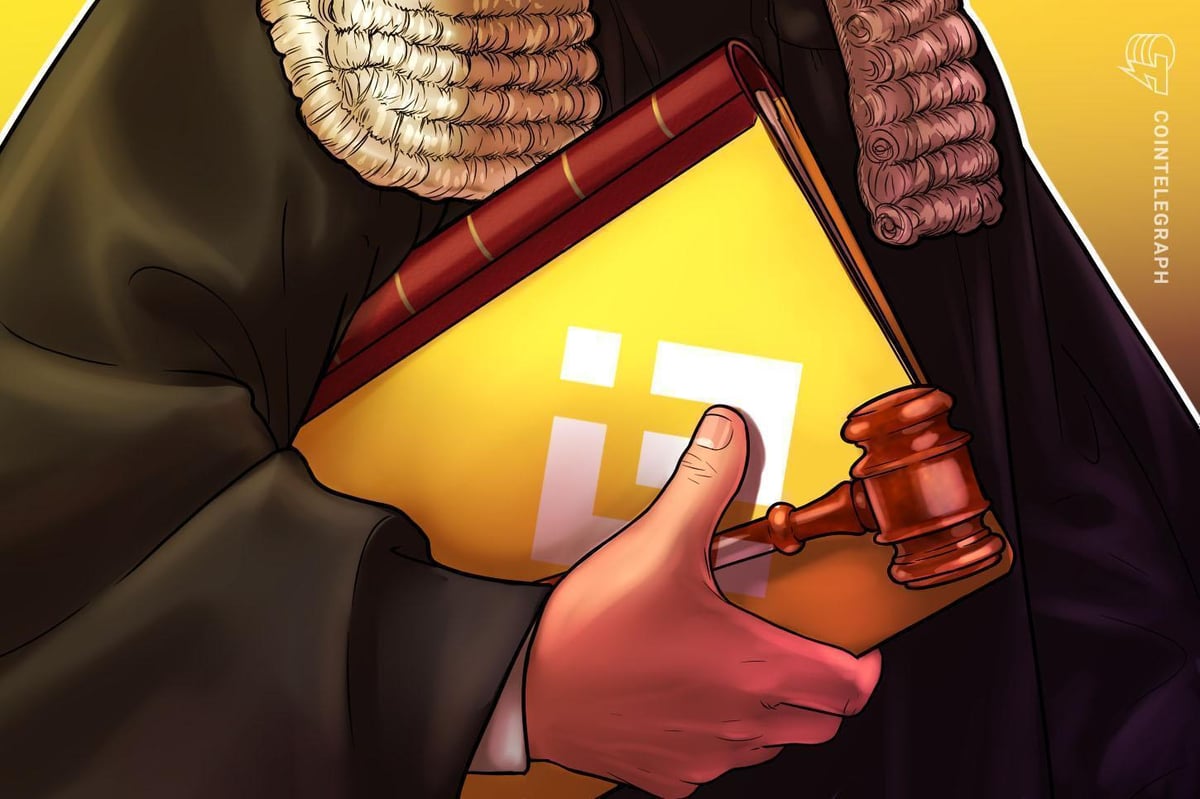
In a significant legal setback for the world’s largest cryptocurrency exchange, a United States federal judge has ruled that Binance Holdings Ltd. cannot compel a group of American customers into private arbitration over claims involving financial losses on digital assets. The decision, handed down by District Judge Andrew Carter Jr. in the Southern District of New York, ensures that a high-profile class-action lawsuit will remain in open court, providing a rare public venue for litigation against the global crypto giant. The ruling specifically concerns claims related to cryptocurrency tokens purchased on Binance’s global platform prior to February 20, 2019, a period during which the exchange’s terms of service lacked the stringent arbitration requirements it later adopted.
The core of the dispute centers on whether Binance could retroactively apply a 2019 arbitration clause to disputes that originated under an earlier, more permissive version of its user agreement. Judge Carter’s ruling found that users who joined the platform under the 2017 terms of use were not adequately notified when the company unilaterally updated its policies in early 2019. This decision underscores a growing judicial skepticism toward "clickwrap" and "browsewrap" agreements in the digital age, particularly when financial platforms attempt to strip consumers of their right to a jury trial without explicit, individualized notice.
The Legal Foundation of the Ruling
The litigation, titled Williams v. Binance, involves a proposed class of investors from California, Nevada, and Texas. These plaintiffs allege that Binance and its founder, Changpeng "CZ" Zhao, engaged in the illegal sale of unregistered securities and operated as an unregistered broker-dealer within the United States. The plaintiffs argue that the exchange facilitated the trading of various digital tokens that should have been regulated under federal securities laws, leading to significant financial damages when those assets plummeted in value or faced regulatory scrutiny.
Binance’s defense rested heavily on its 2019 terms of use, which included a mandatory arbitration clause requiring all disputes to be settled through private proceedings in Singapore. However, Judge Carter noted that the 2017 version of the terms—under which the plaintiffs originally signed up—contained no such waiver of class-action rights or arbitration requirements. The court found that Binance’s method of updating these terms was legally insufficient. Rather than providing direct notice to users via email or a mandatory pop-up notification, the exchange relied on a general "change-of-terms" clause and the mere posting of the updated document on its website.
The judge’s memorandum highlighted that there was no evidence of an "announcement" that would have reasonably alerted a user to the fundamental shift in their legal rights. Under standard contract law, particularly within the jurisdiction of the Southern District of New York, a party cannot unilaterally impose new, burdensome obligations on a pre-existing contract without clear consent or, at the very least, sufficient notice that would allow the consumer to make an informed choice to continue using the service or terminate the relationship.
Decentralization vs. Traditional Contract Law
One of the more striking aspects of Judge Carter’s ruling was his dismissal of Binance’s "new world" rhetoric. Throughout the proceedings, Binance had argued that its operational model—frequently described by its executives as decentralized and lacking a formal global headquarters—necessitated a more flexible interpretation of traditional legal frameworks. The exchange suggested that the digital-native nature of its platform and its global reach should influence how the court views its interactions with users.
Judge Carter rejected this line of reasoning, stating that the company’s philosophical leanings toward decentralization do not exempt it from the basic tenets of internet-based contract law. The court maintained that regardless of how "decentralized" a platform claims to be, it is still a legal entity entering into binding agreements with individuals. If those agreements involve the waiver of constitutional rights, such as the right to a trial, the standards for establishing a "meeting of the minds" remain high. The ruling reinforces the principle that the "crypto-native" status of a business does not grant it a pass to ignore established consumer protection standards or procedural fairness in contract modifications.
Chronology of the Williams v. Binance Litigation
The journey of the Williams v. Binance case has been marked by several years of complex legal maneuvering, reflecting the broader volatility and evolving regulatory landscape of the cryptocurrency industry.
- April 2020: The initial class-action complaint is filed in the Southern District of New York. The plaintiffs allege that Binance profited from the sale of "unregistered securities" including tokens like EOS, TRX, and others, capitalizing on the 2017-2018 initial coin offering (ICO) boom.
- March 2022: Judge Carter initially dismisses the case. The court’s first ruling suggested that the plaintiffs had filed their claims too late, citing a one-year statute of limitations. Furthermore, the court questioned whether US securities laws could be applied to a foreign-based exchange like Binance for transactions that took place on its global (non-US) platform.
- March 2024: The Second Circuit Court of Appeals revives the case. In a landmark appellate decision, the court ruled that the plaintiffs’ claims were timely and that the investors had plausibly alleged that their purchases became "irrevocable" within the United States, thereby bringing the transactions under the purview of domestic law. The case was remanded back to Judge Carter for further proceedings.
- June 2024: Binance moves to compel arbitration, arguing that even if the case can be heard in the US, the users agreed to settle disputes in Singapore.
- February 2025: Judge Carter issues the current ruling, denying the motion to compel arbitration for pre-2019 claims and setting the stage for a public trial or settlement negotiations in federal court.
Analyzing the Class Action Waiver
A secondary but equally important component of the ruling involved a purported class-action waiver embedded in the 2019 terms. Judge Carter found this waiver to be unenforceable in federal court because the contract failed to clearly articulate the terms of the waiver within the body of the agreement. Instead, the waiver was largely contained within a section heading.
Under the legal principle of contra proferentem, which dictates that ambiguous terms in a contract should be interpreted against the party that drafted the document, the court held that Binance could not rely on a poorly defined clause to prevent a group of plaintiffs from joining forces in a single lawsuit. This is a critical win for the plaintiffs, as class-action status allows individuals with relatively small losses to pool their resources, making it financially viable to take on a multi-billion-dollar corporation.
Responses from Binance and Legal Representatives
In the wake of the ruling, a spokesperson for Binance emphasized that the scope of the remaining litigation is narrower than the original complaint suggested. The spokesperson noted that in response to Binance’s motions, the plaintiffs had voluntarily dismissed all claims that accrued on or after February 20, 2019.
"Binance will vigorously defend the limited claims that remain in this meritless case," the spokesperson told media outlets. The company maintains that its operations have always sought to comply with the evolving regulatory frameworks of the jurisdictions in which it operates and that the tokens in question were not securities under the laws of the time.
Legal experts representing the plaintiffs, however, view the ruling as a major victory for transparency. By keeping the case in the Southern District of New York, the discovery process—where Binance will be forced to turn over internal communications and financial records—will be conducted under the supervision of a US judge rather than behind the closed doors of a private arbitration firm in Singapore. This could potentially reveal significant details about Binance’s internal compliance measures, or lack thereof, during its period of rapid global expansion.
Broader Implications for the Crypto Industry
The ruling in Williams v. Binance arrives at a time of unprecedented regulatory pressure on the cryptocurrency sector. Binance recently concluded a massive settlement with the US Department of Justice, the CFTC, and the Treasury Department, agreeing to pay over $4 billion in fines and appointing an independent monitor to oversee its compliance for several years. While that settlement addressed anti-money laundering and sanctions violations, it did not resolve private civil litigation like the Williams case.
The court’s decision sets a vital precedent for how other crypto exchanges manage their user agreements. Platforms such as Coinbase, Kraken, and Gemini frequently update their terms of service to reflect changing laws and business practices. The Williams ruling serves as a warning that simply posting a new PDF on a website is insufficient to bind existing users to new arbitration clauses.
Furthermore, the decision highlights the "jurisdictional reach" of US courts over global crypto platforms. Even if an exchange is incorporated in a foreign jurisdiction, the fact that it serves US customers and facilitates transactions that are finalized on US-based servers or by US-based individuals can be enough to trigger the application of American contract and securities laws.
Conclusion and Future Outlook
The remaining claims in Williams v. Binance will now move toward the discovery phase in federal court. The focus will shift from procedural hurdles to the merits of the case: were the tokens sold by Binance indeed unregistered securities, and did the exchange act as an unlicensed broker?
As the legal battle continues, the industry will be watching closely. A judgment against Binance could lead to a massive restitution requirement for thousands of early investors and could force a fundamental restructuring of how tokens are listed and traded on global platforms. For now, the ruling serves as a stark reminder that in the eyes of the US judiciary, the "Wild West" of crypto must still adhere to the established rules of the law of the land. The "new world" of digital finance remains tethered to the "old world" of consumer rights and contractual integrity.