
 James Watt
Lido Finance, a dominant force in the liquid staking sector, has announced a series of significant updates to its Lido V3 stVaults, introducing enhanced functionality, robust security features, and expanded support for institutional participants. These developments, unveiled on July 9, 2026, mark a crucial step in Lido’s commitment to providing modular, flexible, and secure staking infrastructure, particularly tailored for larger and more sophisticated entities navigating the complex Ethereum Proof-of-Stake (PoS) environment. The updates encompass improvements to the stVaults Web UI, an expanding product overview hub, and comprehensive additions to the Doc Center, designed to streamline operations and foster broader adoption.
Understanding Lido V3 and the Genesis of stVaults
To fully appreciate the scope of these advancements, it’s essential to contextualize Lido V3 and its core primitive, stVaults. Lido Finance emerged as a pioneer in liquid staking, offering users a way to stake their Ethereum (ETH) and receive stETH (staked ETH) in return, which remains liquid and usable across various decentralized finance (DeFi) protocols. This innovation addressed the illiquidity inherent in direct staking on the Ethereum network, where staked ETH is locked and withdrawals were initially unavailable post-Merge. Lido’s market leadership, often exceeding 30% of total staked ETH, underscores its critical role in the Ethereum ecosystem.
Lido V3 represents an evolution of this offering, moving towards a more decentralized and permissionless architecture. Launched with the explicit goal of enhancing modularity and catering to a wider spectrum of stakers, particularly institutions and large-scale operators, Lido V3 introduced stVaults. At its core, an stVault is a customizable staking primitive that provides modular infrastructure, allowing users to run their own validators while leveraging Lido’s robust network and infrastructure. A key differentiator is the optionality of stETH minting, which grants vault owners the flexibility to decide whether their staked ETH positions are tokenized into stETH, thus unlocking DeFi composability, or remain as native staked ETH, suitable for specific institutional requirements or regulatory considerations. This hybrid approach caters to diverse risk appetites and operational needs, distinguishing stVaults from earlier, more rigid liquid staking models.
Navigating the Ethereum Validator Entry Queue: A Strategic Imperative
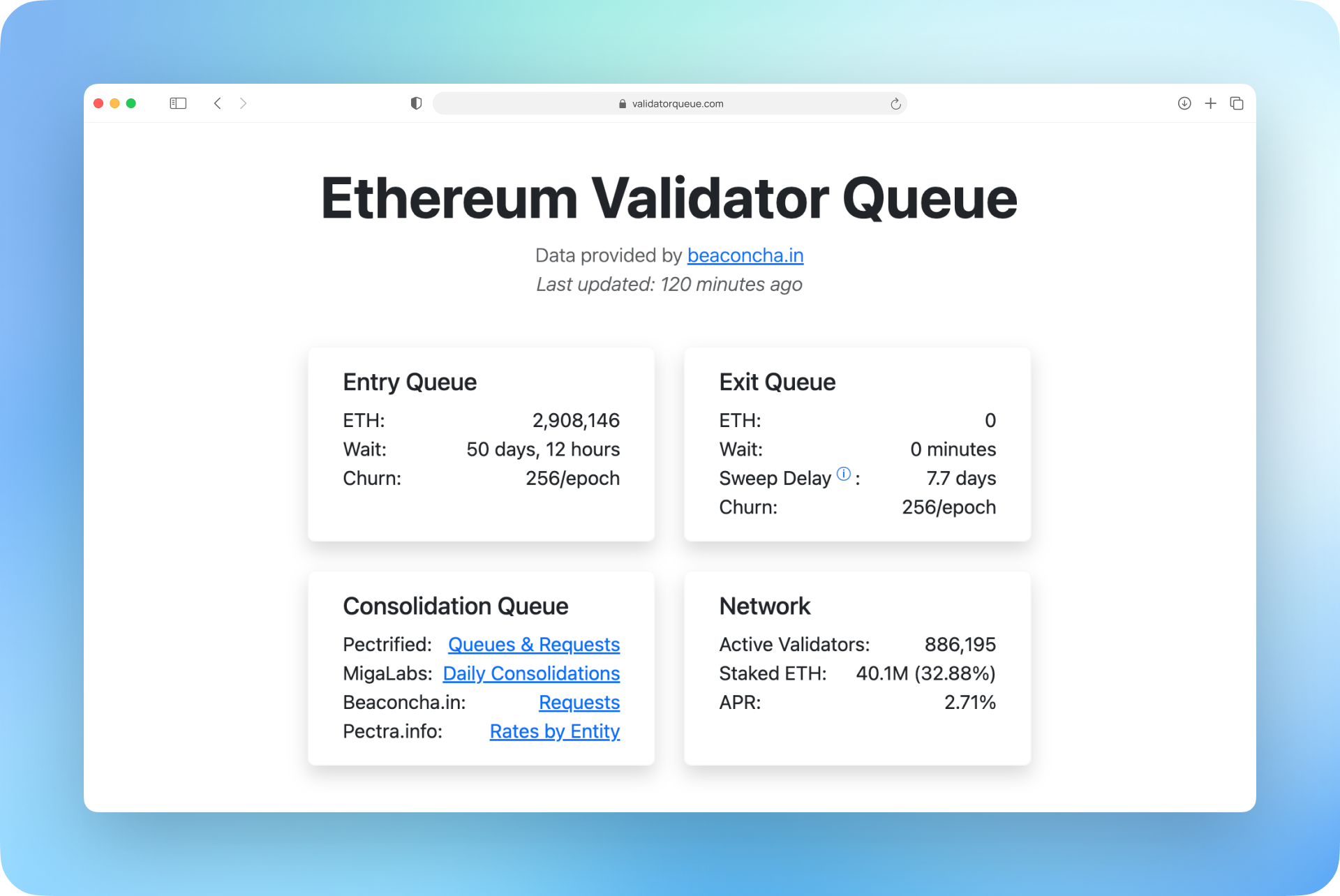
A significant backdrop to these updates is the persistent challenge of the Ethereum validator entry queue. The transition of Ethereum to Proof-of-Stake in September 2022 (the Merge) and the subsequent activation of withdrawals in April 2023 (the Shapella upgrade) democratized staking but also introduced a dynamic queue for new validators to join the network. This mechanism is crucial for network stability, preventing an overwhelming influx of new validators from compromising chain integrity. However, it also means that capital designated for staking can sit idle for extended periods before becoming active and earning rewards.
Throughout May 2026, the Ethereum validator entry queue saw a notable surge, extending past 60 days. This meant that any new validator attempting to join the network would face a waiting period of two months or more before becoming active and contributing to network security and earning rewards. While the queue eased slightly to an average of 50 days in June, representing a marginal improvement, it still signifies a considerable delay for prospective stakers. This latency directly impacts capital efficiency, as funds remain unproductive during the waiting period. For institutional players managing substantial capital, such delays can translate into significant opportunity costs.
In response to this, Lido actively promotes validator consolidation as a highly capital-efficient migration strategy for existing validators looking to transition to stVaults while bypassing the entry queue. This method allows "source validators" to continue accruing rewards during the migration process, ensuring uninterrupted capital utilization. Post-consolidation, stakers gain access to stETH, which, as previously noted, unlocks unparalleled DeFi composability, potentially enhanced rewards through yield-generating strategies, and crucial liquidity for large staking positions that would otherwise be locked. This strategy is particularly appealing to entities seeking to optimize their staking operations and integrate with the broader DeFi ecosystem without incurring the lengthy wait times. Adding further incentive, Lido has extended its stVaults infra fee waiver through the end of August, reducing the initial cost burden for new participants and encouraging faster adoption. This strategic waiver reflects Lido’s understanding of market dynamics and its commitment to fostering growth within its ecosystem.
Expanding Horizons: The stVaults Products Overview Hub
The growing ecosystem built atop stVaults is a testament to its modularity and flexibility. The stVaults Products Overview Hub serves as a dynamic showcase for the diverse range of innovative products and use-cases leveraging the platform. While specific new products were not detailed in the announcement, the very existence of a dedicated hub signifies a maturing ecosystem where third-party developers and institutions are actively building tailored solutions. These could range from highly specialized institutional staking services with bespoke compliance features to novel DeFi protocols integrating stVaults for enhanced capital efficiency or risk management. The hub acts as a central repository, demonstrating the platform’s versatility and inspiring further innovation within the Lido V3 ecosystem. Lido has also extended an open invitation to vault builders and owners to feature their products on the hub, fostering a collaborative environment and encouraging broader participation. This strategy not only highlights the platform’s capabilities but also strengthens the network effect, attracting more developers and capital.
Enhancing User Experience and Security: The stVaults Web UI
A cornerstone of the recent updates lies in the significant enhancements to the stVaults Web UI. Designed as an intuitive and well-instrumented interface, the Web UI empowers vault builders and owners to set up, manage, and monitor their vaults with unprecedented ease. These improvements are not merely cosmetic; they address critical operational and security concerns, particularly relevant for institutional adoption.
One of the most crucial additions is the implementation of anti-scam protections for stakers. In an environment rife with sophisticated digital asset fraud, safeguarding users from malicious activities is paramount. The Web UI now incorporates intelligent warning systems that alert stakers to potentially risky transactions. Furthermore, it proactively blocks certain operations if the stVault’s configuration is deemed insecure or if it could potentially allow unauthorized third-party actors to exploit or defraud stakers. This proactive security layer significantly mitigates risks associated with misconfigurations or social engineering attempts, bolstering trust and security for all participants. Industry analysts suggest this feature is particularly vital for institutional clients, who often face stringent compliance and security requirements. "Robust anti-scam measures are no longer a luxury but a fundamental requirement for institutional participation in decentralized finance," stated a blockchain security expert, implying the importance of Lido’s move.
Another notable operational improvement is the ability to settle Lido fees directly within the UI. Historically, certain actions within an stVault required the settlement of accrued Lido fees, often necessitating direct interaction with the command-line interface (CLI) or smart contracts. This process could be cumbersome and error-prone, especially for users less familiar with technical interfaces. With this update, Lido has permissionlessly integrated fee settlement directly into the Web UI. Vault Owners and Node Operators can now conveniently review and settle outstanding fees from a centralized dashboard, eliminating the need for complex command-line operations. This simplification dramatically improves operational efficiency and reduces the technical barrier to entry, particularly for institutions that prefer streamlined, GUI-based workflows.
Perhaps one of the most impactful UI enhancements for institutional users is the new support for rebalancing. Rebalancing, in the context of stVaults, refers to the process of repaying stETH liability using ETH from the vault’s own balance. This feature is particularly crucial for institutions that manage redemption fulfillment processes. After a redemption request is initiated and fulfilled by minting stETH from the stVault and subsequently swapping it for ETH, an equivalent stETH liability is created within the vault. Previously, covering this liability required direct interaction with smart contracts or the CLI, posing significant operational hurdles for large-scale operations and multi-signature approval processes typical in institutional settings.
With the Web UI’s rebalancing functionality, vault owners can now perform this critical operation themselves, entirely within their established approval and custody setups. This means a more seamless, secure, and auditable process for managing redemptions and maintaining vault balance. For example, a large financial institution managing a pool of staked ETH for its clients can now fulfill redemption requests with greater agility and transparency, reducing manual intervention and potential errors. This feature significantly enhances the professional-grade utility of stVaults, positioning it as a more viable solution for high-volume, regulated entities.
Fortifying Support: The stVaults Doc Center
Complementing the UI enhancements, the stVaults Doc Center has received substantial additions, particularly in the form of new custodian guides. These guides are critical for institutional adoption, as qualified custodians play a pivotal role in securing digital assets for clients. By providing detailed, step-by-step instructions and best practices for interacting with stVaults through various custodial solutions, Lido is actively lowering the technical and operational barriers for these crucial partners. The expansion of these guides suggests a growing collaboration between Lido and prominent institutional custodians, indicating a broader industry trend towards integrating liquid staking solutions into traditional financial frameworks.
Furthermore, the Qualified Custodians overview section in the Doc Center now comprehensively lists all stVaults smart-contract addresses that require whitelisting before interaction. This seemingly minor detail is, in fact, a significant boon for institutional security and compliance teams. By centralizing this information, Lido ensures that custodians and vault owners can easily identify and approve the necessary contract addresses, preventing unauthorized interactions and streamlining security protocols. This attention to detail underscores Lido’s commitment to enterprise-grade security and operational clarity, which are non-negotiable for large-scale institutional engagement.
Broader Implications and Future Outlook
These updates collectively signal a strategic deepening of Lido’s focus on institutional clients and the long-term sustainability of the Ethereum staking ecosystem. By enhancing security, simplifying complex operations, and providing robust documentation, Lido is not only catering to the immediate needs of large stakers but also laying the groundwork for broader institutional participation in decentralized finance.
The improvements to the Web UI, particularly the anti-scam protections and streamlined rebalancing, directly address key concerns of financial institutions regarding operational risk, security, and compliance. Industry experts believe that such features are instrumental in bridging the gap between traditional finance and DeFi. "Lido’s continued focus on enterprise-grade tools is a clear indication of the growing maturity of the liquid staking landscape," commented a DeFi research analyst. "By reducing operational friction and bolstering security, they are making it easier for large entities to access the yield opportunities of Ethereum staking without compromising on their internal controls."
The ongoing validator queue situation, while a network-level concern, highlights the importance of solutions like stVaults and validator consolidation. By offering a path to bypass these delays, Lido enables more efficient capital deployment, benefiting both individual stakers and the overall health of the Ethereum network by ensuring more ETH is actively securing the chain. The extension of the infra fee waiver further sweetens the deal, demonstrating Lido’s commitment to facilitating growth even during periods of network congestion.
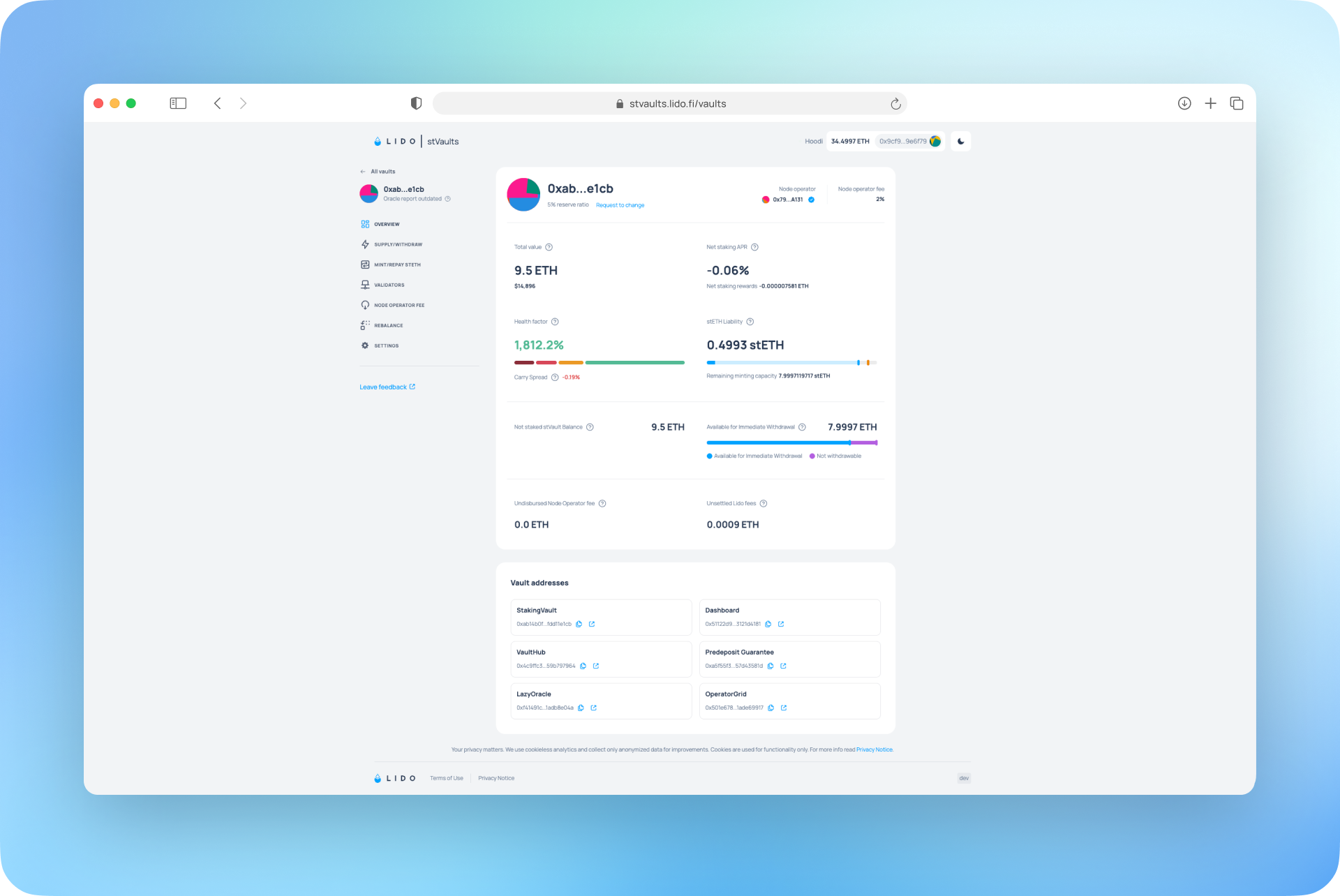
Looking ahead, the expansion of the stVaults Products Overview Hub suggests a vibrant and growing ecosystem. As more developers and institutions build on stVaults, it will likely lead to a greater diversity of staking products, potentially fostering increased competition and innovation within the liquid staking market. This modular approach aligns with the broader ethos of decentralized networks, promoting choice and customization.
In conclusion, Lido V3’s latest enhancements to stVaults represent a significant milestone in the evolution of liquid staking. By prioritizing security, operational efficiency, and institutional accessibility, Lido is not only solidifying its position as a market leader but also actively shaping the future landscape of Ethereum staking, making it more robust, accessible, and integrated with the global financial system. The continuous development cycle, driven by user feedback and market demands, positions stVaults as a critical primitive for institutions and large-scale operators navigating the dynamic world of decentralized finance in 2026 and beyond.









