
 James Watt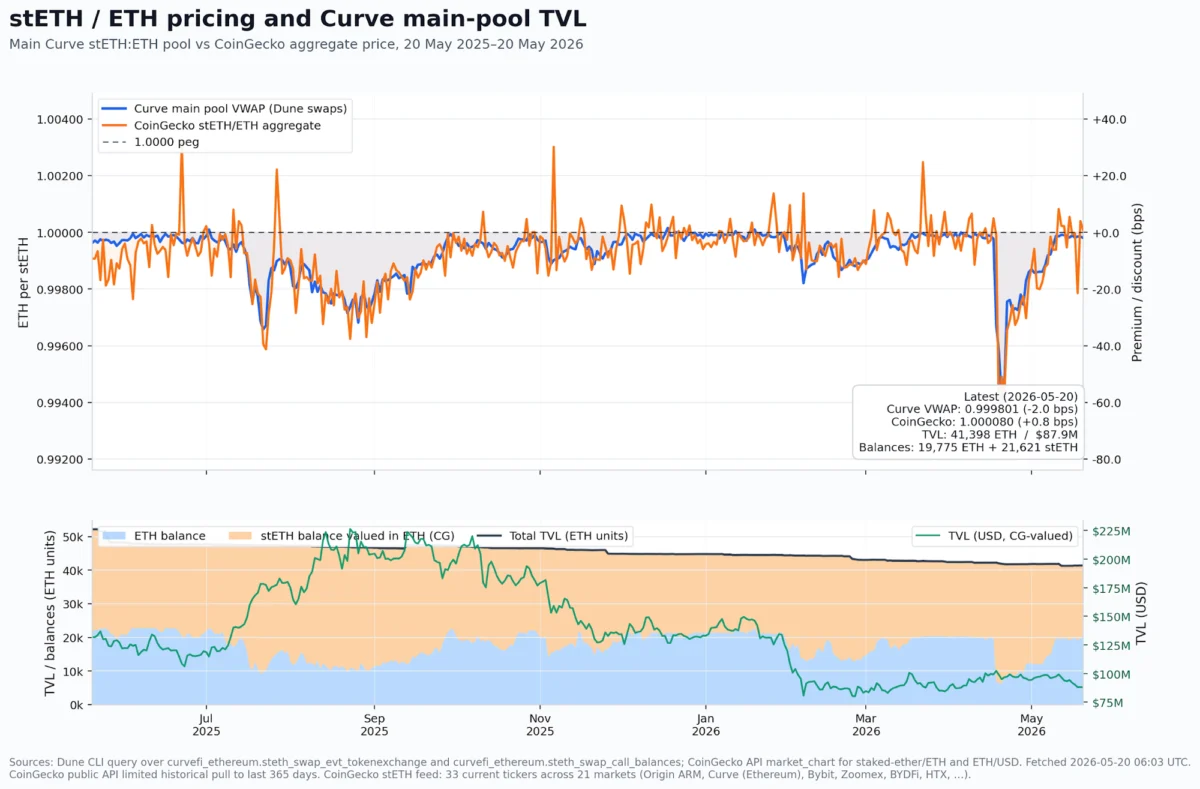
The cryptocurrency ecosystem experienced a significant external shock in April 2026, when the KelpDAO rsETH exploit sent ripples through restaking and ETH-denominated lending markets. This incident, while impacting a specific segment of the DeFi landscape, provided a critical stress test for the broader liquid staking derivatives (LSD) market, particularly for stETH and wstETH. Despite the considerable market upheaval and repricing of risk, the core asset, Lido’s stETH, exhibited remarkable functionality and resilience, affirming its foundational role within the Ethereum ecosystem. This article delves into the secondary-market performance of stETH and wstETH during the KelpDAO incident, analyzing pricing dynamics, liquidity depth, and the underlying factors that contributed to its stability.
The KelpDAO Exploit: Unpacking a Cross-Chain Vulnerability
On April 18, 2026, the decentralized finance (DeFi) world watched as attackers successfully exploited KelpDAO’s LayerZero-based rsETH bridge path. The incident quickly became a focal point for security concerns within the burgeoning restaking sector. Public post-incident analyses revealed the exploit stemmed from a critical cross-chain verification failure, which allowed approximately 116,500 rsETH tokens, valued at an estimated $292 million at the time, to be erroneously minted on the Ethereum blockchain without a corresponding burn on the source chain. This unauthorized issuance created an immediate and severe imbalance, leading to significant market distress.
It is crucial to differentiate the immediate stress channel of this exploit. The attack specifically targeted restaking collateral and associated lending-market exposures tied to rsETH. Importantly, Lido’s core staking protocol and its flagship liquid staking token, stETH, were not directly compromised. This distinction proved pivotal in how the broader market reacted and how stETH liquidity ultimately fared. While the incident undoubtedly created widespread anxiety, market participants were largely able to discern between a vulnerability in a specific cross-chain restaking asset path and the robust, long-established liquidity profile of stETH, Ethereum’s largest liquid staking token. This nuanced understanding was instrumental in preventing a broader contagion effect across the entire LSD ecosystem.
A Chronology of Market Response: April 18 – April 28, 2026
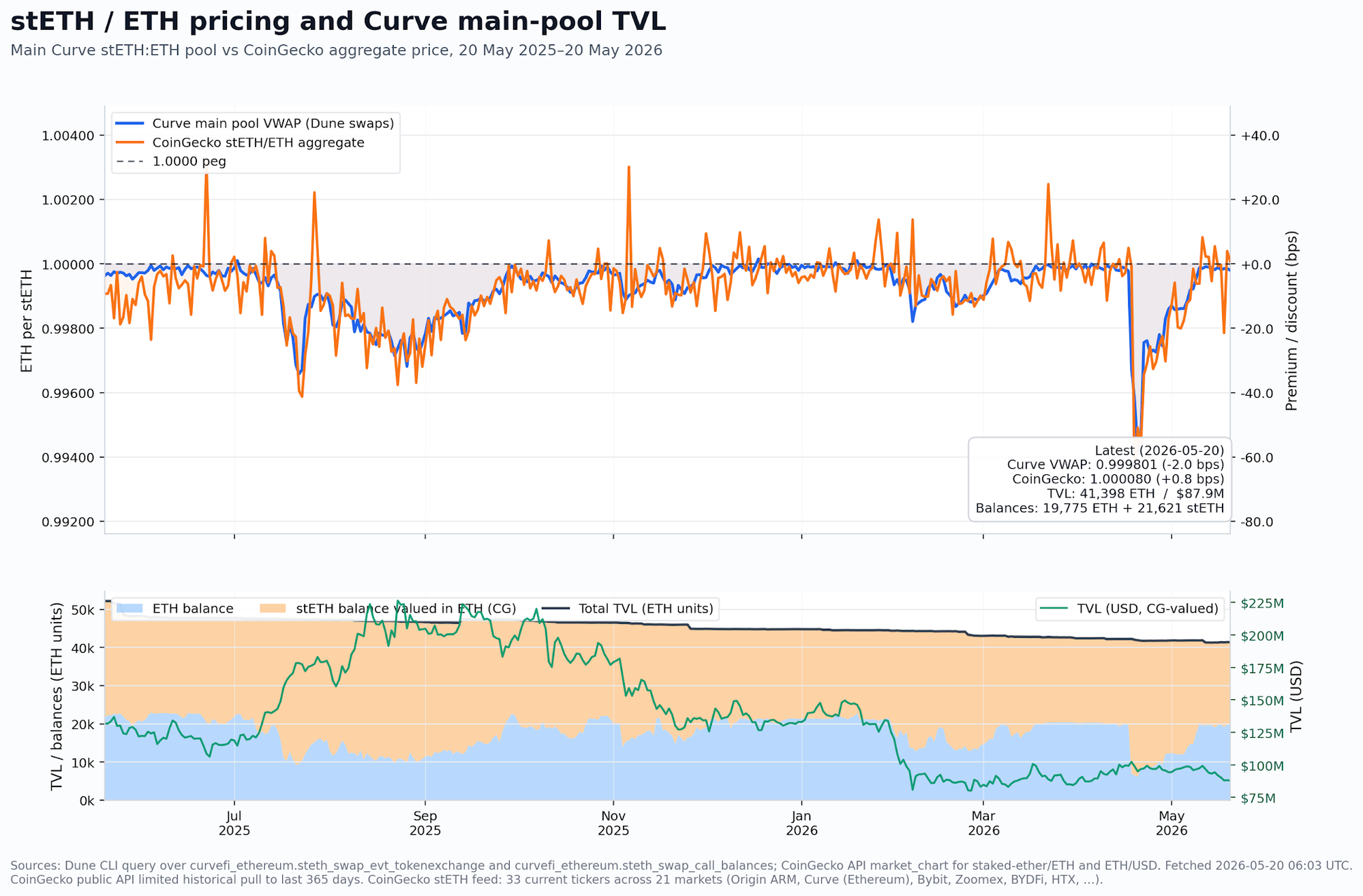
The period immediately following the KelpDAO exploit, from April 18 to April 28, 2026, became a critical window for market observation. Upon the news breaking, panic selling and uncertainty led to a noticeable, albeit contained, dip in stETH’s peg to ETH. On April 18, the daily Volume-Weighted Average Price (VWAP) for stETH on Curve’s main pool reached a low of approximately 0.9941 ETH per stETH, representing a deviation of about -59 basis points (bps) from parity. Concurrently, CoinGecko’s aggregate stETH/ETH pricing registered a comparable low of approximately 0.9934. These figures indicate a measurable repricing of risk by the market, as traders and protocols adjusted their positions in response to the exploit.
During this tumultuous period, Lido’s internal protocol mechanics continued to function precisely as intended. The protocol successfully processed one of the largest periods of net outflows in its history, demonstrating its underlying robustness and ability to handle significant redemption requests without faltering. This operational stability, coupled with transparent communication from Lido and other ecosystem participants, played a vital role in reassuring the market. As the initial shock subsided and the specific nature of the exploit became clearer, stETH pricing began a steady recovery. By May 20, just weeks after the incident, Curve’s VWAP for stETH had rebounded to near parity at 0.99980, with CoinGecko reporting an aggregate price of 1.00008. This swift and decisive recovery underscored the market’s confidence in stETH’s fundamental value proposition and the integrity of the Lido protocol.
The ability of stETH to navigate this intense period of market stress and subsequently recover its peg speaks volumes about the maturity and resilience of the liquid staking ecosystem. While other assets might have faced a prolonged de-pegging or even a collapse in liquidity, stETH demonstrated its capacity to absorb external shocks and regain stability, a testament to its deep market integration and the trust it commands among users and protocols.
Liquidity Depth: The True Measure of Resilience Under Stress
While headline price movements offer an initial snapshot, a more profound understanding of market resilience requires examining liquidity depth and execution quality, especially during periods of stress. Stable headline prices can sometimes mask a severe deterioration in the ability to execute large trades without significant slippage. For this reason, liquidity depth serves as a more accurate and useful metric for assessing an asset’s robustness under pressure.
To quantify this, analysis focused on the quote impact for a hypothetical $1 million fixed-sell wstETH transaction on the Ethereum mainnet. Prior to the KelpDAO exploit, the median daily quote impact across 236 observations was an impressively low -0.1 bps. This indicated highly efficient execution, where large trades incurred minimal slippage, reflecting abundant liquidity. However, during the 10-day stress window immediately following the exploit, the median daily quote impact for the same $1 million transaction surged to -5.0 bps. Furthermore, the 7-day moving average of this metric reached a trough of -15.9 bps.
These figures represent a tangible and significant increase in the cost of execution for large wstETH trades. Traders looking to exit positions or rebalance portfolios would have faced considerably higher slippage compared to pre-exploit conditions. However, critically, this increase in execution cost did not translate into a disappearance of liquidity. Unlike scenarios where market makers withdraw, order books evaporate, and trades become impossible or prohibitively expensive, wstETH/ETH execution remained measurable, routable, and interpretable throughout the crisis. The market might have become more expensive, but it remained functional and liquid, a stark contrast to the illiquidity that can plague less robust assets during major external shocks. This continued availability of actionable liquidity, even at an increased cost, was a crucial factor in preventing a broader market meltdown related to stETH.
The Pillars of stETH’s Enduring Resilience
Several interconnected factors contributed to stETH’s comparative resilience during the KelpDAO incident:
- Clear Asset Distinction: The exploit specifically targeted rsETH and its associated LayerZero bridge, not stETH or the Lido protocol itself. This clear delineation allowed market participants to distinguish between the compromised asset path and stETH, which remained fundamentally sound. This ability to isolate the risk was paramount in preventing a systemic cascade.
- Robust Protocol Mechanics: Lido’s protocol functioned flawlessly throughout the crisis. Its unstaking mechanisms, validator operations, and reward distribution continued unimpeded. The protocol successfully handled a period of substantial net outflows, demonstrating its architectural integrity and ability to perform under extreme demand. This operational stability instilled confidence and prevented an internal crisis from compounding the external shock.
- Deep Secondary Market Liquidity: Years of dedicated liquidity building around stETH have established it as a truly foundational asset within the Ethereum ecosystem. Its integration across numerous DeFi protocols, including major decentralized exchanges like Curve and lending platforms like Aave, has created robust secondary markets. This extensive network of liquidity pools and trading pairs ensured that even when market sentiment soured, there were ample avenues for users to trade stETH, providing an essential buffer against illiquidity.
- Transparent On-Chain Pricing: The decentralized and transparent nature of stETH pricing on public blockchains, combined with reliable data sources like Dune Analytics and CoinGecko, allowed market participants to access real-time, verifiable information. This transparency enabled rapid assessment of market conditions and informed decision-making, helping to prevent panic driven by misinformation or a lack of visibility.
- Widespread Ecosystem Integration: As the largest liquid staking token, stETH benefits from widespread adoption and integration across the DeFi landscape. Its utility extends beyond simple staking rewards, serving as collateral, a base asset in liquidity pools, and a component in various yield-generating strategies. This broad utility creates inherent demand and diversified use cases, which contribute to its stability and resilience during market downturns.
- Maturity of the LSD Market: The liquid staking derivatives market, while still evolving, has gained significant maturity. Participants have become more sophisticated in evaluating risks associated with different LSDs and their derivatives. This maturity implies a greater capacity to differentiate between a core LST like stETH and more complex, layered tokens like rsETH, which introduce additional layers of smart contract and bridge risk.
Reactions and Broader Industry Implications
The KelpDAO incident prompted swift reactions and initiated critical discussions across the DeFi industry. KelpDAO, along with LayerZero, was expected to undertake comprehensive post-mortem analyses, outlining the vulnerabilities, their mitigation strategies, and potential plans for affected users. While specific public statements from these entities regarding compensation or detailed security overhauls would have been critical in real-time, the general industry expectation is that such incidents lead to intensified security audits, bug bounty programs, and a re-evaluation of cross-chain bridge designs.
From Lido’s perspective, the incident served to underscore the robustness of its protocol and the resilience of stETH. The operational integrity during a period of high stress provided a powerful validation of its architecture and risk management framework. For the broader restaking market, the exploit served as a stark reminder of the inherent complexities and risks associated with layering derivatives and utilizing cross-chain bridges. It prompted a re-evaluation of due diligence processes for new restaking protocols and emphasized the importance of understanding the underlying security model of each component in a DeFi stack.
More broadly, the incident reinforced the critical need for enhanced security measures across the entire DeFi ecosystem, particularly concerning cross-chain interoperability. Bridges, while essential for connecting disparate blockchain networks, remain significant attack vectors. The exploit highlighted the necessity for multi-layered security models, rigorous independent audits, and robust, decentralized verification mechanisms to prevent similar incidents in the future. The event also served as a crucial lesson for investors and protocols alike: understanding the specific risks associated with different types of tokens—from core LSTs to their layered derivatives—is paramount for sound risk management in a rapidly evolving landscape.
Looking Ahead: Strengthening the DeFi Ecosystem’s Foundations
The KelpDAO incident, while a regrettable event for those directly affected, ultimately provided valuable insights into the resilience of core DeFi assets like stETH and the broader market’s ability to differentiate risk. Moving forward, the industry must leverage these lessons to strengthen its foundations. This includes:
- Prioritizing Security Audits: Investing heavily in comprehensive, multi-party security audits for all new protocols and significant upgrades, especially for those involving cross-chain interactions and complex derivatives.
- Developing Robust Incident Response Plans: Establishing clear, transparent, and swift incident response protocols that include communication strategies, vulnerability assessment, and potential recovery mechanisms.
- Enhancing Risk Management Frameworks: Protocols and users must adopt more sophisticated risk management frameworks that account for interconnectedness, cascading failures, and the unique risks posed by different layers of abstraction in DeFi.
- Promoting User Education: Continuing to educate users about the inherent risks of complex DeFi strategies, the importance of understanding smart contract security, and the nuances between various types of crypto assets.
- Fostering Decentralization and Transparency: Reinforcing the core tenets of decentralization and transparency in protocol design and governance, which contribute to resilience by distributing control and enabling public scrutiny.
The Takeaway: Resilience Where It Matters
The KelpDAO incident clearly demonstrated why liquidity and asset stability must be evaluated not only under normal market conditions but, more crucially, during periods of extreme stress. For stETH, the April 2026 event served as a definitive stress test, unequivocally showing that its deep secondary markets, transparent on-chain pricing, and wide ecosystem integration are capable of absorbing a severe external shock without compromising the integrity of the core staking asset. While pricing did move and execution costs rose, the market remained remarkably functional and liquid.
This outcome is not accidental; it reflects years of strategic development, liquidity building, and continuous integration of stETH as a foundational Ethereum asset. It underscores a core advantage for users, integrators, and protocols that rely on staking collateral to be not only useful in quiet, bullish markets but also robust and actionable when markets are under significant pressure. The incident reinforced stETH’s position as a cornerstone of the Ethereum DeFi landscape, capable of weathering storms and maintaining its functionality even amidst significant external turbulence.









