James Watt
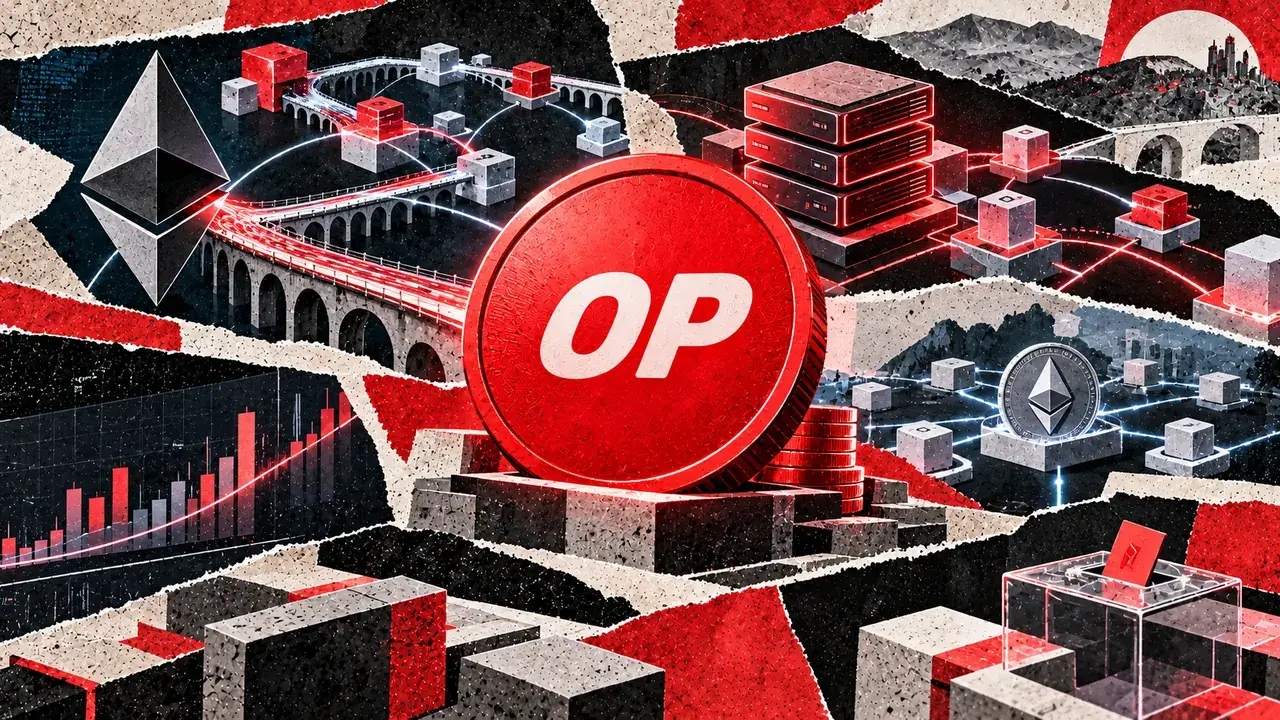
The landscape of Ethereum Layer-2 scaling is undergoing a fundamental shift as Optimism transitions from a software provider to a comprehensive infrastructure operator. Through its OP Enterprise initiative, the Optimism Foundation and OP Labs are increasingly assuming responsibility for the day-to-day production operations of high-profile blockchain networks. This evolution was solidified by the October 9 announcement from Uniswap Labs, which detailed plans for Unichain—an Ethereum Layer-2 chain built on the OP Stack—to migrate its production sequencing, public node access, monitoring, and incident response to Optimism’s managed service. This strategic pivot marks a significant milestone in the "Superchain" vision, where specialized product teams focus on ecosystem growth while a centralized protocol developer manages the underlying technical complexities.
The Strategic Shift Toward Managed Infrastructure
The decision by Uniswap Labs to move Unichain’s operations under the Optimism umbrella represents an expansion of a relationship that previously focused on technical support. Under the new arrangement, the transition will occur in two phases: a testnet migration scheduled for October 13, followed by a full mainnet cutover on October 29. This move follows a blueprint established by other major players in the OP Stack ecosystem, most notably Ink and Soneium, both of which have opted for similar "Fully Managed" service models.
The rationale behind this shift is rooted in the operational demands of maintaining a high-performance Layer-2 network. By outsourcing infrastructure management, application developers can mitigate the overhead associated with running sequencers, batchers, and proposers. Jing Wang, a key figure in the Optimism ecosystem, articulated this strategy during the Ink announcement, suggesting that product teams are best positioned to build applications, while Optimism is best equipped to run the infrastructure. This division of labor allows brands to leverage the protocol expertise of the core developers who built the OP Stack, potentially increasing network reliability and response times during technical anomalies.
A Chronology of Managed Service Adoption
The trend toward managed operations has accelerated throughout 2024, reflecting a growing preference for professionalized infrastructure among enterprise-grade blockchain projects.
In June 2024, the Ink Foundation announced its plan to upgrade to OP Enterprise. The arrangement allowed Ink to concentrate on ecosystem expansion while Optimism handled the network’s maintenance. By September, updated vendor guides confirmed that Ink’s infrastructure—including its mainnet and testnet sequencers, Remote Procedure Call (RPC) nodes, and block explorers—was being operated by the Optimism Foundation via OP Labs.
Following this, on September 30, Soneium announced its adoption of the Fully Managed model. This agreement assigned the Optimism Foundation and OP Labs responsibility for deployment, sequencer operations, node infrastructure, and incident response. While Soneium retains control over its roadmap and the development of its Tokenized Intellectual Property (IP) products, the core mechanics of the chain are now handled by the Optimism team.
The October 9 announcement regarding Unichain is the latest and perhaps most significant addition to this roster. Unichain had previously utilized a "Mission Critical" support add-on while operating its own infrastructure. The move to a fully managed model signifies a total transfer of operational responsibility, though Uniswap Labs emphasized that the chain’s identity, contract-upgrade governance, and existing application deployments will remain unchanged.
Understanding the OP Enterprise Service Tiers
Optimism’s service model is structured into tiers that define the level of operational involvement by OP Labs. Understanding these tiers is crucial for assessing the security and reliability profiles of the participating chains.
- Self-Managed: In this tier, the customer (such as a foundation or a brand) runs the infrastructure and retains direct control over the sequencer and nodes. Optimism provides support and monitoring but does not intervene in daily operations.
- Fully Managed: This is the model adopted by Unichain, Ink, and Soneium. Here, OP Labs operates the sequencer (which orders transactions), the batcher (which submits transaction data to the Ethereum mainnet), and the proposer (which submits claims about the chain’s state).
- Mission Critical Add-on: This service level provides enhanced Service Level Agreements (SLAs). It guarantees a 99.95% uptime target and a 15-minute initial response time for high-severity incidents, with status updates provided every 30 minutes.
For Soneium, the agreement includes a 99.9% monthly uptime target and 24/7 on-call incident response. These commitments are designed to offer institutional-grade reliability, reducing the likelihood of prolonged outages that have historically plagued some early-stage Layer-2 solutions.
The Technical Reality of Centralized Operations
While the managed service model offers reliability, it introduces a common organizational dependency. If a single entity—OP Labs—is responsible for the sequencers of multiple major chains, a provider-wide technical failure or a cloud region outage could theoretically affect several ecosystems simultaneously.
However, the architecture of the OP Stack provides a "fallback" mechanism that exists independently of the managed service. This is facilitated through the Ethereum mainnet. If a managed sequencer fails or attempts to censor transactions, users can utilize the "forced transaction" path. By submitting a transaction directly to the chain’s portal contract on Ethereum, users can ensure their transactions are eventually included in the Layer-2 state. According to the OP Stack derivation specification, nodes can derive blocks containing these forced transactions once a specific "sequencing window" (often up to 12 hours) expires.
Comparative Analysis of Withdrawal Security
The level of protection offered to users varies across the managed chains, primarily based on their "Stage" of decentralization as defined by L2BEAT.
Unichain and Ink are currently classified as Stage 1 rollups. This designation is significant because it means they have permissionless fault proofs. If the primary proposer (operated by Optimism) fails to submit state roots, other actors with sufficient funds can step in to propose roots. This ensures that the exit path from the Layer-2 back to Ethereum remains functional even if the official operator is offline.
In contrast, Soneium operates with a more permissioned structure. As of late 2024, it utilizes a whitelisted proposer system. This means only authorized entities can publish state roots. If these whitelisted proposers fail, withdrawals are effectively frozen, as there is no functional on-chain dispute process or permissionless fallback for state proposals. While forced inclusion can get a transaction into the chain, it cannot facilitate a withdrawal out of the chain if the proposal authority is absent.
Furthermore, all three chains—Unichain, Ink, and Soneium—maintain a seven-day proof-maturity period. This delay is a standard security feature of optimistic rollups, allowing time for the community to challenge fraudulent state roots before they are finalized on Ethereum.
Implications for Governance and Upgradability
A common misconception is that outsourcing operations to Optimism also transfers the power to upgrade the network’s smart contracts. However, production operations and upgrade authority remain distinct.
In the case of Unichain, Uniswap Labs has confirmed that its existing governance arrangements and contract-upgrade authorities remain in place. L2BEAT assessments for all three managed chains show that upgrades generally require the joint approval of the Optimism Foundation and a Security Council. Currently, these upgrades can often be executed without a significant delay, meaning that while the sequencer is managed by Optimism, the ultimate control over the protocol’s code resides with the respective governing bodies and security councils.
This structure creates a nuanced trust model: users must trust Optimism for operational uptime and sequencing, but they must trust the Security Councils for the integrity of the protocol’s logic.
The Path to Interoperability
The consolidation of multiple chains under a single operator is a precursor to the broader goal of "Superchain" interoperability. In September 2024, the Optimism ecosystem underwent "Upgrade 20," which laid the technical groundwork for future native interoperability between OP Stack chains.
The goal is to allow assets and data to move seamlessly between chains like Unichain, Base, Ink, and Soneium without the long withdrawal delays typically associated with Layer-2 bridges. While Unichain has advertised native interoperability as a future feature, Soneium’s current announcements have explicitly excluded it for the time being. The migration to managed operations simplifies the coordination required to implement these cross-chain features, as the same entity (OP Labs) will be managing the technical execution across the various participating networks.
Conclusion and Future Outlook
The migration of Unichain to Optimism’s managed infrastructure on October 29 will serve as a high-stakes test for the "Chain-as-a-Service" model. If successful, it will likely encourage more brands to launch their own Layer-2 solutions without the burden of building in-house infrastructure teams.
However, the trend also highlights a growing concentration of operational power within the Ethereum ecosystem. As major decentralized finance (DeFi) hubs like Uniswap and global corporations like Sony (via Soneium) move their infrastructure to a shared provider, the resilience of that provider becomes a systemic concern for the entire industry. The reliability of these networks will no longer be judged solely by their code, but by the operational excellence and service commitments of the Optimism Foundation. For users, the primary safeguard remains the immutable contracts on Ethereum, which provide a slow but certain path to fund recovery in the event that the managed services fail to deliver on their promises.