admin
admin
The United Kingdom has taken a significant stride in modernizing its legal framework for digital assets with the Royal Assent of the Digital Asset Act 2025 on December 2nd. This landmark legislation, remarkably concise in its single-clause statute, fundamentally redraws the map of personal property law, officially recognizing digital and electronic assets as a distinct category. This move is poised to resolve long-standing ambiguities and provide a robust legal foundation for the burgeoning digital economy, with implications reaching far beyond the UK’s shores due to the global influence of English law.
For years, legal practitioners and the judiciary have grappled with fitting novel digital assets, such as cryptocurrencies and non-fungible tokens (NFTs), into existing property classifications. These assets, neither tangible physical goods nor intangible claims enforceable in court, defied traditional categorization. The Digital Asset Act 2025 rectifies this by establishing a "third category" of personal property, distinct from "things in possession" (physical objects) and "things in action" (legal claims). This new category acknowledges that digital objects can function as property in their own right, independent of their ability to conform to legacy legal definitions.
The Act’s genesis can be traced back to years of academic discourse, extensive consultations by the Law Commission, and a series of scattered High Court judgments. These efforts aimed to adapt outdated legal doctrines, originally conceived for physical assets like ships or paper-based securities, to the realities of the digital age. The core principle of the new law is clear: an asset is not disqualified from being property merely because it doesn’t fit neatly into the established categories of physical possession or legal action.
The global reach of English law lends considerable weight to this development. A substantial proportion of international corporate contracts, fund structures, and custody arrangements are governed by English law, even when the entities involved are domiciled elsewhere. Consequently, any clarification of property rights within this jurisdiction sends ripples across global financial and legal systems. This is particularly pertinent as the Bank of England continues its consultation on a regulatory framework for systemic stablecoins, suggesting that the Digital Asset Act 2025 will likely serve as a cornerstone for the UK’s crypto-market design in the coming decade.
A Decade of Legal Evolution: From Doctrinal Limbo to Statutory Anchor
Prior to the Digital Asset Act 2025, the legal status of crypto assets existed in a state of "doctrinal limbo." While UK courts had repeatedly treated tokens as property in practical scenarios—issuing freezing orders, granting proprietary injunctions, and appointing receivers—these decisions were often based on an imperfect fit with existing categories. This ad hoc approach, while functional, was inelegant and presented inherent limitations. When an asset’s classification is uncertain, challenges arise in its use as collateral, its assignment during insolvency proceedings, or in resolving title disputes following a security breach.
The Law Commission’s seminal decision to conceptualize crypto assets as "data objects"—assets deriving their existence from consensus mechanisms rather than physicality or contractual promises—marked a turning point. This conceptual shift began to influence judicial thinking, but the absence of statutory recognition rendered each new judgment provisional. Consequently, efforts to trace stolen Bitcoin or recover hacked stablecoins relied on the court’s willingness to stretch established legal precedents.
This ambiguity proved particularly problematic in the realms of lending and custody. Lenders require clear assurance that a borrower can grant them a proprietary interest in collateral, an interest that would remain valid even in the event of the borrower’s insolvency. For crypto assets, courts could only speculate on how such arrangements should function, often drawing analogies to intangible choses in action. Similarly, insolvency practitioners faced significant gaps in determining the precise nature of a customer’s "property" interest in a collapsed exchange. Was it a contractual right, a trust claim, or something else entirely? This uncertainty hampered efforts to ring-fence customer assets and distinguish them from unsecured claims.
Disputes over control further highlighted these legal seams. The question of who truly "owned" a token—the holder of the private key, the purchaser, or a party with contractual rights through an exchange—lacked definitive common law answers. As novel hybrid assets like NFTs and wrapped tokens emerged, the limitations of existing categories became increasingly apparent, further fraying the edges of traditional property law.
The Digital Asset Act 2025, while not resolving every philosophical debate surrounding digital ownership, effectively removes most procedural bottlenecks. By establishing a standalone class of digital property, Parliament empowers courts to apply appropriate remedies without the need for strained analogies. Ownership is now more directly interpretable through on-chain realities, and control becomes a factual question of asset movement rather than a negotiation of metaphors. This predictability extends to insolvency scenarios, offering clearer outcomes for individuals holding assets on UK-regulated exchanges.
For UK citizens holding cryptocurrencies like Bitcoin or Ethereum, the practical impact is most evident when things go awry. In cases of theft, the process of tracing, freezing, and recovering stolen coins is streamlined, as courts now possess a clear statutory footing to treat these assets as proprietary. In the event of an exchange failure, the assessment of customer holdings becomes more straightforward. Furthermore, the use of crypto as collateral for institutional lending or future consumer finance products is now underpinned by a firmer legal basis.
Implications for Citizens, Investors, and Courts
English law’s efficacy stems from its reliance on clear categories, and by granting digital assets their own distinct classification, Parliament has addressed a critical coordination problem among courts, regulators, creditors, custodians, and users. The UK has historically been proactive in freezing stolen crypto and appointing receivers for its recovery. While courts previously granted these powers, each decision necessitated a fresh justification. The new Act removes this doctrinal strain, explicitly recognizing crypto as property that can be frozen, traced, assigned, and reclaimed. This reduces the scope for interpretive gymnastics and closes loopholes that could be exploited by defendants. Both retail and institutional victims of hacks can anticipate smoother recovery processes, more expedited interim relief, and a stronger foundation for international cooperation.
When a UK-based exchange or custodian fails, administrators are tasked with distinguishing between client assets held in trust and those forming part of the general estate. Under the previous framework, this involved piecing together contract terms, implied rights, and analogies to traditional custodial arrangements. The new category provides a more direct pathway for treating user assets as distinct property, thereby supporting enhanced segregation and mitigating the risk of customers becoming unsecured creditors. While poorly drafted terms can still present challenges, the Act offers judges a clearer legal map.
Collateralization: The Long-Term Payoff
Perhaps the most significant long-term benefit of the Digital Asset Act 2025 lies in its potential to unlock the full utility of digital assets as collateral. Financial institutions, funds, and prime brokers have long sought legal certainty when accepting digital assets as security. The absence of such certainty has led to murky regulatory capital treatment, questionable enforceability of security interests, and complex cross-border arrangements. The new classification strengthens the argument for digital assets to be recognized as eligible collateral in structured finance and secured lending. While it may not instantly rewrite banking regulations, it removes a major conceptual impediment.
Custody arrangements also stand to benefit considerably. When a custodian holds tokens on behalf of a client, the precise nature of the client’s proprietary interest is crucial for redemptions, staking activities, rehypothecation, and recovery following operational failures. Under the new framework, a client’s claim over a digital asset can be classified as a direct property interest, obviating the need to force it into ill-fitting contractual structures. This clarity empowers custodians to draft more robust terms, enhances consumer transparency, and reduces the likelihood of litigation in the event of platform failure.
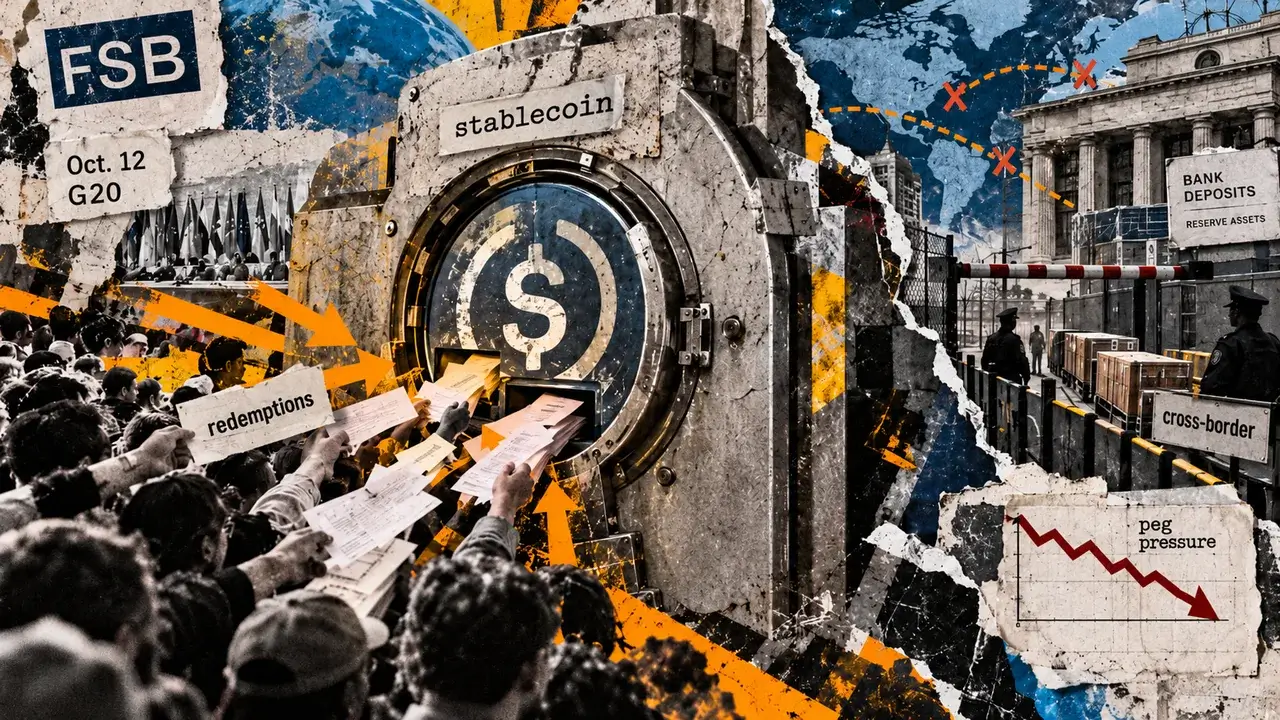
Furthermore, the Act’s implications extend to the Bank of England’s ongoing consultation on systemic stablecoin regulation. A regime that envisions stablecoins redeemable at par, integrated into payment systems, and subject to bank-like oversight necessitates a coherent underlying property law framework. If the Bank of England aims for systemic stablecoin issuers to meet prudential standards, ensure asset segregation, and establish clear redemption rights, courts require a solid legal basis for treating the stablecoins themselves as property that can be held, transferred, and recovered. The Digital Asset Act 2025 lays essential groundwork for this.
For the average UK crypto user, the benefits, while perhaps less visible, are substantial. For individuals holding Bitcoin or Ethereum on an exchange, the legal mechanisms designed to protect them during crises are now more robust. If their tokens are stolen, the process of freezing and recovering them is less reliant on improvisation. Participation in lending markets or collateral-backed products will be governed by agreements based on more straightforward legal principles. And as systemic stablecoins potentially integrate into everyday payments, the underlying property rules will be sufficiently advanced to support financial innovation.
The Act applies to England and Wales and Northern Ireland, providing a unified approach across most of the UK. While Scotland operates under its own distinct legal system, Scottish courts have been progressively aligning with similar legal trends. Consequently, the UK as a whole enters 2026 with a clearer and more established foundation for digital asset ownership than many other major jurisdictions. Compared to the EU’s Markets in Crypto-Assets (MiCA) framework, which focuses on regulation but largely defers property classification, and the fragmented US approach with state-level rules like UCC Article 12, the UK’s Digital Asset Act 2025 represents the most comprehensive statutory recognition of digital property in the Western world.
What the Act Does Not Do: Regulation Remains Separate
It is crucial to emphasize that the Digital Asset Act 2025 is a property law reform, not a regulatory one. It does not introduce tax rules, license custodians, rewrite Anti-Money Laundering (AML) obligations, or confer special status upon tokens. Its sole purpose is to eliminate the conceptual mismatch that previously made crypto-related legal cases feel like a forced application of inappropriate legal tools.
The significant regulatory work will continue to be undertaken by the Financial Conduct Authority (FCA) and the Bank of England over the next 18 months, particularly as the stablecoin regime solidifies into final rules. However, the fundamental property law foundation is now firmly established. For a decade, the crypto industry has often humorously remarked on the need to "bring English law into the twenty-first century." With this single-clause Act, a persistent problem that eluded metaphorical solutions has finally been addressed.
The courts now possess the essential legal category they required. Regulators have a clear runway for developing policy regarding systemic stablecoins. And individuals holding Bitcoin and Ethereum in the UK enter 2026 with more clearly defined rights than they possessed at the beginning of the year. The full impact of this legislative reform will unfold incrementally, case by case, dispute by dispute, as individuals experience losses, utilize collateral, or navigate the complexities of platform failures.