admin
admin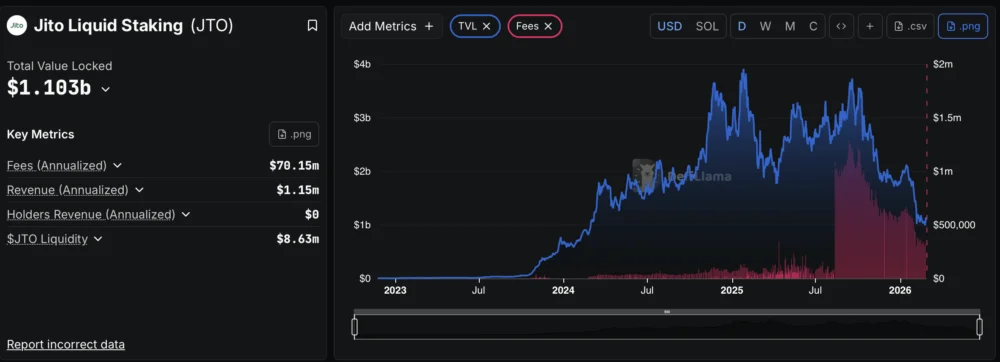
Nasdaq has officially submitted a proposed rule change to the United States Securities and Exchange Commission (SEC) to list and trade shares of the VanEck JitoSOL ETF, a pioneering investment vehicle designed to provide regulated exposure to the Solana-based liquid staking token, JitoSOL. The proposal, filed under Nasdaq Rule 5711(d), represents a significant escalation in the race to bring diversified digital asset products to the American public markets. If approved, the fund would become the first of its kind in the United States to hold a liquid staking token (LST) directly, marking a shift from traditional spot-based exchange-traded funds (ETFs) toward yield-bearing crypto-native assets.
The VanEck JitoSOL ETF is structured as a commodity-based trust that aims to track the performance of JitoSOL, a derivative token created by the Jito Network. Unlike traditional staking, where assets are locked and illiquid for a set period, liquid staking allows participants to secure a proof-of-stake network while receiving a transferable token in return. This token—in this case, JitoSOL—represents the user’s claim on the underlying staked Solana (SOL) plus any accrued rewards, including staking yield and Maximum Extractable Value (MEV) distributions.
The Mechanics of the JitoSOL Trust
According to the filing, the proposed trust would value its shares using the MarketVector JitoSol VWAP Close Index. This benchmark is meticulously calculated using pricing data aggregated from multiple high-volume trading platforms to ensure accuracy and mitigate the risk of price manipulation. A key feature of the proposal is the trust’s ability to facilitate both cash and in-kind creations and redemptions, a flexibility that has been a point of contention in previous ETF applications but was ultimately resolved during the approval process for spot Bitcoin and Ether funds.
Brian Smith, the president of the Jito Foundation, provided critical clarity on how the fund would handle the economic benefits of staking. In a statement, Smith noted that staking rewards would not be distributed as separate dividends or payouts to shareholders. Instead, because JitoSOL is a reward-bearing token that automatically compounds, the staking yield would be reflected directly in the fund’s net asset value (NAV). As the underlying SOL generates rewards on the Solana network, the value of each JitoSOL token increases relative to SOL, theoretically allowing the ETF’s share price to capture the total return of the staked asset without the need for complex distribution mechanisms.
Regulatory Foundations and the SEC Review Process
The Nasdaq filing strategically leans on the regulatory precedents established by the SEC’s prior approval of spot Bitcoin and spot Ether exchange-traded products (ETPs). The exchange argues that the JitoSOL proposal satisfies the rigorous standards for fraud prevention, market manipulation safeguards, and surveillance-sharing agreements. Notably, the filing acknowledges the absence of a regulated futures market for JitoSOL—a hurdle that initially delayed Bitcoin ETFs for years—but suggests that the SEC can approve the product through "other means," citing the maturity of the underlying Solana market and the high correlation between JitoSOL and the native SOL token.
The proposal includes extensive correlation data to support the claim that JitoSOL is economically comparable to SOL. This is a vital legal argument, as it seeks to position the liquid staking token as an asset that can be treated as analogous to its underlying base layer for the purposes of generic listing standards. These standards, which the SEC approved in September, were designed to streamline the listing of digital asset products that meet specific safety and transparency criteria without requiring individual, bespoke approvals for every fund.
Under the statutory requirements of the Securities Exchange Act, the SEC now faces a strict timeline. Once the proposal is published in the Federal Register, the agency has an initial 45 days to approve, disapprove, or institute proceedings to determine whether the proposal should be rejected. This window can be extended to a maximum of 90 days, setting a likely decision deadline for the middle of 2026.
A Chronology of Staking Exposure in US Markets
While the VanEck JitoSOL ETF represents a novel approach by focusing on a specific liquid staking token, it follows a series of incremental steps taken by asset managers to bring staking yield to US investors.
The timeline of regulated staking exposure began in earnest on July 2, 2024, with the launch of the REX-Osprey Solana + Staking ETF (SSK). This product was one of the first to combine spot Solana price exposure with on-chain staking rewards, though it functioned differently by distributing yield directly to shareholders. In September 2024, the same firm expanded its offerings with the REX-Osprey ETH + Staking ETF (ESK), which paired spot Ether exposure with monthly yield payouts.

By October 2024, industry giant Grayscale joined the fray. The firm integrated staking exposure into its existing Grayscale Ethereum Mini Trust ETF and the flagship Grayscale Ethereum Trust (ETHE). Furthermore, Grayscale enabled staking for its Solana Trust (GSOL), which is currently in the process of seeking regulatory approval to transition into a full-fledged ETP.
The VanEck proposal differs from these predecessors by holding JitoSOL—a pre-packaged, yield-bearing asset—rather than the fund manager performing the staking operations manually with native SOL. This "tokenized" approach to staking yield could offer a more efficient tax and operational structure for institutional investors.
The Jito Network and the Evolution of Solana DeFi
The Jito Network has become a cornerstone of the Solana ecosystem. JitoSOL is backed by SOL deposited into a staking pool that is distributed across a set of high-performance validators. What distinguishes Jito from other staking providers is its focus on MEV. By utilizing a specialized client, Jito validators can capture additional revenue from transaction ordering, which is then passed back to JitoSOL holders.
The growth of the protocol has been a bellwether for Solana’s broader decentralized finance (DeFi) health. According to data from DefiLlama, Jito’s total value locked (TVL) currently fluctuates around $1.1 billion. This follows a period of significant volatility; the protocol saw its TVL peak above $3.0 billion in 2025 during a surge in Solana network activity, before retracing to its current levels in early 2026.
The introduction of an ETF could provide a significant liquidity injection into the Jito ecosystem. By allowing traditional brokerage accounts to hold JitoSOL, the fund bridges the gap between the $100 trillion global wealth management industry and the specialized world of on-chain yield generation.
Legal Nuances and Potential Roadblocks
Despite the momentum, the path to approval is not without obstacles. The SEC’s Division of Corporation Finance has issued varying guidance on the nature of staking. In May 2024, staff indicated that certain protocol-level staking activities do not generally constitute the offer or sale of securities. This was followed by more specific staff guidance in August 2024 regarding liquid staking and staking receipt tokens.
However, these statements are characterized as "staff guidance" rather than formal rulemaking, meaning they do not carry the force of law and do not guarantee the approval of any specific financial product. The SEC has historically been cautious about "yield-bearing" products, often scrutinizing them under the Howey Test to determine if they represent investment contracts. VanEck’s filing attempts to circumvent these concerns by classifying the trust under commodity-based rules, arguing that the token is a digital representation of a commodity (SOL) rather than a share in a common enterprise.
Global Context and Market Implications
The United States is trailing behind Europe in the adoption of liquid staking products. In January 2024, 21Shares successfully launched a Jito-staked Solana ETP on European exchanges, providing a proof-of-concept for the product VanEck is now proposing for the American market. The success of the European product has demonstrated that there is institutional appetite for "total return" crypto products that capture both price appreciation and network yield.
The approval of the VanEck JitoSOL ETF would likely trigger a wave of similar filings for other liquid staking tokens, such as Lido’s stETH or Rocket Pool’s rETH. It would signal a maturation of the digital asset market, where investors are no longer satisfied with simple spot exposure but are instead seeking the native productivity of proof-of-stake assets.
For the Solana network, such an ETF would solidify its position as a leading institutional-grade blockchain. By facilitating easier access to JitoSOL, the ETF would indirectly support network security and validator decentralization, as more SOL is funneled through the Jito staking pool. As the SEC enters its review period, the industry remains watchful, recognizing that this filing could redefine the boundaries of what is possible within the regulated crypto investment landscape.