Nila Kartika Wati
The corporate arm of the Dogecoin Foundation has forged a significant partnership with Paxos, a regulated blockchain infrastructure provider, to integrate Dogecoin (DOGE) across its comprehensive brokerage and custody infrastructure. This strategic collaboration has the potential to substantially expand access to the popular memecoin through established and regulated financial channels, marking a notable step in Dogecoin’s journey toward broader institutional acceptance. The announcement, made on Monday, signifies that DOGE will now be available on Paxos’s robust brokerage and custody platform, enabling the company’s extensive network of fintech, payments, and institutional clients to evaluate and potentially support the integration of the cryptocurrency into their respective service offerings.
Paxos stands as a critical backbone in the digital asset landscape, providing crypto infrastructure for several leading fintech and brokerage platforms globally. Its clientele includes prominent names such such as PayPal, Venmo, Interactive Brokers, and Mercado Libre, underscoring the potential reach and impact of this new partnership. While the agreement does not automatically translate into these major financial entities immediately offering DOGE trading or custody services, it crucially lowers the barrier to entry. It makes Dogecoin readily available for Paxos clients to assess its viability, conduct due diligence, and ultimately decide whether to incorporate it into their own product suites, potentially opening the floodgates for wider adoption among their vast user bases.
The question of whether this partnership will translate into meaningful, widespread adoption remains a subject of close observation within the cryptocurrency market. Dogecoin, despite its origins as a satirical digital currency, has evolved to become the largest memecoin by market capitalization, currently standing at approximately $15.53 billion, according to CoinMarketCap data. Historically, DOGE has exhibited a strong correlation with broader crypto market sentiment, often mirroring the price movements of leading cryptocurrencies like Bitcoin (BTC) and Ether (ETH). However, institutional demand for Dogecoin has traditionally lagged behind that of these more established digital assets, which are often perceived as more fundamentally sound or having clearer use cases beyond speculative value.
Nevertheless, there are discernible signs indicating a gradual but steady expansion of institutional interest in Dogecoin. In a significant development, the Grayscale Dogecoin Trust, a private investment vehicle designed for accredited investors seeking exposure to DOGE, was launched. This initiative by Grayscale, a prominent digital asset manager, signaled a growing appetite among sophisticated investors to gain exposure to Dogecoin within a regulated and structured framework. Furthermore, asset manager 21Shares received approval to list its Dogecoin exchange-traded fund (ETF) in the United States earlier this year. The approval of an ETF is a pivotal moment for any cryptocurrency, as it provides a regulated and easily accessible investment product for a much broader range of investors, including those in traditional financial markets who may be hesitant to directly hold cryptocurrencies. These developments collectively underscore a maturing perception of Dogecoin within the institutional investment community, moving it incrementally beyond its meme-status origins.
Dogecoin’s Evolution: From Joke to Major Contender
To fully appreciate the significance of the Paxos partnership, it is essential to understand Dogecoin’s unique journey. Created in December 2013 by software engineers Billy Markus and Jackson Palmer, Dogecoin was initially conceived as a lighthearted alternative to Bitcoin, designed to poke fun at the speculative nature of cryptocurrencies. Its mascot, the Shiba Inu dog from the popular "Doge" internet meme, quickly endeared it to a burgeoning online community. Unlike Bitcoin’s finite supply, Dogecoin was designed with a relatively high and inflationary supply, producing 10,000 new DOGE every minute, which contributes to its low transaction fees and makes it suitable for micro-tipping and small transactions.
For years, Dogecoin remained a niche, community-driven project, primarily used for charitable fundraising and online tipping. Its robust and engaged community, often referred to as the "Doge Army," played a crucial role in its early growth. However, its trajectory dramatically shifted in 2021, largely fueled by endorsements from high-profile figures, most notably Tesla CEO Elon Musk. Musk’s frequent tweets about DOGE ignited a retail trading frenzy, propelling its price to unprecedented highs and significantly boosting its market capitalization. This period saw Dogecoin capture mainstream attention, demonstrating the immense power of social media and celebrity influence in the crypto space. While its price has since stabilized from those peak levels, the 2021 surge solidified Dogecoin’s position as a significant player in the broader cryptocurrency market, proving its resilience and appeal beyond its initial satirical intent. The establishment of the Dogecoin Foundation, with its corporate arm, further formalized efforts to support the cryptocurrency’s development and promote its utility.
Paxos: A Bridge Between Traditional Finance and Digital Assets

Paxos Trust Company holds a unique and critical position within the cryptocurrency ecosystem as a regulated blockchain infrastructure provider. Operating under a charter from the New York Department of Financial Services (NYDFS), Paxos is one of the few entities that can legally offer regulated crypto-asset services in the United States. This regulatory oversight is paramount, as it provides a layer of trust and compliance that is often lacking in the broader, often unregulated, crypto market.
Paxos’s core business involves enabling financial institutions to integrate blockchain and digital asset capabilities into their existing services. It offers a suite of products, including crypto brokerage, stablecoin issuance (such as Pax Dollar, USDP), and tokenization services. Its role as a regulated custodian means it can securely hold digital assets on behalf of clients, adhering to stringent security and compliance protocols. For traditional financial institutions like banks, brokerages, and payment processors, partnering with Paxos allows them to enter the digital asset space without having to build complex regulatory frameworks or develop specialized blockchain technology in-house. This "crypto-as-a-service" model is pivotal in bridging the gap between legacy financial systems and the emerging digital economy. The inclusion of DOGE in its offerings signifies Paxos’s commitment to responding to market demand and diversifying the range of digital assets accessible through its regulated channels, further solidifying its role as a key enabler for mainstream crypto adoption.
A Timeline of Dogecoin’s Institutional Ascent
Dogecoin’s journey toward institutional recognition has been a gradual, yet accelerating, process:
- 2013: Dogecoin is launched by Billy Markus and Jackson Palmer as a peer-to-peer digital currency, primarily intended as a joke.
- 2014-2020: DOGE gains a loyal community, used for online tipping and small charitable initiatives, but remains largely a retail-driven asset with minimal institutional interest.
- 2021: Elon Musk’s endorsements trigger a massive surge in DOGE’s price and public awareness. The Dogecoin Foundation is re-established with a renewed focus on network development and utility. This period marks the first significant mainstream and speculative institutional interest.
- Late 2021: Grayscale Investments files to launch a Dogecoin Trust, signaling early formal institutional consideration of DOGE as an investable asset, albeit for accredited investors.
- Early 2024: 21Shares receives approval to list a Dogecoin ETF in the United States, a landmark achievement that provides a regulated investment vehicle for a broader investor base, including those in traditional finance. This move significantly enhances DOGE’s accessibility and legitimacy.
- Current Partnership (Recently Announced): The Dogecoin Foundation’s corporate arm partners with Paxos, integrating DOGE into Paxos’s brokerage and custody infrastructure. This move makes DOGE available for evaluation by Paxos’s institutional clients, including major fintech and brokerage platforms.
These milestones collectively paint a picture of Dogecoin slowly but surely shedding its "joke" currency label and gaining traction within more conventional financial ecosystems. The Paxos partnership represents a critical inflection point, providing a direct conduit for regulated financial entities to engage with DOGE.
Broader Market Context: Sustained Outflows and Shifting Sentiment
The Paxos-Dogecoin partnership emerges against a backdrop of clear signs of subdued market appetite for digital assets across both institutional and retail circles. Recent data highlights a challenging period for the broader cryptocurrency market. Crypto exchange-traded products (ETPs) recorded a significant $1.67 billion in net outflows last week, marking the third consecutive week of withdrawals. The cumulative outflows over this three-week period have reached a substantial $4.21 billion, according to reports from CoinShares, a leading digital asset manager.
This pronounced pullback reflects a broader "risk-off" sentiment pervading various parts of the global financial markets. Investors are currently grappling with a confluence of macroeconomic and geopolitical concerns. Persistent inflation, particularly in key economies, continues to be a major worry, prompting central banks to maintain or consider higher interest rates, which typically makes riskier assets less attractive. Elevated energy prices, often driven by supply chain disruptions and geopolitical events, further compound inflationary pressures. Moreover, ongoing geopolitical tensions, particularly in the Persian Gulf and other volatile regions, contribute to market uncertainty and encourage investors to seek safer havens.
While investors have shown a tendency to rotate back into certain risk assets, such as high-performing artificial intelligence (AI) and semiconductor stocks, demand for digital assets has remained notably subdued. James Butterfill, head of research at CoinShares, suggests that this trend may partly reflect a lack of progress on the CLARITY Act, a proposed U.S. market structure bill for digital assets. The CLARITY Act aims to provide much-needed regulatory clarity for the cryptocurrency industry in the United States, which is often seen as a fragmented and uncertain landscape. The absence of a clear regulatory framework can deter institutional investors who prioritize legal certainty and consumer protection. Senator Cynthia Lummis, a vocal proponent of clear crypto regulation, has echoed similar concerns, suggesting that a lack of clarity in the U.S. could allow other nations to gain a competitive edge in the digital asset space.
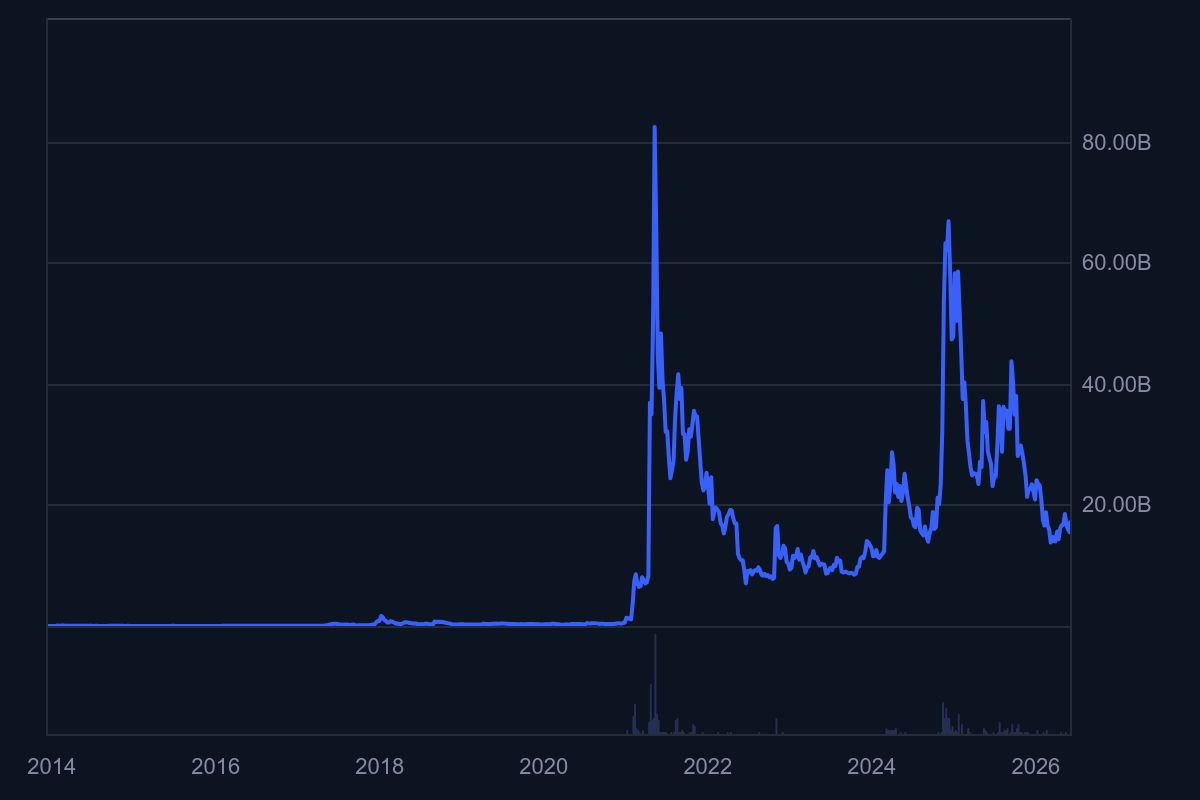
Further underscoring the slowdown, separate data from blockchain intelligence company TRM Labs points to a deceleration in retail adoption of cryptocurrencies. In April, TRM Labs reported that global crypto adoption declined by 11% in the first quarter of the year. This suggests a weakening participation from individual investors, despite the continued, albeit cautious, institutional engagement in select areas of the market. The confluence of these factors – institutional outflows, macroeconomic headwinds, regulatory uncertainty, and waning retail interest – paints a complex picture for the crypto market, making the Dogecoin-Paxos partnership’s timing particularly intriguing. It suggests a long-term strategic play by Dogecoin and Paxos, irrespective of immediate market fluctuations.
Implications and Future Outlook for Dogecoin and the Crypto Market
The partnership between the Dogecoin Foundation’s corporate arm and Paxos carries multifaceted implications for Dogecoin, Paxos, and the broader cryptocurrency industry.
For Dogecoin:
- Enhanced Legitimacy: The integration with a regulated entity like Paxos significantly bolsters Dogecoin’s legitimacy. It moves DOGE further away from its pure memecoin origins and closer to being recognized as a serious digital asset within traditional financial frameworks. This could help attract more conservative investors who prioritize regulatory compliance.
- Increased Accessibility: By making DOGE available through Paxos’s infrastructure, the potential for increased accessibility for both retail and institutional investors is enormous. If Paxos’s clients (like PayPal, Venmo) choose to offer DOGE, millions of users could gain easy access to buy, sell, and hold the cryptocurrency, potentially driving significant new demand.
- Potential for Price Impact: While immediate price speculation is unwarranted, a wider availability through regulated channels could, over time, lead to increased demand and potentially a more stable price floor for DOGE, as it becomes less reliant solely on speculative retail trading.
- Ecosystem Growth and Utility: Greater institutional acceptance could spur further development efforts within the Dogecoin ecosystem, focusing on enhancing its utility beyond just a store of value or tipping currency. This could involve integrations into DeFi protocols or payment solutions.
For Paxos:
- Diversified Offering: The inclusion of Dogecoin diversifies Paxos’s digital asset offerings, allowing it to cater to a broader range of client demands and market interests. This keeps Paxos competitive in a rapidly evolving industry.
- Reinforced Market Leadership: By being among the first regulated infrastructure providers to offer DOGE to its institutional clients, Paxos reinforces its position as a forward-thinking and comprehensive enabler of digital asset services for traditional finance.
For the Broader Crypto Industry:
- Mainstream Integration: This partnership represents another significant stride toward the seamless integration of digital assets into mainstream financial systems. It demonstrates that even assets with unconventional origins can find a place within regulated financial infrastructure.
- Regulatory Evolution: The move highlights the ongoing dialogue and evolution between innovation in digital assets and the necessity for robust regulatory frameworks. As more diverse assets enter regulated channels, it pushes regulators to adapt and clarify their stances.
- Memecoin Evolution: The acceptance of Dogecoin by a regulated entity like Paxos could set a precedent for other established memecoins, prompting a re-evaluation of their potential within regulated finance, provided they meet certain criteria for liquidity and market capitalization.
Challenges and Risks:
Despite the positive implications, challenges and risks remain. Dogecoin is still known for its volatility, which might deter some conservative institutional clients. The partnership doesn’t guarantee immediate adoption by Paxos’s clients, as each institution will conduct its own risk assessment and market analysis. Furthermore, the broader crypto market’s "risk-off" sentiment and regulatory uncertainties could temper the immediate impact of this development. The success of this partnership hinges on the willingness of Paxos’s clients to integrate DOGE and the continued maturation of the Dogecoin ecosystem.
In conclusion, the partnership between the Dogecoin Foundation’s corporate arm and Paxos is a landmark development for Dogecoin, signaling a tangible move towards institutional integration and wider accessibility through regulated financial channels. It reflects a growing recognition of Dogecoin’s market presence and potential, despite its unconventional genesis. While the broader cryptocurrency market navigates a period of subdued sentiment and regulatory uncertainty, this strategic alliance underscores a long-term vision for Dogecoin’s role in the evolving digital economy, positioning it for potential expansion beyond its current user base into the vast realm of traditional finance. Its ultimate impact will be measured by the degree of adoption by Paxos’s extensive client network and the sustained growth of interest in digital assets.