Lina Irawan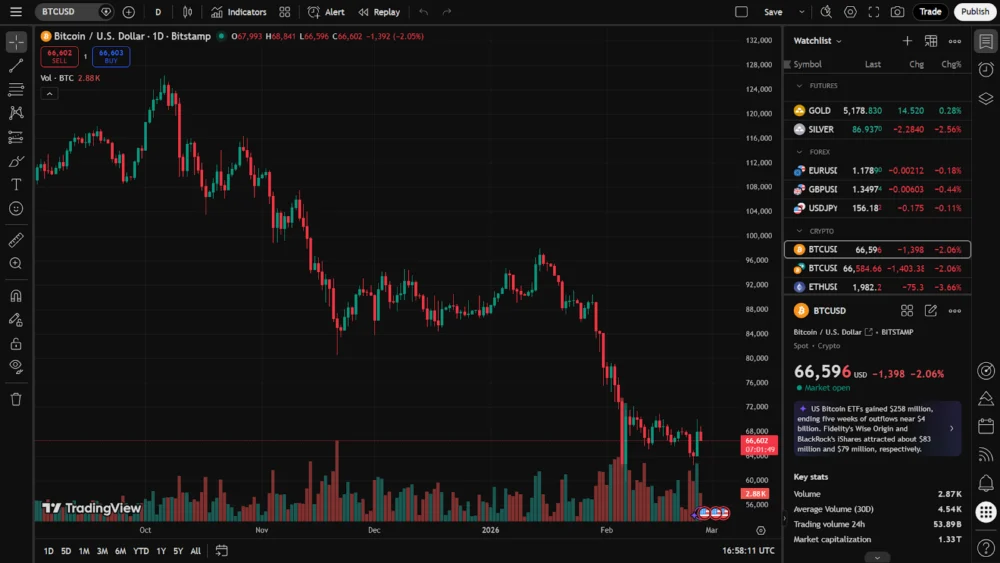
As the cryptocurrency landscape matures and the year 2026 approaches, the price prediction for Bitcoin (BTC) has become a focal point for investors and market analysts alike. This dynamic digital asset, which pioneered the entire blockchain revolution, continues to captivate global attention not only for its historical performance but also for its potential to redefine long-term investment portfolios. While current market sentiment offers a snapshot of today’s valuation, it often fails to fully encapsulate the underlying technological advancements, evolving macroeconomic currents, and intricate supply dynamics that are actively shaping Bitcoin’s future. The critical question for many remains: will Bitcoin ascend to new all-time highs, solidify its position as digital gold, or undergo further corrections before embarking on its next significant upward trajectory? This comprehensive forecast delves into market data-driven trends, expert projections, and key indicators poised to influence BTC’s path, offering clarity beyond the prevalent hype.
Bitcoin (BTC) Overview: The Digital Gold Standard
Bitcoin (BTC), launched in 2009, stands as the foundational cryptocurrency and the most recognized and widely traded digital asset globally. Its decentralized architecture, powered by a vast network of computers verifying transactions on a distributed ledger, ensures operation without reliance on any central authority. A core tenet of Bitcoin’s design is its finite supply, capped at 21 million coins. This inherent scarcity is a primary driver for its classification as "digital gold" and a potential hedge against inflation for many investors. The price projections for Bitcoin are consequently a complex interplay of market sentiment, historical performance data, and forward-looking analyses, reflecting a spectrum of both optimistic and cautious outlooks.
BTC Market Snapshot: A Trillion-Dollar Valuation
Currently, Bitcoin is trading in a significant price range, with figures often oscillating between $60,000 and $65,000 across major exchanges. This valuation solidifies its position as the largest cryptocurrency by market capitalization, consistently hovering around the trillion-dollar mark. Daily trading volumes typically range between $20 billion and $35 billion, indicative of deep liquidity and robust participation from both retail and institutional investors. Short-term price movements are particularly sensitive to macroeconomic data releases, the flow of funds into Bitcoin Exchange-Traded Funds (ETFs), and significant regulatory news.
Market sentiment surrounding BTC is often characterized by its reactivity, swiftly shifting from bullish optimism during upward trends to cautious apprehension during periods of correction. Recent price forecast models suggest a gradual long-term appreciation, underpinned by its limited supply and increasing adoption. However, volatility remains an intrinsic characteristic of Bitcoin’s market behavior. Compared to its historical peak valuations, Bitcoin continues to present opportunities for recovery narratives while simultaneously harboring downside risks, heavily influenced by broader market conditions.
BTC Price History and Performance: A Cycle of Growth and Correction
Since its inception as a peer-to-peer electronic cash system, Bitcoin has traversed distinct phases of expansion and contraction, significantly influencing broader cryptocurrency market sentiment and setting the pace for the entire industry.
- Early Days (2009-2013): Bitcoin emerged from the cypherpunk movement, initially a niche experiment for early adopters and technologists. Its value was negligible, with early transactions often involving the exchange of goods or services rather than fiat currency. By 2013, it had gained some traction, reaching a peak of over $1,000 before experiencing its first major correction.
- The Rise of Awareness (2014-2016): Following the early boom and bust, Bitcoin entered a period of consolidation and growing awareness. Mt. Gox, once the largest Bitcoin exchange, collapsed in early 2014, casting a shadow of doubt and highlighting the risks associated with nascent digital asset markets. However, development continued, and the underlying technology gained more attention.
- The 2017 Bull Run: This period marked Bitcoin’s dramatic surge into mainstream consciousness. Fueled by increasing retail interest and speculation, BTC reached an unprecedented all-time high of nearly $20,000 in December 2017. This was followed by a significant bear market that lasted through 2018.
- Institutional Interest and the 2020-2021 Bull Market: After a period of recovery, Bitcoin experienced another monumental bull run starting in late 2020, driven by increased institutional adoption, corporate treasury allocations, and the launch of Bitcoin ETFs in some jurisdictions. It surpassed its previous all-time high, reaching over $69,000 in November 2021.
- The 2022 Bear Market and Current Landscape: The subsequent year saw a significant market downturn, influenced by rising inflation, interest rate hikes by central banks, and the collapse of several prominent crypto firms. Bitcoin, along with the broader crypto market, experienced substantial price drops. However, the approval of spot Bitcoin ETFs in the United States in early 2024 has reignited interest and injected new capital into the market, leading to a renewed upward trend.
Bitcoin (BTC) Technical Analysis: Gauging Momentum and Trend
The technical outlook for Bitcoin suggests a structurally bullish asset that navigates established long-term support and resistance zones while reacting dynamically to short-term catalysts. Key technical indicators, including moving averages, the Relative Strength Index (RSI), and trading volume, are crucial tools for traders to decipher momentum shifts and gauge broader market sentiment. For investors engaged in Bitcoin mining or trading, understanding these signals is vital for optimizing accumulation strategies and managing risk effectively.
Moving Averages: Trend Indicators
Short-term moving averages for Bitcoin are currently tracking closely with its spot price, indicating immediate market sentiment. The 200-day moving average, however, serves as a critical gauge for long-term directional trends. When BTC trades consistently above its 200-day average, it generally signifies a bullish continuation and a strengthening market sentiment. Historically, a "golden cross"—where the 50-day moving average crosses above the 200-day moving average—has preceded extended periods of upside price action. Conversely, a "death cross," where the 50-day average falls below the 200-day, often signals a period of consolidation or potential downside pressure.
Relative Strength Index (RSI): Momentum Oscillator
The Relative Strength Index (RSI) for Bitcoin typically fluctuates between 40 and 60 during consolidation phases, indicating balanced momentum rather than extreme overbought or oversold conditions. Readings above 70 are generally interpreted as an asset being overextended and potentially due for a correction, while dips below 30 suggest oversold territory where buying interest might emerge. Recent RSI positioning has aligned with range-bound price action, reflecting neutral momentum rather than an immediate, aggressive breakout.
Key Price Levels: Support and Resistance Zones
Understanding key price levels is fundamental for strategic investment. These levels represent areas where buying pressure (support) or selling pressure (resistance) has historically been strong.
Support Levels (USD):
- S1: $60,000
- S2: $55,000
- S3: $50,000
- S4: $45,000
- S5: $40,000
Resistance Levels (USD):
- R1: $72,000
- R2: $75,000
- R3: $80,000
- R4: $85,000
- R5: $90,000
BTC Price Prediction 2027: A Forecast of Growth
Market analysis models project a significant upward trajectory for Bitcoin in the coming years, with specific forecasts for 2027 indicating substantial growth.
| Month | Minimum Price (USD) | Average Price (USD) | Maximum Price (USD) | Expected ROI (%) |
|---|---|---|---|---|
| Jan 2027 | $106,588 | $126,144 | $145,700 | +113% |
| Feb 2027 | $108,246 | $127,802 | $147,358 | +115% |
| Mar 2027 | $109,904 | $129,460 | $149,016 | +118% |
| Apr 2027 | $111,563 | $131,118 | $150,674 | +120% |
| May 2027 | $113,221 | $132,777 | $152,332 | +123% |
| Jun 2027 | $114,879 | $134,435 | $153,991 | +125% |
| Jul 2027 | $116,537 | $136,093 | $155,649 | +127% |
| Aug 2027 | $118,195 | $137,751 | $157,307 | +130% |
| Sep 2027 | $119,853 | $139,409 | $158,965 | +133% |
| Oct 2027 | $121,512 | $141,067 | $160,623 | +135% |
| Nov 2027 | $123,170 | $142,726 | $162,281 | +138% |
| Dec 2027 | $124,828 | $144,384 | $163,940 | +140% |
BTC Price Prediction 2028: Continued Ascent
The upward trend is projected to continue into 2028, with forecasts suggesting further significant gains.
| Month | Minimum Price (USD) | Average Price (USD) | Maximum Price (USD) | Expected ROI (%) |
|---|---|---|---|---|
| Jan 2028 | $126,140 | $145,731 | $165,322 | +154% |
| Feb 2028 | $127,790 | $147,381 | $166,972 | +156% |
| Mar 2028 | $129,440 | $149,031 | $168,622 | +159% |
| Apr 2028 | $131,091 | $150,682 | $170,273 | +162% |
| May 2028 | $132,741 | $152,332 | $171,923 | +164% |
| Jun 2028 | $134,391 | $153,982 | $173,573 | +167% |
| Jul 2028 | $136,041 | $155,632 | $175,223 | +169% |
| Aug 2028 | $137,692 | $157,283 | $176,874 | +172% |
| Sep 2028 | $139,342 | $158,933 | $178,524 | +174% |
| Oct 2028 | $140,992 | $160,583 | $180,174 | +177% |
| Nov 2028 | $142,643 | $162,234 | $181,825 | +179% |
| Dec 2028 | $144,293 | $163,884 | $183,475 | +182% |
Long-term Outlook: BTC Price Prediction (2026–2030)

Extending the analysis to the end of the decade reveals a robust long-term growth outlook for Bitcoin, contingent on continued adoption and market maturation.
| Year | Minimum Price (USD) | Average Price (USD) | Maximum Price (USD) |
|---|---|---|---|
| 2026 | $60,000 | $105,000 | $150,000 |
| 2027 | $70,000 | $115,000 | $200,000 |
| 2028 | $85,000 | $120,000 | $200,000 |
| 2029 | $110,000 | $150,000 | $300,000 |
| 2030 | $140,000 | $185,000 | $400,000 |
What Factors Influence Bitcoin’s Price?
Bitcoin’s valuation is a complex phenomenon influenced by a confluence of interacting forces. Understanding these factors is crucial for interpreting market movements and informing any price forecast.
Supply and Scarcity: The Finite Nature of Bitcoin
With a hard cap of 21 million coins, Bitcoin’s fixed supply is a fundamental driver of its long-term value proposition. Scheduled "halving" events, which occur approximately every four years, reduce the rate at which new Bitcoins are issued, thereby tightening circulation. Historically, these events have often preceded significant upward price cycles, particularly when demand remains robust. The next halving is anticipated in 2024, which analysts believe could contribute to upward price pressure in the subsequent years.
Market Demand and Adoption: The Growing Ecosystem
The level of demand for Bitcoin is directly impacted by institutional investment, the inflow of capital into Bitcoin ETFs, corporate treasury allocations, and sustained retail participation. As adoption accelerates across various sectors, increased buying pressure can propel Bitcoin into new trading ranges. The increasing integration of Bitcoin into traditional financial products and services signals a growing acceptance and utility, which is a key determinant of future price action.
Market Sentiment and Media Influence: The Psychological Factor
Investor psychology plays a potent role in short-term market fluctuations. Positive news cycles, optimistic macroeconomic outlooks, and favorable technical signals can fuel rally momentum. Conversely, periods of fear, uncertainty, and doubt (FUD) often amplify sell-offs. Media coverage, social media trends, and influential figures within the crypto space can significantly sway public perception and, consequently, market sentiment.
Macroeconomic Conditions: The Global Economic Climate
Broader macroeconomic factors, including interest rates, inflation trends, and global liquidity conditions, have a substantial impact on risk assets, including Bitcoin. In environments characterized by monetary easing and low-interest rates, capital often seeks higher yields in alternative assets like Bitcoin. Conversely, periods of monetary tightening and economic uncertainty can lead investors to de-risk, potentially impacting Bitcoin’s price negatively.
Regulation and Policy Developments: The Legal Framework
Governmental decisions regarding cryptocurrency taxation, the regulation of exchanges, and the approval of financial products like Bitcoin ETFs can rapidly alter market expectations and investor confidence. Clear, supportive regulatory frameworks tend to foster greater institutional and retail participation, strengthening market stability. Conversely, restrictive policies or regulatory uncertainty can temporarily suppress momentum and introduce volatility.
Key Risks That Could Impact BTC’s Forecast
Despite the generally positive long-term outlook, several inherent risks could alter Bitcoin’s expected trajectory and necessitate revisions to any price forecast.
- Regulatory Crackdowns: Unforeseen or overly restrictive regulations in major economies could stifle adoption and create significant downward price pressure.
- Technological Vulnerabilities: While unlikely for Bitcoin’s core protocol, potential vulnerabilities in related infrastructure or emerging blockchain technologies could erode confidence.
- Macroeconomic Shocks: A severe global recession or unexpected geopolitical events could lead to a broad deleveraging across all asset classes, including cryptocurrencies.
- Competition from Altcoins: The emergence of more technologically advanced or widely adopted alternative cryptocurrencies could, in the long term, challenge Bitcoin’s dominance.
- Environmental Concerns: Ongoing debates and potential regulatory action related to Bitcoin’s energy consumption could impact its public image and investor sentiment.
Final Thoughts: Navigating the Future of Bitcoin
Bitcoin continues to represent an asset class with substantial potential, albeit accompanied by significant risks. Its future trajectory is intricately linked to evolving adoption trends, dynamic macroeconomic forces, and the ongoing development of regulatory clarity worldwide. While long-term projections paint a picture of continued growth, short-term price volatility necessitates careful consideration of entry and exit strategies. Investors are strongly advised to thoroughly evaluate prevailing market conditions, their personal risk tolerance, and their broader portfolio strategy before acting on any price forecast. A balanced approach that integrates diligent research, technical awareness, and disciplined risk management remains paramount for successfully navigating the complex and evolving landscape of Bitcoin’s future.
FAQs
-
Will Bitcoin reach $100,000 by 2030?
Many long-term forecasts suggest that Bitcoin has the potential to surpass $100,000 by or before 2030, contingent on sustained adoption growth, consistent institutional demand, and overall macroeconomic stability. -
Is Bitcoin a good long-term investment?
Supporters view Bitcoin as a strong long-term investment due to its fixed supply and historical growth patterns. However, it is crucial to acknowledge its substantial price volatility and inherent risks. -
What will Bitcoin be worth in 2026?
Projections for 2026 generally place Bitcoin within a broad range, with more bullish models indicating potential for six-figure valuations, while more conservative estimates suggest moderate but significant growth. -
Is now a good time to buy Bitcoin or should I wait for a dip?
Timing the market precisely is notoriously difficult. While Bitcoin may present opportunities during consolidation phases, many investors opt for a gradual accumulation strategy rather than attempting to perfectly time market bottoms. -
How does the Bitcoin halving affect BTC’s price?
The Bitcoin halving reduces the rate of new supply entering circulation. Historically, this supply shock has often preceded upward price cycles in the months following the event. -
Does Bitcoin follow a 4-year market cycle?
Historically, Bitcoin has exhibited market cycles that closely align with its four-year halving schedule. However, as the market matures, future performance may exhibit deviations from these historical patterns.