Lina Irawan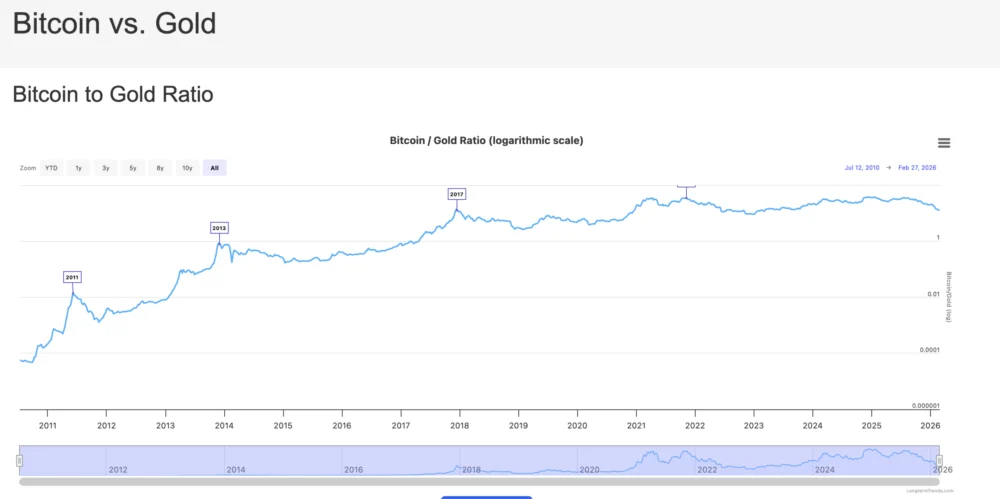
The cryptocurrency market is experiencing a significant resurgence, marked by Bitcoin’s decisive breach of the $70,000 resistance level. This pivotal moment has not only injected renewed optimism into the broader Web3 ecosystem but has also ignited a vigorous discussion among economists, financial analysts, and investors regarding a potential capital rotation away from traditional gold and into Bitcoin. This analysis delves into the ramifications of Bitcoin’s spectacular comeback and its potential implications for the global macroeconomic landscape.
Bitcoin Surpasses a Critical Psychological and Technical Threshold
For participants in the digital asset space, crossing significant price levels like $70,000 transcends mere numerical achievement; it represents a crucial psychological milestone. The sustained ascent above this mark is a potent indicator of strong bullish sentiment, reverberating across various sectors of the crypto market, from decentralized finance (DeFi) and non-fungible tokens (NFTs) to the more speculative memecoin arena.
Following a period of consolidation and testing of lower support levels, Bitcoin’s return to the $70,000 territory suggests continued robust demand, particularly from institutional investors. The consistent inflows into Spot Bitcoin Exchange-Traded Funds (ETFs) in the United States, approved in early 2024, appear to be a key driver. These inflows are demonstrating a persistent appetite for Bitcoin, effectively preventing a descent into a prolonged bearish phase, often referred to as a "crypto winter."
The approval of Spot Bitcoin ETFs marked a watershed moment for the cryptocurrency industry. These regulated investment vehicles provide a familiar gateway for traditional investors to gain exposure to Bitcoin without the complexities of direct digital asset custody. Since their inception, these ETFs have experienced unprecedented demand, amassing billions of dollars in assets under management within a remarkably short timeframe. This institutional embrace underscores a growing maturity and acceptance of Bitcoin as a legitimate asset class within mainstream finance.

The Evolving Relationship Between Bitcoin and Gold
Bitcoin has frequently been analogized to "Digital Gold" due to its inherent scarcity, capped at a finite supply of 21 million coins, and its perceived role as a store of value and hedge against inflation. However, the intricate relationship between these two distinct asset classes warrants a nuanced examination.
Historical Correlation: A Shared Haven?
Historically, periods of heightened inflation or significant geopolitical instability have often seen capital flow into both gold and Bitcoin as perceived safe-haven assets. Examining historical price charts reveals cyclical periods where Bitcoin and gold have moved in tandem, suggesting that investors do indeed consider Bitcoin as a modern, albeit digital, equivalent to gold. For instance, during the initial stages of the COVID-19 pandemic in early 2020 and subsequent global economic uncertainty, both assets experienced upward price pressure as investors sought refuge from market volatility. Similarly, the banking crises of 2023 saw renewed interest in both gold and Bitcoin as investors looked for alternatives to traditional financial institutions.
Moments of Decoupling: Bitcoin’s Unique Catalysts
Despite these periods of correlation, history is replete with instances where Bitcoin has surged dramatically, diverging significantly from gold’s price trajectory. These moments of decoupling are often driven by catalysts unique to the cryptocurrency market. When traditional markets exhibit sideways movement or even minor downturns, Bitcoin can experience explosive growth fueled by events such as:

- Halving Events: The programmed reduction in Bitcoin’s block reward, which occurs approximately every four years, inherently decreases the rate at which new Bitcoins are created, thereby enhancing scarcity and often preceding significant price rallies. The most recent halving, occurring in April 2024, is a prime example of such an event.
- Growth in DeFi and NFTs: The rapid expansion and innovation within the DeFi and NFT sectors have attracted substantial capital and developer talent, creating new use cases and demand for cryptocurrencies, including Bitcoin.
- Institutional Capital Inflows: As seen with the recent ETF approvals, substantial inflows of institutional capital can dramatically impact Bitcoin’s price, often independent of broader market trends.
Moreover, Bitcoin’s nature as a more agile, risk-on asset means it can react more intensely to shifts in global liquidity and technological advancements. While gold’s price is influenced by a complex interplay of central bank policies, jewelry demand, and industrial applications, Bitcoin’s valuation is more directly tied to network effects, adoption rates, regulatory developments, and the overall sentiment within the digital asset ecosystem.
The Hypothesis of Capital Rotation from Gold to Bitcoin
The recent confluence of Bitcoin touching the $70,000 mark while gold exhibits signs of cooling off has significantly amplified the "capital rotation" hypothesis. This theory posits that investors are actively reallocating capital from traditional gold holdings into Bitcoin, viewing the latter as a more compelling investment opportunity in the current economic climate.
Since the U.S. approval of Spot Bitcoin ETFs, a discernible shift in wealth allocation has been observed. Data from financial analytics firms indicate that inflows into Bitcoin ETFs have been exceptionally strong, reaching record-breaking levels in a short period. Concurrently, several regions have reported outflows from gold-backed ETFs. This trend suggests a growing perception among both new-generation investors and seasoned fund managers that Bitcoin represents a more efficient and potentially higher-yielding capital allocation tool compared to the established, yet perhaps less dynamic, stability of gold.
This shift can be attributed to several factors. Bitcoin’s transparent, decentralized ledger and its finite supply offer a unique form of digital scarcity that resonates with a generation accustomed to digital innovation. Furthermore, the narrative of Bitcoin as a hedge against inflation and a store of value is gaining traction, bolstered by its performance during periods of economic uncertainty. While gold has historically been the undisputed safe haven, Bitcoin’s rapid appreciation and its increasing integration into the mainstream financial system are challenging this long-held paradigm.
Assessing the Sustainability of the $70,000 Breakout
A crucial question facing traders and long-term investors is whether the $70,000 level represents a sustainable breakout or a temporary surge. For this new price territory to be firmly established, analysts are closely monitoring several key indicators:

- Sustained Inflows into Spot Bitcoin ETFs: Continued robust demand for Bitcoin through regulated ETF products is a critical indicator of institutional conviction. Persistent inflows suggest that large financial players are not only entering the market but are also committed to long-term positions. Data from providers like BlackRock and Fidelity have consistently shown significant daily inflows, reinforcing this trend.
- Retail Investor Sentiment and On-Chain Activity: While institutional money plays a significant role, broader market strength often depends on sustained retail participation. Metrics such as active wallet addresses, transaction volumes, and social media sentiment surrounding Bitcoin can provide insights into retail investor confidence. An increase in these indicators would suggest a more broadly based rally.
- Macroeconomic Conditions and Regulatory Landscape: The broader economic environment, including inflation rates, interest rate policies from central banks, and global geopolitical stability, will continue to influence investor risk appetite. Positive developments in these areas, coupled with a clear and supportive regulatory framework for digital assets globally, would further bolster the case for a sustainable Bitcoin breakout. Conversely, unexpected hawkish monetary policy shifts or stringent regulatory crackdowns could pose challenges.
Broader Implications and Future Outlook
Bitcoin’s sustained presence above $70,000 is a profoundly bullish signal for the digital asset market. While definitively stating that capital is being "drained" from gold to exclusively fund Bitcoin’s rise might be an oversimplification, the evidence points towards a significant and growing trend of reallocation. "Digital Gold" is increasingly solidifying its position as a prominent asset within diversified global investment portfolios, challenging traditional safe-haven assets.
The implications of this evolving asset allocation strategy are far-reaching. It suggests a fundamental shift in how value is perceived and stored in the 21st century, driven by technological innovation and a growing distrust in traditional financial systems. For the broader macroeconomic landscape, this could mean a recalibration of traditional portfolio diversification strategies and a renewed focus on understanding and integrating digital assets.
The next phase of the cryptocurrency journey promises to be dynamic and potentially explosive. As Bitcoin continues to mature as an asset class, its influence on global markets is expected to grow, making it imperative for investors, policymakers, and economists to closely observe its trajectory and its evolving role in the global financial order. The narrative of Bitcoin as a digital store of value, a hedge against inflation, and a burgeoning asset class is gaining undeniable momentum, potentially ushering in a new era of investment and wealth management.