admin
admin
The European Union’s landmark Markets in Crypto-Assets (MiCA) regulation is exerting a significant dampening effect on new cryptocurrency exchange listings worldwide, forcing a global recalibration of digital asset market strategies. While MiCA is not the EU’s first foray into crypto regulation, its comprehensive scope and specific focus on the rapidly expanding Decentralized Finance (DeFi) sector mark a pivotal moment for the industry. The regulation’s "extraterritorial scope" means its influence extends beyond EU member states, impacting any entity that offers services to EU customers or utilizes the Euro, regardless of its physical location. This broad reach, coupled with increasing regulatory scrutiny in other major markets like the United States, is leading to a more cautious approach to new token listings across the globe.
The Genesis and Scope of MiCA
The Markets in Crypto-Assets (MiCA) regulation, a comprehensive legislative framework established by the European Union, was designed to harmonize and supervise the digital asset market across all member states. Its objective is to create a unified and predictable regulatory environment for a sector characterized by rapid innovation and evolving risks. MiCA’s provisions cover a wide array of digital assets, including utility tokens, security tokens, and importantly, stablecoins, establishing clear rules for their issuance, trading, and custody.
While prior EU directives have touched upon aspects of digital assets, MiCA represents the most ambitious and far-reaching attempt to date to specifically address the unique challenges and opportunities presented by the fast-growing DeFi market. Its ambitious timeline saw the stablecoin legislation component go live at the end of June, even as the full implementation of the broader framework is anticipated by December. This staggered rollout has already begun to ripple through the global crypto ecosystem.
The regulation’s "extraterritorial scope" is a key factor amplifying its impact. It mandates that companies and exchanges headquartered outside the EU must comply with its provisions if they wish to offer services to EU citizens or conduct transactions denominated in Euros. This broad application significantly influences a substantial portion of the global crypto market, compelling many international players to reassess their operational strategies and compliance protocols.
Shifting Tides: The Impact on New Listings
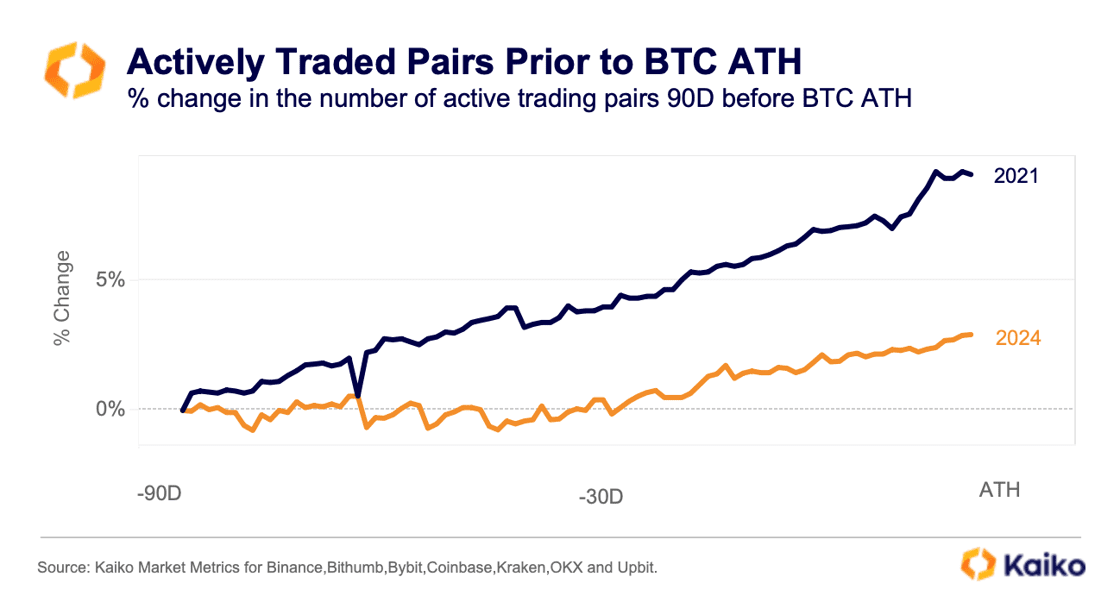
Data compiled by Kaiko, a leading cryptocurrency market data provider, reveals a discernible slowdown in the rate of new cryptocurrency exchange listings since the peak of the 2021 bull run. This trend is characterized by a reduced growth rate in new trading pairs across major exchanges that serve customers in both the EU and the US. According to Kaiko’s analysis, the growth rate of new trading pairs has declined from a high of 9% prior to Bitcoin’s all-time high in 2021, to a mere 3% leading up to its 2024 peak. This significant deceleration suggests a growing hesitancy among exchanges to onboard new digital assets, a shift directly attributable to the evolving regulatory landscape.
Figure 1: Percentage Change in Active Trading Pairs on Centralized Exchanges (2021 vs. 2024)
[Insert Graph depicting the percentage change in the number of active trading pairs on centralized exchanges in 2021 and 2024, sourced from Kaiko]
Graph showing the percentage change in the number of active trading pairs on centralized exchanges in 2021 and 2024 (Source: Kaiko)

The implications of this slowdown are multifaceted. For new projects seeking to gain market traction and liquidity, the increased difficulty in securing exchange listings can pose a significant hurdle. It may necessitate longer development cycles, more robust compliance efforts, and a greater reliance on community-driven initiatives to build awareness and adoption before even considering a public listing. For investors, the reduced number of new listings could translate to fewer speculative opportunities, potentially leading to a more mature and less volatile market.
Regulatory Pressure in the United States: A Parallel Influence
The regulatory environment in the United States has also played a crucial role in shaping the global sentiment towards new crypto listings. With the 2024 Presidential elections on the horizon, digital assets, particularly Bitcoin, have become an increasingly prominent political frontier. This heightened political attention has unfortunately coincided with a period of significant regulatory uncertainty, leaving companies and exchanges operating within the US on edge.
The US Securities and Exchange Commission (SEC) has been actively pursuing enforcement actions against various crypto entities, citing concerns over unregistered securities offerings and investor protection. These actions, coupled with the ongoing debate about the classification of digital assets, have created a climate of apprehension. Exchanges are becoming more risk-averse, scrutinizing potential listings with a finer-tooth comb to avoid potential legal repercussions. This cautious stance, driven by the fear of regulatory enforcement, directly contributes to the overall decline in new listings.
Exchange-Specific Trends and Strategic Adjustments
The impact of these regulatory pressures is not uniform across all exchanges. Data reveals distinct trends at the platform level. Binance, the world’s largest cryptocurrency exchange by trading volume, has experienced a slower pace of new active trading pair growth. Its active trading pair count remains 14% below its 2022 peak. While MiCA is a significant contributor to this slowdown for Binance’s European operations, the exchange has also faced a confluence of global challenges.
Lingering regulatory troubles in various jurisdictions, alongside the legal charges faced by its founder and former CEO, Changpeng Zhao, have undoubtedly impacted its growth trajectory and strategic decisions. The legal battles faced by Binance.US in the past year have also played a substantial role in diminishing its perceived global dominance, further influencing its approach to expanding its offerings.
In stark contrast, exchanges like Bybit have demonstrated resilience and even growth in their active trading pair numbers, reaching an all-time high during the market rally in May. This divergence can be largely attributed to Bybit’s customer base, which predominantly resides in regions outside the EU. This geographical distribution allows Bybit to navigate the MiCA regulations with less direct impact on its core operations.
A similar trend is observable in South Korean exchanges, most notably Bithumb. These platforms have witnessed a surge in new listings, with Bithumb’s growth in new listings surpassing that of Upbit. This rapid expansion has, in turn, attracted increased regulatory attention within South Korea, where authorities are still grappling with the development of a comprehensive regulatory framework for the digital asset industry. The dynamic regulatory landscape in emerging markets, often characterized by a more accommodative stance towards innovation, can present opportunities for exchanges to expand their offerings, albeit with the potential for future regulatory adjustments.
Figure 2: Number of Active Newly Listed Trading Pairs on Centralized Exchanges (Jan 2020 – July 2024)
[Insert Graph depicting the number of active newly listed trading pairs on centralized exchanges from January 2020 to July 2024, sourced from Kaiko]
Graph showing the number of active newly listed trading pairs on centralized exchanges from January 2020 to July 2024 (Source: Kaiko)
The Broader Implications for the Crypto Market
The deceleration in new exchange listings, coupled with a notable shift towards stablecoin trading pairs, contributes to a broader cooling of the overall growth rate of the cryptocurrency market. This suggests a maturation of the market, moving away from the speculative frenzy of previous years towards a more sustainable and regulated future.
However, emerging markets are exhibiting a different dynamic, demonstrating significant resilience and an increased demand for cryptocurrencies. This demand is fueled by a complex interplay of factors, including high inflation rates, currency volatility, and, in some regions, a less stringent regulatory environment. In these markets, cryptocurrencies are increasingly viewed as a hedge against economic instability and a means of accessing financial services where traditional avenues are limited.
The implications of this global regulatory divergence are profound. While established markets like the EU and the US are prioritizing investor protection and market integrity through stricter oversight, other regions may become hubs for innovation and adoption, albeit with potentially higher inherent risks. This could lead to a fragmented global crypto landscape, where regulatory arbitrage becomes a key strategic consideration for businesses operating in the sector.
The focus on stablecoin pairs, as indicated by Kaiko’s data, suggests a growing preference for assets perceived as less volatile and more aligned with traditional financial instruments. This trend, likely amplified by MiCA’s specific provisions for stablecoins, indicates a strategic pivot by exchanges and traders alike, prioritizing utility and stability over pure speculative growth.
The long-term impact of MiCA and similar regulatory initiatives will likely be the creation of a more robust and trustworthy digital asset ecosystem. While the immediate consequence is a slowdown in new listings and a period of adjustment, this regulatory clarity is essential for attracting institutional capital and fostering broader mainstream adoption. The industry is at a critical juncture, where the balance between innovation and regulation will ultimately determine its trajectory and its role in the future of finance. The current slowdown in new exchange listings serves as a tangible indicator of this ongoing transformation, a signal that the era of unfettered expansion is giving way to a more measured and compliant phase of development.