Nila Kartika Wati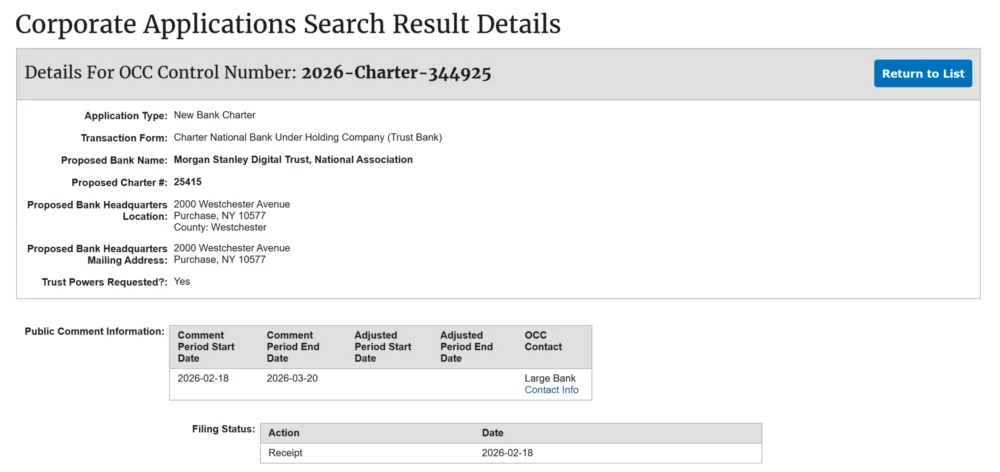
The intersection of national security, cutting-edge artificial intelligence, and the evolving financial landscape saw significant developments today, as Anthropic CEO Dario Amodei sharply criticized the Pentagon’s decision to label his company a "supply chain risk." This pronouncement, described by Amodei as "unprecedented," came swiftly before rival AI firm OpenAI announced a landmark agreement to deploy its AI models on classified Pentagon networks. Simultaneously, the financial sector witnessed a major move as Wall Street titan Morgan Stanley applied for a national trust bank charter, signaling its intent to significantly expand its digital asset services to include custody, trading, and staking for clients. These events underscore the rapidly shifting dynamics in technology, defense, and finance, highlighting critical ethical debates in AI deployment and the accelerating institutional adoption of cryptocurrencies.
The AI Geopolitics Shift: Anthropic vs. OpenAI and the Pentagon
The dramatic turn of events concerning two of the leading generative AI developers, Anthropic and OpenAI, and their relationship with the United States Department of Defense, unfolded with striking speed. On Friday, the U.S. government issued a directive that sent shockwaves through the tech industry, designating Anthropic, a prominent domestic AI company, as a "supply chain risk." This label, typically reserved for foreign entities or components deemed to pose a threat to national security, immediately raised questions about its implications for the future of AI development and military collaboration.
Unprecedented Designation: Anthropic Labeled a "Supply Chain Risk"
Dario Amodei, the chief executive officer of Anthropic, wasted no time in publicly responding to the Pentagon’s decision, calling it "unprecedented." The designation, announced by "Secretary of War" Pete Hegseth, effectively places restrictions on federal agencies, requiring defense contractors to certify that they are not utilizing Anthropic’s models in their operations. This move is particularly jarring given Anthropic’s established history as a significant partner to the Department of Defense, having previously engaged in various collaborations and discussions regarding AI applications for national security. The company has been at the forefront of developing "Constitutional AI," a method aimed at aligning AI models with human values through a set of guiding principles, emphasizing safety and ethical deployment.
The "supply chain risk" designation is a powerful tool used by the U.S. government to mitigate vulnerabilities in its critical infrastructure and defense systems. Its application to a domestic, ostensibly allied technology firm suggests a profound disagreement or concern that goes beyond typical contractual disputes. While the precise details underpinning the Pentagon’s rationale for this classification were not immediately made public, the severity of the label implies a fundamental divergence on strategic or operational principles, rather than a mere technical incompatibility.
Anthropic’s Ethical Stance and Red Lines
Amodei’s response shed light on the core of this divergence. He explicitly stated that Anthropic had agreed with virtually all AI use cases proposed by U.S. defense officials, with two critical exceptions: fully autonomous weapons platforms and mass domestic surveillance. These two areas, Amodei emphasized, represent fundamental ethical boundaries for the company, deeply rooted in principles he views as essential to American society.

Speaking to CBS News, Amodei articulated his concerns, stating, "These are things that are fundamental to Americans: the right, not to be spied on by the government, the right for our military officers to make decisions about war, themselves, and not turn it over completely to a machine." This statement encapsulates Anthropic’s commitment to human oversight in critical decision-making processes, particularly those involving lethal force or invasive surveillance. The company’s stance aligns with a growing global debate among AI ethicists, policymakers, and civil society organizations about the dangers of "killer robots" and the potential for AI to undermine civil liberties. Anthropic’s "red lines" reflect a broader philosophical position on the responsible development and deployment of advanced AI, advocating for a human-centric approach that prioritizes accountability and avoids unchecked technological power. This ethical framework, a cornerstone of Anthropic’s identity and research, appears to have directly clashed with the Pentagon’s strategic objectives or desired operational flexibility for AI integration.
OpenAI Secures Landmark Pentagon Contract
In a dramatic twist that intensified the unfolding narrative, just hours after the White House’s directive against Anthropic, rival AI powerhouse OpenAI announced its own significant partnership with the Department of Defense. OpenAI CEO Sam Altman, in a late Friday post on X (formerly Twitter), revealed that his company had reached an agreement to deploy its artificial intelligence models on classified military networks. This move marks a substantial shift for OpenAI, which historically maintained a public posture of caution regarding military applications, particularly concerning autonomous weapons.
Altman’s announcement underscored what he described as the Pentagon’s "deep respect for safety" and a willingness to operate within OpenAI’s established "operating limits." While the specifics of these limits and the scope of the deployment on classified networks were not fully detailed, the agreement suggests that OpenAI has found a way to reconcile its commercial and research interests with the stringent requirements and ethical considerations of military deployment. This could involve applications such as advanced data analysis for intelligence gathering, predictive logistics, cybersecurity threat detection, or enhanced decision support systems, all operating within secure, isolated environments. The ability to deploy models on "classified networks" is a critical differentiator, indicating a high level of trust and technical integration not easily achieved, given the sensitive nature of military data and operations.
A Swift Reversal: Chronology of Events
The rapid succession of these events paints a picture of a turbulent day for the AI sector and its relationship with the U.S. government:
- Early Friday: Defense Secretary Pete Hegseth publicly labels Anthropic a "Supply-Chain Risk to National Security."
- Simultaneously: President Donald Trump issues a directive instructing all U.S. federal agencies to immediately cease using Anthropic technology, providing a six-month transition period for agencies already reliant on its systems.
- Late Friday: OpenAI CEO Sam Altman announces a new agreement to deploy OpenAI’s AI models on classified U.S. Department of Defense networks.
This chronology suggests a coordinated and decisive pivot by the U.S. government, sidelining one major AI partner while immediately embracing another. The timing raises questions about potential pre-existing negotiations or a swift reaction to Anthropic’s firm ethical stance.
Broader Implications for AI and National Security
The events of Friday carry profound implications for the future of AI development, national security, and the competitive landscape of the technology industry.

- Competitive Landscape: The immediate beneficiary appears to be OpenAI, which gains a significant foothold within the highly sensitive and well-funded defense sector. This could provide them with invaluable experience in deploying AI in high-stakes environments and access to unique datasets (albeit classified) for model refinement, further cementing their position as a leading AI provider. For Anthropic, the "supply chain risk" label is a substantial blow, potentially impacting future government contracts and even commercial partnerships that are sensitive to government approvals.
- AI Ethics and Military Use: The divergence highlights the ongoing tension between technological advancement and ethical considerations in military AI. Anthropic’s principled stand could galvanize other AI companies and researchers to define their own ethical boundaries, potentially leading to a more fragmented ecosystem where companies align with different governmental or organizational philosophies regarding AI deployment. Conversely, it could also pressure companies to be more flexible with military applications to secure lucrative contracts.
- Government Policy and Oversight: The Pentagon’s decisive action underscores the government’s growing assertiveness in shaping the AI industry to meet national security objectives. It suggests a willingness to take strong measures against perceived risks, even from domestic partners. This could lead to increased regulatory scrutiny, clearer guidelines, or even a more centralized approach to AI procurement for defense purposes.
- Public Perception: The public fallout and online backlash reflect deep societal concerns about AI’s role in warfare and surveillance. The transparency (or lack thereof) surrounding these decisions will be crucial in shaping public trust in both AI developers and government agencies utilizing these powerful technologies. The incident is likely to fuel debates about the appropriate level of civilian oversight and ethical guardrails for AI in military contexts.
Wall Street Embraces Digital Assets: Morgan Stanley’s Crypto Leap
While the AI world grappled with geopolitical shifts, the financial sector continued its inexorable march towards deeper integration with digital assets. Morgan Stanley, one of the largest and most influential investment banks globally, made a significant strategic move by applying for a de novo national trust bank charter. This application signals a major escalation in the bank’s commitment to the cryptocurrency space, positioning it to offer a comprehensive suite of digital asset services to its institutional clients.
Seeking a National Trust Charter: Morgan Stanley Digital Trust
The application, filed with the Office of the Comptroller of the Currency (OCC) and publicly listed under the name "Morgan Stanley Digital Trust, National Association," represents a crucial step for the banking giant. A "de novo national trust bank charter" is a specialized license that allows financial institutions to operate as a trust bank, primarily focused on fiduciary activities such as managing assets for clients. In the context of digital assets, this charter would specifically enable Morgan Stanley to legally and compliantly hold, manage, and facilitate transactions involving cryptocurrencies and other digital assets on behalf of its clientele.
The OCC, as the primary regulator for all national banks and federal savings associations in the U.S., plays a pivotal role in shaping the regulatory landscape for digital assets within the traditional banking system. Its past guidance and approvals for other institutions to engage in crypto-related activities have paved the way for major players like Morgan Stanley to pursue this path. Obtaining such a charter would grant Morgan Stanley a robust regulatory framework, essential for attracting and retaining institutional clients who demand high levels of security, compliance, and legal clarity when engaging with nascent asset classes like cryptocurrencies.
Expanding Institutional Crypto Services: Custody, Trading, and Staking
Detailed business plans released following the OCC filing reveal that the proposed Morgan Stanley Digital Trust, National Association, will offer a range of sophisticated services. These include:
- Digital Asset Custody: This is a cornerstone service for institutional crypto adoption. Morgan Stanley would provide secure, compliant, and insured storage solutions for various digital assets. Institutional custody typically involves advanced cryptographic security, multi-signature wallets, cold storage solutions (offline storage), and robust internal controls to protect client assets from theft, loss, or unauthorized access. For large asset managers, hedge funds, and corporate treasuries, secure custody by a regulated entity is a prerequisite for entry into the crypto market.
- Trading and Execution: The subsidiary would execute purchases, sales, swaps, and transfers of digital assets to support client investment activities. This means Morgan Stanley would act as an intermediary, providing liquidity and efficient trade execution for its clients, allowing them to gain exposure to or manage positions in cryptocurrencies without directly interacting with potentially less regulated crypto exchanges.
- Crypto Staking: This service is particularly significant. Staking involves locking up cryptocurrencies to support the operations of a proof-of-stake blockchain network, in return for rewards. By offering staking services, Morgan Stanley would enable its clients to earn passive income on their digital asset holdings, further integrating crypto into traditional investment strategies that seek yield generation. This opens up new avenues for institutional investors to maximize returns from their digital asset portfolios.
These offerings collectively position Morgan Stanley to become a comprehensive service provider for institutional investors looking to navigate the digital asset space with confidence and regulatory assurance.
The Regulatory Landscape and OCC’s Role
Morgan Stanley’s move comes amidst an evolving, albeit sometimes opaque, regulatory environment for digital assets in the United States. The OCC has been one of the more forward-leaning federal regulators in acknowledging the legitimacy of crypto-related activities for banks. Under previous leadership, the OCC issued interpretive letters clarifying that national banks could engage in stablecoin activities, act as custodians for crypto assets, and use distributed ledger technology. While subsequent administrations and other regulatory bodies have sometimes expressed more caution, the foundational framework for banks to engage with digital assets remains.

The pursuit of a de novo national trust bank charter demonstrates Morgan Stanley’s strategy to operate within a clearly defined and federally regulated perimeter, mitigating regulatory uncertainty that has historically plagued the crypto industry. This approach aims to provide maximum legal and operational clarity, which is paramount for institutional clients who face strict compliance requirements.
Morgan Stanley’s Strategic Position in the Digital Asset Space
Morgan Stanley has been cautiously exploring the digital asset space for several years. It was among the first major Wall Street banks to offer access to Bitcoin funds for its wealthy clients in 2021, albeit through third-party investment vehicles. This charter application represents a significant step beyond simply facilitating access; it signifies an intent to bring core crypto services in-house and directly manage the underlying assets.
This move positions Morgan Stanley squarely against competitors who have also been making inroads into digital assets, such as Fidelity, BNY Mellon, and Goldman Sachs. Fidelity, through its Digital Assets arm, has been a pioneer in institutional crypto custody and trading. BNY Mellon also launched its digital asset custody platform. By securing a national trust charter, Morgan Stanley aims to establish itself as a dominant player, leveraging its extensive client base, established reputation, and deep financial infrastructure to capture a significant share of the burgeoning institutional digital asset market.
The Future of Institutional Crypto Adoption
Morgan Stanley’s application is a powerful indicator of the irreversible trend towards institutional adoption of cryptocurrencies. As regulatory clarity gradually improves and infrastructure matures, more traditional financial institutions are expected to follow suit, offering a wider range of digital asset products and services. This will likely lead to:
- Increased Liquidity and Market Maturity: Greater institutional participation can bring more capital into the crypto markets, enhancing liquidity and potentially reducing volatility.
- Mainstream Integration: The integration of crypto services into established banking frameworks will further normalize digital assets as a legitimate asset class, bridging the gap between traditional finance and the decentralized economy.
- Enhanced Client Offerings: Wealth managers and investment advisors will have more sophisticated and compliant tools to meet the growing demand from high-net-worth individuals and institutional clients seeking exposure to digital assets.
- Regulatory Evolution: The active engagement of major banks will likely prompt further development and refinement of regulatory frameworks, creating a more stable and predictable environment for the entire digital asset ecosystem.
In conclusion, today’s news highlights the complex and often intertwined nature of technological innovation, national security, and global finance. The Pentagon’s contentious decision regarding Anthropic and its swift embrace of OpenAI underscore the critical ethical and strategic debates surrounding AI’s role in defense. Concurrently, Morgan Stanley’s bold step into comprehensive crypto services illustrates the unstoppable momentum of digital assets within traditional finance. These developments collectively signify a period of profound transformation, shaping the future of both cutting-edge technology and the global economic landscape.