
 Layla Zulfa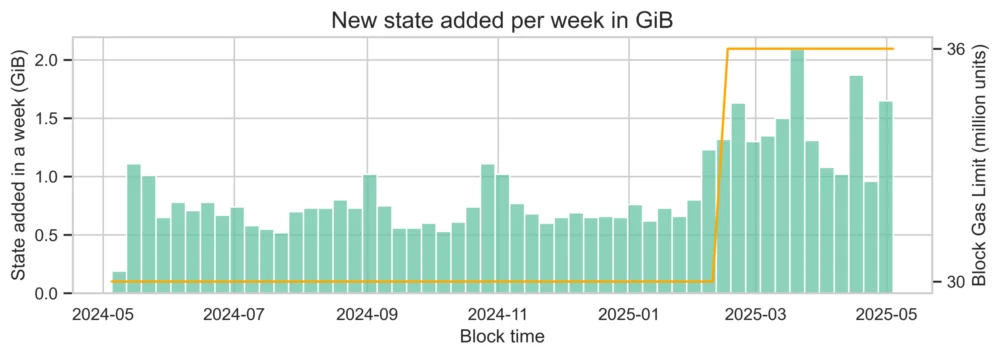
Ethereum, once a nascent experimental network, has transformed into a foundational pillar of global digital infrastructure, underpinning billions of dollars in daily value settlement, coordinating countless decentralized applications, and serving as the bedrock for an expansive ecosystem of Layer 2 solutions. At the core of this complex and rapidly evolving system lies a single, indispensable component: the blockchain’s "state." This article delves into a recent proposal from the Stateless Consensus team, reviewed by Ladislaus von Daniels and Marius van der Wijden, which critically examines the escalating challenges associated with Ethereum’s state management and outlines strategic directions to safeguard the network’s long-term health and decentralization. It is important to note that this perspective represents a specific team’s proposal and reflects the healthy diversity of opinion within the Ethereum Foundation, an organization that fosters varied viewpoints across its protocol development and beyond.
Understanding Ethereum’s Indispensable "State"
To grasp the magnitude of the challenge, one must first understand what "state" means in the context of Ethereum. It is not merely a record of past transactions but rather the cumulative knowledge of the network at any given moment. When a user checks their balance, that information isn’t stored in their physical wallet; it resides within Ethereum’s state. This encompasses a vast array of data points: every account’s balance, the code and storage of every smart contract, the status of all active Layer 2 protocols, and the myriad of interactions that define the network’s current configuration. Essentially, the state is a comprehensive snapshot of the entire blockchain’s reality.
This global ledger underpins virtually every function of the Ethereum network. It dictates how transactions are processed, how smart contracts execute, and how decentralized applications maintain their integrity. The state is fundamental to security, ensuring that every node can independently verify the network’s validity without relying on a central authority. It is also crucial for censorship resistance, as a widely distributed and accessible state allows diverse participants to construct and validate blocks, preventing any single entity from dictating which transactions are included. Moreover, the state is vital for the interoperability and security of Layer 2 solutions, which rely on the underlying Layer 1 state for finality and dispute resolution.
The paramount importance of state makes its efficient and decentralized management a critical concern. Should the state grow uncontrollably, become overly centralized in its storage, or prove too difficult for a broad range of participants to access and serve, the entire edifice of Ethereum — from its core protocol to its sprawling L2 ecosystem — faces heightened fragility, increased operational costs, and a significant erosion of its decentralization principles.
Ethereum’s Scaling Journey and Its State-Related Consequences
Ethereum has embarked on an ambitious, multi-year journey to enhance its scalability, a process marked by a series of significant upgrades and innovations. This progression includes the rise of Layer 2 scaling solutions, the implementation of EIP-4844 for Blob transactions, strategic gas limit increases, and dynamic gas repricing mechanisms, alongside the ongoing development of enshrined Proposer-Builder Separation (ePBS, EIP-7732). Each of these advancements has demonstrably expanded the network’s capacity to handle more activity, yet they simultaneously introduce a new layer of challenges, particularly concerning the management of the blockchain’s state.
Challenge #1: The Relentless Growth of State
One of the most pressing issues is the continuous, unidirectional growth of Ethereum’s state. With every new account creation, every storage write by a smart contract, and every deployment of bytecode, additional data is permanently etched into the network’s history. This ever-expanding dataset translates into tangible costs for all participants who wish to run a full node and contribute to the network’s decentralization. These costs manifest as increased storage requirements, demanding larger and faster hard drives; higher I/O demands, as nodes must frequently access and update this growing database; and escalating bandwidth consumption for synchronization and data propagation.
Figure 1, accompanying the original proposal (EIP-8037 context), visually underscores this trend, depicting the consistent addition of new state data week after week over the past year. This persistent growth trajectory is exacerbated by initiatives aimed at increasing throughput, such as gas limit increases, which inherently allow for more state-writing operations per block. As a result, the hardware and operational demands for running a full node steadily climb, making it increasingly impractical for average users. This inevitably pushes the responsibility of maintaining and serving the full state into the hands of a dwindling number of large, sophisticated providers.
The ramifications for decentralization are profound. A concentration of state storage and serving capabilities among a few powerful entities poses a direct threat to Ethereum’s censorship resistance and credible neutrality. If only a small cadre of actors can afford to run full nodes and effectively build blocks end-to-end, their ability to censor transactions or influence network operations becomes disproportionately high. While mechanisms like FOCIL (EIP-7805) and VOPS (Validity-Only Partial Statelessness) are being explored to preserve censorship resistance even with specialized builders, their ultimate effectiveness hinges on a robust ecosystem of nodes capable of accessing, holding, and serving the state without prohibitive costs. Therefore, controlling state growth is not merely an optimization but a fundamental prerequisite for maintaining Ethereum’s core values.
To proactively address this, the community is actively engaged in measuring and stress-testing various aspects: the current state size, its growth rate, the performance of state-accessing operations, and the overall resource consumption of different node configurations. These efforts, detailed on platforms like bloatnet.info, aim to identify critical thresholds and inform future protocol design.
Challenge #2: The Paradox of Statelessness and Centralization
Even if Ethereum’s transaction throughput were to remain constant at today’s gas limit, the network would eventually confront significant state growth issues. However, the community’s clear and persistent demand for higher transaction throughput necessitates a path towards greater scalability. Statelessness, a long-term vision for Ethereum, offers a compelling solution by decoupling validators from the need to store the full state. In a fully stateless paradigm, validators would only need to verify cryptographic proofs that attest to the validity of state transitions, rather than holding and processing the entire state themselves.
This represents a major scalability breakthrough, enabling higher transaction volumes without overburdening validators. Yet, this architectural shift also makes explicit a previously implicit reality: state storage and serving could become a distinct, specialized role, no longer intrinsically tied to every validator. While validators become lighter and more numerous, the responsibility for maintaining the full, historical state would likely consolidate among a few key entities: large RPC providers (like Infura or Alchemy), block builders, and Layer 2 sequencers.
This consolidation introduces a new form of centralization. If state storage becomes highly centralized, several critical consequences emerge. The network’s resilience to outages or attacks could diminish if a few central points of failure hold the primary copies of the state. The cost of accessing state data for developers and users might increase if a limited number of providers control access. Furthermore, the ability of users to interact directly with the blockchain or, critically, to force-include transactions on Layer 2s, could be compromised if access to the underlying Layer 1 state becomes fragile or highly centralized. The current incentive structure, where services like snap sync are widely supported by default, does not necessarily extend to robust RPC serving. Without deliberate mechanisms to make state serving more economically attractive and broadly distributed, the network risks having its fundamental data access controlled by a select few.

Strategic Pathways to a Sustainable Ethereum
Recognizing these challenges, the Ethereum community is actively exploring three broad directions to mitigate state-related risks and ensure the network’s long-term viability and decentralization.
1. State Expiry: Pruning the Digital Tree
The concept of state expiry acknowledges that not all pieces of state data retain equal importance indefinitely. Recent analyses suggest that a significant portion—approximately 80%—of Ethereum’s state has remained untouched for over a year. Despite this inactivity, nodes are still burdened with the perpetual cost of storing this dormant data. State expiry aims to temporarily remove inactive state from the "active set" that full nodes maintain, requiring a form of cryptographic proof to "revive" it when needed. This approach divides into two main categories:
- Mark, Expire, Revive (MER): This fine-grained approach involves the protocol marking rarely used state as inactive, allowing it to be pruned from the active set maintained by most nodes. When this inactive state is needed again, it can be brought back by presenting a proof of its prior existence. The advantage here is more straightforward revival and a focus on keeping frequently used contracts and balances "hot" and cheap to access, while "cold" state does not burden every node. However, marking requires additional metadata storage.
- Multi-era Expiry: In this design, state is periodically rolled into distinct "eras," perhaps on an annual basis. The "current era" remains small and fully active, while older eras are effectively "frozen" from the perspective of live execution. New state is always written into the current era. Reinstating data from an older era requires proofs demonstrating its existence within that specific historical context. This approach is conceptually simpler and aligns well with archiving strategies, but the proofs for revival can be more complex and larger.
Both MER and Multi-era expiry share the common goal of maintaining a manageable "active state" by temporarily removing inactive components, while retaining mechanisms for their retrieval. They differ in their trade-offs regarding complexity, user experience, and the distribution of work between clients and infrastructure. Ongoing research, including discussions on "not all state is equal" and proposals like EIP-4444 (historical block and state expiry), continues to refine these concepts.
2. State Archive: Differentiating Hot and Cold Data
State archive is a complementary strategy focused on separating the "hot" (frequently accessed) and "cold" (infrequently accessed) parts of the state. This approach involves:
- Explicit Data Partitioning: Nodes are designed to explicitly store recent, frequently used state data separately from older, less accessed information.
- Bounded Hot Set: The crucial benefit is that even as the total state size continues to grow, the portion requiring fast access – the "hot set" – can remain bounded. This means that a node’s execution performance, particularly the I/O costs associated with state access, can remain relatively stable over time, rather than degrading as the blockchain ages and accumulates more data.
- Specialized Archival Nodes: Older, less frequently accessed data would be stored by specialized archival nodes, which are optimized for long-term storage rather than rapid transaction processing. This allows standard full nodes to operate with a smaller, more efficient dataset.
By segregating data based on its access frequency, state archiving aims to keep the operational burden on active nodes manageable, ensuring that the network remains performant even as its historical data expands indefinitely.
3. Empowering Broader Participation: Making State More Accessible
Beyond protocol-level changes, a crucial direction involves making it easier for a wider range of participants to hold and serve state, even if they don’t store the full, historical dataset. This addresses the question of how to maintain a useful and decentralized ecosystem with less data.
- Partial Statelessness: This involves allowing nodes to operate with only a subset of the full state, relying on proofs for the missing parts. This could involve:
- Prover/Verifier Separation: Nodes could specialize as either "provers" (who hold the full state and generate proofs) or "verifiers" (who only verify proofs).
- Delegated State Provisioning: Light clients or partial nodes could delegate state queries to other nodes, receiving cryptographic proofs in return.
- Focus on Active State: Similar to state expiry, nodes could focus on holding only the "active" or recently accessed state, fetching older data on demand.
- Lowering Infrastructure Barriers: Practical improvements are needed to reduce the cost and complexity of running useful Ethereum infrastructure:
- RPC Enhancements: Improving the efficiency and decentralization of RPC services, which are the primary interface for most users and applications, is crucial.
- Client Software Optimizations: Continuous development to make Ethereum client software more efficient in terms of storage, CPU, and memory usage.
- Incentivized State Serving: Exploring economic models or protocol changes that incentivize a broader range of entities to store and serve historical state data.
These ideas, explored in depth in various research forums and EIPs such as EIP-4444, "The Perpetual State," and "The Scourge: Data Availability Sampling & State Expiry," aim to create a more resilient and decentralized infrastructure landscape where diverse participants can contribute meaningfully.
The Road Ahead: Immediate Actions and Future Vision
Ethereum’s state management stands quietly at the nexus of some of the most critical questions defining the protocol’s future: how to achieve unprecedented scalability without sacrificing decentralization, how to ensure credible neutrality as the network matures, and how to maintain robust censorship resistance in an increasingly complex environment.
While some of these questions remain open and subject to ongoing research and debate, the overarching direction is unequivocally clear: reduce state as a performance bottleneck, lower the cost of holding it, and make it easier for a diverse set of participants to serve it.
The immediate priorities of the Stateless Consensus team are focused on low-risk, high-reward initiatives that offer tangible benefits today while laying the groundwork for more ambitious future protocol changes. These include:
- Archive Solutions: Experimenting with out-of-protocol solutions that manage older data in archives while keeping the active state bounded. This provides invaluable real-world data on performance, user experience, and operational complexity. If proven successful and necessary, these learnings could inform future in-protocol changes.
- Partial Stateless Nodes and RPC Enhancements: Recognizing that most users and applications interact with Ethereum via centralized RPC providers, efforts are underway to:
- Improve the efficiency and decentralization of RPC services.
- Develop node designs that are useful participants without requiring storage of the entire historical state.
- Enhance tools and protocols for fetching historical state data more reliably and securely.
These projects are strategically chosen for their immediate utility and forward compatibility. They aim to strengthen Ethereum’s health and resilience in the present, while simultaneously preparing the ecosystem for the profound architectural shifts that statelessness and state expiry will entail in the future.
As the Ethereum ecosystem continues to iterate and innovate, the Stateless Consensus team commits to transparently sharing its progress and unresolved questions. Addressing the monumental challenge of state management requires a collaborative effort from across the community. Client developers, node operators, infrastructure providers, Layer 2 builders, and anyone invested in Ethereum’s enduring health are invited to engage in this vital dialogue: provide feedback on proposals, participate in forum discussions and calls, and actively contribute to testing new approaches in practice. The future of a decentralized and scalable Ethereum hinges on collective innovation and shared responsibility in managing its most fundamental component.







