admin
admin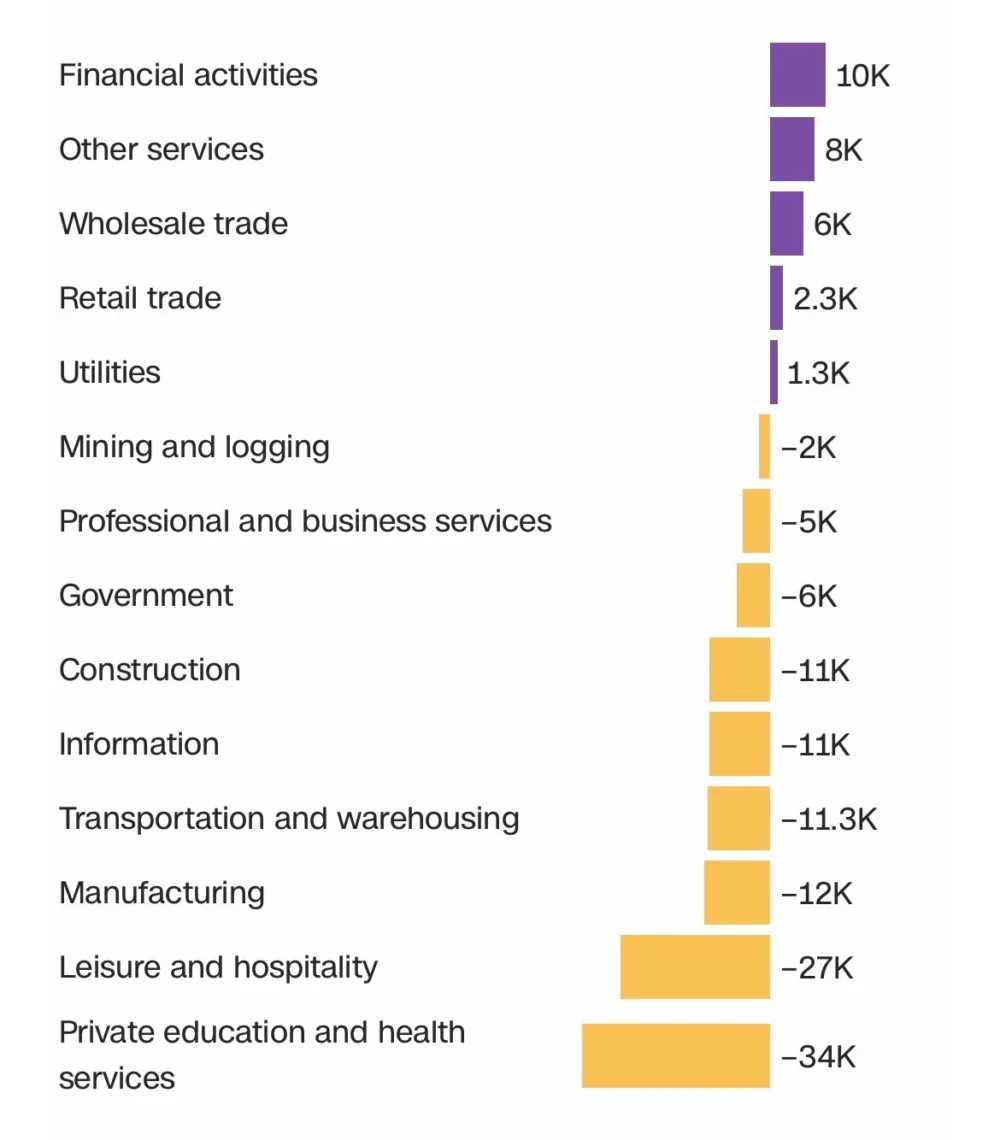
The United States financial services landscape is facing a significant contraction in labor demand, with job openings in the finance and insurance sectors falling to their lowest levels since the aftermath of the Great Recession. According to recent data released by the Federal Reserve Bank of St. Louis and highlighted by market commentary firm The Kobeissi Letter, vacancies in these pivotal industries have reached a 13-year low, signaling what many analysts believe is a defensive posture by major institutions bracing for further economic volatility and potential layoffs. The data indicates that job openings in finance and insurance plummeted to 134,000 in February, a staggering decline of 117,000 since December alone. This trend reflects a broader cooling of the labor market that has historically preceded periods of significant economic downturn, drawing uncomfortable parallels to previous recessions.
A Drastic Decline from Post-Pandemic Peaks
The current state of the finance and insurance labor market represents a sharp reversal from the aggressive hiring cycles seen in the immediate wake of the COVID-19 pandemic. At its peak in 2022, the sector was characterized by a massive surplus of available positions as firms competed for talent in a rapidly digitizing economy. However, the latest figures suggest that the "hiring party" has not only ended but has been replaced by a period of extreme caution.
Available vacancies in these sectors have dropped by approximately 410,000, or 75%, since that 2022 peak. To put this into historical perspective, the current number of openings is now lower than the levels recorded at the bottom of the 2001 recession. The Kobeissi Letter noted that the vacancy rate—the percentage of total jobs in the sector that are currently unfilled—has fallen to a mere 1.9%. This means that fewer than two out of every 100 jobs in the finance and insurance industries are currently vacant, the lowest such rate since February 2010.
For industry veterans, the speed of this decline is particularly alarming. During the 2008 Financial Crisis, which remains the modern benchmark for systemic economic distress, the largest single-month decline in finance job openings was 125,000. The recent volatility in vacancy data suggests that while the sector may not be experiencing a 2008-style collapse in asset values, the appetite for new human capital has diminished with a severity that rivals the most difficult periods in recent financial history.
The Paradox of Net Employment Gains
While the decline in job openings paints a grim picture for job seekers and career movers, the actual employment figures for February provided a more nuanced, albeit confusing, outlook. According to the U.S. Bureau of Labor Statistics (BLS), the "financial activities" sector actually posted a net employment gain of 10,000 jobs during the month. This occurred even as the broader U.S. economy unexpectedly lost a net 92,000 jobs.
This discrepancy between falling vacancies and rising employment suggests a "tightening of the hatches" within the industry. Firms may be filling critical roles that have been open for months while simultaneously closing all other prospective listings to minimize future overhead. Analysts suggest that the 10,000-job gain could be attributed to essential regulatory compliance hiring or the finalization of recruitment cycles started late in the previous year, rather than a sign of renewed growth.
The broader labor market’s net loss of 92,000 jobs was driven largely by sectors outside of finance. The healthcare sector, typically a reliable engine of job growth, saw a net loss of 28,000 positions. Much of this decline was attributed to a massive four-week strike by Kaiser Permanente employees, which concluded late last month. The information sector, transportation and warehousing, and the federal government also contributed to the overall decline, losing 11,000, 11,000, and 10,000 jobs respectively.
Historical Chronology: From Boom to Stagnation
To understand the current crisis in finance job openings, one must look at the timeline of the last four years. Following the 2020 lockdowns, the financial sector underwent a rapid transformation. Low interest rates fueled a surge in mortgage lending, refinancing, and investment banking activities. By early 2022, job openings were at record highs as firms scrambled to keep up with the demand for financial services.
However, the Federal Reserve’s aggressive interest rate hiking cycle, which began in mid-2022 to combat runaway inflation, fundamentally altered the industry’s profitability models. Higher rates led to a cooling of the housing market, a decrease in corporate mergers and acquisitions, and increased pressure on regional banks. By 2024, the cumulative effect of these rate hikes began to manifest clearly in corporate budgets.

By the end of 2025 and into the first quarter of 2026, the data began to reflect a sector in retreat. The decline from the 2022 peak of over 540,000 openings to the current 134,000 represents one of the most rapid contractions in labor demand for the financial sector in recorded history.
External Factors and the "Weather" Defense
In interpreting the recent BLS data, some mainstream outlets and government officials have pointed toward external factors as potential disruptors. CNN reported that extreme weather conditions across various parts of the United States in February may have artificially depressed employment numbers. Heavy snowstorms and unseasonable flooding in key economic hubs can prevent individuals from starting new roles or lead to temporary business closures that skew data collection.
However, the BLS itself remained cautious about attributing the weakness solely to the elements. In its official report, the bureau indicated that the impact of weather conditions is notoriously difficult to quantify with precision. While weather might explain a temporary dip in retail or construction, it rarely accounts for a long-term, systemic decline in job openings within the finance and insurance sectors, which are largely office-based or remote-capable.
Market Reactions and Economic Implications
The reaction from market analysts has been a mixture of concern and strategic recalibration. The Kobeissi Letter’s argument that the industry is "bracing for more layoffs" aligns with recent announcements from major Wall Street firms regarding "workforce reductions" and "efficiency initiatives." In an era where generative AI is increasingly capable of handling entry-level analytical and administrative tasks, the threshold for creating a new human-centered role in finance has risen significantly.
From a macroeconomic perspective, a weak jobs market is a double-edged sword. For the Federal Reserve, a cooling labor market is often a prerequisite for cutting interest rates. If the economy shows signs of significant distress, the Fed may be forced to pivot away from its "higher for longer" stance to prevent a hard landing.
For the cryptocurrency and digital asset markets, this data carries particular weight. Historically, Bitcoin and other risk assets have benefited from a "dovish" Federal Reserve. If the jobs data continues to deteriorate, investors may begin to price in imminent rate cuts, which could provide a bullish catalyst for crypto markets. Conversely, if the labor market weakness is perceived as the beginning of a deep recession, investors may adopt a "risk-off" strategy, fleeing volatile assets like Bitcoin in favor of the U.S. Dollar or gold. This tension was reflected in recent market movements, where the Crypto Fear and Greed Index dipped back into "extreme fear" levels despite the potential for a more favorable Fed policy.
Analysis: The Future of the Finance Professional
The 1.9% vacancy rate is perhaps the most telling statistic for the future of the industry. It suggests a market that is almost entirely saturated. For new graduates and those looking to transition into finance, the environment has become increasingly competitive. The reduction in openings implies that firms are prioritizing retention over acquisition, focusing on keeping their most productive employees while letting natural attrition reduce their total headcount.
Furthermore, the insurance sector, which often serves as a stable counterweight to the more volatile investment banking sector, is facing its own set of challenges. Rising claims costs due to climate-related disasters and inflation have pressured margins, leading to a similar freeze in hiring.
As the industry moves further into 2026, the focus will likely remain on whether the net employment gains seen in February can be sustained or if they were a final gasp before a broader wave of layoffs. If the vacancy rate remains at these historic lows, it is only a matter of time before the net employment numbers begin to mirror the downward trajectory of the job opening data.
Conclusion
The drop in finance and insurance job openings to 13-year lows is a stark indicator of the cooling U.S. economy. While the net gain of 10,000 jobs in February provides a momentary cushion, the 75% collapse in vacancies since 2022 cannot be ignored. Whether this is a necessary "normalization" after the post-pandemic boom or the precursor to a more painful economic contraction remains to be seen. For now, the financial services industry appears to be in a state of watchful waiting, with its doors closed to new entrants and its eyes fixed on the Federal Reserve’s next move. Professional observers and participants alike must now navigate a landscape where opportunities are fewer than they have been in over a decade, necessitating a more strategic and cautious approach to career and capital management.