Lina Irawan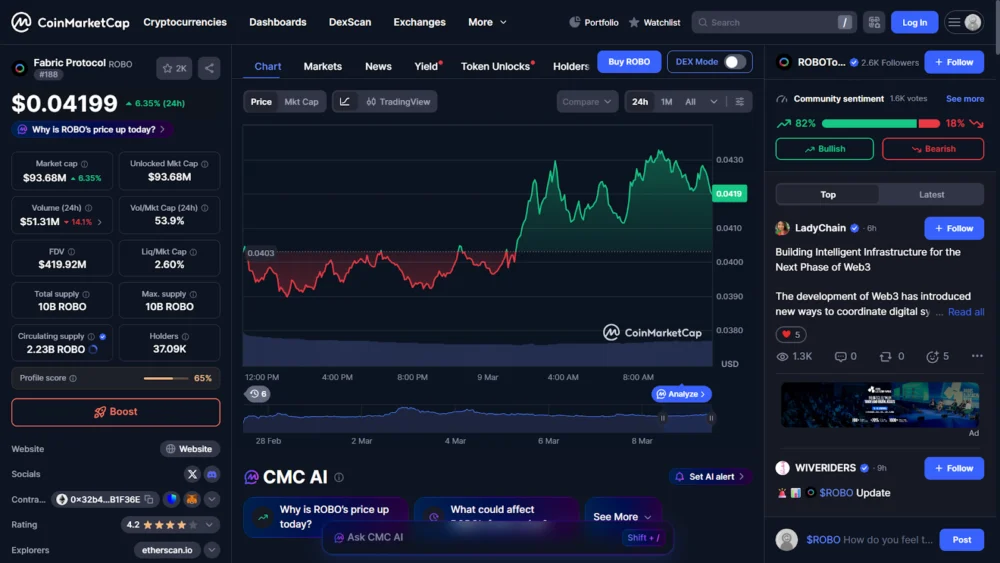
Fabric Protocol (ROBO) is emerging as a significant player in the decentralized network space, drawing attention for its innovative approach to integrating robotics, blockchain technology, and verifiable automation. This project aims to create a practical framework where machines can operate as independent economic agents, registering identities, receiving tasks, verifying work, and interacting with smart contracts without relying on centralized control. For investors and industry observers alike, understanding Fabric Protocol’s mechanics, the utility of its ROBO token, and its potential trajectory, particularly towards 2026, is crucial. This article delves into the operational framework of Fabric Protocol, the value proposition of the ROBO token, and its projected market outlook, offering a comprehensive overview for those considering its long-term prospects.
The Genesis and Vision of Fabric Protocol
At its core, Fabric Protocol is a blockchain-based initiative designed to bridge the gap between physical robotic systems and the digital realm of decentralized coordination. It provides a robust infrastructure that empowers robots to possess verifiable identities on-chain, enabling them to engage with smart contracts and participate in a burgeoning "robot economy." This initiative moves beyond the traditional financial applications of blockchain, demonstrating its capacity to facilitate and manage real-world machine activities.
The project is underpinned by the Fabric Foundation, an entity dedicated to nurturing the protocol’s broader vision and ensuring its continuous development. In essence, Fabric Protocol seeks to imbue robotic operations with unprecedented levels of transparency, traceability, and on-chain validation. This makes the ROBO token an integral component of a system where machines, data, and economic incentives are intricately linked and governed by clearly defined rules.
Addressing the Challenges of the Robot Economy
Fabric Protocol is strategically designed to tackle several persistent challenges within the evolving robot economy, fostering a more efficient, collaborative, and trustworthy ecosystem. By creating a decentralized and verifiable system, it addresses issues such as:
- Lack of Standardization and Interoperability: The current robotics landscape often suffers from fragmented systems and proprietary protocols, hindering seamless communication and collaboration between different robotic platforms. Fabric Protocol aims to establish a universal framework for machine identity and interaction.
- Trust and Verifiability in Robotic Work: In many applications, verifying the completion and accuracy of tasks performed by robots can be complex and prone to manipulation. The protocol’s Proof of Robotic Work (PoRW) mechanism offers a decentralized and tamper-proof method for validating robotic contributions.
- Centralized Control and Single Points of Failure: Many robotic operations rely on centralized servers or control systems, making them vulnerable to downtime, cyberattacks, and monopolistic practices. Fabric Protocol’s decentralized nature mitigates these risks by distributing control and decision-making.
- Inefficient Task Allocation and Resource Management: Without a transparent and automated system, allocating tasks to the most suitable robots can be inefficient. The protocol’s decentralized task allocation mechanism optimizes this process based on robot capabilities and network demand.
- Limited Economic Participation for Robots: Currently, robots are largely tools rather than autonomous economic participants. Fabric Protocol aims to enable robots to earn, spend, and be compensated for their services, fostering a more dynamic robot economy.
The Architects Behind Fabric Protocol
Fabric Protocol was conceptualized and brought to life by OpenMind, a team committed to advancing the integration of robotics and blockchain technology. OpenMind’s foundational contribution is the OM1 OS, an open-source operating system designed to serve as a universal platform for robots. This development paved the way for the Fabric Protocol, facilitating a more cohesive and collaborative environment within the robot ecosystem.
OpenMind has also implemented a transparent token distribution model for the ROBO token. This approach is intended to support the protocol’s operational needs and incentivize widespread participation within the network. By ensuring that resources are allocated effectively, this model aims to foster sustainable growth within the nascent robot economy.
The Operational Mechanics of Fabric Protocol
Fabric Protocol operates as a decentralized network, empowering robots to function as independent governance participants within the robot economy. It provides the essential infrastructure for robots to interact, collaborate, and execute tasks autonomously. Key components of its operational framework include:
Robot Identity and On-Chain Registry
A cornerstone of Fabric Protocol is the establishment of a unique, verifiable machine identity for each robot. This identity is immutably recorded on the blockchain, allowing robots to securely participate in the network, engage with other entities, and maintain a transparent audit trail of their activities. This on-chain registry is crucial for establishing accountability and trust in decentralized robotic operations.
Decentralized Task Allocation
The protocol leverages smart contracts to facilitate the decentralized allocation of tasks across the network. Robots can "bid" for tasks based on their specific capabilities, availability, and other predefined parameters. This creates an efficient and dynamic system where work is distributed organically, eliminating the need for a central authority and optimizing resource utilization.
Proof of Robotic Work (PoRW)
Proof of Robotic Work (PoRW) is a novel consensus and validation mechanism designed specifically for robotic operations. It serves to verify that tasks assigned to robots have been completed accurately and according to specifications. Upon successful validation, completed work is recorded on the blockchain, and robots are rewarded for their contributions. This creates a transparent and accountable system that incentivizes reliable performance.
Verifiable Compute and Smart Contracts
Fabric Protocol harnesses the power of smart contracts to enable secure and automated execution of tasks and data exchange between robots. The concept of "verifiable compute" ensures that all computational operations performed by robots and processed by the protocol are transparent and resistant to tampering. This makes the protocol particularly attractive for applications requiring high levels of integrity and reliability, positioning it as a significant player in the AI crypto investment landscape.

Key Features Redefining Robotic Interaction
Fabric Protocol introduces a suite of features designed to revolutionize how robots interact and operate within a decentralized ecosystem, fostering the growth of the robot economy and enhancing inter-system collaboration:
- Decentralized Autonomous Organizations (DAOs) for Robots: The protocol envisions future governance models where robots, through their on-chain identities and token holdings, can participate in decentralized decision-making processes, shaping the evolution of the network and its economic rules.
- Secure and Transparent Data Sharing: By utilizing blockchain, Fabric Protocol enables robots to share data securely and transparently, facilitating collaborative tasks and the development of more sophisticated AI models.
- Incentivized Automation: The ROBO token acts as a powerful incentive mechanism, rewarding robots for completing tasks, contributing to network security, and participating in governance, thereby driving participation and innovation.
- Scalability through Layer 2 and Future Layer 1: Initially deployed on Ethereum’s Layer 2 solutions like Base, Fabric Protocol is designed with scalability in mind, with plans to transition to its own dedicated Layer 1 blockchain optimized for machine-native operations.
- Machine-to-Machine (M2M) Commerce: The protocol lays the groundwork for direct economic transactions between robots, enabling them to autonomously buy and sell services or resources without human intervention.
Understanding the ROBO Token
The ROBO token is the native utility asset of the Fabric Protocol. It is the driving force behind the decentralized network, underpinning the robot economy by facilitating transactions, incentivizing participation, and enabling governance within the Fabric ecosystem.
ROBO Tokenomics and Supply
The ROBO token boasts a fixed total supply of 10 billion tokens. This capped supply is designed to promote long-term value stability and ensure alignment among network participants. The tokenomics are meticulously structured to support a wide array of network operations:
- Transaction Fees: ROBO tokens are used to pay for transaction fees on the Fabric Protocol network, ensuring that network resources are utilized efficiently and sustainably.
- Staking and Governance: Holders of ROBO tokens can stake their tokens to secure the network and participate in governance decisions, influencing the future direction of the protocol.
- Incentives and Rewards: The token serves as a reward mechanism for robots that successfully complete tasks, validate work, and contribute to the network’s overall health.
- Ecosystem Participation: ROBO tokens are essential for accessing and utilizing various services and functionalities within the Fabric Protocol ecosystem, encouraging active engagement.
Functions of the ROBO Token
The ROBO token plays several critical roles within the Fabric Protocol:
- Network Fuel: It powers all on-chain activities, from task execution to data verification.
- Governance Mechanism: Token holders have a say in protocol upgrades, parameter adjustments, and future development through a decentralized governance framework.
- Economic Incentive: It rewards participants, including robots and node operators, for their contributions.
- Access to Services: Holding and using ROBO tokens may grant access to premium features or services within the ecosystem.
ROBO Real-World Use Cases
The practical applications of the ROBO token are intrinsically linked to the development and adoption of the Fabric Protocol:
- Autonomous Delivery Services: Robots performing delivery tasks can use ROBO to pay for network access, task completion verification, and inter-robot coordination.
- Industrial Automation: Factories and warehouses utilizing robotic systems can leverage ROBO for managing automated workflows, optimizing production lines, and compensating robotic units for their labor.
- Smart City Infrastructure: Robots involved in urban maintenance, surveillance, or logistics can utilize ROBO for operational payments and data exchange within a smart city framework.
- Robotic Research and Development: Researchers and developers can use ROBO to access and deploy robotic assets on the Fabric Protocol, facilitating collaborative R&D and testing.
ROBO vs. Ethereum: A Comparative Analysis
Comparing ROBO (Fabric Protocol) with Ethereum, the leading smart contract platform, highlights the distinct focus and specialized design of Fabric Protocol:
| Feature | ROBO (Fabric Protocol) | Ethereum |
|---|---|---|
| Primary Purpose | Focused on the global robot economy, enabling robots to act as independent economic agents. | General-purpose blockchain for decentralized applications and smart contracts. |
| Consensus Mechanism | Proof of Robotic Work (PoRW) validates robotic tasks and contributions. | Proof of Stake (PoS) secures the network and validates transactions. |
| Native Token | ROBO token, used for fees, staking, governance, and task payments. | ETH, used for transaction fees, staking, and executing smart contracts. |
| Target Users | Robots, robot operators, and industries utilizing robotics. | Developers, businesses, and users building or interacting with dApps. |
| Task Allocation | Decentralized task allocation specifically built for robotic operations. | General-purpose smart contracts for a wide range of use cases. |
| Identity System | On-chain identity registry provides unique identities for robots. | No native identity system; relies on third-party solutions. |
| Scalability | Plans to transition to a dedicated Layer 1 blockchain optimized for machine operations. | Uses Layer 2 solutions like Optimism and Arbitrum to improve scalability. |
| Governance | Decentralized governance through token holder voting with veROBO. | Governance through Ethereum Improvement Proposals (EIPs) and community consensus. |
| Use Cases | Autonomous delivery, industrial automation, smart cities, and robotic R&D. | DeFi, NFTs, gaming, supply chain, and general-purpose decentralized apps. |
| Transaction Fees | Lower fees tailored for robotic operations and task settlements. | Variable gas fees based on network congestion and demand. |
| Interoperability | Initially deployed on Ethereum Layer 2, with plans for its own Layer 1 blockchain. | Interoperable with multiple blockchains through bridges and Layer 2 solutions. |
This comparison underscores that while Ethereum provides a broad foundation for decentralized applications, Fabric Protocol is purpose-built to address the unique needs of the robotic sector, offering specialized functionalities like PoRW and machine identity.
Fabric Protocol (ROBO) Price Prediction for 2026
Forecasting the price of any cryptocurrency involves inherent uncertainties, but several factors suggest a potential trajectory for ROBO by 2026. Market conditions, the rate of adoption of robotic automation, and advancements in blockchain technology will all play pivotal roles.
Expected Price Range
Based on current market dynamics and projected growth, under stable market conditions, ROBO is anticipated to trade within the $0.03 to $0.06 range by 2026. This projection assumes steady development and increasing integration into robotic workflows.
During periods of accelerated adoption, particularly if significant breakthroughs occur in the robotics and decentralized AI sectors, the price could potentially surge towards the $0.08 level. Such a bullish scenario would be driven by increased demand for the ROBO token to facilitate a larger volume of robotic transactions and operations.
Key Drivers of Price Movement
Several factors are expected to influence the price of ROBO:
- Adoption Rate of Robotics and Automation: As industries increasingly adopt robotic solutions, the demand for a decentralized coordination platform like Fabric Protocol will grow, directly impacting ROBO’s utility and value.
- Technological Advancements: Continuous development and successful implementation of Fabric Protocol’s roadmap, including its transition to a dedicated Layer 1 blockchain, will enhance its capabilities and appeal.
- Partnerships and Integrations: Strategic alliances with robotics manufacturers, AI developers, and industry leaders will significantly broaden the protocol’s reach and utility.
- Market Sentiment and Broader Crypto Trends: General sentiment within the cryptocurrency market, particularly regarding AI-related tokens and infrastructure projects, will influence ROBO’s performance.
- Regulatory Landscape: Evolving regulations concerning AI, robotics, and cryptocurrencies could either foster or hinder adoption, impacting ROBO’s price.
Future Growth Prospects
The long-term growth prospects for Fabric Protocol appear promising, especially if it successfully solidifies its position as the leading decentralized infrastructure for the robot economy. Its unique focus on verifiable automation and machine identity sets it apart. As the world moves towards greater automation, the need for a robust, transparent, and decentralized system to manage these autonomous agents will only intensify. The integration of robotics with blockchain technology positions ROBO as a potentially valuable asset in this evolving market, with significant appreciation potential as adoption scales.
Is Fabric Protocol (ROBO) a Good Investment?
Fabric Protocol (ROBO) presents itself as a compelling proposition within the rapidly expanding landscape of AI and blockchain integration. By addressing critical gaps in the robotics industry through on-chain anchoring of robot identity, task coordination, and incentive mechanisms, it offers a forward-thinking solution. Its unique focus on enabling autonomous AI agents and fostering decentralized coordination within the robotics sector makes it an attractive prospect for investors keen on innovative projects.
The protocol’s token distribution model, emphasizing long-term alignment and sustainable growth, further enhances its investment appeal. With a market capitalization that reflects its current stage of development and a fixed supply of 10 billion tokens, ROBO is designed to be integral to the Fabric network’s operations, supporting fees, staking, and governance. This structure is engineered to incentivize consistent participation and ensure the token’s enduring relevance within the ecosystem. As adoption of robotic automation and decentralized AI solutions accelerates, the demand for ROBO tokens is anticipated to rise, potentially bolstering its value proposition.
For individuals interested in the convergence of robotics, AI, and blockchain, Fabric Protocol offers a noteworthy investment opportunity. Its foundational focus on autonomous AI agents and decentralized coordination builds a solid basis for future expansion. However, as with all investments in the cryptocurrency space, it is essential to acknowledge the inherent risks. Market volatility, regulatory uncertainties, and the competitive landscape are factors that investors must carefully consider. Conducting thorough due diligence and assessing personal risk tolerance are paramount before committing capital to ROBO or any other digital asset.
How to Buy Fabric Protocol (ROBO)
Acquiring ROBO tokens, like most cryptocurrencies, involves a straightforward process that can be completed in a few key steps:
- Choose a Cryptocurrency Exchange: Select a reputable exchange that lists ROBO. Popular options often include platforms that support trading pairs such as ROBO/USDT or ROBO/ETH.
- Create and Verify an Account: Sign up for an account on the chosen exchange and complete the necessary identity verification (KYC) procedures.
- Deposit Funds: Fund your exchange account with fiat currency (e.g., USD, EUR) or other cryptocurrencies.
- Place a Buy Order: Navigate to the trading interface for ROBO and place a buy order, specifying the amount you wish to purchase.
- Secure Your Tokens: Once purchased, consider transferring your ROBO tokens to a secure personal wallet for enhanced control and safety.
The Future Trajectory of Fabric Protocol
The future of Fabric Protocol is intrinsically tied to its capacity to redefine the operational paradigms within the robotics industry through the seamless integration of blockchain technology. As a decentralized network, its ambition is to cultivate a global ecosystem where robots function as autonomous economic entities, thereby driving significant advancements in efficiency and fostering groundbreaking innovation.
Key strategic developments, most notably the planned transition to a dedicated Layer 1 blockchain, are poised to dramatically enhance scalability and optimize operations specifically for machine-native tasks. This evolutionary step is critical in positioning Fabric Protocol as a frontrunner in both the robotics and blockchain sectors, with the potential to attract widespread industry adoption and integration.
With its unwavering commitment to verifiable contributions, robust governance frameworks, and streamlined task coordination, Fabric Protocol is strategically positioned to play a pivotal role in shaping the future architecture of robotics. As its adoption continues to expand, it has the potential to fundamentally alter how robots interact, collaborate, and contribute to the global economic landscape, ushering in an era of truly autonomous and decentralized machine operations.
Conclusion
Fabric Protocol represents a significant leap forward in merging the fields of robotics and blockchain technology. It offers a decentralized framework designed for autonomous operations and verifiable contributions, with the potential to fundamentally transform the robotics industry and catalyze innovation in decentralized infrastructure. Its focus on scalability, governance, and practical, real-world applications positions it strongly within the evolving AI and blockchain landscape. While its ultimate success will depend on continued adoption and technological advancements, Fabric Protocol is poised to become a key enabler of the future robot economy.
FAQs
Where can I buy ROBO tokens?
ROBO tokens can be purchased on cryptocurrency exchanges that support Fabric Protocol trading pairs, such as ROBO/USDT or ROBO/ETH.
What blockchain does Fabric Protocol run on?
Fabric Protocol currently operates on Base, an EVM-compatible blockchain. The project has plans to transition to its own dedicated Layer 1 blockchain in the future.
What is the "Proof of Units" mechanism?
The "Proof of Units" mechanism is a system designed to validate and record robotic contributions on-chain. It ensures transparency and rewards verified work performed by robots within the network.
Is ROBO available for spot trading?
Yes, ROBO tokens are available for spot trading on major cryptocurrency exchanges, offering liquidity and accessibility for investors looking to engage with the asset.