Lina Irawan
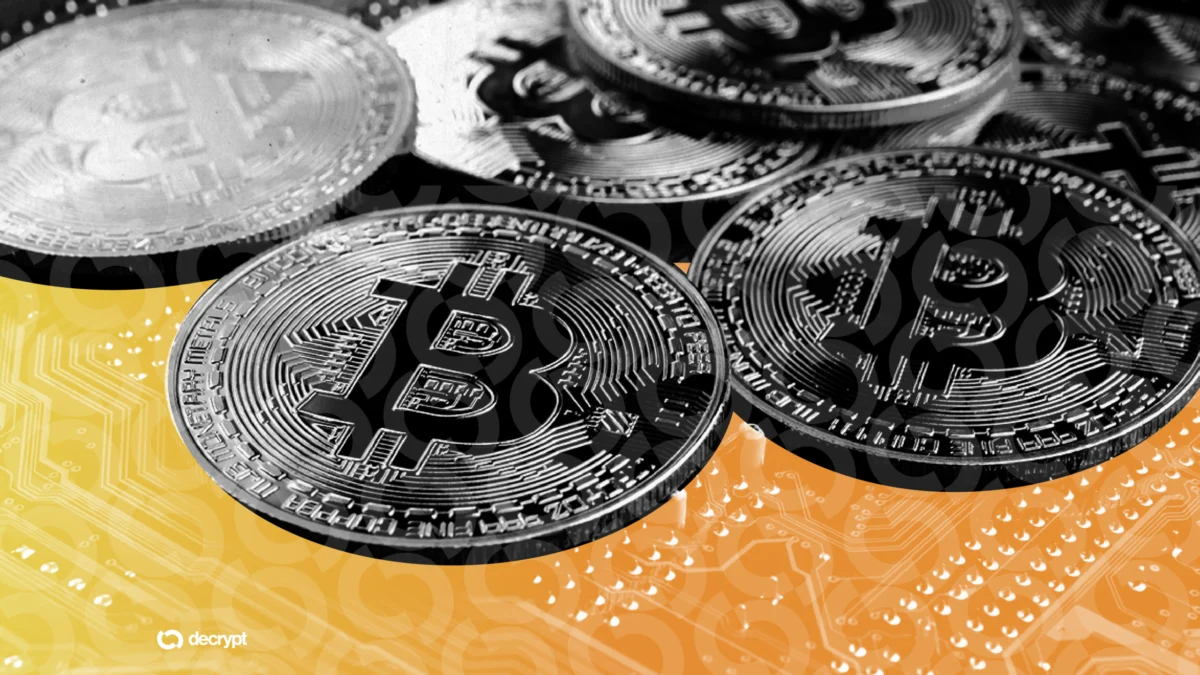
Bitcoin, the vanguard of the cryptocurrency revolution, commands a significant portion of the global digital asset market, representing over 64% of its ecosystem with a market capitalization exceeding $1.48 trillion. Understanding what underpins its value is crucial in navigating the complex landscape of digital finance. Unlike traditional currencies tethered to governmental decrees or physical commodities, Bitcoin derives its worth from a confluence of technological, economic, and societal factors. This article delves into the multifaceted nature of Bitcoin’s backing, exploring its genesis, its unique value drivers, and its distinction from conventional financial instruments.
Understanding the Concept of "Backed" in Currency
The term "backed" when applied to currency typically refers to the assets or systems that guarantee its value. Historically, currencies were backed by precious metals like gold or silver, meaning a specific amount of metal could be redeemed for a unit of currency. In the modern era, fiat currencies are backed by the faith and credit of the issuing government, its ability to tax its citizens, and its overall economic stability. Public trust, government decree, and market demand-supply dynamics are the pillars upon which these traditional currencies stand. However, the advent of digital currencies like Bitcoin has challenged these established notions, introducing a paradigm shift in how value is perceived and maintained.
The Genesis of Bitcoin: A Response to Financial Instability
The creation of Bitcoin in the aftermath of the 2008 global financial crisis was not a mere technological innovation but a deliberate response to the perceived failures of traditional financial systems. In October 2008, a pseudonymous entity or group known as Satoshi Nakamoto published a white paper titled "Bitcoin: A Peer-to-Peer Electronic Cash System." This document outlined a vision for a decentralized digital currency that could operate independently of central banks and financial intermediaries. The subsequent release of the Bitcoin software in January 2009 marked the genesis of the first cryptocurrency, offering an alternative to a system that had demonstrated vulnerabilities to inflation, manipulation, and systemic risk. Nakamoto’s aim was to create a robust, transparent, and censorship-resistant monetary system, a goal deeply influenced by the economic turmoil of the preceding year.
Is Bitcoin Truly Backed by Nothing? Debunking a Common Misconception
The assertion that Bitcoin is "backed by nothing" often stems from a misunderstanding of its foundational principles. Unlike fiat currencies, Bitcoin is not backed by a central authority, a government guarantee, or tangible assets like gold. Instead, its value is intrinsically linked to a sophisticated interplay of technology, mathematics, and network dynamics. The integrity and security of the Bitcoin network are underpinned by:
- Blockchain Technology and Distributed Ledger Technology (DLT): Bitcoin operates on a decentralized ledger, a public and immutable record of all transactions. This transparency and distributed nature make it resistant to tampering and fraud.
- Cryptography and Mathematics: Advanced cryptographic algorithms secure transactions and the creation of new Bitcoins. The mathematical principles embedded in its code ensure its predictability and integrity.
- Decentralized Network: A vast, global network of computers (nodes) maintains and validates the blockchain. This distributed architecture means no single entity can control or shut down the network.
- Proof-of-Work (PoW) Consensus Mechanism: Miners, using significant computational power, compete to solve complex mathematical puzzles to validate transactions and add new blocks to the blockchain. This process is energy-intensive and costly, making it economically unfeasible for any single entity to gain control of the network.
- Fixed Supply: Bitcoin has a hard-coded limit of 21 million coins. This scarcity, a deliberate design choice by Satoshi Nakamoto, is a critical factor in its value proposition, akin to precious metals.
These inherent properties collectively secure the network, ensure the integrity of transactions, and create a predictable supply, forming the bedrock of Bitcoin’s value.
Key Pillars of Bitcoin’s Value Proposition
Delving deeper, several core attributes contribute to Bitcoin’s perceived and actual value:
1. Scarcity and Predictable Supply
The fixed supply of 21 million Bitcoins is perhaps its most defining characteristic. This finite nature is reinforced by the "halving" event, a programmed reduction in the rate at which new Bitcoins are created. Occurring approximately every four years (after every 210,000 blocks mined), the halving cuts the block reward for miners in half. This mechanism ensures that new Bitcoins enter circulation at a decreasing rate, mimicking the finite supply of precious metals and creating deflationary pressure over time. The predictable emission schedule contrasts sharply with fiat currencies, whose supply can be expanded by central banks, potentially leading to inflation.
2. Decentralization and Network Security
The decentralized nature of the Bitcoin network is paramount to its resilience and trustworthiness. Unlike traditional financial systems that rely on central authorities, Bitcoin’s ledger is distributed across thousands of nodes worldwide. This distribution makes it virtually impossible for any single entity to control, censor, or manipulate the network. The Proof-of-Work consensus mechanism, while energy-intensive, ensures that a significant amount of computational power is required to validate transactions and create new blocks. This economic barrier deters malicious actors, as mounting the resources for a 51% attack (controlling more than half of the network’s computing power) would be prohibitively expensive. The immutability of the blockchain further solidifies this security; once a transaction is recorded and confirmed, it cannot be altered or deleted.
3. Utility and Functionality
Bitcoin’s utility extends beyond being a speculative asset. It serves as a global, borderless medium of exchange, enabling peer-to-peer transactions without the need for intermediaries like banks. This is particularly beneficial in regions with underdeveloped financial infrastructure or for individuals seeking to circumvent traditional banking fees and delays. Its divisibility into smaller units, known as satoshis (1 Bitcoin = 100 million satoshis), makes it practical for small transactions. Furthermore, its portability allows for easy transfer across vast distances, a significant advantage over physical assets. The ability to send and receive value digitally and instantaneously has driven its adoption as a payment rail for certain businesses and individuals.
4. Trust and Adoption
While often debated, trust in Bitcoin has grown significantly over time. This trust is not based on governmental decree but on the network’s consistent operation, its security features, and the increasing adoption by individuals, institutions, and even some nations. The emergence of over 500 million Bitcoin users globally is a testament to its growing acceptance. Moreover, the involvement of established financial institutions in providing custodial services, developing investment products like Bitcoin Exchange-Traded Funds (ETFs), and integrating Bitcoin into their liquidity offerings lends a degree of institutional validation. This increasing adoption and integration into the broader financial ecosystem contribute to its perceived value and stability.
Bitcoin vs. Fiat Currency: A Comparative Analysis
The fundamental differences between Bitcoin and fiat currency are stark, highlighting the unique value proposition of the digital asset:
| Feature | Bitcoin | Fiat Currency |
|---|---|---|
| Backing | Inherent characteristics: scarcity, decentralization, security, utility, adoption. | Faith and credit of the issuing government; economic stability. |
| Supply | Finite and predictable (capped at 21 million). | Variable, subject to central bank policy and economic conditions. |
| Control | Fully decentralized; no single entity has control. | Centralized; controlled by governments and central banks. |
| Inflation/Deflation | Deflationary potential due to fixed supply and halving events. | Prone to inflation due to potential for increased money supply. |
| Transactions | Intermediary-free, cross-border payments possible. | Typically require intermediaries (banks), can incur fees and delays. |
| Legal Tender | Recognized as legal tender in only a few jurisdictions (e.g., El Salvador). | Serves as legal tender within its issuing country. |
| Volatility | Highly volatile. | Relatively more stable, though subject to market fluctuations. |
| Transparency | Public, immutable ledger on the blockchain. | Transaction details are private, subject to banking regulations. |
Is Bitcoin Backed by Gold?
Bitcoin is not backed by gold. While often compared to gold due to its scarcity and perceived store of value properties, it operates on an entirely different technological and economic foundation. Gold’s value is derived from its physical properties, historical significance, and industrial uses, whereas Bitcoin’s value is rooted in its digital nature, network security, and decentralized architecture. The comparison is more about functional similarities (like being a hedge against inflation or a store of value) than direct backing.

Is Bitcoin Backed by the US Government?
No, Bitcoin is not backed by the US government or any other central authority. Its value is derived from its intrinsic properties and the consensus of its global network participants, not from any governmental guarantee or endorsement. This independence from state control is one of its core design features, intended to provide an alternative to government-controlled monetary systems.
Bitcoin vs. Gold: A Store of Value Debate
Both Bitcoin and gold are often considered stores of value, but they offer different characteristics and appeal to different investor profiles.
- Gold: Its value is intrinsically tied to its physical properties, historical demand, and use in jewelry and industry. It is relatively stable and has historically served as a hedge against economic uncertainty and inflation. Verification of purity and weight are key to its valuation.
- Bitcoin: Its value is derived from its capped supply, technological security (PoW consensus, SHA-256 cryptography), network incentives, and increasing adoption. It is divisible, portable, and facilitates intermediary-free transactions. However, it is significantly more volatile than gold.
For conservative investors seeking a hedge against economic downturns, gold often remains the preferred choice due to its historical stability. For investors with a higher risk tolerance and a belief in the long-term potential of digital assets, Bitcoin offers the possibility of higher returns, albeit with greater volatility.
Addressing Criticisms: The "Greater Fool" Theory
A common criticism leveled against Bitcoin is that its value is based on the "Greater Fool Theory" – the idea that an asset’s price is driven by the expectation that it can be sold to another "greater fool" at a higher price. Critics argue that Bitcoin has no intrinsic value and is merely speculative. However, proponents counter that Bitcoin’s continuous growth and adoption are not solely reliant on this theory. They point to its inherent characteristics – security, scarcity, utility, decentralization, and growing adoption – as fundamental drivers of its value, providing a tangible basis for its worth beyond mere speculation. The increasing integration into financial products and services by major institutions further bolsters the argument against it being purely a "greater fool" asset.
The Hypothetical Collapse of Bitcoin’s Value
Should Bitcoin ever lose all its value, the implications would be far-reaching. Its utility as a medium of exchange and store of value would vanish. Miners, the backbone of the network’s security, would likely cease operations as the economic incentive disappears, leading to the network’s eventual shutdown. The ripple effect would be immense, potentially wiping out a significant portion of the cryptocurrency market’s value and shaking investor confidence not only in digital assets but potentially in broader financial systems due to the interconnectedness of global finance.
Conclusion
Bitcoin’s value is not derived from the promises of governments or the tangible backing of precious metals. Instead, it is a complex interplay of its inherent technological architecture, economic principles, and growing societal adoption. Its scarcity, robust security through decentralization and cryptography, undeniable utility as a digital payment system, and increasing global trust form the bedrock of its valuation. While volatility remains a significant factor, the underlying attributes that define Bitcoin suggest that it is more than just a speculative bubble or an asset backed by the "Greater Fool Theory." Its value is a testament to innovation in monetary systems and the evolving landscape of digital finance.
Frequently Asked Questions
What is Bitcoin backed by?
Bitcoin is not backed by governments, central banks, or physical commodities like gold. Its value is derived from its scarcity, robust security protocols, decentralized network, innovative technology, widespread adoption, and its utility as a digital asset and medium of exchange.
Is Bitcoin backed by gold?
No, Bitcoin is not backed by gold. While both are considered by some as stores of value, their underlying principles and value drivers are fundamentally different. Gold’s value is tied to its physical properties and historical demand, while Bitcoin’s value is based on its digital architecture and network effects.
Why is Bitcoin valuable if it’s not backed by anything?
Bitcoin is valuable due to its intrinsic properties. Its finite supply, the complex and costly process of mining (Proof-of-Work), the underlying blockchain technology ensuring security and transparency, its use cases in facilitating digital transactions, and the growing consensus and adoption among users all contribute to its perceived and actual value.
Could Bitcoin go to zero?
While Bitcoin is known for its volatility, a complete collapse to zero is considered unlikely by many experts due to its inherent characteristics. Its decentralized nature, fixed supply, and the ongoing development and adoption by a significant global community provide a strong foundation for its continued existence and value.
Is Bitcoin tangible?
No, Bitcoin is an intangible digital currency. It exists solely on the blockchain network and cannot be physically touched or held like traditional currency or commodities.
What is cryptocurrency backed by?
Cryptocurrencies, in general, are not backed by central authorities or physical assets. Their value is determined by factors such as their underlying technology, the security of their respective networks, their scarcity (or controlled supply), their utility, the size and engagement of their community, and the dynamics of supply and demand within the market.