Lina Irawan
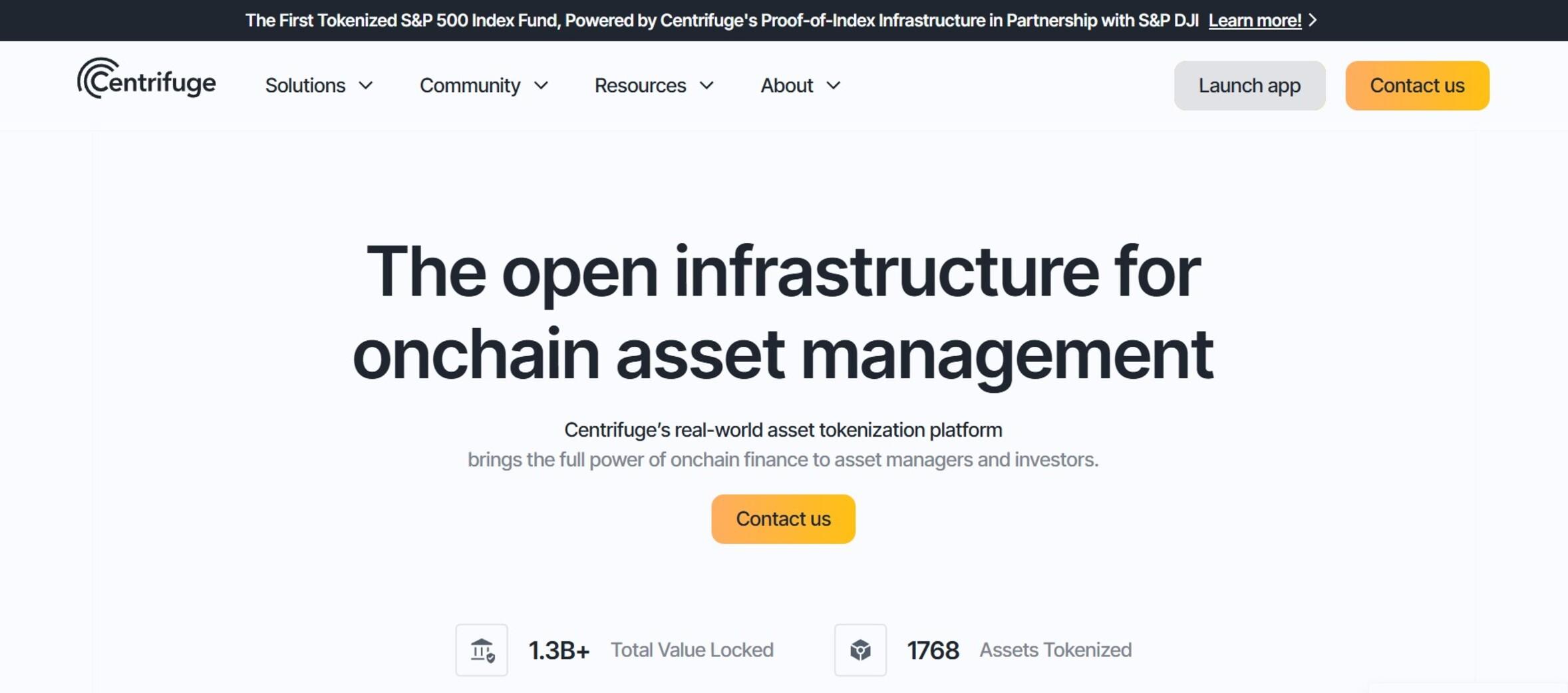
The cryptocurrency landscape is undergoing a profound transformation, with the tokenization of real-world assets (RWAs) emerging as the most significant and talked-about trend. At the forefront of this paradigm shift is Centrifuge (CFG), a protocol meticulously designed to bridge the chasm between traditional finance (TradFi) and decentralized finance (DeFi). By bringing tangible assets such as invoices, real estate, and credit portfolios onto the blockchain, Centrifuge is not merely participating in this trend but actively shaping its trajectory. This comprehensive review delves into the intricate workings of the Centrifuge protocol, the pivotal role of its native CFG token, and its burgeoning potential within the rapidly expanding RWA-DeFi market.
The Genesis of Centrifuge: A Vision for Accessible Capital
Centrifuge, founded in 2017 by a trio of seasoned professionals – Lucas Vogelsang, Martin Quensel, and Bhaji Illuminati – emerged from a collective vision to democratize access to capital. With backgrounds spanning fintech, software development, and traditional business lending, the founders identified a critical disconnect in financial markets. Small and medium-sized businesses (SMBs) often struggle with limited access to financing, facing slow, expensive, and intermediary-laden traditional loan processes. Simultaneously, the burgeoning crypto market, while flush with capital, often saw this liquidity circulating internally without meaningfully impacting the real economy.
Centrifuge was conceived as the solution to this disconnect. The protocol’s core mission is to unlock the value of illiquid, real-world assets by transforming them into on-chain, investable opportunities. This innovative approach allows businesses, known as asset originators, to leverage their off-chain assets as collateral to secure much-needed liquidity and working capital, bypassing the traditional gatekeepers of finance.
How Centrifuge Operates: Tokenization as a Financial Bridge
At its heart, Centrifuge operates by taking tangible, off-chain assets and representing them as Non-Fungible Tokens (NFTs) on the blockchain. These tokenized assets are then pooled together, creating investment opportunities for a diverse range of liquidity providers. The protocol is built upon its own EVM-native Layer 1 chain, offering multi-chain support and leveraging sophisticated oracles for robust data verification.
For Businesses: Unlocking Liquidity with Tokenized Assets
For asset originators, Centrifuge offers a compelling alternative to conventional lending. The process begins with the uploading and verification of real-world assets, such as outstanding invoices, mortgage agreements, or supply chain financing contracts. Once validated, these assets are tokenized as NFTs, with ownership and provenance verifiable both off-chain and on-chain.
The critical step involves bundling these tokenized assets into what are known as "asset pools" through Centrifuge’s proprietary product, Tinlake. Within Tinlake, businesses can structure their deals, define risk parameters, and present these asset pools to investors. This streamlined process enables businesses to access liquidity significantly faster, obtain additional working capital, and unlock financial solutions without the lengthy and often restrictive processes associated with traditional banking. For instance, a company with a substantial portfolio of unpaid invoices could tokenize these receivables, using them as collateral to secure immediate funding, thereby improving its cash flow and operational efficiency.
For Investors: Accessing Stable Yields and Diversified Portfolios
On the investor side, Centrifuge provides access to tokenized real-world assets, offering a unique diversification from typical, often volatile, cryptocurrency assets. Investors deposit stablecoins into these asset pools. The funds are then allocated across two primary tranches within Tinlake:
- DROP Tokens: These tokens are designed for investors seeking a stable yield, akin to fixed-income products in traditional finance. They typically offer more predictable returns, often derived from the accrued interest of the underlying loans within the asset pool. This tranche is generally considered lower risk.
- TIN Tokens: Holders of TIN tokens, often referred to as frontline TIN holders, assume a first-loss position. This means they absorb the initial losses should any of the underlying assets default. In return for taking on this increased risk, TIN holders typically receive a higher yield.
This tiered structure allows investors to choose their preferred risk-reward profile, catering to both conservative investors seeking stable income and those willing to embrace higher risk for potentially greater returns.
Centrifuge Prime: Institutional-Grade Tokenization
Recognizing the growing demand from institutional investors and larger entities, Centrifuge introduced Centrifuge Prime. This is a white-label platform designed to facilitate end-to-end tokenization for institutions across multiple chains, including Ethereum and Base. Centrifuge Prime incorporates built-in compliance tools, making it a scalable solution for Real-World Asset (RWA) issuance. It functions as both a marketplace and a decentralized investment application, enabling asset managers, Decentralized Autonomous Organizations (DAOs), and investment funds to research asset originators, meticulously evaluate deals, and allocate capital to curated asset pools.

Centrifuge Prime empowers institutions to:
- Automate Tokenization: Streamlining the process of converting real-world assets into digital tokens.
- Ensure Compliance: Integrating regulatory requirements into the tokenization workflow.
- Access Curated Deals: Providing a platform for discovering and investing in high-quality, verified asset pools.
- Manage Investments: Offering tools for tracking and managing RWA investments efficiently.
This initiative is crucial for Centrifuge’s strategy to bridge the gap between on-chain capital and off-chain demand, offering a more structured, transparent, and compliant alternative to traditional credit markets.
The Spectrum of Tokenizable Assets
Centrifuge’s versatility is underscored by the diverse range of assets it supports for tokenization. The protocol is designed to handle verifiable tangible assets and financial instruments that can be effectively structured for on-chain financing. This includes, but is not limited to:
- Invoice Receivables and Trade Finance: Tokenizing outstanding invoices to unlock immediate working capital.
- Real Estate Equity and Loans: Representing fractional ownership or debt associated with properties.
- Revenue-Based Financing Contracts: Tokenizing future revenue streams from businesses.
- Inventory and Supply Chain Assets: Facilitating financing for goods in transit or held in inventory.
- Mortgages: Tokenizing debt obligations secured by real estate.
- Royalties: Representing future income from intellectual property.
- Credit Portfolios: Packaging and tokenizing diversified loan portfolios.
- Tokenized Funds: Including treasury funds and other managed investment vehicles.
- Experimental On-Chain Equity: Exploring the tokenization of direct equity stakes in companies.
This broad scope demonstrates Centrifuge’s ambition to become a foundational layer for RWA tokenization across a multitude of industries.
The CFG Token: The Engine of the Centrifuge Ecosystem
The Centrifuge protocol is powered by its native utility and governance token, CFG. This token plays a multifaceted role, essential for the decentralized operation and ongoing development of the RWA tokenization ecosystem.
CFG Tokenomics and Supply Dynamics
As of January 2026, the total supply of CFG tokens is projected to be 691,800,000. A significant development in the token’s history was its V3 migration in March 2025, which consolidated previous versions into an Ethereum-native ERC-20 token. This standardization enhances interoperability and accessibility. Staking rewards for CFG holders are derived from protocol fees and income generated from asset pools. Furthermore, linear vesting for ecosystem incentives is scheduled to continue through April 2029, ensuring sustained community engagement and development.
The Intrinsic Value of CFG
The value of the CFG token is derived from several key functions within the Centrifuge ecosystem:
- Network Security via Staking: Holders can stake CFG to secure the network, validating transactions and participating in consensus mechanisms. Stakers are rewarded with a portion of protocol fees and network incentives.
- Transaction Fee Payment: CFG is used to pay transaction fees on the Centrifuge chain, compensating validators and node operators for their services.
- On-Chain Governance: CFG holders have the power to influence the future direction of the Centrifuge protocol. They can vote on crucial upgrades, the allocation of treasury funds, and parameters such as fee structures and burn mechanisms. This decentralized governance model ensures that the protocol evolves in alignment with the interests of its community.
- Ecosystem Incentives: CFG is distributed as incentives for various ecosystem participants, including asset originators, investors, and developers, fostering growth and adoption.
CFG’s Integration with Major Exchanges
The listing of CFG on major cryptocurrency exchanges, such as Binance, has significantly enhanced its liquidity and market exposure. This availability allows traders and investors to access CFG for spot trading, margin trading, and futures contracts, offering up to 50x leverage. While this accessibility provides trading opportunities, it’s crucial to acknowledge that, like many mid-cap tokens, CFG can be subject to considerable volatility. Investors are strongly advised to conduct thorough due diligence and invest only capital they can afford to lose.
Is CFG a Strategic Investment? Navigating Risk and Reward
The investment case for CFG is intricately linked to three primary factors: an investor’s risk tolerance, their market timing, and their conviction in the future growth of the RWA market. Following its listing on Binance, CFG experienced a notable surge, climbing approximately 60% to trade between $0.14 and $0.15, with trading volumes exceeding $178 million.
Projections for CFG’s future price are optimistic, contingent on the anticipated expansion of the RWA market, which some analysts estimate could reach between $35 billion and $45 billion. Under such favorable market conditions, some analysts forecast CFG potentially reaching price targets between $0.20 and $0.45.
However, the inherent risks associated with cryptocurrency investments remain. The annual inflation rate of CFG is approximately 3%, with the total supply expected to expand towards 692 million tokens. In a bearish market scenario, downside forecasts suggest CFG could trade as low as $0.07 to $0.15. Additional uncertainties stem from potential regulatory pressures on off-chain assets and the risk of borrower defaults within asset pools. Volatility is an intrinsic characteristic of this asset class, demanding careful consideration from potential investors.
The Trajectory of Centrifuge: Charting a Course for the Future
The long-term success of Centrifuge is inextricably tied to the overall growth and adoption of the real-world asset tokenization market. With projections indicating a substantial market size for tokenized RWAs, Centrifuge is strategically positioned as a core infrastructure provider. It facilitates access to liquidity for asset originators and enables investors to deploy capital into structured asset pools.
Key upcoming milestones for Centrifuge include the further expansion and enhancement of Centrifuge Prime, the development of more sophisticated tools for researching asset originators, strengthening network security measures, and rolling out significant protocol upgrades. The protocol’s ultimate success will hinge on a confluence of factors: widespread adoption by businesses and investors, the consistent performance of its asset pools, and increasing regulatory clarity within the RWA space. These elements will collectively determine Centrifuge’s ability to capture a meaningful share of the burgeoning RWA-DeFi bridge.
Conclusion: A Pioneer in the RWA Revolution
Centrifuge (CFG) is carving out a distinctive and vital niche within the financial ecosystem by effectively bridging the traditional and decentralized finance worlds through the tokenization of real-world assets. The protocol empowers asset originators with faster and more equitable access to capital, while simultaneously offering investors the opportunity to generate stable yields from well-structured, asset-backed pools.
The future trajectory of Centrifuge is closely aligned with the broader adoption of RWAs, the increasing participation of institutional players, and the successful execution of its strategic initiatives, particularly Centrifuge Prime and ongoing protocol enhancements. For traders and investors, CFG presents a high-risk, high-reward opportunity, one that is not solely driven by market speculation but is fundamentally linked to the real-world growth and maturation of finance on the blockchain.
Frequently Asked Questions
Is CFG listed on Binance?
Yes, Centrifuge (CFG) is listed on Binance, offering accessibility through spot trading, margin trading, and futures products. This listing has significantly boosted CFG’s liquidity and market visibility.
What are the primary uses of the CFG token?
The CFG token serves as the native utility and governance token of the Centrifuge Chain. Its core functions include paying transaction fees, participating in Centrifuge’s decentralized governance, staking for network security, and supporting essential protocol operations such as the structuring and management of asset pools.
What is the relationship between Centrifuge and Centrifuge Prime?
Centrifuge is the overarching decentralized asset financing protocol. Centrifuge Prime, conversely, is its institutional-grade layer – an open marketplace and decentralized investment application that allows asset managers and investors to research asset originators and connect with high-quality real-world assets.
What are the price predictions for CFG?
Analyst projections suggest CFG could trade between $0.20 and $0.45 if the real-world assets market experiences significant growth and adoption scales as anticipated. However, potential headwinds such as inflation, supply expansion to 692 million tokens, regulatory challenges, and general market volatility could lead to a bearish scenario where CFG might trade between $0.07 and $0.15.