Layla Zulfa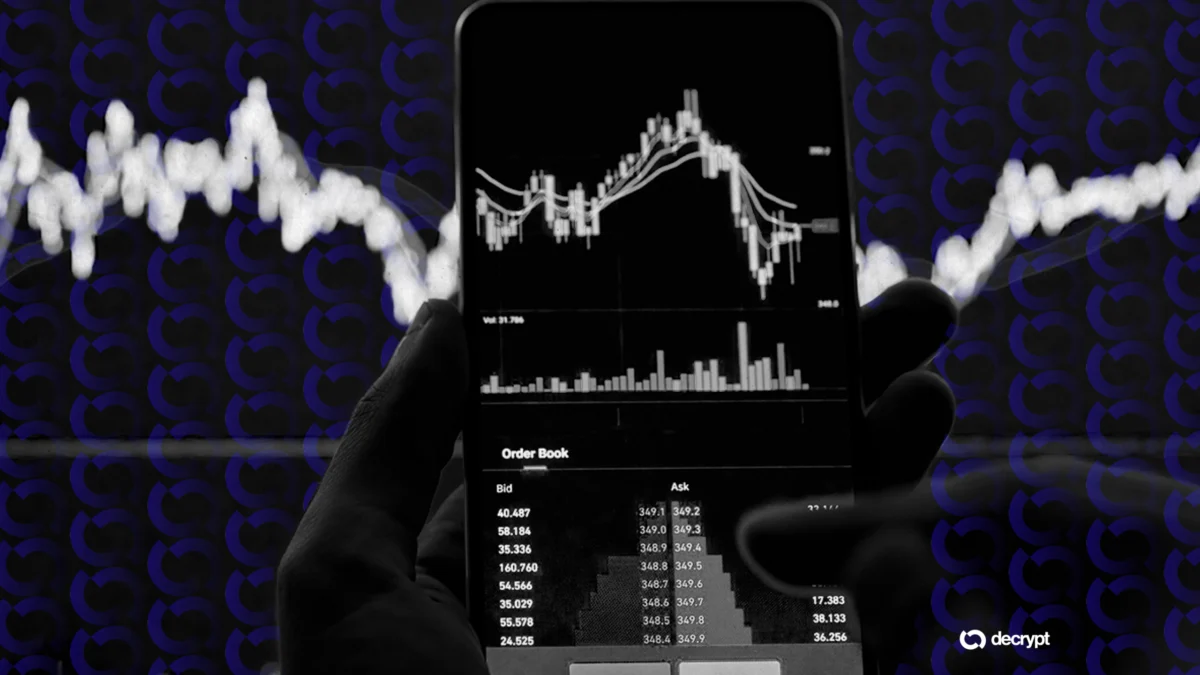
The global cryptocurrency market witnessed a surge in volatility Tuesday as artificial intelligence-focused altcoins spearheaded a broad recovery, catalyzed by shifting geopolitical tensions and a massive wave of forced liquidations. Digital assets associated with the burgeoning AI sector outperformed the wider market after United States President Donald Trump announced a strategic "postponement" of planned military strikes against Iran’s energy infrastructure. This diplomatic pivot initially sparked a relief rally across risk-on assets, though the subsequent denial of diplomatic progress by Iranian officials introduced a fresh layer of uncertainty that ultimately led to over $670 million in market-wide liquidations within a 24-hour window.
Among the top performers, Bittensor (TAO) recorded a substantial 10.2% increase, underscoring the high-beta nature of AI-linked protocols. The Artificial Superintelligence Alliance (FET) and Render (RENDER) followed suit, posting gains of 6.2% and 4.8%, respectively. Other notable movements were observed in Aptos (APT), LayerZero (ZRO), and World Liberty Financial (WLFI), the decentralized finance project associated with the Trump family. According to data from CoinGecko, these collective gains helped push the total cryptocurrency market capitalization back above the $2.5 trillion threshold, a psychological level that has served as a pivot point for investor sentiment in recent weeks.
Geopolitical De-escalation Signals and the Risk-On Pivot
The primary driver for the early Tuesday rally was a sudden shift in the rhetorical stance of the White House regarding the ongoing friction in the Middle East. President Trump announced a five-day moratorium on planned strikes against Iranian power plants and energy facilities, citing what he described as "productive conversations" between Washington and Tehran. The prospect of de-escalation in a region critical to global energy supplies had an immediate and profound impact on traditional markets, which subsequently spilled over into the digital asset space.
As news of the pause broke, West Texas Intermediate (WTI) and Brent crude oil prices experienced a sharp decline, tumbling more than 13%. For crypto investors, the cooling of energy prices is often viewed as a precursor to lower inflationary pressures, which in turn increases the likelihood of a more accommodative monetary policy from the Federal Reserve. This "relief rally" environment provided the necessary liquidity for high-growth sectors, particularly AI tokens, to reclaim lost ground.
Performance Breakdown of AI-Centric Digital Assets
The outperformance of AI-focused altcoins is not an isolated phenomenon but rather the continuation of a narrative-driven market cycle. Bittensor’s TAO token, which serves as the native asset for a decentralized machine learning network, led the charge. Analysts point to TAO’s unique positioning as a proxy for decentralized compute and intelligence, making it a primary target for institutional and retail speculators looking to capitalize on the "AI boom" within a blockchain framework.
The Artificial Superintelligence Alliance (FET), representing the merged interests of Fetch.ai, Ocean Protocol, and SingularityNET, also saw significant buying pressure. The consolidation of these projects has created a unified ecosystem that investors increasingly view as a blue-chip entry point for the AI crypto sub-sector. Similarly, Render (RENDER), a provider of decentralized GPU-based rendering solutions, benefited from the renewed interest in the hardware side of the AI revolution.
Derek Lim, Head of Research at crypto market-making firm Caladan, noted that the surge was exacerbated by the technical positioning of the market. Lim explained that the short squeeze propagated most aggressively into "higher-beta names where positioning was already most compressed." In financial terms, beta measures a token’s volatility relative to the broader market; AI tokens currently possess some of the highest beta coefficients in the industry, meaning they tend to swing more violently than Bitcoin or Ethereum during periods of market stress or recovery.
The Nvidia Factor: Technological Tailwinds
Beyond the geopolitical headlines, the AI sector in crypto has been bolstered by developments in the traditional technology sector. The recent GTC conference hosted by Nvidia, led by CEO Jensen Huang, acted as a secondary catalyst for the Tuesday rally. Nvidia’s continued dominance in the AI hardware space often serves as a sentiment barometer for AI-related crypto projects.
The convergence of easing geopolitical fears and the "halo effect" from Nvidia’s technological milestones created a perfect storm for tokens like TAO and FET. When the traditional AI sector thrives, capital often flows downstream into decentralized alternatives, as investors seek outsized returns in smaller-cap assets that mirror the growth of industry giants.
Conflicting Diplomatic Reports and Market Reversal
The initial optimism of Tuesday morning was met with a sharp reality check as the trading day progressed. Iran’s foreign ministry issued a formal statement asserting that there was "no dialogue" currently taking place between Tehran and Washington, directly contradicting the U.S. President’s claims of productive discussions. This denial was further reinforced by Iran’s parliament speaker, Mohammad Bagher Ghalibaf, who dismissed the notion of a diplomatic breakthrough.
The resulting confusion triggered a swift reversal in the energy markets. Oil prices, which had earlier cratered, surged back above $100 a barrel as traders reassessed the risk of supply disruptions. The volatility in the energy sector translated into immediate turbulence for the cryptocurrency market. The sudden "risk-off" shift caught many over-leveraged traders off guard, leading to a cascade of liquidations.
Liquidations and the Mechanics of the Short Squeeze
Data from Coinglass revealed the sheer scale of the market’s volatility. Over a 24-hour period, more than $670 million in positions were liquidated across the crypto ecosystem. Interestingly, while the market eventually saw a mix of long and short liquidations, short positions accounted for approximately $370 million—representing more than half of the total.
A short squeeze occurs when the price of an asset rises unexpectedly, forcing traders who bet on a price decline to buy back the asset to close their positions. This forced buying further drives the price up, creating a feedback loop. In the case of AI altcoins, the initial move higher triggered by the Trump announcement forced shorts to cover, which provided the momentum for the double-digit gains seen in TAO and others. However, the subsequent Iranian denial led to a "long squeeze" for those who entered the market at the top of the rally, contributing to the high total liquidation figure.
Macroeconomic Headwinds: Inflation and the Energy Dilemma
The ongoing uncertainty regarding the U.S.-Iran conflict has broader implications for the global economy, specifically concerning inflation and interest rate expectations. Illia Otychenko, lead analyst at cryptocurrency exchange CEX.IO, highlighted that conflicting statements are fueling risk aversion.
"That uncertainty is keeping oil prices elevated and lowering expectations for rate cuts," Otychenko stated. For the crypto market, this creates a complex environment. High oil prices are traditionally inflationary, which may force central banks to keep interest rates "higher for longer." Such a scenario is generally bearish for risk assets like altcoins, which rely on cheap liquidity and a high appetite for risk.
Furthermore, rising Treasury yields have begun to compete with digital assets for capital. When yields on safe-haven government bonds rise, the opportunity cost of holding volatile cryptocurrencies increases, often leading to capital outflows from the altcoin market back into traditional finance or stablecoins.
The Divergent Path for Bitcoin and Altcoins
Despite the turbulence affecting the altcoin sector, Bitcoin (BTC) has maintained a relatively stable trajectory. The primary cryptocurrency continues to trade near the $71,000 mark, posting a modest 0.3% gain over the 24-hour period. This stability highlights a growing divergence between Bitcoin and the rest of the digital asset market.
Analysts suggest that Bitcoin is increasingly being viewed through the lens of its "store-of-value" narrative. In times of geopolitical instability and inflationary fears, Bitcoin often acts as a digital gold, attracting capital from investors looking to hedge against currency debasement. Otychenko warned, however, that the real test for Bitcoin would come if oil prices and Treasury yields begin to move in opposite directions. Such a decoupling would create a macro backdrop that could pressure almost all assets except for bonds and the U.S. dollar, potentially testing Bitcoin’s resilience as a non-correlated asset.
Future Projections and the Viability of an Altcoin Season
While the rally in AI tokens provided a glimpse of bullish momentum, experts remain cautious about the prospect of a broad-based "altcoin season." Previous reports indicate that altcoin trading volumes have slumped significantly as monetary conditions remain tight. Instead of a "rising tide lifts all boats" scenario, the market appears to be transitioning into a more selective phase.
In this maturing market, gains are expected to be concentrated in narrow sectors driven by specific narratives—such as AI, Real World Assets (RWA), or modular blockchain infrastructure—and projects with strong fundamental adoption. The "spray and pray" approach of previous cycles is being replaced by a more calculated investment strategy focused on utility and macro-alignment.
This sentiment is reflected in the prediction markets. On Myriad, a platform owned by Dastan (the parent company of Decrypt), users are currently assigning only a 44% probability to a significant crypto rally this spring. This sub-50% confidence level suggests that while specific sectors like AI may see explosive short-term growth, the broader market remains weighed down by geopolitical uncertainty and a restrictive macroeconomic environment.
As the week progresses, market participants will be closely monitoring official communications from both Washington and Tehran. Any further confirmation of diplomatic stalling or a return to aggressive military rhetoric could quickly erase the gains made by AI altcoins, while a genuine de-escalation could provide the fuel needed for the total crypto market cap to challenge its previous all-time highs. For now, the market remains in a state of high-tension equilibrium, sensitive to every headline and diplomatic shift.