Lina Irawan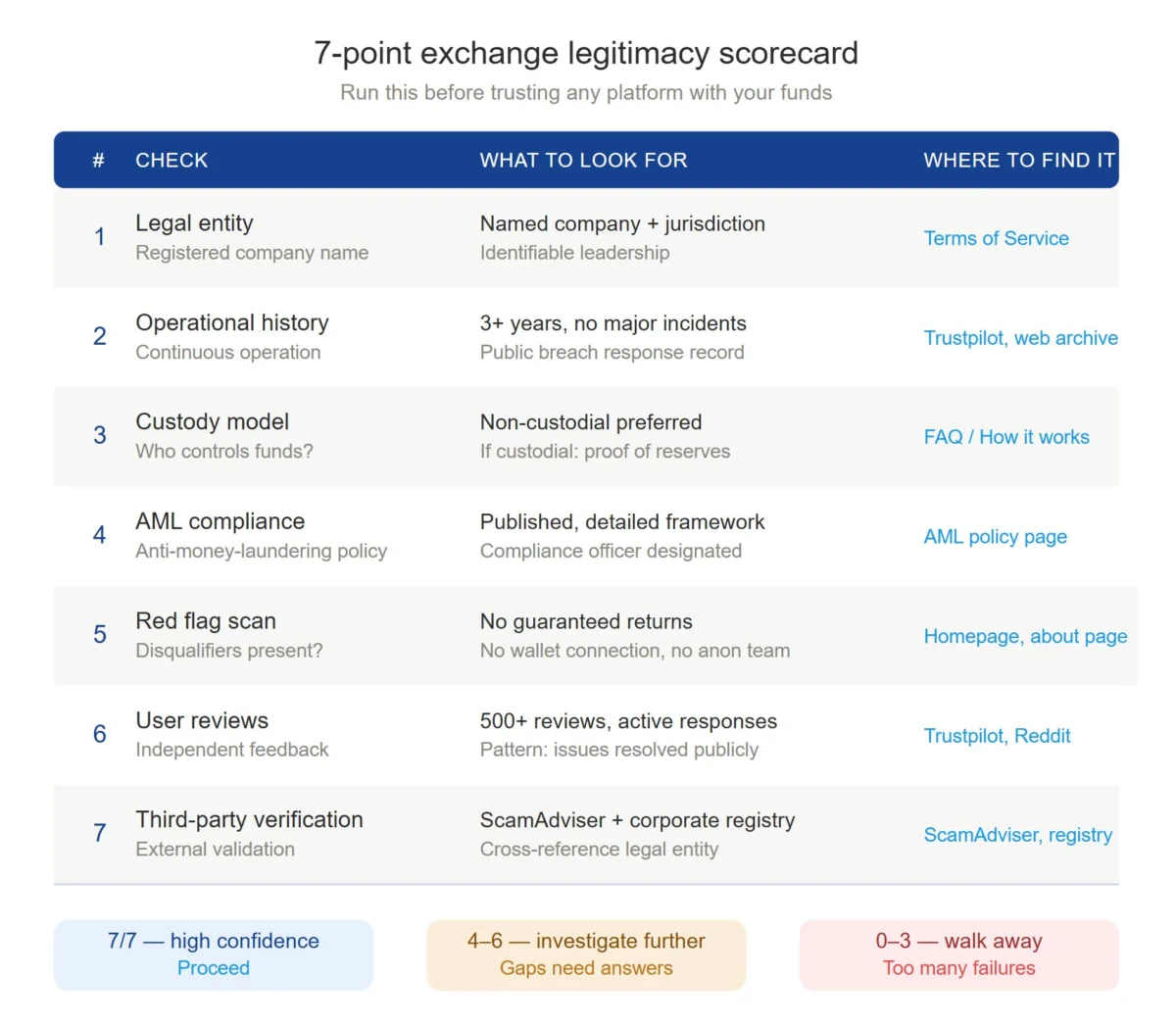
The digital asset landscape, while offering unprecedented opportunities for financial innovation, is also a fertile ground for sophisticated scams and fraudulent activities. In 2025 alone, Chainalysis reported that an estimated $17 billion was lost to cryptocurrency scams and fraud, a staggering increase from the revised $12 billion total of the previous year. This alarming trend was exacerbated by a 1,400% surge in impersonation scams and the rise of AI-enabled fraud, which proved to be 4.5 times more profitable than traditional schemes. At the core of these widespread losses lies a fundamental vulnerability: users entrusting their digital assets to platforms without conducting adequate verification. The critical question for any cryptocurrency user is not whether to verify an exchange, but how. Generic advice like "check reviews" or "look for a padlock icon" offers superficial reassurance rather than robust due diligence. This article presents a comprehensive, repeatable framework, mirroring the rigorous standards employed by institutional traders and compliance professionals, to empower individuals to assess the legitimacy of crypto exchanges and avoid becoming another statistic in the escalating digital asset fraud epidemic.
The Escalating Threat: A New Era of Crypto Fraud
The sheer scale of financial losses attributed to crypto scams and fraud in recent years underscores a systemic issue within the digital asset ecosystem. The year-over-year increase from $12 billion to $17 billion is not merely an incremental rise; it signifies an acceleration of illicit activities, driven by evolving technologies and increasingly sophisticated attack vectors. The surge in impersonation scams, where fraudsters leverage familiar branding or public figures to trick unsuspecting individuals, highlights the psychological manipulation tactics at play. Simultaneously, the emergence of AI-enabled fraud introduces a new dimension of efficiency and personalization to criminal operations. These advanced schemes can mimic legitimate communication patterns, create highly convincing fake websites, and even automate phishing attacks, making them exceptionally difficult to detect with conventional security measures.
The underlying failure in most of these incidents is a lack of basic due diligence on the part of the user. In a space characterized by rapid technological advancement and a degree of regulatory ambiguity, relying on intuition or superficial checks is akin to gambling with one’s financial future. This article aims to equip users with the knowledge and tools to perform a thorough assessment of any cryptocurrency exchange before committing their funds.
Step 1: Verifying the Legal Entity Behind the Exchange
The foundational element of a legitimate cryptocurrency exchange is its traceability to a registered legal entity. This is the crucial starting point for any due diligence process, as it establishes accountability and provides a basis for recourse should issues arise. Before delving into the exchange’s user interface or marketing materials, the paramount concern should be the corporate registration of its parent company. The presence of a verifiable legal entity signifies that the operation is subject to some form of regulatory oversight and that there are identifiable individuals responsible for its conduct.
When examining the legal structure, several key indicators must be scrutinized:
- Registered Legal Entity: A legitimate exchange must operate under a formally registered company. This entity should have a clear name and registration number. Users should be able to find this information readily available, typically within the exchange’s "Terms of Service" or "About Us" pages.
- Jurisdiction of Incorporation: The country or jurisdiction where the parent company is registered is significant. While some jurisdictions are more robust in their regulatory frameworks than others, the key is that a jurisdiction exists and is publicly declared. The Seychelles, for instance, is a common jurisdiction for crypto exchanges, and while it may not have the same stringent oversight as the SEC in the United States or the MiCA regulations in Europe, its presence indicates a deliberate choice to establish a legal presence. The critical factor then becomes whether the exchange voluntarily implements comparable compliance standards.
- Named Responsible Persons: Beyond the corporate entity, there should be transparency regarding key personnel. Identifying at least one named responsible person, such as a CEO, Compliance Officer, or Director, adds a layer of personal accountability. This information is often found in company filings, press releases, or leadership pages on the company website.
If an exchange fails to provide a verifiable legal entity, a registered jurisdiction, and at least one named responsible individual, it is a significant red flag. At this juncture, further investigation is unwarranted, as the absence of these fundamental elements points to a lack of transparency and accountability, essential for any financial service.
Step 2: Examining the Exchange’s Incident History
Past performance is often the most reliable predictor of future behavior, and this adage holds particularly true in the volatile world of cryptocurrency. An exchange’s track record of handling security incidents, operational challenges, and customer complaints provides invaluable insights into its resilience and commitment to user protection. While an exchange with no reported incidents might seem ideal, it could simply be a newer platform that hasn’t yet faced significant challenges. Conversely, an exchange that has transparently addressed past issues and compensated affected users demonstrates a capacity to manage crises under pressure.

When assessing an exchange’s incident history, consider the following:
- Security Breaches and Hacks: The frequency, severity, and response to past security breaches are critical. A platform that has experienced multiple major hacks without adequate remediation or transparency raises serious concerns. Conversely, an exchange that has proactively disclosed breaches, outlined its security enhancements, and managed to recover or compensate users for losses demonstrates a commitment to security and user welfare.
- Operational Outages and Downtime: Frequent or prolonged periods of downtime, especially during periods of high market volatility, can indicate underlying infrastructure weaknesses or poor operational management. A history of stable operations, even through market downturns, is a positive indicator.
- Customer Fund Mishandling: Incidents involving the misuse or loss of customer funds due to internal mismanagement or insolvency are among the most serious red flags. The collapse of FTX in November 2022 serves as a stark reminder of the catastrophic consequences when custodial platforms mishandle user assets. An exchange’s history in this regard is paramount.
- Transparency and Communication: How an exchange communicates about incidents is as important as the incidents themselves. Transparent and timely disclosure, coupled with clear explanations of the steps taken to resolve issues, builds trust. A pattern of evasiveness or delayed communication during crises is a significant warning sign.
- Regulatory Actions and Fines: Any history of enforcement actions, investigations, or fines from regulatory bodies in its operating jurisdictions should be thoroughly investigated. Such actions can indicate compliance failures or misconduct.
A clean incident record is desirable, but a clean record spanning years of continuous operation, encompassing various market cycles and potential challenges, is a far stronger indicator of an exchange’s reliability and trustworthiness.
Step 3: Understanding the Custody Model – The Biggest Risk Factor
The custody model of a cryptocurrency exchange is arguably the single most significant factor determining the level of risk associated with holding digital assets on the platform. This model dictates who has control over users’ private keys and, consequently, their funds. There are two primary types of custody models: custodial and non-custodial.
-
Custodial Exchanges: These platforms hold users’ cryptocurrencies in wallets managed by the exchange itself. When you deposit funds onto a custodial exchange, you are essentially entrusting the platform with your private keys. While this can offer convenience, it introduces substantial risks. The most significant risk is insolvency. If the exchange goes bankrupt, as seen with FTX, Celsius, and Voyager, user funds held in custody can be lost or tied up in lengthy bankruptcy proceedings. Furthermore, custodial exchanges are susceptible to insider threats, where employees with privileged access could misappropriate funds. The convenience of a custodial model comes at the cost of relinquishing direct control over one’s assets.
-
Non-Custodial Exchanges: In contrast, non-custodial exchanges never take possession of users’ private keys or digital assets. Transactions occur directly between the user’s own wallet and the counterparty’s wallet. The exchange acts as an intermediary, facilitating the swap without ever controlling the underlying funds. This architecture inherently eliminates the risk of insolvency-related fund loss and insider misuse of pooled assets. Users retain full control of their private keys at all times. While "non-custodial" does not automatically equate to "safe" – users still need to verify the platform’s integrity – it fundamentally removes the largest category of exchange risk: the potential for a third party to mismanage or abscond with your money.
The practical differences are stark:
| Feature | Custodial Exchange | Non-Custodial Exchange |
|---|---|---|
| Fund Control | Platform holds assets | User retains control |
| Insolvency Risk | High; user funds at risk | None; no pooled balances |
| Insider Threat | Possible | Structurally eliminated |
| KYC Required | Typically Yes | Varies, often minimal or none |
| Swap Speed | Varies | Usually 5-30 minutes |
| Example Platforms | Coinbase, Kraken, Binance | Godex, Boltz, Bisq |
Non-custodial exchanges, often referred to as instant swap services, process transactions by routing them directly from the user’s wallet to the recipient’s. The user initiates a swap, sends their cryptocurrency to a generated address, and the swapped asset is returned to their specified wallet. The "exposure window," the period during which the exchange has any involvement, is limited to the transaction processing time, typically measured in minutes, rather than days or longer periods associated with custodial withdrawals.
It is crucial to reiterate that even with a non-custodial architecture, users must still conduct thorough due diligence. Verifying the legal entity, incident history, and operational model of a non-custodial exchange remains essential. However, by choosing a non-custodial model, users significantly mitigate the most prevalent and devastating risks associated with centralized cryptocurrency platforms.
Scam Exchange Red Flags: Immediate Disqualifiers

Many fraudulent cryptocurrency exchanges exhibit predictable patterns of behavior and operational characteristics. Recognizing these "red flags" early can prevent significant financial losses. These signals are often more apparent than users realize, but awareness is key.
The following are immediate disqualifiers for any cryptocurrency exchange:
- Lack of Verifiable Legal Entity: As discussed in Step 1, the absence of a registered company, jurisdiction, or named responsible individuals is a fundamental flaw.
- Anonymous or Unverifiable Team: Legitimate businesses are transparent about their leadership. Exchanges with anonymous teams or where the identities of key personnel cannot be independently verified should be treated with extreme suspicion.
- No Published Compliance Policies (AML/KYC): While some non-custodial exchanges may have minimal KYC requirements, all reputable platforms should have clearly accessible Anti-Money Laundering (AML) and Know Your Customer (KYC) policies. The absence of such policies suggests a disregard for regulatory compliance and a potential haven for illicit activities.
- Mandatory Wallet Connection: Legitimate exchanges typically operate via wallet addresses for transactions. Platforms that demand direct connection to your personal wallet (e.g., through browser extensions like MetaMask) before facilitating any transaction can pose a significant security risk, potentially granting the platform unauthorized access to your funds.
- Template or Non-Responsive Support: Poor customer support is a common characteristic of scam operations. Exchanges that offer only generic, templated responses or are unresponsive to customer inquiries, especially regarding withdrawals or transaction issues, are highly suspect.
- Unrealistic Promises or Guarantees: Be wary of exchanges that promise guaranteed high returns, exceptionally low fees that seem too good to be true, or offer special "promotions" that pressure users into quick decisions. These are often hallmarks of Ponzi schemes or fraudulent investment platforms.
- Obfuscated Fee Structures: Hidden or complex fee structures that are not clearly disclosed upfront can lead to unexpected charges and reduced profits. Transparent and straightforward fee disclosures are a sign of a legitimate operation.
One red flag should serve as a strong warning. Three or more red flags strongly indicate a pattern of deception, and users should disengage from such platforms immediately.
Tools for Verifying Exchange Legitimacy
Leveraging third-party verification tools can significantly streamline the due diligence process, condensing hours of research into minutes. While no single tool is a silver bullet, a combination of these resources can provide a reliable composite assessment of an exchange’s legitimacy.
- Whois Lookup: This tool reveals information about the registration of a website’s domain name, including the registrant’s contact details and the registration date. A recently registered domain for an exchange claiming to be established for years is a major red flag.
- ScamAdviser.com and Similar Review Sites: These platforms aggregate user reviews and perform automated checks for common scam indicators. While user reviews should be taken with a grain of salt and cross-referenced, an overwhelmingly negative sentiment or a low trust score from a reputable aggregator is a significant warning.
- Corporate Registry Databases: Depending on the exchange’s claimed jurisdiction, accessing official corporate registry databases (e.g., Companies House in the UK, SEC EDGAR database in the US) can verify the existence and details of the registered legal entity.
- Trustpilot and Reddit: While not solely verification tools, these platforms offer a wealth of user feedback. Examining detailed reviews on Trustpilot or searching for discussions on Reddit can reveal patterns of user experiences, both positive and negative, related to withdrawals, customer support, and overall platform reliability.
- Blockchain Explorers: For non-custodial exchanges, verifying transaction flows through blockchain explorers can offer insights into the operational mechanics, though this requires a more technical understanding.
By strategically employing these tools, users can gather objective data to supplement their qualitative assessment of an exchange.
Case Study: Applying the Framework to Godex
To illustrate the practical application of this due diligence framework, let’s examine Godex, a cryptocurrency exchange.
-
Legal Entity Check: Godex operates under Nrnb Ltd., a company registered in the Republic of Seychelles. This information is readily accessible within their publicly available AML/KYC Policy. The policy also names a designated AML Compliance Officer with direct access to senior management. While Seychelles may not have the same regulatory rigor as some Western jurisdictions, the key here is that a legal entity and a clear jurisdiction are established. Godex’s voluntarily implemented compliance standards, including a Customer Identification Program, risk-based tiering, transaction monitoring, and suspicious activity reporting procedures, align with international best practices, reflecting a commitment to responsible operations.
-
Incident History: Godex is a non-custodial instant crypto exchange that has been operational since 2018. During its eight years of continuous operation, it has navigated multiple market cycles, including the significant downturn of 2022 that led to the collapse of several major exchanges. Crucially, there are no reported security breaches or incidents of frozen user funds at the platform level. With over 1,000 Trustpilot reviews averaging a 4.4-star rating, the platform demonstrates a positive track record. While individual complaints are not uncommon for any service provider, the overall pattern indicates active support responses and issue resolution.

-
Custody Model: Godex operates on a non-custodial architecture. Users do not create accounts or deposit funds into a Godex-controlled wallet. Instead, users provide a destination address, send their cryptocurrency, and receive the swapped asset directly into their wallet. This design inherently eliminates the risks of insolvency, insider misuse of pooled assets, and account freezes that are characteristic of custodial platforms. The user’s exposure window is limited to the transaction processing time, typically a matter of minutes.
-
Red Flag Scan:
- Published AML/KYC policy: Present and accessible.
- Legal entity with named jurisdiction: Confirmed (Nrnb Ltd., Seychelles).
- No wallet connection required: Confirmed; transactions are address-based.
- Active support with public response history: Confirmed through user reviews and platform transparency.
- Partnerships with established brands (e.g., Trezor, Edge Wallet): Indicative of broader ecosystem trust.
- Restricted jurisdictions list aligned with FATF guidance: Demonstrates awareness of international compliance standards.
-
Operational Specifics: Godex supports over 937 cryptocurrencies, offering both fixed and floating rate options for swaps. Fixed rates guarantee the quoted price, protecting users against market volatility. The platform has no upper exchange volume limits and provides 24/7 support.
By applying this structured framework, users can systematically assess a platform’s legitimacy and identify potential risks before committing their assets.
The Due Diligence Checklist
Before utilizing any cryptocurrency exchange, regardless of whether it is centralized, decentralized, custodial, or non-custodial, users should conduct the following checks:
- Legal Entity Verification: Examine the "Terms of Service" and "About Us" pages for a registered company name, jurisdiction, and contact information.
- Operational History and Longevity: Assess the exchange’s operational history through user reviews on platforms like Trustpilot and search for mentions on forums like Reddit. Longer operational histories, especially through market volatility, are generally more trustworthy.
- Custody Model Clarity: Understand whether the exchange is custodial or non-custodial by reviewing its FAQ or platform documentation. Prioritize non-custodial solutions to minimize fund control risks.
- AML/KYC Compliance: Locate and review the exchange’s published AML and KYC policies. The presence of these policies indicates a commitment to regulatory compliance.
- Red Flag Scan: Review the exchange’s homepage and operational practices for any immediate disqualifiers, such as mandatory wallet connections, anonymous teams, or unrealistic promises.
- User Reviews and Community Feedback: Consult independent review sites and cryptocurrency communities to gauge overall user sentiment and identify recurring issues.
- Third-Party Verification Tools: Utilize services like ScamAdviser.com and domain registration lookups to gather objective data on the platform’s reputation and technical aspects.
A score of 7 out of 7 on this checklist suggests a high level of confidence. A score of 4 to 6 warrants further investigation, while a score of 0 to 3 indicates that users should disengage from the platform.
The Bottom Line
The legitimacy of a cryptocurrency exchange is not a binary concept but exists on a spectrum defined by transparency, architectural integrity, and a demonstrable track record. Platforms that endure and foster repeat user engagement across various market cycles are those that have made structural decisions to minimize risk rather than expecting users to passively accept it. The principles of transparency, robust architecture, and a consistent history of responsible operation are paramount. If these criteria—non-custodial architecture, published compliance policies, operational longevity, and the absence of mandatory identity collection—align with your priorities, platforms like Godex warrant thorough evaluation. However, the ultimate safeguard lies not in accepting assurances, but in conducting diligent, independent verification. By systematically applying a comprehensive due diligence framework, users can navigate the cryptocurrency landscape with greater confidence and security, transforming the daunting task of exchange verification into a proactive and empowering practice.