admin
admin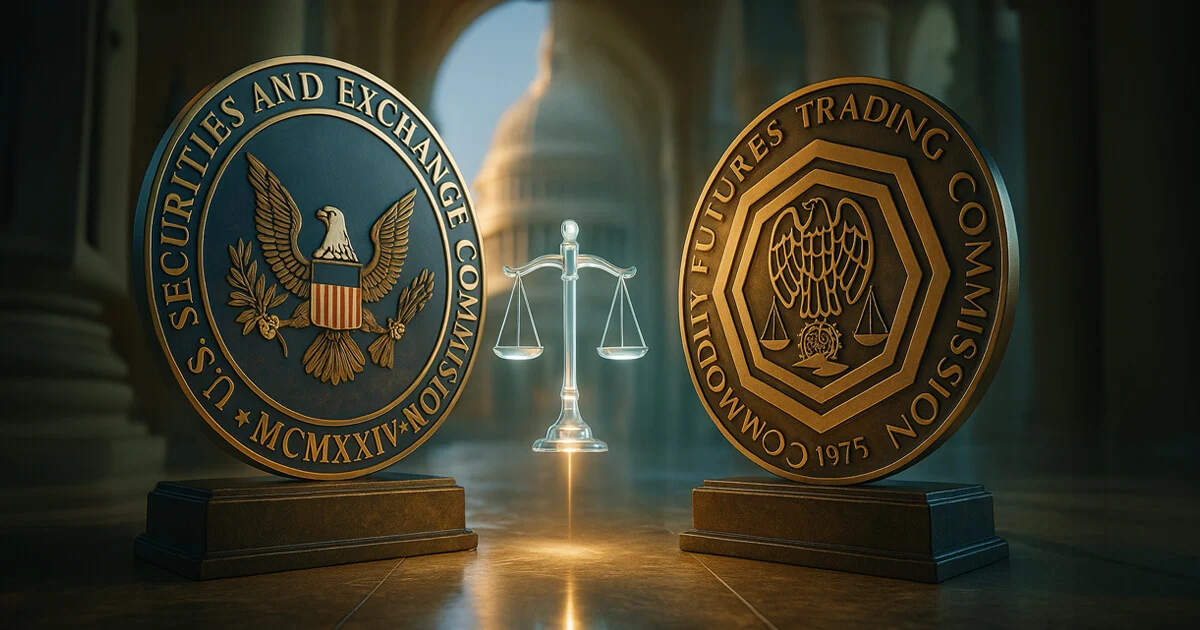
Washington D.C. has long grappled with the complex question of which regulatory bodies should oversee the burgeoning digital asset landscape. While the House of Representatives passed the Digital Asset Market Clarity Act of 2025 during the summer, signaling a desire for legislative action, the Senate has remained notably silent. This legislative inertia has now been broken with the release of two competing discussion drafts from key Senate committees, each proposing distinct pathways toward regulatory order and fundamentally reshaping the jurisdictional map for digital assets in the United States. These proposals, emanating from the Senate Agriculture Committee and the Senate Banking Committee, promise to alter the regulatory frameworks governing everything from Bitcoin spot markets to Ethereum disclosures and the operational rulebooks of digital asset exchanges.
The emergence of these two distinct legislative proposals marks a critical juncture for the digital asset industry. The outcome of this Senate debate will have profound implications for how digital assets are classified, how they are traded, and how investor protections are implemented. For market participants, from nascent startups to established financial institutions, understanding the nuances of these competing drafts is paramount to navigating the evolving regulatory environment. The choices made in the coming months will determine the future structure of the U.S. digital asset market, influencing everything from custodial arrangements and asset classification to the depth and breadth of disclosure requirements.
The Senate Agriculture Committee’s proposal, a bipartisan effort spearheaded by Senators John Boozman and Cory Booker, aims to significantly expand the authority of the Commodity Futures Trading Commission (CFTC). This draft envisions the CFTC as the primary regulator for what it defines as "digital commodities" and their associated spot markets. To achieve this, the legislation outlines a comprehensive registration framework for exchanges, brokers, and dealers operating in this space, mirroring the established oversight mechanisms the CFTC currently applies to traditional commodity markets. This move would bring a substantial portion of the digital asset ecosystem under a regulatory umbrella with decades of experience in managing complex derivatives and commodity trading.
Under the Agriculture Committee’s framework, intermediaries would be mandated to utilize qualified custodians to safeguard customer assets, a crucial measure designed to prevent potential conflicts of interest, particularly with affiliated entities. The bill also thoughtfully includes provisions for joint rulemaking between the CFTC and the Securities and Exchange Commission (SEC) to address entities or situations that may fall under dual jurisdiction or require dual registration. However, acknowledging the complexity of the decentralized finance (DeFi) sector, the draft proposes to defer detailed regulatory considerations for DeFi to future debates, recognizing its unique challenges.
This version of the legislation appears to build upon the spirit of the House’s Clarity Act, with a clear intention to bring the volatile and often opaque spot markets for digital assets under the direct oversight of the CFTC. For U.S.-based Bitcoin platforms, this would necessitate registration as digital-commodity exchanges, compelling them to adhere to new capital requirements, stringent custody rules, and enhanced retail investor protections. Such a regulatory shift could lead to a greater standardization of data sharing across trading venues, which would be a boon for market surveillance capabilities, particularly for entities such as exchange-traded fund (ETF) issuers who rely on robust market data. It is important to note that while spot markets might fall under CFTC purview, the regulatory status of ETFs themselves would likely remain under the SEC’s jurisdiction.
The potential impact of shifting spot market oversight to the CFTC extends beyond mere administrative changes. It suggests a fundamental reorientation of how these markets are perceived and managed. Exchanges would be compelled to operate under the principles of commodity exchanges, emphasizing clear reporting, robust market surveillance, and the integrity of trading operations over the more disclosure-centric approach often associated with securities regulation. This could provide market analysts, traders, and regulators with a more granular and comprehensive understanding of market quality, liquidity, and potential manipulation. Despite this expansion of CFTC authority, the SEC would retain its role in overseeing digital assets classified as securities and any crypto-related futures contracts, thus maintaining a dual oversight structure for certain aspects of the market.
In parallel, across the Capitol, the Senate Banking Committee has put forth its own legislative proposal, dubbed the Responsible Financial Innovation Act. This draft takes a different tack, focusing on digital assets that occupy a nebulous space between traditional securities and commodities. At the heart of the Banking Committee’s proposal is the introduction of a new category: "ancillary assets." This term is defined as a "fungible digital commodity" that is distributed through an arrangement that also constitutes an investment contract.
The Banking Committee’s draft explicitly grants the SEC enhanced authority to oversee these "ancillary assets." This would involve imposing disclosure requirements on issuers, compelling them to provide detailed information regarding token distributions, governance structures, and the associated risks. Furthermore, the legislation would provide the SEC with a defined timeframe, approximately two years, to finalize comprehensive rules defining what constitutes an "investment contract" in the digital asset context. A novel element of this proposal is the introduction of a "decentralization certification process." This mechanism would allow a digital asset project to transition away from securities treatment once its network control falls below specific, pre-defined thresholds, indicating a significant degree of decentralization.
This framework offers a potential pathway for digital assets that are intrinsically linked to "active projects," such as Ethereum, to navigate the regulatory landscape. A token could initially be subject to SEC oversight, benefiting from investor protections and disclosure requirements, but then "graduate" to a different regulatory status once its governance becomes sufficiently decentralized. This approach seeks to provide much-needed structure to a gray area that has troubled the industry since the early days of initial coin offerings and the landmark DAO report. Crucially, it would compel the SEC to articulate its understanding of decentralization in a clear, written form, moving away from the current reliance on enforcement actions to establish regulatory precedent.
Under this proposed model, clearer distinctions would likely emerge in practice. Bitcoin, with its established track record and decentralized nature, would almost certainly be treated as a digital commodity under the CFTC’s purview. Tokens with clear ties to specific corporate entities or development teams would likely fall under the SEC’s ancillary-asset regime until they can demonstrate sufficient decentralization. Centralized exchanges, the crucial intermediaries of the digital asset ecosystem, would find themselves navigating the complexities of both regulatory frameworks. They would need to register as CFTC digital-commodity exchanges to facilitate spot crypto trading, while simultaneously remaining subject to SEC oversight for any listed securities or ancillary assets.
The cumulative effect of these proposed frameworks could necessitate significant operational overhauls for U.S.-based digital asset platforms. This might include the adoption of dual registration models, adherence to more rigorous capital requirements, and the implementation of enhanced transparency measures for their trading books.
A significant unknown across both legislative proposals is the precise timeline for implementation. The Banking Committee’s draft includes specific deadlines for regulatory rulemaking, which could expedite the process. However, the Agriculture Committee’s draft leaves several key questions open for future deliberation. Both proposals are contingent on future coordination rules and extensive public consultations before any of these provisions can take effect. The House version of the Clarity Act has already cleared its chamber, but the Senate proposals are still very much in the discussion phase, with indications of potential opposition from various factions within both major political parties.
The two discussion drafts currently serve as an essential working document for those building and trading in the digital asset space. They offer a glimpse into how U.S. spot markets might evolve under a CFTC-led regulatory regime, providing clarity on the operational requirements and investor protections that could be put in place. Furthermore, they illustrate potential pathways for token projects to transition out of securities classification and outline how exchanges might need to fortify their internal compliance and operational firewalls to accommodate dual regulatory oversight. While these drafts may not immediately deliver the absolute clarity their titles suggest, they undeniably chart the next phase of the ongoing regulatory debate in Washington.
In a market where the classification of an asset can profoundly impact its liquidity, custodial arrangements, and overall compliance burden, understanding which agency will ultimately draw the definitive lines could prove to be as strategically valuable as any on-chain analytical tool. The coming months will be a period of intense negotiation and refinement, with significant implications for the future of digital finance in the United States. The industry watches with bated breath as Congress navigates the intricate task of bringing order to the rapidly evolving world of digital assets.