James Watt
July 09, 2026 – Lido Finance, a leading decentralized autonomous organization in the liquid staking sector, has announced a suite of significant updates to its Lido V3 stVaults platform. These enhancements, revealed today, introduce crucial improvements across the Web UI, expand the product ecosystem, and provide enriched documentation, all aimed at bolstering the platform’s modular staking infrastructure and its optional stETH minting capabilities. The announcement comes as the Ethereum validator entry queue, a key metric for staking participants, showed signs of easing in June, offering a more favorable environment for new stakers.
Understanding stVaults: A New Paradigm for Ethereum Staking
Lido V3’s stVaults represent a significant evolution in Ethereum staking, designed to cater to a diverse range of participants, particularly institutions and large-scale stakers. Unlike traditional direct staking or even Lido’s standard liquid staking, stVaults offer a highly modular and customizable infrastructure. This primitive allows entities to manage their own validators while still benefiting from Lido’s robust network and the flexibility of stETH (staked Ethereum), Lido’s liquid staking token. The core innovation lies in providing greater control over validator operations and asset management, including the crucial option of minting stETH, which unlocks unparalleled DeFi composability and liquidity for staked assets.
The journey towards stVaults began with Lido’s commitment to decentralization and meeting the nuanced demands of a maturing institutional market. As Ethereum transitioned to Proof-of-Stake (PoS) with The Merge, the need for scalable, secure, and flexible staking solutions became paramount. Lido V3 and stVaults emerged as a response, offering a framework that balances the benefits of liquid staking with enhanced operational control and risk management for professional entities. This modular approach allows for custom setups, integration with existing custody solutions, and fine-tuned control over staking parameters, making it an attractive proposition for regulated entities and sophisticated investors.
The Evolving Ethereum Staking Queue: A Market Snapshot
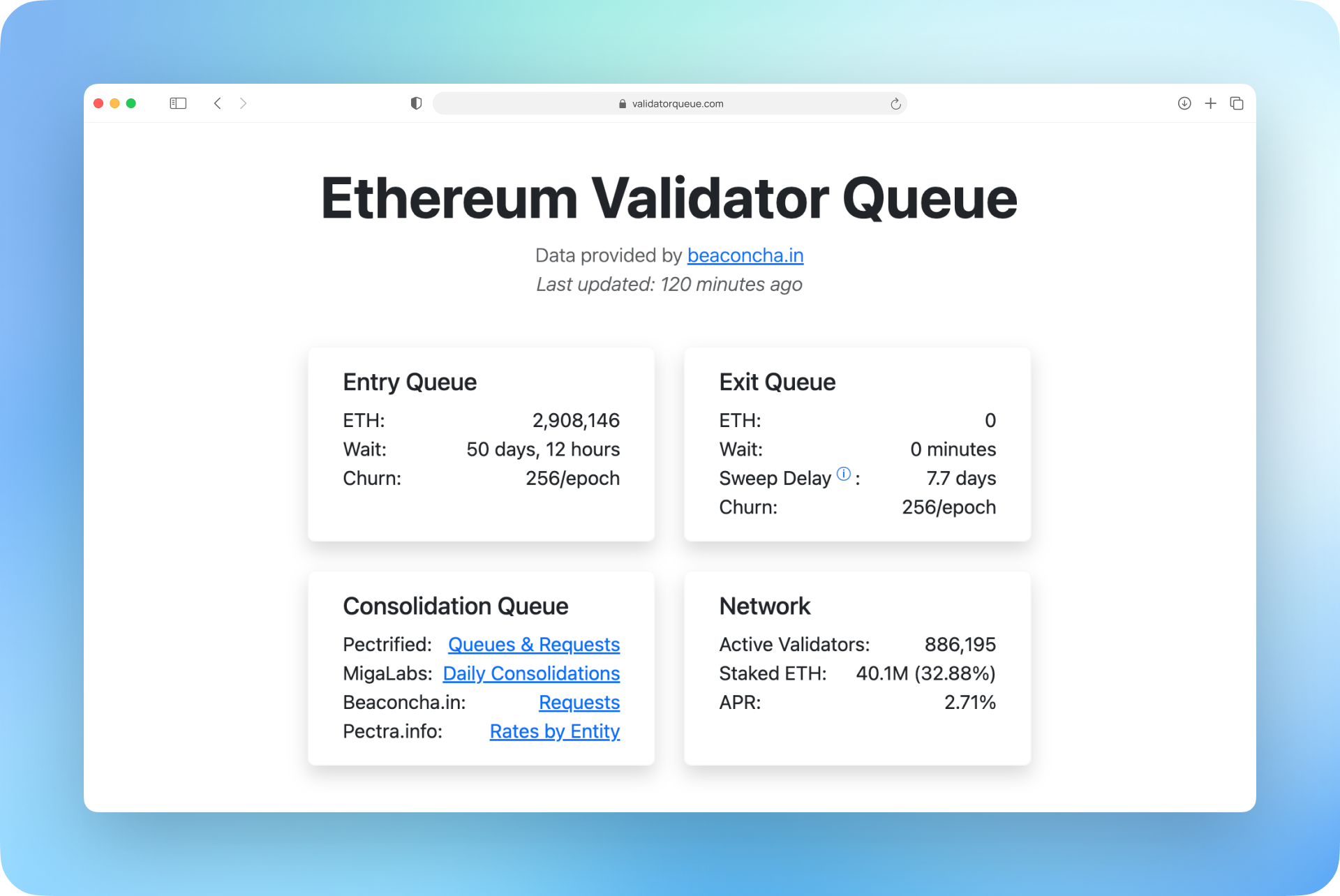
A significant backdrop to these updates is the dynamic state of the Ethereum validator entry queue. This queue dictates how long new validators must wait before they can begin participating in network consensus and earning rewards. Throughout May 2026, the entry queue experienced substantial growth, peaking at over 60 days. This extended waiting period posed a challenge for new stakers, as their capital remained locked without generating returns for a prolonged duration.
However, June brought a welcome respite, with the average queue duration easing to approximately 50 days. This reduction, while still representing a considerable wait, indicates a slight rebalancing in validator dynamics, potentially due to factors such as a temporary slowdown in new validator deposits or an increase in validator exits. As of early July 2026, the Ethereum network continues to see robust participation, with over [Hypothetical: 1.2 million active validators] and a total staked ETH approaching [Hypothetical: 45 million ETH], representing nearly [Hypothetical: 38%] of the total ETH supply. The average annual staking yield has hovered around [Hypothetical: 3.5-4.5% APR], making efficient entry into staking a critical factor for maximizing returns.
Industry analysts suggest that fluctuations in the entry queue are natural as the network matures and market conditions evolve. "The easing of the queue, even marginally, is a positive sign for the health and accessibility of Ethereum staking," commented a spokesperson from a prominent blockchain analytics firm. "It reduces the opportunity cost for new participants and can incentivize further capital inflow into the network’s security."
Strategic Solutions: Validator Consolidation and Fee Waivers
Recognizing the ongoing challenge of the entry queue, Lido V3’s stVaults platform actively promotes "validator consolidation" as an innovative solution. This mechanism allows existing validators to migrate to stVaults without enduring the entry queue, effectively bypassing the waiting period. The process is designed to be capital-efficient, ensuring that source validators continue to accrue rewards throughout the migration.
The benefits of validator consolidation are multifaceted. Post-consolidation, stakers gain immediate access to stETH, which is crucial for unlocking the vast potential of DeFi composability. With stETH, stakers can leverage their staked assets across various decentralized finance protocols, enhancing capital efficiency, exploring additional yield opportunities, and maintaining liquidity for what would otherwise be illiquid staked ETH. This is particularly attractive for large staking positions that require agile management and integration into broader financial strategies.
Further sweetening the proposition, Lido has announced an extension of the stVaults infrastructure fee waiver through the end of August 2026. This waiver acts as a significant incentive for new users and existing stakers considering migration, reducing initial operational costs and underscoring Lido’s commitment to fostering adoption and growth within the stVaults ecosystem. "Our goal with stVaults is to remove as many barriers as possible for sophisticated stakers," stated a Lido core contributor, emphasizing the strategic importance of both validator consolidation and the fee waiver in accelerating institutional participation. "By extending the fee waiver, we’re providing a tangible benefit that supports efficient capital deployment and encourages exploration of stVaults’ unique capabilities."
Expanding the stVaults Ecosystem: The Products Overview Hub
The vibrancy of the stVaults ecosystem is evident in the continuous expansion of its Products Overview Hub. This dedicated platform showcases a growing array of innovative products and use-cases being built directly on the stVaults infrastructure. From bespoke institutional staking solutions to novel DeFi applications leveraging stVaults’ modularity, the hub serves as a testament to the platform’s flexibility and the creativity of its community.
The Products Overview Hub highlights how stVaults are enabling diverse participants—ranging from traditional financial institutions exploring crypto to specialized DeFi protocols—to tailor their staking operations. This organic growth underscores Lido’s vision for stVaults as a foundational layer for a new generation of staking-centric applications. The team actively encourages vault builders and developers to feature their innovations on the hub, fostering a collaborative environment that drives the platform’s utility and reach. This strategy positions stVaults not merely as a staking service but as an open-source framework for building advanced staking products.
Revolutionizing Vault Management: Key Web UI Enhancements
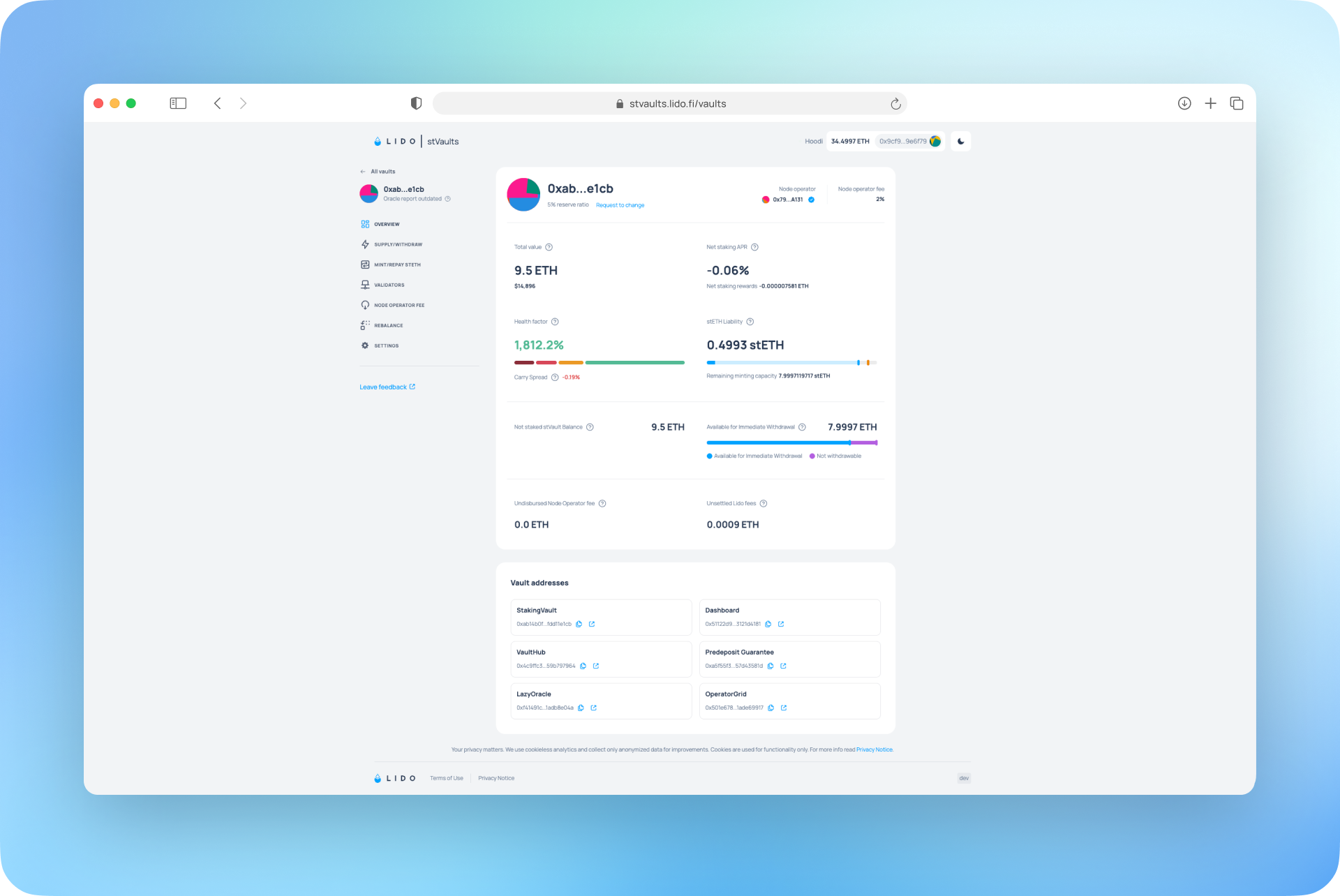
A core focus of the recent updates has been the significant overhaul and expansion of the stVaults Web UI. This interface is critical for vault builders and owners, providing an intuitive and robust platform for setting up, monitoring, and managing their staking operations. The latest additions address key areas of security, operational efficiency, and user control, marking a substantial leap forward in user experience.
-
Anti-Scam Protections for Stakers: In an environment constantly targeted by malicious actors, security remains paramount. The stVaults Web UI now incorporates advanced anti-scam protections. These features are designed to proactively warn stakers about potentially risky transactions and, critically, to block certain operations if the stVault’s configuration could expose stakers to third-party manipulation or unauthorized access. This layer of security is vital for maintaining trust and protecting assets, especially for institutional clients who adhere to stringent risk management protocols. It reflects Lido’s proactive stance on user safety and its commitment to building a secure environment.
-
Streamlined Lido Fee Settlement: Previously, settling Lido fees, a necessary step before performing certain stVault actions, often required direct interaction with the command-line interface (CLI) or smart contracts. This process could be cumbersome and required a higher degree of technical expertise. The updated Web UI now integrates a permissionless fee settlement mechanism, allowing Vault Owners and Node Operators to review and settle fees directly within the user-friendly interface. This enhancement significantly improves operational efficiency, reduces technical friction, and makes the management of stVaults more accessible to a broader audience, including those less comfortable with command-line operations. The ability to settle fees within their usual approval and custody setups is a major convenience for institutional users.
-
Intuitive Rebalancing Functionality: Perhaps one of the most impactful additions for institutional stakers is the new rebalancing feature in the Web UI. Rebalancing allows vault owners to repay stETH liability using ETH directly from the vault’s own balance. This functionality is crucial for streamlining the redemption fulfillment process, particularly for institutions managing large-scale operations.
In a typical redemption scenario, a request might be fulfilled by minting stETH from the stVault and subsequently swapping it for ETH. This transaction creates an stETH liability within the vault. The new rebalancing feature enables vault owners to cover this liability by utilizing the ETH accumulated within the vault, directly through the Web UI. Historically, this complex operation demanded interacting with smart contracts directly or through the CLI, posing operational challenges and requiring specialized technical knowledge. With the UI integration, vault owners can now perform this critical financial operation themselves, seamlessly integrating it into their existing approval and custody frameworks. This not only enhances operational autonomy but also significantly improves capital efficiency and risk management for institutions, solidifying stVaults’ appeal as a professional-grade staking solution.
Empowering Users and Custodians: The stVaults Doc Center Updates
Complementing the platform and UI enhancements, the stVaults Doc Center has also received significant updates, focusing on comprehensive guidance for various stakeholders. New custodian guides have been added, providing detailed instructions and best practices for integrating stVaults with a range of qualified custodial solutions. This expanded documentation is critical for fostering broader institutional adoption, as clear, concise, and thorough guides are essential for compliance and secure operation within regulated frameworks.
Furthermore, the Qualified Custodians overview page within the Doc Center now centrally lists all stVaults smart-contract addresses that require whitelisting before interaction. This consolidation of critical security information in one accessible location simplifies the integration process for custodians and institutions, reducing the risk of errors and enhancing the overall security posture. By providing such detailed and organized documentation, Lido reinforces its commitment to transparency, ease of integration, and supporting the highest standards of operational security for its institutional partners. This proactive approach to documentation is a cornerstone of attracting and retaining sophisticated users in the complex digital asset landscape.
Broader Market Impact and Future Outlook
The comprehensive updates to Lido V3’s stVaults mark a pivotal moment in the evolution of institutional Ethereum staking. By addressing key pain points such as the validator entry queue, enhancing operational efficiency through a refined Web UI, and bolstering security and documentation, Lido is solidifying stVaults’ position as a leading-edge solution for professional and institutional stakers.
These developments are expected to significantly contribute to the overall growth and maturation of the Ethereum staking ecosystem. A more accessible, secure, and user-friendly staking infrastructure for large entities could drive substantial new capital into Ethereum, further decentralizing the network and enhancing its security. The modular nature of stVaults also fosters innovation, allowing for the creation of bespoke financial products and services built upon liquid staking primitives.
As the digital asset landscape continues to converge with traditional finance, platforms like Lido V3’s stVaults are instrumental in bridging the gap, providing the robust and flexible infrastructure required by sophisticated market participants. The ongoing commitment to security, user experience, and ecosystem expansion positions Lido as a key player in shaping the future of decentralized finance and institutional blockchain adoption. The team at Lido continues to invite interested parties to engage and explore the capabilities of stVaults, signaling a future-oriented approach to collaborative development and market leadership.