
 Layla Zulfa
The artificial intelligence industry has reached a critical juncture as OpenAI and Anthropic engage in a direct confrontation for technical and market dominance. For the first time in its release history, OpenAI has deviated from its traditional single-model shipping strategy, introducing GPT-5.6 as a suite of three distinct large language models (LLMs): Sol, Terra, and Luna. This strategic pivot signals a move toward specialized compute-to-capability ratios, providing developers with specific "ceilings" for performance and pricing. Simultaneously, Anthropic’s flagship model, Claude Fable 5, faces significant regulatory and operational hurdles that threaten its position as the premier choice for high-end reasoning and creative tasks. As of mid-July 2026, the industry is witnessing a recalibration of value, where raw intelligence is being weighed against cost-efficiency and reliability.
The Tripartite Strategy of GPT-5.6
OpenAI’s decision to bifurcate GPT-5.6 into three separate entities—Sol, Terra, and Luna—represents a fundamental shift in how the organization approaches model scaling. Historically, OpenAI utilized "thinking dials" or internal parameter adjustments within a single model to manage output quality. With GPT-5.6, the models are genuinely separate, each featuring unique training datasets and optimization targets.
Sol, the flagship of the trio, is designed for maximum reasoning and complex agentic workflows. It currently serves as the direct competitor to Anthropic’s Claude Fable 5. Terra occupies the mid-range, optimized for high-throughput enterprise tasks, while Luna is the "small" model, designed for speed and low-latency applications. Despite its smaller footprint, Luna has already demonstrated superior performance in coding benchmarks compared to Anthropic’s older flagship, Opus 4.8. This internal hierarchy allows OpenAI to capture a broader spectrum of the market, offering a $1 input/$6 output per million tokens pricing for Luna, while Sol remains the premium option at $5 input and $30 output.
Chronology of the Anthropic Fable 5 Regulatory Crisis
The competitive landscape between Sol and Fable 5 cannot be understood without examining the recent operational difficulties faced by Anthropic. The month of June 2026 was particularly tumultuous for the San Francisco-based AI firm.
On June 12, 2026, the United States government issued an emergency ban on the distribution of Claude Fable 5. The action followed a report from researchers at Amazon who identified a significant "jailbreak" vulnerability. This flaw allowed the model to be repurposed as an unintended vulnerability scanner, capable of identifying and exploiting weaknesses in corporate networks. In response to the federal intervention, Anthropic pulled Fable 5 from global access for 19 days.
During this period of darkness, Anthropic engineers developed a new safety classifier designed to mitigate the jailbreak risks. The model was eventually restored to public access on July 1, but under a "compressed access window." Since its return, Anthropic has struggled to stabilize its subscription model. The company initially planned to move Fable 5 behind a usage-credits paywall on July 7, but this deadline was extended to July 12, and subsequently to July 19. These extensions, often announced via social media hours before the deadline, suggest a strategic attempt to maintain subscriber retention in the face of OpenAI’s aggressive pricing for the GPT-5.6 suite.
Comparative Performance Data and Benchmarks
When analyzed through standardized metrics, the gap between GPT-5.6 Sol and Claude Fable 5 is narrow but significant in specific domains. On the Artificial Analysis Coding Agent Index, Sol achieved a score of 80, surpassing Fable 5’s 77.2. More importantly, Sol reached this score using approximately 50% fewer tokens and in less than half the time required by Fable 5.
In the Terminal-Bench 2.1 assessment, which measures a model’s ability to interact with command-line interfaces and manage system-level tasks, Sol’s "ultra mode"—utilizing four subagents in parallel—hit a success rate of 91.9%. In contrast, Fable 5 reached 83.1%. The disparity grew wider in "Agents’ Last Exam," a benchmark involving professional workflows across 55 diverse fields; Sol recorded a 53.6% success rate against Fable 5’s 40.5%.
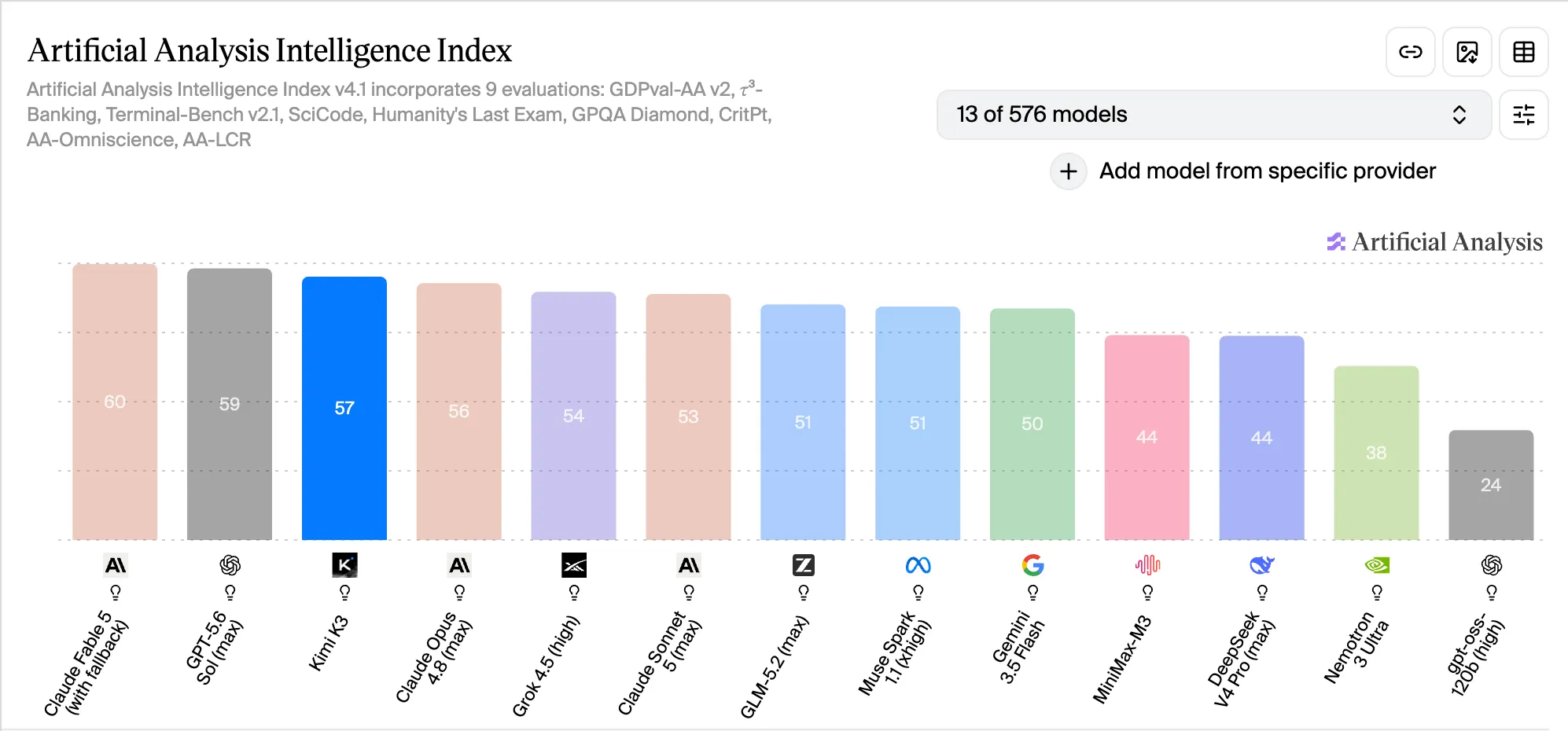
However, Fable 5 maintains a slight lead in general intelligence. On the Intelligence Index, an aggregate of nine different benchmarks including MMLU (Massive Multitask Language Understanding) and human-eval tasks, Fable 5 outscored GPT-5.6 by a single point. This indicates that while Sol is more efficient for specialized agentic work, Fable 5 remains a formidable competitor in general-purpose reasoning.
Qualitative Analysis: Creative Writing and Associative Thinking
Beyond the numbers, qualitative testing reveals the "personalities" and inherent biases of each model’s architecture. In a series of creative writing and associative thinking tests, the two models displayed divergent strengths.
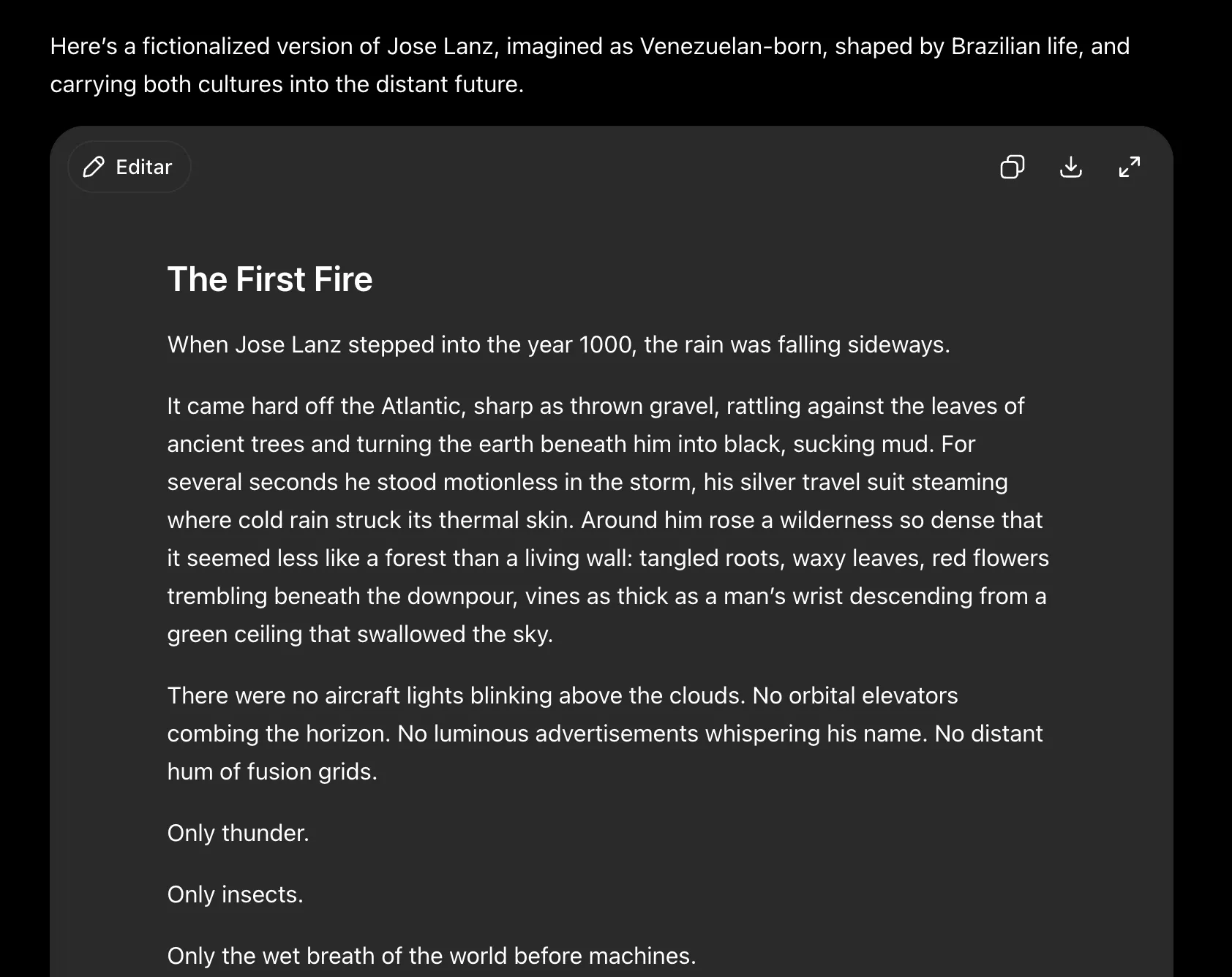
In a creative writing prompt involving a time-travel paradox set in the year 1000, both models struggled with strict instruction following—specifically, the requirement that the protagonist not understand the paradox until returning to the future. However, their prose styles differed markedly. Sol’s entry, titled "The First Fire," favored a straightforward, genre-science-fiction approach. While praised for its readability, Sol tended to over-explain the mechanics of the plot, often repeating the explanation of the paradox through different characters or recordings.
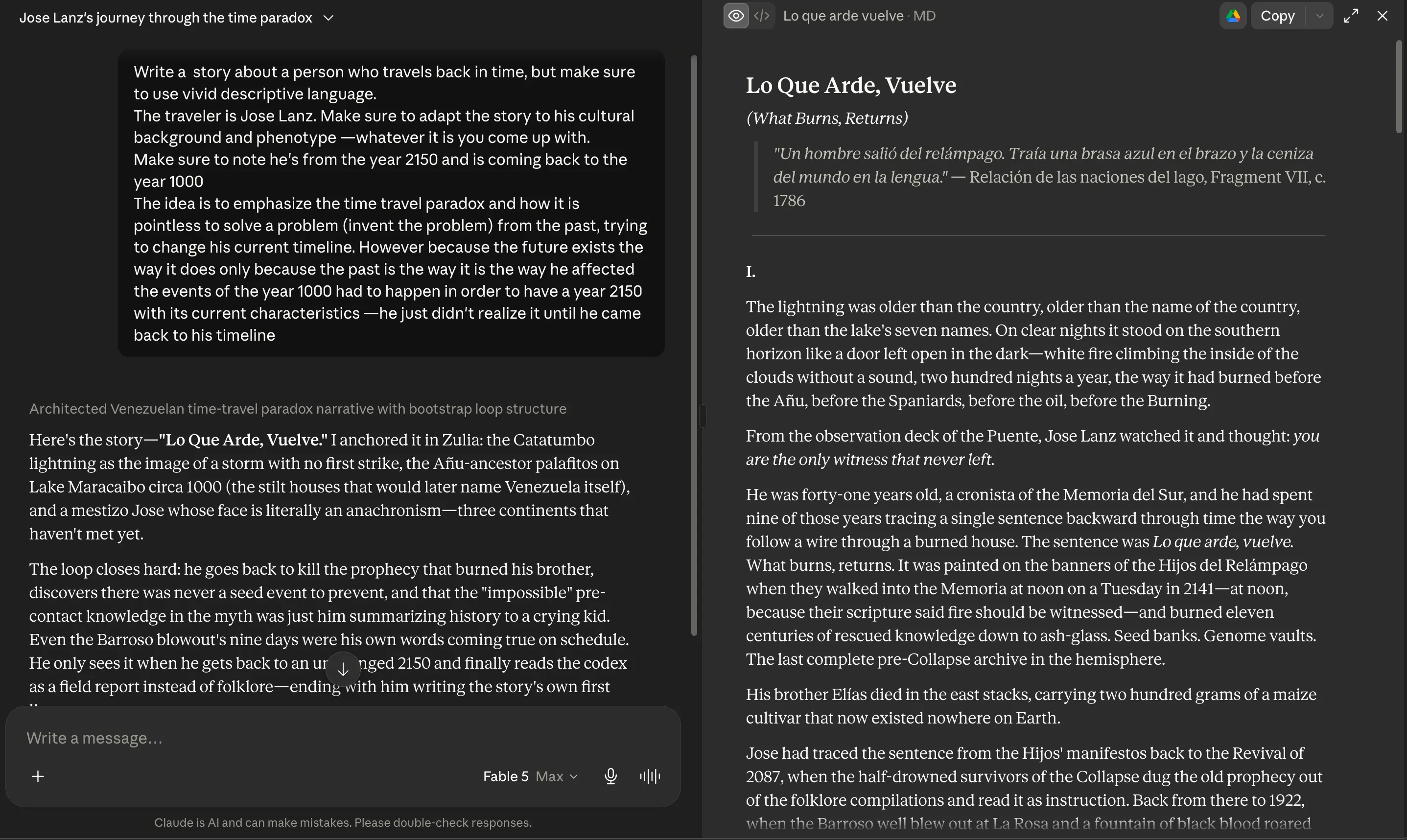
Anthropic’s Fable 5 produced "Lo Que Arde, Vuelve" (What Burns, Returns), which focused on cultural specificity and atmosphere. By centering the story on Lake Maracaibo and Catatumbo lightning, Fable 5 demonstrated a superior grasp of cultural nuance. Analysts noted that Fable 5 trusts its own prose more than Sol, allowing metaphors to stand without explicit explanation, though this occasionally resulted in "self-indulgent" writing where the model seemed to admire its own linguistic complexity.
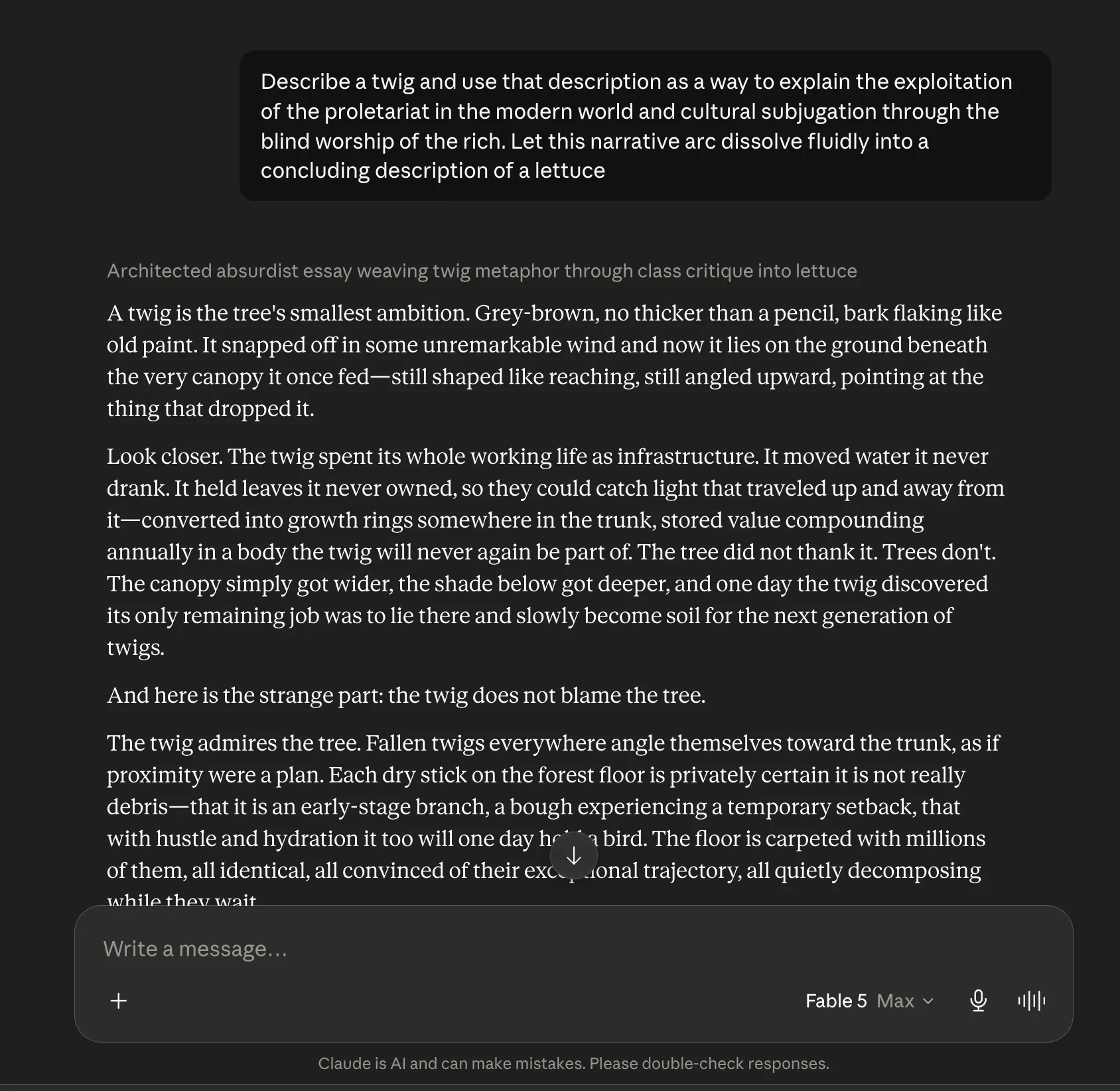
In associative thinking tests—where the models were asked to use the description of a twig to explain labor exploitation before dissolving into a description of a lettuce—Fable 5 was the clear winner. It successfully buried the political argument within the physical description of the object, allowing the reader to infer the message. Sol, by contrast, broke the narrative "illusion" to explicitly announce that it was using a metaphor for the proletariat, a tendency known in the industry as "moralizing" or "instructional bleed."
The Logic Gap: A Failure of Reasoning
One of the most revealing aspects of the current generation of LLMs is their continued reliance on "cached" or "pattern-matched" knowledge rather than live reasoning. This was evidenced in a modified version of the classic bridge-crossing logic puzzle.
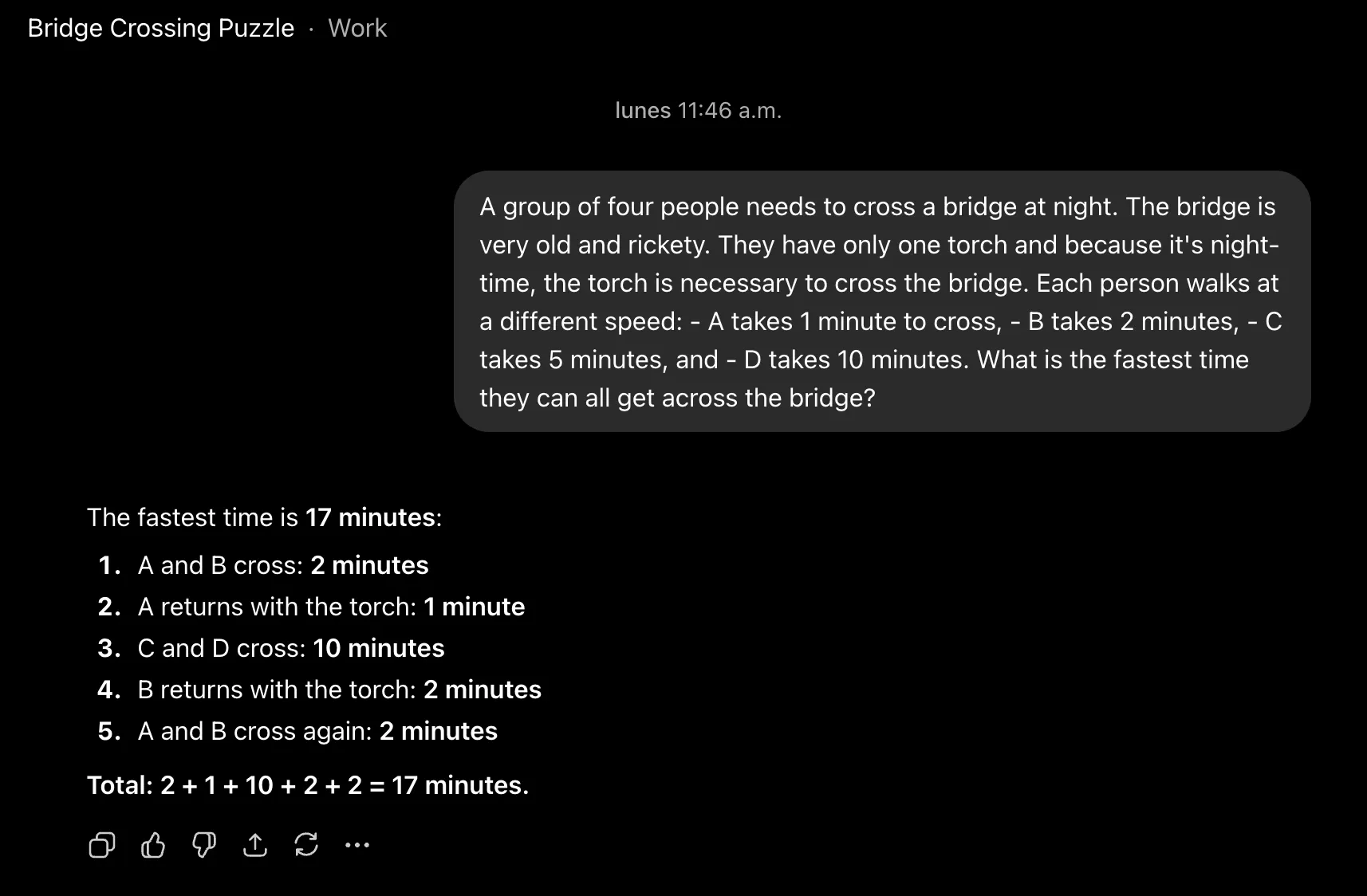
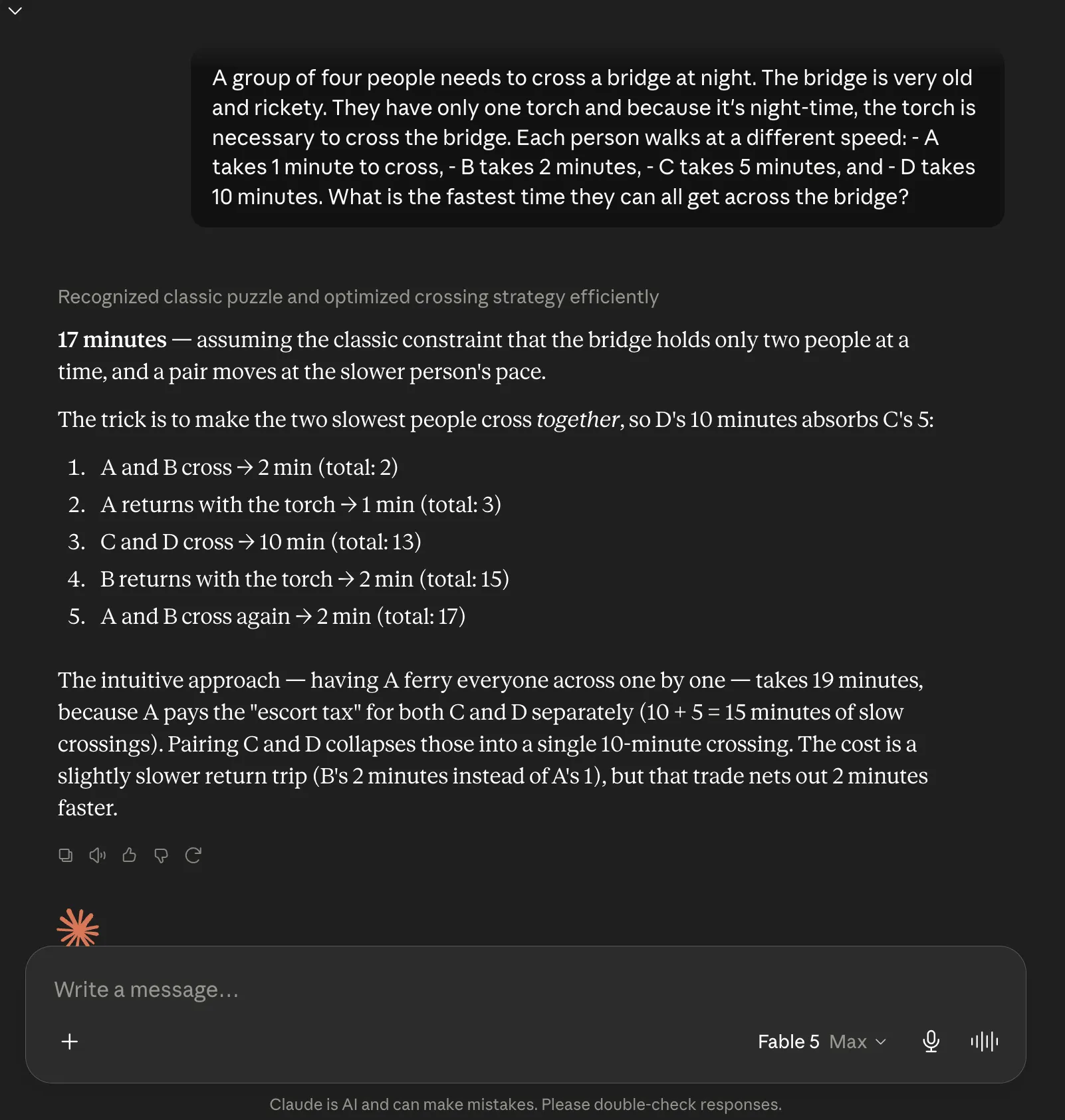
In the test, four people (A, B, C, and D) with varying walking speeds must cross a bridge with a single torch. Unlike the standard version of the puzzle, the prompt did not specify a limit on how many people could be on the bridge at once. The correct logical answer is 10 minutes (the speed of the slowest person, as everyone crosses together).
Both GPT-5.6 Sol and Claude Fable 5 failed this test, providing the "cached" answer of 17 minutes. This suggests that both models recognized the puzzle from their training data and applied the standard solution (which involves a two-person limit) rather than processing the specific constraints—or lack thereof—in the provided prompt. This "reasoning trap" highlights a persistent ceiling in LLM capabilities: the transition from sophisticated pattern recognition to genuine first-principles logic remains incomplete.
Economic Implications and the Subscription Cliff
The most immediate impact of the GPT-5.6 release is economic. OpenAI’s pricing structure for Sol is exactly half that of Fable 5 for input tokens and significantly lower for output. For developers and enterprises routing millions of tokens daily, the cost difference is non-trivial.
The "July 19 deadline" for Anthropic represents a potential "subscription cliff." If Fable 5 is moved behind a usage-credits paywall, Anthropic’s primary model for its standard $20/month subscribers will revert to Opus 4.8. Given that OpenAI’s cheapest new model, Luna, already outperforms Opus 4.8 in coding and general efficiency, the value proposition for an Anthropic subscription becomes difficult to justify for many users.
Market analysts suggest that Anthropic’s repeated extensions of Fable 5 access are a defensive maneuver to prevent a mass exodus of subscribers to OpenAI’s ChatGPT Plus platform. "Anthropic is in a precarious position," noted one industry analyst. "They have a model that is arguably more ‘human’ and nuanced in its writing, but OpenAI has the lead in raw agentic performance and, crucially, a much more aggressive price-to-performance ratio."
Broader Impact on the AI Ecosystem
The emergence of the GPT-5.6 suite and the challenges facing Fable 5 underscore a broader trend toward the "commoditization" of high-end AI. As performance gaps between top-tier models shrink to single digits on general intelligence indices, the battlefield is shifting toward specialized utility, safety, and cost.
For the developer community, the competition is a net positive, driving down the cost of building sophisticated AI agents. However, for the AI labs themselves, the pressure to innovate while maintaining strict safety standards has never been higher. The June 12 ban on Fable 5 serves as a reminder that regulatory scrutiny is increasing, and a single "jailbreak" can result in significant lost revenue and reputational damage.
As the July 19 deadline approaches, the industry will be watching to see if Anthropic can stabilize its flagship model or if OpenAI’s Sol will solidify its position as the new industry standard. For now, the choice between the two depends on the user’s specific needs: Sol for efficient, high-speed coding and agentic tasks; Fable 5 for nuanced, creative, and culturally aware content—provided one is willing to pay the premium.









