Layla Zulfa
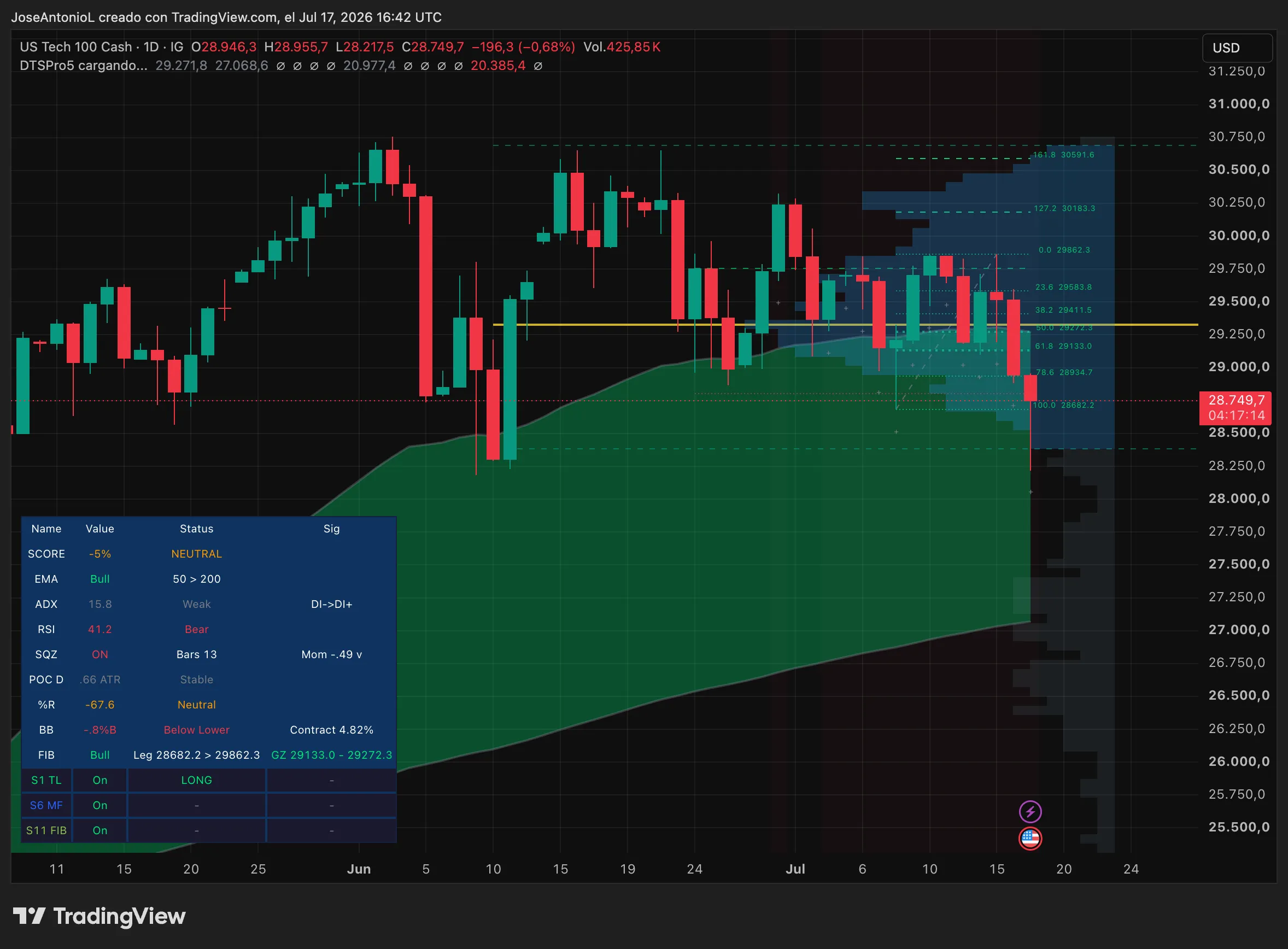
The global financial landscape experienced a significant tremor on Friday as Moonshot AI, the Beijing-based unicorn, announced the unexpected release of its latest large language model, Kimi K3. The launch, which occurred during the overnight hours in Western markets, triggered an immediate and aggressive selloff across the semiconductor and artificial intelligence sectors. Investors, seemingly spooked by the rapid closing of the technological gap between Chinese and American AI laboratories, reacted with a level of volatility not seen since the beginning of the year. The market contagion began in Asia and spread rapidly to Western exchanges, resulting in the Nasdaq’s worst session of the week and a substantial retreat for the world’s leading chipmakers.
The scale of the market reaction was underscored by the performance of major indices. Taiwan’s benchmark index plummeted by more than 6%, reflecting the vulnerability of the region’s critical semiconductor supply chain to shifts in AI demand expectations. In Japan, markets closed down 4%, while the Nasdaq Composite in the United States slid 1.5%. The VanEck Semiconductor ETF (SMH), a primary bellwether for the industry, fell below its exponential moving average (EMA) support band for the first time since April. This technical breakdown extended a broader rout that has seen the ETF lose more than 20% of its value since reaching a record high in late June.
The DeepSeek Precedent and the Efficiency Narrative
To understand the current market anxiety, analysts point to the "DeepSeek shock" of January 2025. When the Chinese firm DeepSeek released its R1 model earlier that year, it fundamentally challenged the prevailing industry assumption that frontier-level AI performance required exponentially increasing capital expenditures on hardware. Before R1, the consensus held that "frontier AI" was synonymous with "frontier spending." DeepSeek’s ability to achieve high-level reasoning with significantly fewer resources caused Nvidia to shed approximately $590 billion in market capitalization in a single trading session.
The launch of Kimi K3 appears to have validated those earlier fears. While the DeepSeek event was seen by some as an anomaly, Kimi K3 suggests a systemic trend of architectural efficiency emerging from Chinese labs. The market’s reaction today indicates a growing realization that the massive backlogs for high-end AI chips may be predicated on inefficient training methods that are now being bypassed. If high-performance AI can be achieved with less hardware, the valuation models for the entire semiconductor sector may require a fundamental reassessment.
Technical Benchmarks: Kimi K3 vs. The World
The technical data accompanying the Kimi K3 release provides a clear rationale for the market’s concern. According to the Artificial Analysis Intelligence Index—an independent composite benchmark that aggregates performance across reasoning, knowledge, mathematics, and coding—Kimi K3 achieved a score of 57. This score places the model in direct competition with the most advanced systems currently available in the United States.
Specifically, Kimi K3 outranked Claude Opus 4.8 and GPT-5.5. It currently sits on par with Claude Fable 5 and OpenAI’s GPT-5.6 Sol. Most notably, Kimi K3 outperformed these Western counterparts in specific reasoning and coding benchmarks while reportedly being trained and operated at a fraction of the cost. This performance-to-price ratio is the primary driver of investor anxiety, as it threatens the high-margin subscription models and hardware-intensive roadmaps of Silicon Valley’s leading firms.
Furthermore, Moonshot AI announced that the full weights for Kimi K3 would be released on July 27 under a Modified MIT license. This move is expected to democratize access to frontier-level AI, allowing smaller laboratories and independent developers to utilize the model for free. This "open-weights" strategy contrasts sharply with the "closed-door" approach of major U.S. developers and could accelerate the commoditization of high-end AI capabilities.
Financial Trajectory and Corporate Background
Moonshot AI’s rise to prominence has been meteoric. In 2024, the company was valued at approximately $2.5 billion following a $1 billion funding round led by the Chinese e-commerce giant Alibaba. Since then, the startup’s valuation has surged to an estimated $31.5 billion. This nearly 1,200% increase in valuation in less than two years highlights the immense capital flowing into Chinese AI development, even amidst broader geopolitical tensions and export restrictions on advanced hardware.
Alibaba’s strategic backing of Moonshot AI has proven to be a pivotal factor in the startup’s success. By providing both capital and access to large-scale cloud infrastructure, Alibaba has enabled Moonshot to iterate rapidly. The company’s influence has already begun to permeate the global developer ecosystem. In May, it was revealed that the popular AI-powered code editor Cursor was utilizing Moonshot’s Kimi K2.5 model for its "Composer 2" feature without initial public disclosure. The subsequent acknowledgment by the Cursor team underscored the reality that Chinese AI models are already being integrated into the workflows of Western developers due to their superior performance in specific tasks.
Analyst Reactions: A Confirmatory Trend
Wall Street analysts have largely characterized the Kimi K3 launch as a "confirmatory" event rather than a total surprise. Robin Zhu, an analyst at Bernstein, noted that the release aligns with a trend that has been building throughout 2026. Zhu stated that the emergence of K3 confirms two key views: first, that the state-of-the-art (SOTA) in AI continues to evolve with extreme rapidity, and second, that Chinese AI labs are successfully keeping pace with global leaders, positioning them to capture significant market share over time.
Gary Yu, an analyst at Morgan Stanley, echoed these sentiments, framing K3 as the result of steady, compounded progress. Yu observed that the positive global feedback for K3 signals an "all-round catch-up" by Chinese Large Language Models (LLMs). According to Yu, the gap between Chinese and U.S. leaders in terms of model size, performance, and pricing has effectively closed, leaving the industry in a new phase of intense, global competition where geographical boundaries offer little protection for incumbent leaders.
Broader Implications and the Future of AI Competition
The implications of the Kimi K3 launch extend far beyond short-term stock market fluctuations. The event signals a shift in the "moat" strategy that has defined the AI industry for the past three years. If the primary advantage of U.S. firms was their exclusive access to massive compute clusters, the architectural innovations demonstrated by Moonshot AI suggest that software efficiency can compensate for hardware limitations.
This shift has profound geopolitical consequences. Despite ongoing efforts to restrict China’s access to the most advanced semiconductor nodes, labs like Moonshot and DeepSeek are proving that they can achieve world-class results through algorithmic ingenuity. This raises questions about the long-term effectiveness of export controls as a means of maintaining a technological lead in AI.
Moreover, the decision to release Kimi K3 under a Modified MIT license on July 27 is likely to disrupt the business models of Western AI firms that rely on API access fees. As high-performance models become freely available for local deployment, the "AI-as-a-Service" industry may face significant pricing pressure. Small-to-medium enterprises (SMEs) that previously could not afford the high costs of GPT-5 or Claude 5 may soon have access to comparable power at no cost, potentially sparking a new wave of AI-driven innovation across various sectors of the global economy.
As the market prepares for the July 27 release, the focus has shifted to how U.S. tech giants will respond. Whether through further hardware investment or a renewed focus on architectural efficiency, the pressure to innovate has never been higher. For investors, the "panicked" Friday session serves as a stark reminder that in the world of artificial intelligence, the competitive landscape can be rewritten overnight, and the "China gap" is no longer a gap, but a front line.