James Watt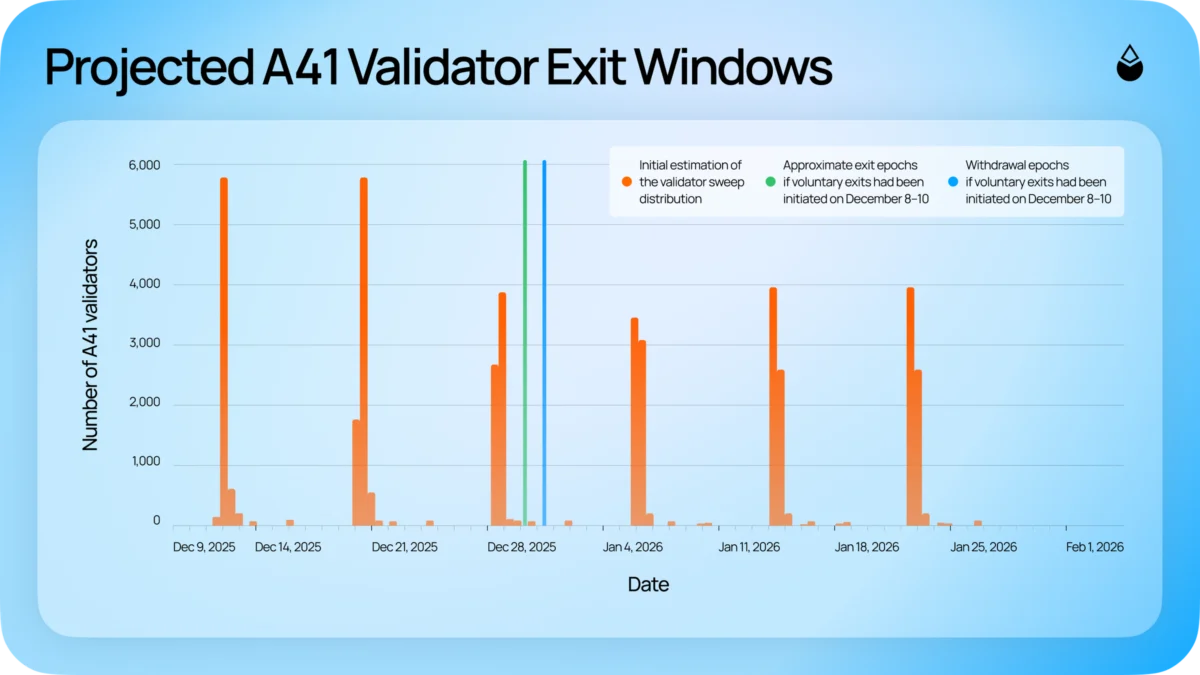
In a landmark demonstration of sophisticated blockchain infrastructure management, the Lido protocol successfully facilitated the complete wind-down of validator operations for A41, a prominent Curated Node Operator (NO), by the stipulated deadline of January 31, 2026. This complex undertaking involved the strategic exit of 6,918 Ethereum validators, representing approximately 221,376 ETH, a significant portion of Lido’s staked assets, and was executed with remarkable precision, dramatically minimizing potential staking reward losses. The operation sets a new benchmark for efficiency and coordination in the evolving landscape of Ethereum liquid staking.
Background: Lido and the Significance of Node Operators

Lido Finance stands as the largest liquid staking protocol on Ethereum, enabling users to stake their Ether (ETH) while maintaining liquidity through stETH tokens. This innovative approach allows participants to earn staking rewards without locking up their assets, contributing significantly to Ethereum’s network security and decentralization. The protocol relies on a network of professional node operators, like A41, to run the actual validators that secure the blockchain. These operators are responsible for maintaining robust infrastructure, ensuring high uptime, and adhering to strict performance standards. A41’s decision to cease its validator operations, announced in December 2025, presented Lido with a substantial logistical challenge: orchestrating the withdrawal of a large validator set within a compressed timeframe while safeguarding the staked assets and maximizing rewards for stakers.
The Challenge: A Large-Scale Exit Under Pressure
A41’s request to deprecate all its infrastructure by January 31, 2026, left Lido with just 52 days to manage the exit of nearly 7,000 validators. At the time of the announcement, A41 managed 2.51% of Lido’s deposited validators, equating to a substantial amount of staked ETH. Such a large-scale withdrawal is inherently complex due to the intricate mechanisms governing validator exits on the Ethereum network. These mechanisms, primarily introduced with the Shanghai-Capella upgrade, dictate how validators queue for withdrawal, how their ETH is "skimmed" from the beacon chain, and how new validators are activated. Without careful planning, a mass exit could lead to significant periods of inactivity for validators, resulting in substantial losses in staking rewards. The Lido Analytics workstream immediately mobilized to develop an optimized exit strategy that combined coordinated voluntary exits, batch execution, and sweep-cycle-aware timing to mitigate these risks.

Understanding Ethereum’s Withdrawal Mechanics
To fully appreciate the complexity of the A41 exit, it’s crucial to understand the key parameters governing Ethereum staking withdrawals:
- Exit Queue: When a validator initiates a voluntary exit, it enters a queue. The length of this queue depends on the number of validators currently exiting and the network’s churn limit.
- Validator Churn Limit: This is a protocol-level parameter that limits the number of validators that can exit (or activate) in a given epoch (approximately 6.4 minutes). It prevents sudden, large-scale shifts in the validator set that could destabilize the network.
- Sweep Cycle: Ethereum’s blockchain "sweeps" through the validator set sequentially, starting from index 0. In each slot (12 seconds), it identifies up to 16 validators eligible for withdrawal (either partial or full). This cycle ensures fairness but means a validator’s withdrawal eligibility is tied to its index.
- Skimming: Once a validator is eligible for full withdrawal, its remaining balance (32 ETH principal + accumulated rewards) is "skimmed" from the beacon chain and sent to its designated withdrawal address.
- Activation Queue: Conversely, new validators must also pass through an activation queue before they can begin participating in consensus and earning rewards.
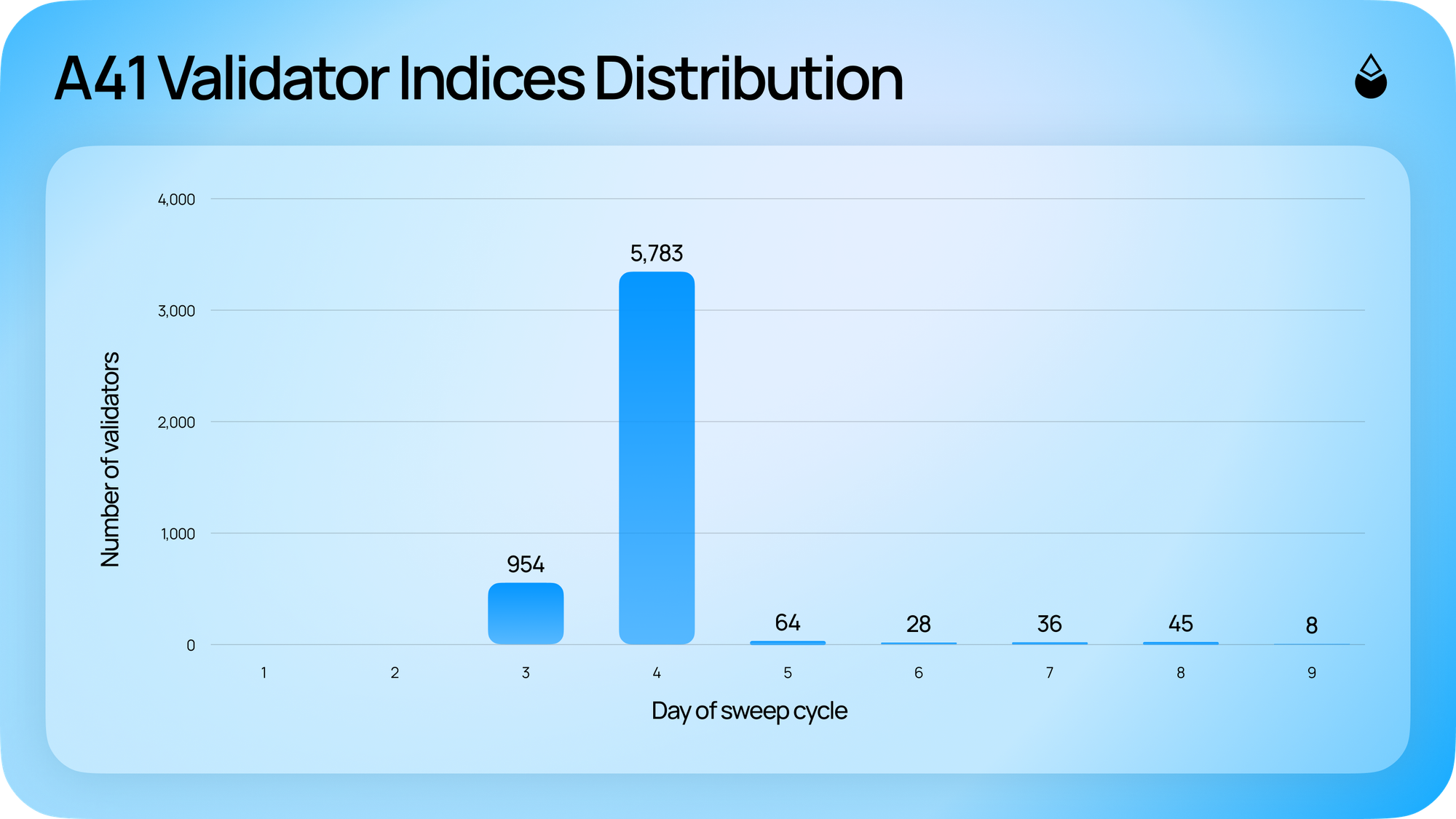
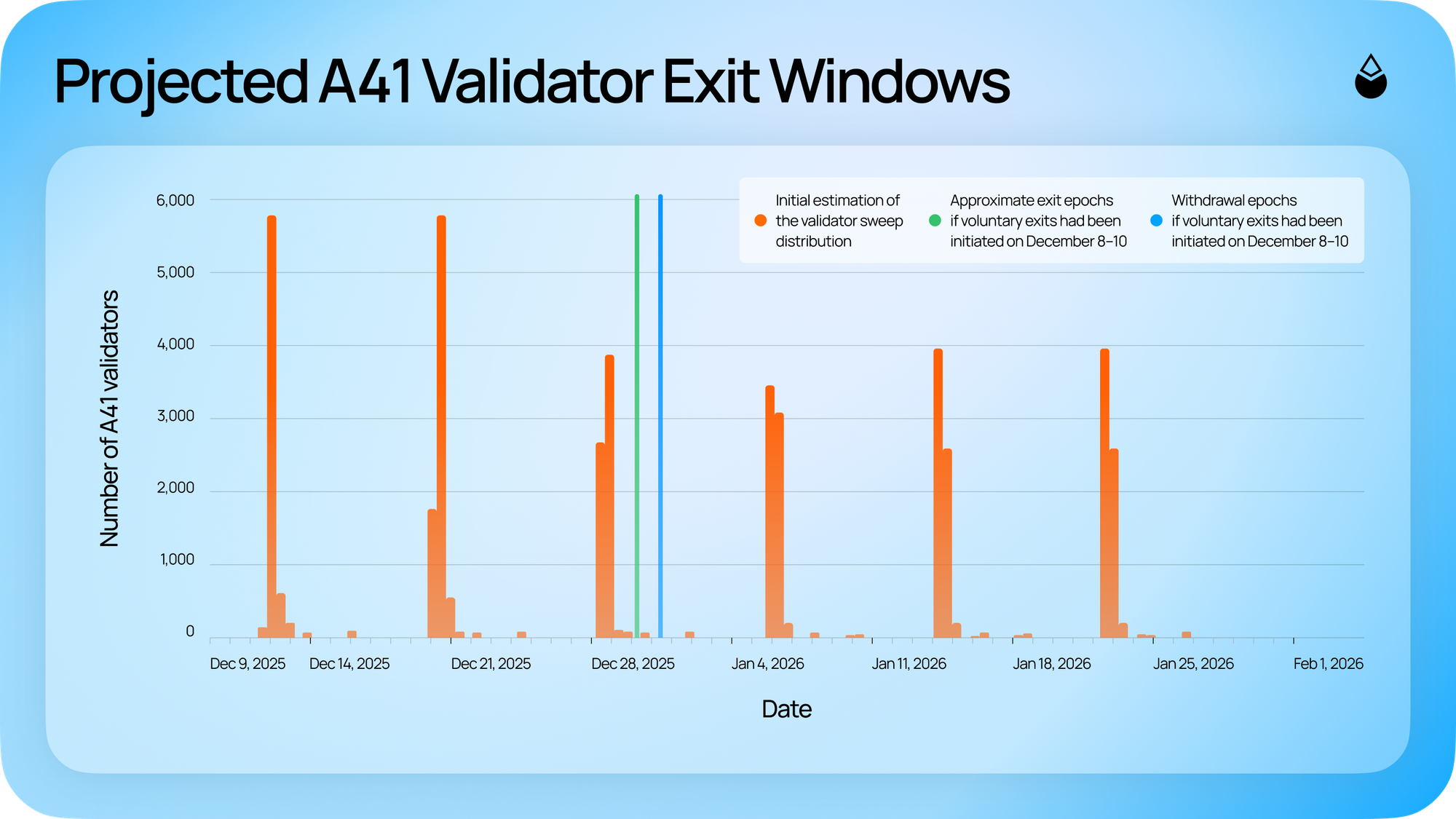
At the time of planning, the exit queue was approximately 18.64 days, and the activation queue was around 18.88 days. A41’s validators were predominantly clustered within a similar index range, meaning a large portion would become eligible for the sweep cycle at roughly the same time, around the transition from the third to the fourth day of the cycle. This concentration, while simplifying some aspects, also meant that poorly timed exits could exacerbate delays, as many validators would hit the sweep pipeline simultaneously, potentially increasing their wait time for skimming.
The Strategic Imperative: Beyond Organic Exits
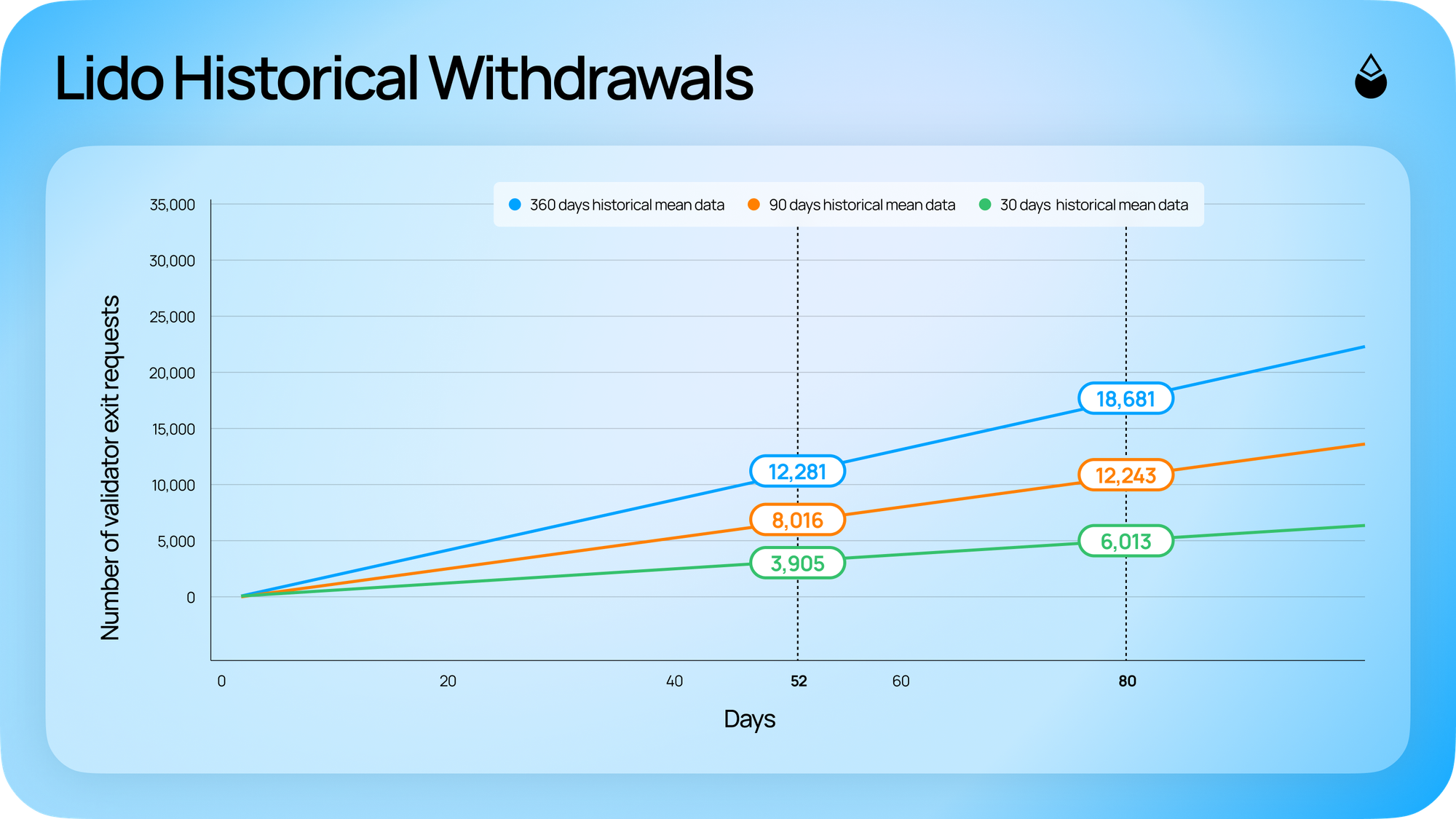
Initial modeling by Lido Analytics contributors quickly revealed that relying on "organic exits"—user-initiated withdrawals from the Lido protocol that would naturally reduce the A41 validator count—would be insufficient. Based on 30-day historical data and 1,000 simulations, exiting the entire A41 validator set organically would take approximately 80 days. This timeline starkly contrasted with A41’s 52-day wind-down request, making it clear that a proactive, coordinated approach involving voluntary exits was imperative. Longer historical datasets yielded higher projections, but these were deemed less representative of current market dynamics.
The primary objective for Lido’s Analytics workstream was to minimize staking reward loss during the transition. A baseline scenario, involving an immediate, uncoordinated exit of all A41 validators, was estimated to result in approximately 78 ETH in missed rewards, representing about 10.5% of the protocol’s daily rewards. This substantial potential loss underscored the need for a highly optimized strategy. The core of this optimization lay in minimizing the "delay gap" – the time between when a validator became withdrawable and when it was actually processed by the sweep cycle.
Crafting the Optimized Exit Strategy: Batching and Precision Timing
Given the concentrated index distribution of A41 validators, Lido Analytics contributors modeled various exit windows. Simulations demonstrated that precisely timed exits could drastically reduce missed rewards to as little as 17 ETH, a substantial improvement over the 78 ETH projected for an uncoordinated exit. However, triggering nearly 7,000 individual exits with precise timing would be an operational nightmare, prone to error and requiring immense manual effort. The solution was a novel "batch exit design" that balanced precision with operational feasibility.
The batching approach introduced several key operational parameters:
- Batch Size: Determining an optimal number of validators per batch.
- Timing Windows: Identifying specific epochs for batch execution.
- Continuous Monitoring: Real-time tracking of network conditions and validator behavior.
To implement this, Lido Analytics contributors developed a sophisticated script designed to determine the optimal timing for voluntary exits. This tooling integrated several real-time network parameters, including the current epoch, the validator churn limit, the current length of the withdrawal queue, and the precise position within the sweep cycle. A crucial innovation was the introduction of a "skimming acceptance" level, set at 0.5 days (12 hours). This parameter allowed the system to identify validators for exit only when their projected wait time between becoming withdrawable and being skimmed fell below this threshold. This mechanism alone was projected to reduce exit losses by approximately 8.6 ETH. The script would then generate an optimized exit distribution order, which, after review, could be exported as a grouping file for A41 to execute.
Executing the Exit: A Phased Approach
The coordinated exit process began with the Lido DAO approving a governance proposal to set A41’s targetValidatorsCount parameter to 0. This signaled the protocol’s allocation mechanism to direct exit requests to validators operated by A41, initiating the official wind-down process. A41, in turn, implemented its own script to call batch voluntary exits, triggered manually during the predefined exit windows.
1. The Test Batch (December 2025):
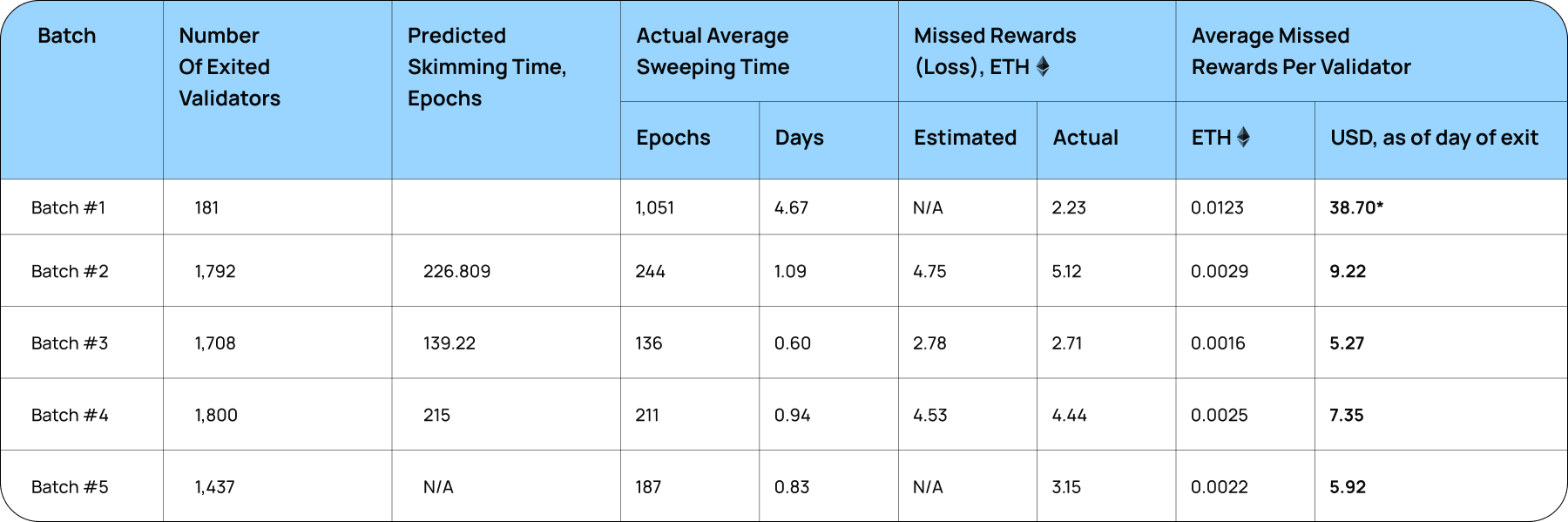
Before committing to large-scale exits, a crucial test batch of 181 validators was executed. This batch was intentionally designed to include validators with highly dispersed indices, pushing the system’s capabilities and ensuring the workflow and tooling behaved as expected across varied conditions. The test run was a resounding success, with the script accurately processing the non-sequential validator set and resulting in a minimal missed reward of 2.23 ETH. This validated the core strategy and the efficacy of the developed tooling.
2. Coordinated Batch Execution (January 2026):
Following the successful test, four additional, larger batches were planned and executed throughout January 2026. The operational workflow involved Lido Analytics providing the optimal timing windows, A41 executing the batches, and Lido contributors continuously monitoring the network and validator behavior.
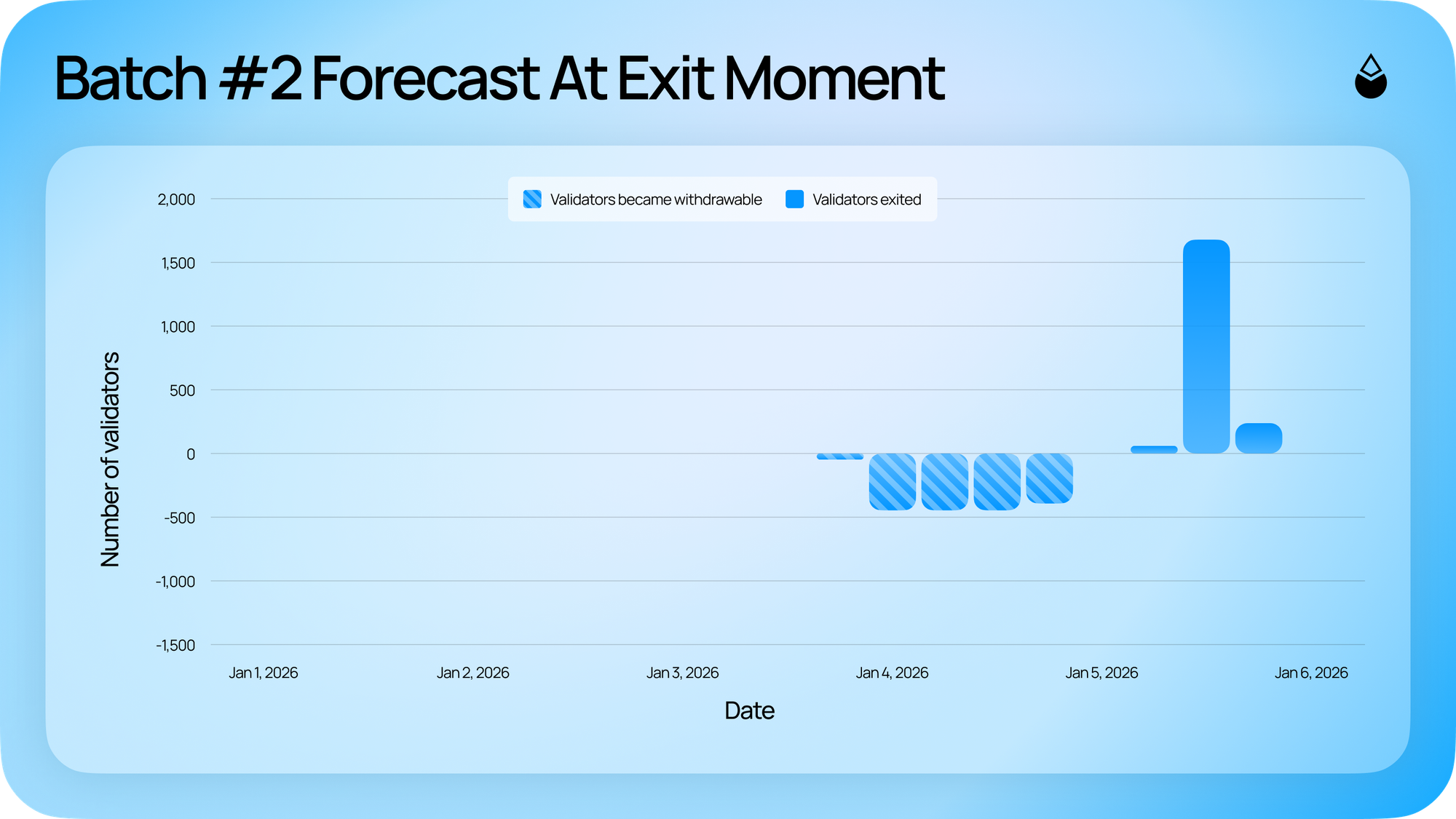
- Batch #2 (Early January): Consisting of 1,792 validators, this batch was executed one day after the test. Analytics contributors forecasted an average skimming wait time of approximately 226.8 epochs. Post-execution analysis confirmed strong alignment, with the actual skimming time recorded at 244 epochs, demonstrating the model’s accuracy in real-world conditions.
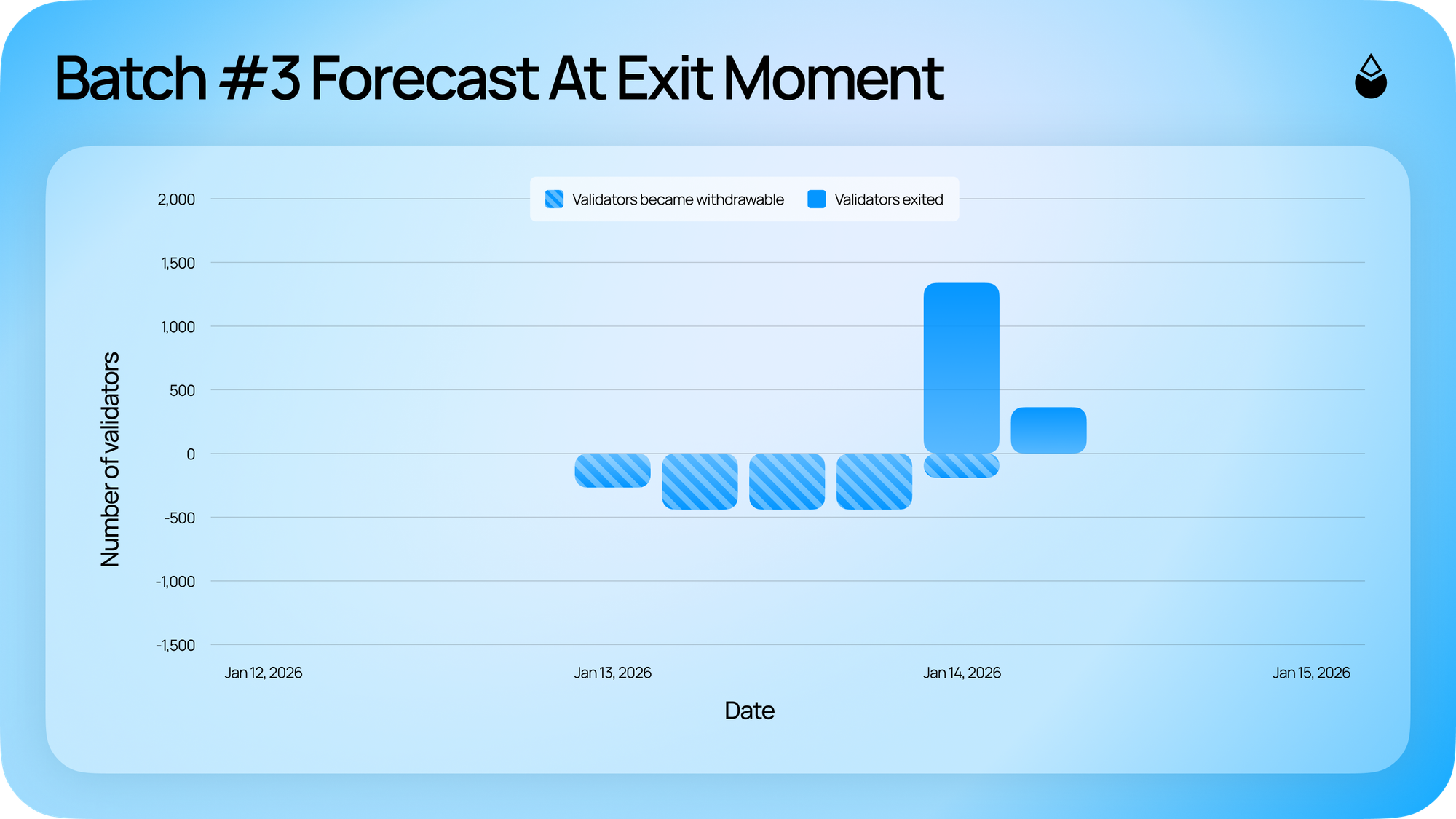
- Batch #3 (Mid-January): This batch included 1,708 validators. Modeling estimated 2.78 ETH of missed rewards for this group, further validating the strategy’s precision.
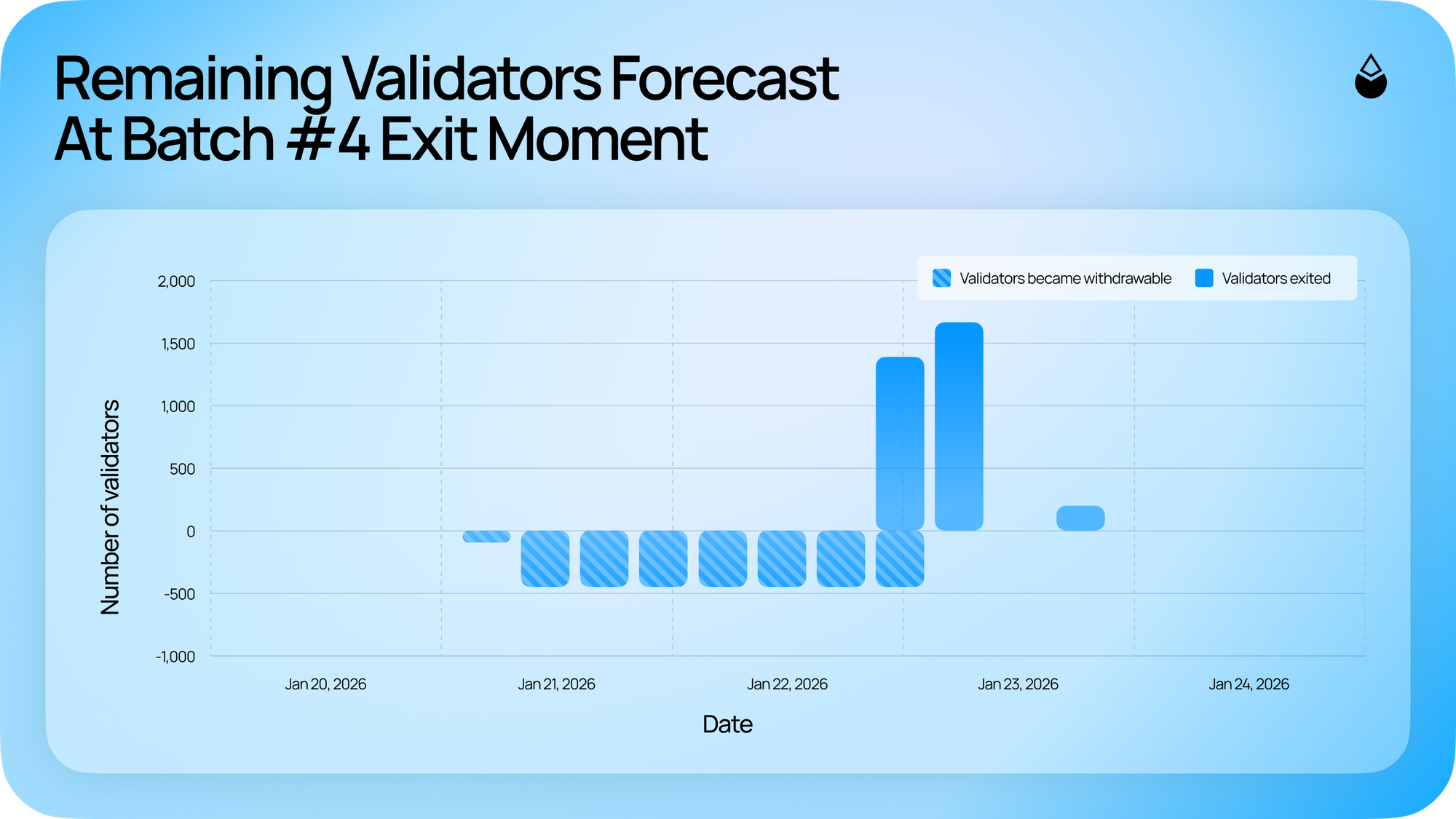
- Batch #4 (Late January): The largest batch, comprising 1,800 validators, was executed with predicted skimming time of 215 epochs and an actual time of 211 epochs, resulting in 4.37 ETH of missed rewards. A scenario to exit all remaining validators (3,237) within this batch was considered, but simulations showed it would lead to ~8.16 ETH in missed rewards, prompting a more granular approach.
- Batch #5 (Late January): To further optimize reward preservation, the remaining validators were split into Batch #4 and a final Batch #5. This allowed for even closer alignment with the sweep cycle, reducing the missed rewards for this final group to just 3.15 ETH.
Results: A Triumph of Coordination and Optimization
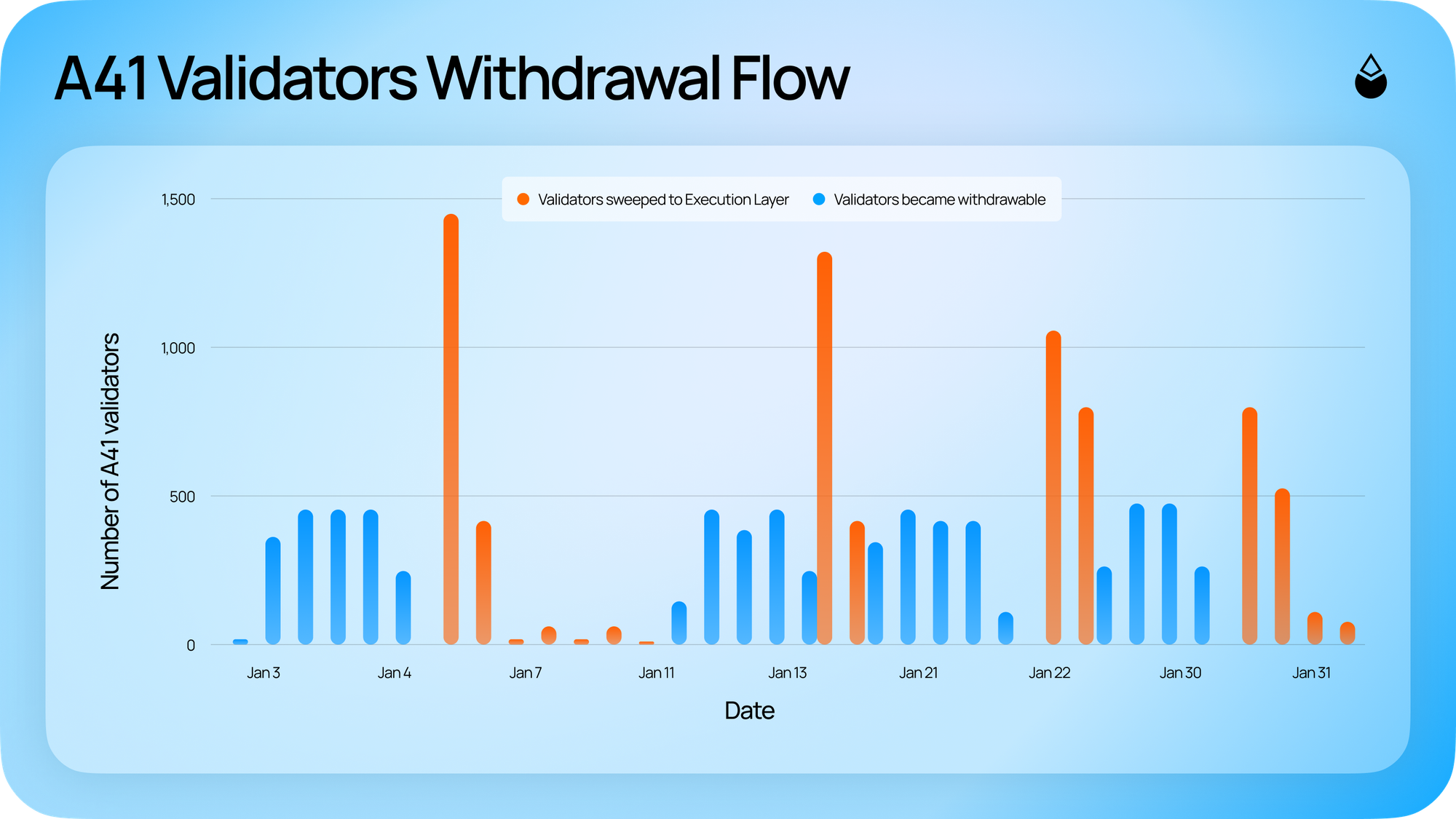
The coordinated process yielded a predictable and well-distributed pattern of validator exits, ensuring A41 met its infrastructure deprecation deadline. The meticulous planning and execution resulted in a drastic reduction in rewards leakage.
Key achievements include:
- Total Validators Exited: 6,918
- Total ETH Repatriated: Approximately 221,376 ETH
- Total Missed Rewards: A mere 17.8 ETH, a significant reduction from the 78 ETH projected for an uncoordinated exit.
- Average Skimming Wait Time: Reduced from an estimated ~4.5 days to an optimized 0.8 days.
- Timely Completion: The entire operation was completed within the 52-day deadline, allowing A41 to wind down operations as planned.
This success underscores the value of sophisticated analytics and operational coordination in managing large-scale, high-value assets within decentralized networks. The ability to precisely predict and align validator exits with network conditions translated directly into tangible economic benefits for the Lido protocol and its stakers.
The Unpredictable Variable: Ethereum Queue Dynamics
Despite the exemplary precision of the exit strategy, the operation highlighted a crucial lesson: the inherent unpredictability of dynamic network parameters. While Lido contributors performed extensive analysis using historical queue patterns, the Ethereum landscape evolved during the A41 exit in ways that were difficult to fully anticipate.
- Exit Queue: Fortuitously, the exit queue, which was approximately 18.64 days when the plan was designed, had decreased to less than one day by the time execution began. This unexpected reduction was beneficial, allowing for even more accurate prediction of when voluntary exits should be initiated and accelerating the initial phase of the process.
- Activation Queue: Conversely, the activation queue, which was around 18.88 days at the start of the test batch, expanded significantly as the exit process unfolded. By the time the operation concluded, the average activation queue time had swelled to approximately 42.8 days.
This dramatic increase in the activation queue posed a new challenge for the Lido protocol. While the coordinated exit strategy successfully minimized rewards lost during the withdrawal phase (by reducing skimming wait times), the subsequent delay in re-activating the repatriated ETH with new node operators meant a prolonged period where this ETH was not actively earning staking rewards. This outcome reinforces a critical lesson: even the most highly optimized validator exit strategies remain subject to the broader dynamics of network-level parameters. Despite this, the coordinated approach still significantly reduced the rewards foregone during the withdrawal period itself, demonstrating its fundamental value.
Broader Implications and Future Outlook
The A41 exit case is more than just a successful operational maneuver; it serves as a robust case study with profound implications for the entire Ethereum staking ecosystem. It unequivocally demonstrates that sophisticated planning and data-driven execution can significantly enhance capital efficiency in a decentralized environment.
Key Operational Insights:
- Exit Timing is Paramount: The precise timing between an exit request, skimming, and withdrawal processing directly impacts forfeited rewards. Delaying or accelerating exits based on sweep cycle position can yield substantial benefits.
- Validator Index Distribution Matters: Understanding how validators are clustered by their indices is crucial for planning batch scheduling and exit sequencing to optimally align with the sweep and withdrawal cycles.
- Batching Improves Operational Efficiency: For large-scale operations, batch-based exit strategies offer a practical balance between achieving sweep cycle alignment and maintaining operational simplicity, avoiding the complexities of individual validator management.
- Data-Driven Coordination is Essential: Combining historical Ethereum data analysis with continuous, real-time network monitoring allows for agile adjustments and ensures strategies remain closely aligned with dynamic network conditions, thereby minimizing lost rewards.
- Network Queues Remain Unpredictable: Validator queues are dynamic variables. Planning must incorporate monitoring and flexibility, including buffers for unexpected delays, rather than relying solely on static projections. The activation queue’s unforeseen growth underscores this need.
The successful exit of A41 validators provides a blueprint for various future scenarios within Ethereum staking. This approach is broadly applicable to:
- Other large staking pools: Enabling them to manage their validator sets with greater efficiency and less financial risk.
- Individual node operators: Providing a framework for optimizing their own infrastructure migrations or strategic adjustments.
- Institutional stakers: Offering a model for managing significant capital deployments in a regulated and efficient manner.
As Ethereum staking continues its rapid growth, scaling into hundreds of thousands of ETH and beyond, the efficiency gains demonstrated in the A41 case become increasingly critical. The ability to manage validator lifecycles—including validator rotations, infrastructure migrations, organic withdrawals, and large-scale exits—with precision and minimal reward leakage will be a cornerstone of sustainable and robust liquid staking protocols. The Lido protocol, through its collaboration with A41 and the innovative work of its Analytics contributors, has not only successfully navigated a complex operational challenge but has also provided invaluable lessons that will shape the future of decentralized finance infrastructure management. This event solidifies Lido’s position at the forefront of liquid staking innovation, showcasing its commitment to security, efficiency, and continuous improvement for the benefit of the broader Ethereum ecosystem.