Lina Irawan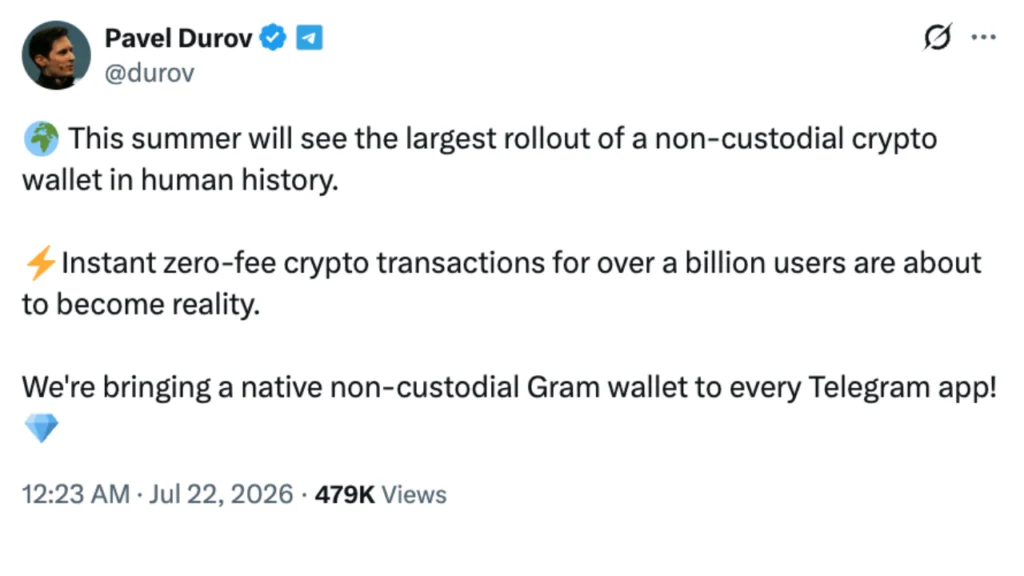
Telegram is on the cusp of orchestrating what may become the most significant cryptocurrency onboarding initiative in history, with plans to seamlessly integrate a native, non-custodial crypto wallet into all versions of its widely-used messaging application. This ambitious move, announced by Telegram’s Founder and CEO Pavel Durov, promises to grant its more than one billion monthly active users unprecedented access to instant, zero-fee cryptocurrency transfers, potentially reshaping the landscape of digital asset accessibility for the global mainstream.
The announcement, made on July 21st via Durov’s official Telegram channel, signifies a deepening commitment by the messaging giant to embed blockchain technology within its expansive ecosystem. If this integration is successfully rolled out before the close of the summer, it could dramatically accelerate the adoption of self-custody wallets, extending their reach far beyond the current, predominantly crypto-savvy user base. This strategic pivot represents a monumental leap towards democratizing access to decentralized finance and digital ownership for billions worldwide.
The Dawn of a Native, Integrated Crypto Wallet
At the heart of this impending revolution is Telegram’s plan to introduce a native non-custodial wallet, specifically designed to function within the Telegram application itself. This innovative approach aims to eliminate the friction often associated with cryptocurrency management, such as the necessity for users to download, configure, and manage separate wallet applications. According to Durov’s statement, the wallet will be directly embedded into every iteration of the Telegram app, ensuring a unified and intuitive user experience.
Durov himself described the forthcoming launch as "the largest rollout of a non-custodial crypto wallet in human history." The core promise of this integration lies in its ability to facilitate instant cryptocurrency transfers with absolutely no transaction fees. This capability, if realized, would address two of the most significant barriers to mainstream crypto adoption: complexity and cost. By making crypto transfers as simple and inexpensive as sending a message, Telegram aims to normalize digital asset transactions for its vast user base.
This initiative marks a significant evolution from Telegram’s existing crypto services. Currently, users can access a custodial wallet solution through the @wallet bot, a service that has already garnered over 150 million registered accounts. However, it is crucial to note that this existing bot is operated by The Open Platform (TOP), an independent entity, rather than directly by Telegram. The new, native wallet represents a more deeply integrated and, crucially, a non-custodial offering.
A key distinction between the current and planned wallet lies in asset management. The existing @wallet bot operates primarily on a custodial model, meaning a third party holds the user’s private keys unless the user explicitly opts for self-custody. In contrast, the upcoming native wallet is slated to be non-custodial by default. This implies that users will have direct ownership and control over their private keys and, consequently, their funds. This shift aligns with the fundamental ethos of cryptocurrency, emphasizing user sovereignty and decentralization.

While Telegram has yet to provide definitive details regarding whether the new native wallet will supersede the existing @wallet bot or operate in parallel, and has not disclosed the full spectrum of cryptocurrencies that will be supported beyond Gram, the focus on a non-custodial, integrated solution is a clear indicator of its strategic direction.
Bridging the Gap to Mainstream Self-Custody
The concept of a non-custodial wallet is foundational to the principles of cryptocurrency. It empowers users to maintain complete control over their digital assets by holding their private keys, rather than entrusting them to an exchange or a third-party service. This direct control ensures that funds cannot be frozen or transferred without the explicit permission of the owner. However, this enhanced control comes with a commensurate responsibility: users must diligently secure their recovery credentials, making robust security practices paramount.
For years, self-custody, while lauded as a core tenet of cryptocurrency, has been perceived as a complex hurdle for the average user. The technical nuances of managing private keys and recovery phrases have deterred many from fully embracing the decentralized nature of digital assets. By embedding a user-friendly, non-custodial wallet directly within an application that boasts over a billion users, Telegram has the potential to dramatically lower these adoption barriers. The sheer scale of this potential rollout is unprecedented. While leading self-custody wallets like MetaMask have amassed tens of millions of users, none have ever had the opportunity to launch with direct access to an audience of Telegram’s global magnitude.
Reviving the Gram Vision: A Renewed Commitment to TON
This significant announcement of a native crypto wallet is intrinsically linked to Telegram’s resurgent commitment to The Open Network (TON) ecosystem. In June of this year, the network’s native token underwent a significant rebrand, officially changing its name from Toncoin (TON) back to Gram (GRAM). This decision was ratified by an overwhelming 81% of the community vote. While the underlying blockchain continues to operate under the banner of The Open Network, the token’s branding has been restored to its original nomenclature.
This rebrand serves as a powerful signal, restoring the name originally envisioned by Telegram when it first introduced its ambitious blockchain project in 2018. It underscores the company’s increasing involvement and renewed strategic focus on the TON ecosystem. The return to the "Gram" name is more than just a cosmetic change; it represents a symbolic and strategic recommitment to the project’s foundational vision.
From SEC Scrutiny to a Strategic Comeback
Telegram’s initial foray into the blockchain space began in 2018. The company successfully raised approximately $1.7 billion from private investors with the explicit aim of developing the Telegram Open Network and its native token, the original Gram. However, the project encountered significant headwinds when the U.S. Securities and Exchange Commission (SEC) alleged that the token sale constituted an unregistered securities offering.

This legal challenge culminated in a settlement in 2020. Telegram agreed to return approximately $1.2 billion to investors and pay an $18.5 million civil penalty, effectively stepping away from direct involvement in the project. Despite Telegram’s withdrawal, the blockchain technology persevered, evolving under community development and continuing to operate as The Open Network, with Toncoin serving as its native cryptocurrency.
In recent years, Telegram has gradually resumed a more prominent role in the ecosystem. This renewed leadership culminated in the token’s rebrand to Gram and, now, the highly anticipated integration of a native wallet. This trajectory represents a remarkable comeback, transforming a project once sidelined by regulatory challenges into a potentially dominant force in mainstream crypto adoption.
Market Reaction: GRAM Sees a Surge
The market has responded with notable enthusiasm to Pavel Durov’s announcement. Following the news, GRAM experienced a roughly 7% climb, recovering above the $1.50 mark. This uptick represents a significant rebound after a period of decline throughout much of July. Despite this positive movement, the token’s current valuation remains considerably below its historical peaks.
GRAM’s all-time high of approximately $8.25 was recorded during a period of intense interest in Telegram’s tap-to-earn gaming initiatives in June 2024. More recently, it reached a peak of around $2.89 in May 2026, following Telegram’s official announcement of its renewed leadership of the TON network. The current surge, while substantial, indicates a market cautiously optimistic about the long-term implications of the integrated wallet.
A Potential Milestone for Global Crypto Adoption
If Telegram successfully implements the integrated wallet as planned, it could fundamentally alter the way everyday individuals interact with digital assets. The prospect of sending cryptocurrency with the same ease and simplicity as sending a text message is a paradigm shift. This could unlock new avenues for creators, merchants, and businesses worldwide, providing them with access to a global payment network capable of instant, fee-free transactions directly within one of the planet’s most widely used messaging platforms.
While many details remain to be clarified, including the precise launch date, the full list of supported cryptocurrencies beyond Gram, and the specific mechanisms Telegram will employ to simplify private key management for novice users, the ambition is undeniable. The integration of a self-custody wallet into an application utilized by over a billion people represents one of the most audacious and potentially impactful attempts to embed cryptocurrency into the fabric of everyday digital life. This initiative, if realized, could mark a pivotal moment in the journey towards mass crypto adoption, transforming speculative digital assets into practical tools for global commerce and communication. The coming months will be critical in observing how Telegram navigates the technical and user-experience challenges inherent in such a groundbreaking endeavor.