admin
admin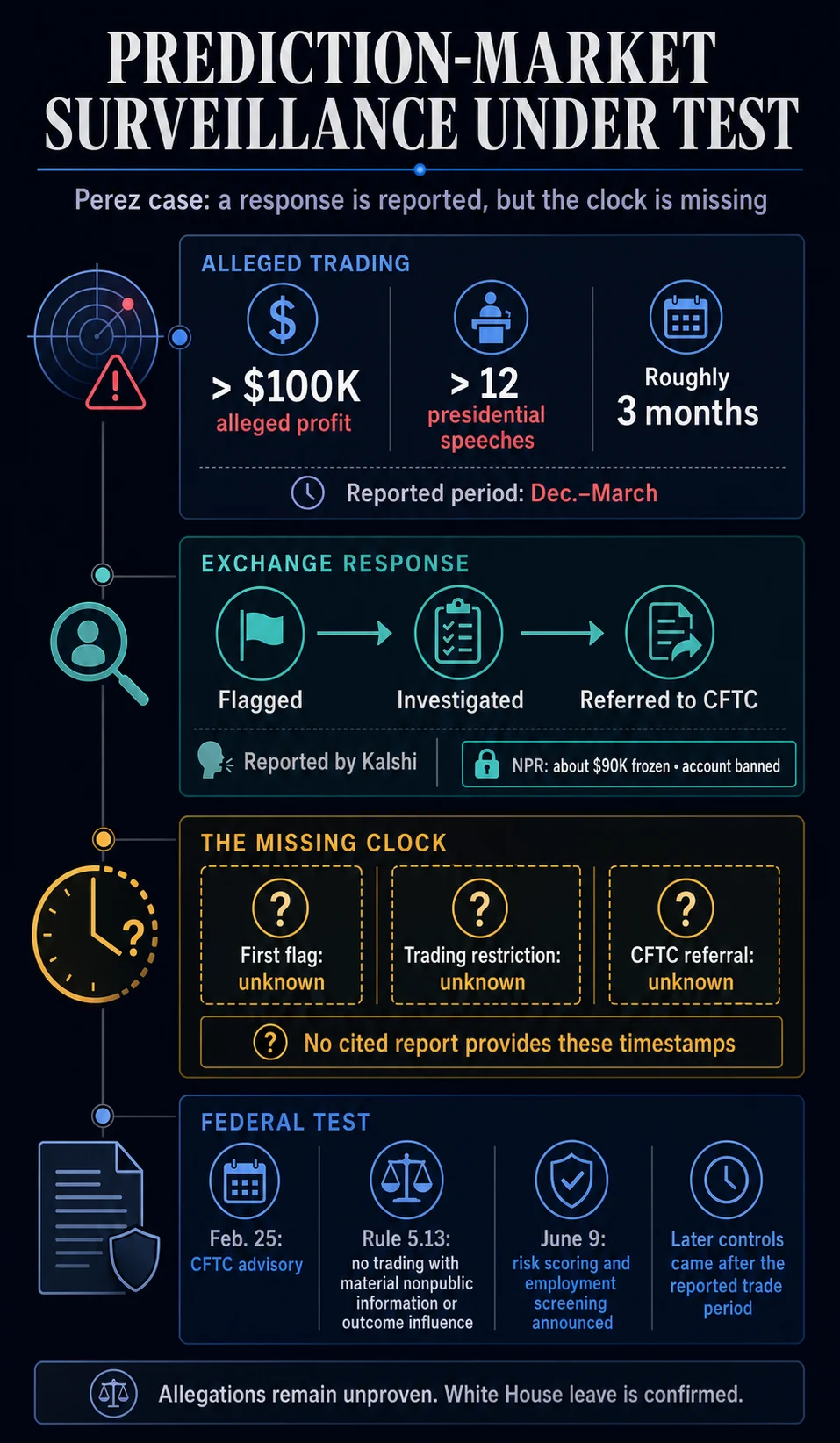
The White House has placed Gabriel Perez, a longtime teleprompter operator for President Donald Trump, on unpaid administrative leave following allegations that he leveraged his access to the President’s prepared remarks to amass over $100,000 through trades on the Kalshi exchange. The alleged scheme, which reportedly spanned more than a dozen speeches over approximately three months, has triggered an investigation and raised significant questions about insider trading in prediction markets and the efficacy of regulatory oversight.
Sources close to the matter, as reported by ABC News, indicate that Perez is currently engaged in discussions with the Commodity Futures Trading Commission (CFTC) regarding a potential settlement. The CFTC, in accordance with its standard operating procedure, has declined to comment on ongoing investigations. These revelations cast a shadow over the integrity of prediction markets, which are designed to forecast future events based on collective intelligence, and highlight the potential for misuse of sensitive, non-public information.
Kalshi, the platform where the alleged trades took place, has stated that its internal surveillance systems promptly identified the suspicious activity. According to a company statement, the exchange initiated an investigation and subsequently referred the matter to the CFTC. The exchange’s proactive stance is a crucial element in the unfolding narrative, though the precise timing of its actions remains a subject of scrutiny. Separately, NPR reported, citing unnamed officials, that Kalshi had frozen approximately $90,000 in funds associated with Perez’s account and barred him from further participation on the platform. This swift action by Kalshi suggests a robust internal control mechanism, but the question of when these measures were implemented in relation to the alleged trading period is critical for determining the full scope of any potential wrongdoing.
The Unfolding Timeline and the Surveillance Gap
The core of the current controversy lies in the lack of precise timestamps detailing Kalshi’s response to the alleged insider trading. While ABC News, The Associated Press, and NPR have all reported on the allegations and Kalshi’s involvement, none of the reports provide specific dates for when Kalshi’s surveillance team first flagged Perez’s account, when trading restrictions were imposed, or when the referral to the CFTC was made. This temporal ambiguity makes it challenging to ascertain whether Kalshi’s intervention occurred before or after the majority of the alleged illicit trades took place.
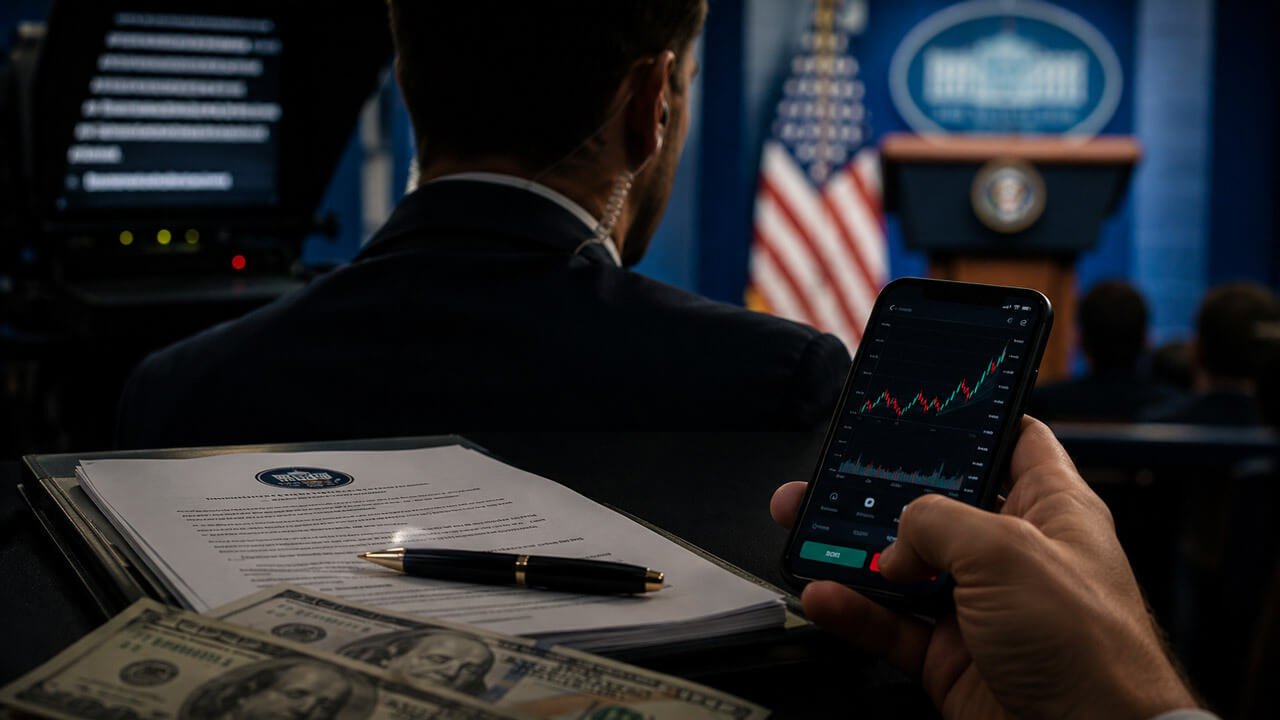
The absence of these critical chronological markers is significant. If Kalshi acted promptly after the initial suspicious trades, it would suggest a highly effective and responsive surveillance system. Conversely, if there was a considerable delay between the alleged trading and the implementation of countermeasures, it could imply a loophole or a delay in the detection process, potentially allowing for further exploitation of non-public information. The ability to establish a clear timeline is paramount for regulators to assess the extent of the alleged violation and the adequacy of Kalshi’s compliance procedures.
Regulatory Framework and Kalshi’s Rules
The alleged actions of Gabriel Perez fall under the purview of federal regulations designed to prevent market manipulation and insider trading. A February CFTC advisory explicitly addressed the misappropriation of confidential information, stating that such actions, when in breach of a duty, can constitute violations of Section 6(c)(1) of the Commodity Exchange Act and Regulation 180.1. This regulation prohibits fraud, manipulation, and deception in connection with the purchase or sale of any commodity in the futures or options markets.
Furthermore, the advisory emphasized the responsibility of designated contract markets, such as Kalshi, to maintain comprehensive audit trails, conduct thorough trading surveillance, and rigorously enforce their own rules. Kalshi’s rulebook, a publicly available document, explicitly prohibits members who possess material non-public information or who have influence over the outcome of a contract from trading that specific contract. It also mandates the review and, where appropriate, investigation of any unusual trading activity. The allegations against Perez suggest a potential breach of these established protocols, underscoring the importance of vigilant enforcement.
Broader Implications for Prediction Markets
The allegations against Perez are not an isolated incident but rather an escalation of a pattern that the CFTC has been observing and addressing within the prediction market landscape. Earlier this year, CryptoSlate reported on the CFTC’s broader warnings regarding the growing insider problem in prediction markets. Additionally, a separate case involving a Special Forces soldier and trades on the Polymarket exchange highlighted similar concerns about individuals exploiting privileged information for financial gain.
What distinguishes the Perez case is the source of the alleged insider information – access to President Trump’s prepared White House speeches – and the fact that the trades were executed on a federally regulated exchange. This scenario brings the potential for significant market impact into sharper focus, as information about presidential speeches can often influence financial markets and public perception. The direct link between White House operations and trading activity on a regulated platform raises critical questions about the security of sensitive governmental information and its potential to be weaponized for financial advantage.

The timing of these allegations also coincides with a significant announcement from Trump Media & Technology Group (TMTG) on July 16, the same day Perez was placed on leave. TMTG revealed the launch of Truth API, a paid data feed designed to deliver posts from key Truth Social accounts, including President Trump’s, to institutional clients with extreme speed. The service, slated to begin August 1, is explicitly aimed at high-frequency and algorithmic trading firms, acknowledging that even marginal delays in information access can translate into substantial financial costs and opportunities.
While Truth API focuses on providing faster access to information after it has been publicly disseminated, the Perez allegations concern access to information before it becomes public. However, both developments underscore the intense competition and value placed on obtaining information related to Donald Trump and his activities ahead of the broader market. They illustrate the emergence of adjacent markets built around the same fundamental commodity: gaining an informational edge on Trump’s potentially market-moving pronouncements.
Kalshi’s Recent Integrity Measures
In response to growing concerns about market integrity, Kalshi announced a suite of new measures on June 9, including the implementation of market risk scores and employment verification for users entering certain high-risk markets. These enhancements were introduced shortly before the period during which Perez allegedly conducted his trades, according to the reported timeline of December to March. The question remains whether these newly implemented safeguards were applied to presidential-mention markets, or if similar checks were already in place prior to their broader rollout.
The effectiveness of these integrity measures in the context of the Perez allegations is yet to be fully determined. While Kalshi’s surveillance capabilities appear to have been sufficient to generate a referral to the CFTC and lead to the reported freeze and ban of Perez’s account, the continued alleged trading and the lingering ambiguity surrounding the exact timing of Kalshi’s intervention leave the speed and deterrent effect of their response unproven in this specific instance. The case highlights the ongoing challenge for exchanges like Kalshi to stay ahead of sophisticated attempts to exploit information asymmetry, particularly when the information originates from the highest levels of government.
The implications of this scandal extend beyond the immediate regulatory and disciplinary actions against Gabriel Perez. It serves as a stark reminder of the inherent risks associated with prediction markets and the critical need for robust, transparent, and consistently enforced integrity protocols. As these markets mature and attract greater participation from institutional players, the onus on exchanges to demonstrate an unshakeable commitment to fair play will only intensify. The outcome of the CFTC’s investigation into Perez’s alleged activities will undoubtedly shape future regulatory approaches and industry best practices, ensuring that the pursuit of profit does not undermine the fundamental principles of market fairness.