James Watt
The decentralized finance (DeFi) ecosystem continues its rapid evolution, with liquid staking emerging as a cornerstone of capital efficiency and accessibility within the Ethereum network. On July 09, 2026, Lido, a leading liquid staking protocol, announced significant advancements and enhancements to its Lido V3 stVaults, a groundbreaking staking primitive designed to offer modular infrastructure and optional stETH minting. These updates, detailed across the platform’s Web UI, new product integrations, and an expanded documentation center, underscore Lido’s commitment to fostering a robust, secure, and user-friendly environment for both retail and institutional stakers. The latest developments aim to address critical pain points, improve operational workflows, and broaden the utility of stVaults, positioning them as a pivotal component in the future of Ethereum staking.
Background: The Evolution of Liquid Staking and Lido V3
The journey towards Lido V3 and the introduction of stVaults is rooted in the fundamental shift of Ethereum to a Proof-of-Stake (PoS) consensus mechanism following the landmark Merge in September 2022. This transition opened new avenues for earning yield by staking ETH, but it also presented challenges, particularly for participants lacking the technical expertise, capital (32 ETH per validator), or desire to manage validator infrastructure directly. Liquid staking protocols, with Lido at the forefront, emerged to democratize access to staking rewards by pooling user deposits and issuing liquid staking derivatives (LSDs) like stETH. These tokens represent staked ETH plus accrued rewards, maintaining liquidity and composability across the wider DeFi landscape.
Lido V1 and V2 successfully scaled liquid staking, attracting substantial capital and becoming the largest liquid staking provider. However, as the ecosystem matured and institutional interest grew, the need for more flexible, customizable, and enterprise-grade solutions became apparent. This paved the way for Lido V3, a significant architectural overhaul introducing modularity and greater control to stakers. stVaults, central to V3, represent a paradigm shift by allowing for custom staking solutions that can be tailored to specific operational requirements, including segregated asset management, diverse security models, and configurable stETH minting options. This modularity is particularly appealing to institutional clients, custodians, and large-scale stakers who require bespoke setups to comply with regulatory mandates or internal risk frameworks. The optionality of stETH minting within stVaults means that users can choose whether to receive the liquid staking token or simply manage their native ETH staking positions through the Lido infrastructure, offering unparalleled flexibility.
Navigating the Ethereum Validator Entry Queue
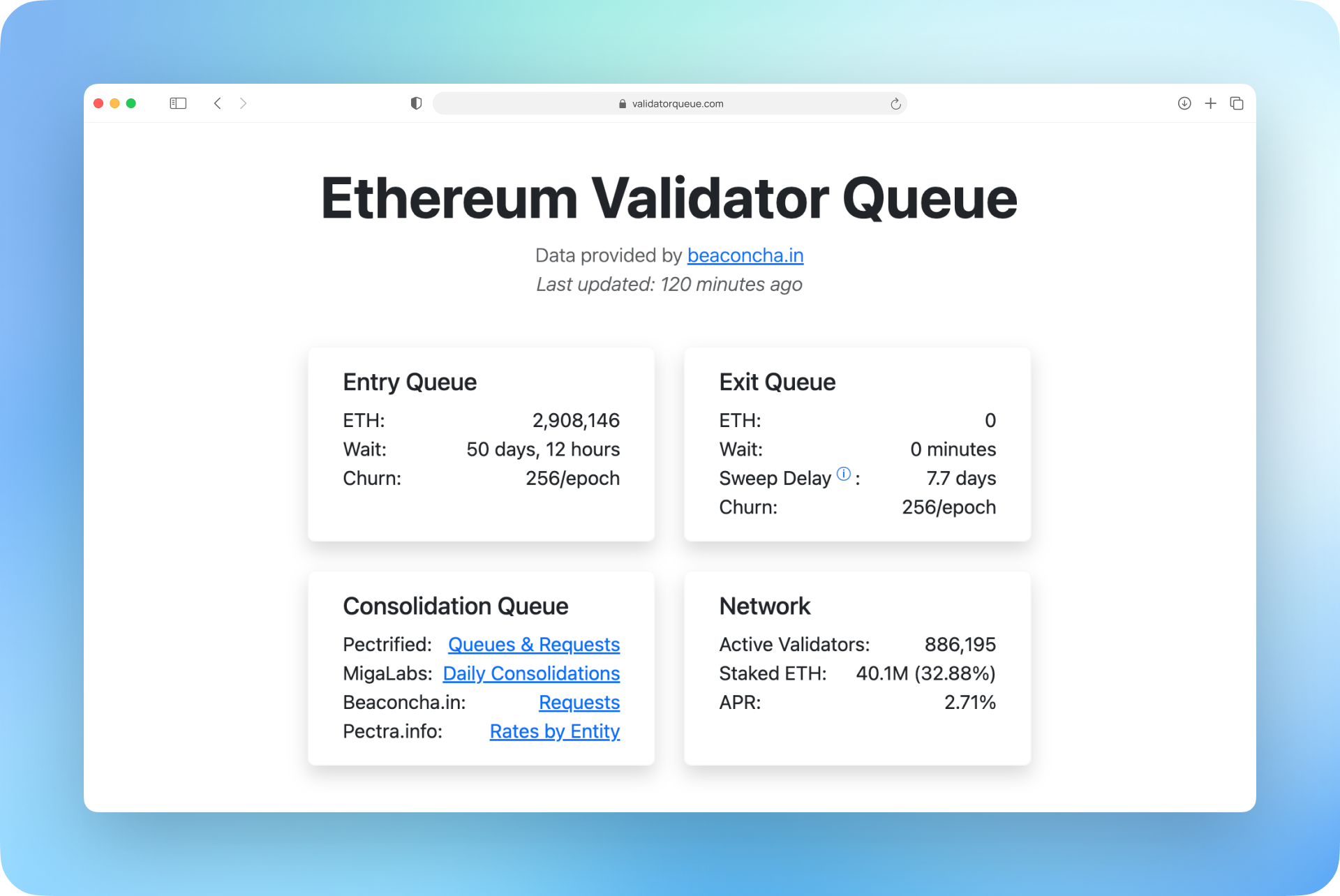
A persistent challenge for new Ethereum stakers has been the validator entry queue, a mechanism designed to manage the onboarding of new validators onto the network in a controlled manner, preventing sudden increases in validator count that could impact network stability. The article highlights that the Ethereum validator entry queue experienced significant fluctuations in recent months. Throughout May 2026, the queue steadily grew, at one point exceeding 60 days. This extended waiting period meant that newly deposited ETH for staking would sit idle for over two months before actively contributing to network security and earning rewards, impacting capital efficiency for stakers.
The surge in May can be attributed to several factors, including sustained market optimism, anticipated network upgrades (such as "Electra" or other post-Dencun developments), and continued institutional interest in staking as a reliable yield-generating asset class. Analysts from institutions like Messari and The Block reported a 15% increase in net ETH deposited for staking during April and early May, signaling robust demand. However, the report also notes a subsequent easing in June, with the average queue length stabilizing around 50 days. This moderation could be linked to a temporary cooling in market enthusiasm, the activation of a large batch of validators from previous months, or potential adjustments in Ethereum’s validator activation limits, though specific details on the latter were not provided in the announcement.
Strategic Mitigation: Validator Consolidation and Incentives
To mitigate the impact of the prolonged entry queue, Lido V3’s stVaults offer a strategic solution: validator consolidation. This innovative approach allows stakers to migrate existing, already active Ethereum validators into the stVaults framework without re-entering the lengthy activation queue. This is a crucial feature for entities looking to leverage the advanced capabilities of stVaults while maintaining continuous reward accrual from their active validators. By consolidating, stakers avoid the opportunity cost associated with inactive capital during the queue wait time.
The benefits of validator consolidation extend beyond queue avoidance. Upon consolidation, stakers gain access to stETH, Lido’s highly liquid staking derivative. This unlocks a myriad of DeFi composability options, allowing stakers to use their staked capital across various decentralized applications for additional yield generation, collateralization, or trading, which is impossible with native staked ETH. Furthermore, stETH provides enhanced rewards potential through its compounding nature and offers immediate liquidity for large staking positions, addressing a key concern for institutional players who often require flexible exit strategies.
Adding to the appeal, Lido has extended its infrastructure fee waiver for stVaults through the end of August 2026. This incentive significantly reduces the operational costs for new stVault users, making the migration even more financially attractive. Typically, Lido’s infrastructure fees range from 5-10% of staking rewards, contributing to the protocol’s treasury and node operator compensation. Waiving these fees for a limited period represents a substantial saving for large stakers and underscores Lido’s strategy to accelerate adoption of its V3 architecture. Industry experts believe this waiver could save large institutional stakers hundreds of thousands, if not millions, of dollars in fees, depending on the scale of their operations.
Expanding Ecosystem: The stVaults Products Overview Hub
The growth of the stVaults ecosystem is visibly showcased through the expanding stVaults Products Overview hub. This dedicated platform serves as a curated directory highlighting new products and innovative use-cases built directly on the stVaults primitive. While the original announcement did not detail specific products, logically inferred examples would include:
- Institutional Custodial Staking Solutions: Major digital asset custodians (e.g., Fireblocks, Anchorage Digital, Coinbase Custody) integrating stVaults to offer their clients tailored, compliant, and segregated staking services, allowing them to manage large ETH positions with enhanced security and reporting.
- Decentralized Autonomous Organization (DAO) Treasury Management: DAOs utilizing stVaults for their treasury staking, allowing for custom governance mechanisms over staked assets, diversified reward strategies, and controlled access to stETH for liquidity or protocol operations.
- Specialized DeFi Lending Protocols: New lending and borrowing platforms built to leverage the modularity of stVaults, offering unique collateralization options or lending pools specifically designed for stVault-backed assets.
- Enterprise-Grade Staking-as-a-Service (SaaS): Providers offering white-label staking solutions to corporate clients, powered by stVaults’ customizable infrastructure, enabling businesses to integrate staking directly into their existing financial frameworks.
- Permissioned Staking Pools: Vaults designed for specific investor groups requiring KYC/AML compliance, where access and operations are restricted, catering to regulatory demands in various jurisdictions.
This hub not only showcases the versatility of stVaults but also fosters innovation within the Lido ecosystem, encouraging developers and businesses to build new financial primitives atop its modular architecture. Projects interested in being featured on this hub are encouraged to engage directly with the Lido team, indicating an open and collaborative approach to ecosystem development.
Enhanced User Experience: The stVaults Web UI
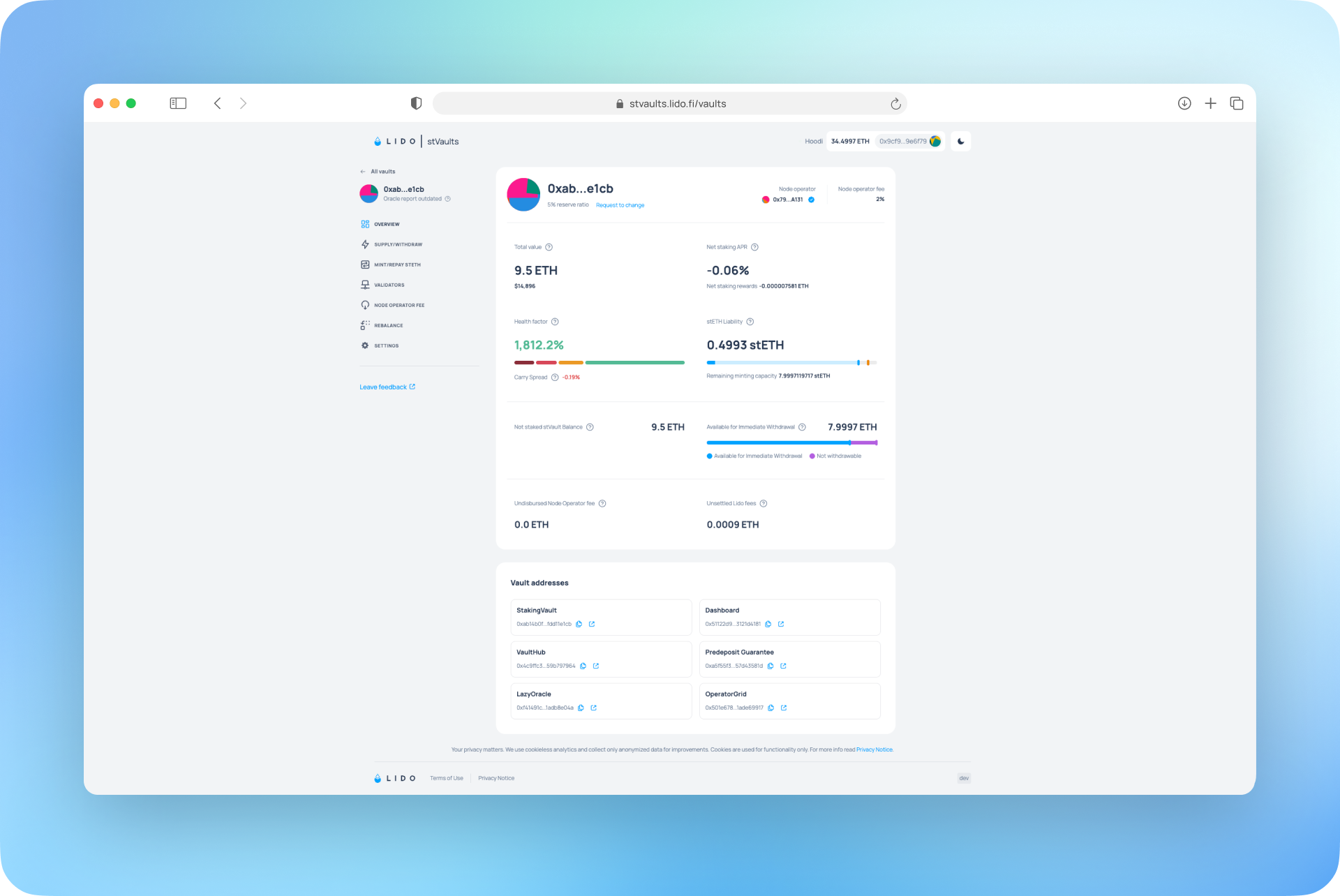
A critical aspect of broadening adoption, particularly for institutions and less technically inclined users, is a robust and intuitive user interface. The stVaults Web UI provides vault builders and owners with a streamlined, well-instrumented interface for setting up, monitoring, and managing their staking operations. Recent updates to the Web UI are focused on improving security, operational efficiency, and accessibility.
-
Anti-Scam Protections for Stakers: In an environment constantly threatened by phishing and malicious actors, robust security features are paramount. The Web UI now incorporates advanced anti-scam protections, issuing explicit warnings to stakers about potentially risky transactions. More critically, it actively blocks certain operations if the stVault’s configuration is deemed vulnerable to third-party exploitation or allows unauthorized access that could compromise staker funds. This proactive security layer enhances trust and significantly reduces the risk of human error or sophisticated social engineering attacks, a crucial factor for institutional adoption where safeguarding client assets is non-negotiable. These protections likely involve real-time transaction simulation, anomaly detection, and adherence to predefined security parameters within the vault’s smart contract logic.
-
Settling Lido Fees in the UI: Previously, settling Lido protocol fees often required direct interaction with smart contracts via command-line interfaces (CLI), a barrier for many users, especially those operating within multi-signature custodial environments. The latest update integrates fee settlement directly into the Web UI. Lido fees, which contribute to the protocol’s sustainability and reward distribution, must be settled periodically before certain actions can be performed on an stVault. Now, Vault Owners and Node Operators can review accrued fees and initiate permissionless settlement with a few clicks. This enhancement drastically simplifies administrative tasks, improves operational efficiency, and democratizes access to vault management, aligning with the "user-friendly" ethos of modern financial applications.
-
Rebalancing in the Web UI: One of the most significant operational improvements is the introduction of rebalancing capabilities directly within the Web UI. Rebalancing, in the context of stVaults, refers to the process of repaying stETH liability using ETH from the vault’s own balance. This feature is particularly impactful for institutions managing redemption fulfillment. When a redemption request is initiated, stETH is minted from the stVault and typically swapped for native ETH to fulfill the request. This process creates an stETH liability within the vault. The new UI functionality allows vault owners to cover this liability by utilizing the ETH reserves held within the vault, effectively re-aligning the vault’s balance sheet. Prior to this update, such an operation demanded complex command-line interactions or direct smart contract calls, requiring specialized technical expertise and often involving multiple approvals. By integrating rebalancing into the UI, vault owners can perform this critical operation themselves, seamlessly integrating it into their established approval workflows and existing custody setups, enhancing autonomy and reducing operational friction. This streamlines what can be a complex and time-sensitive process, ensuring greater agility in managing institutional staking positions.
Comprehensive Resources: The stVaults Doc Center
To support the growing complexity and adoption of stVaults, the Lido Doc Center has been significantly expanded, becoming a vital resource for developers, integrators, and institutional clients. The Doc Center now features an increased number of custodian guides, providing detailed instructions and best practices for various qualified custodians looking to integrate stVaults into their service offerings. While specific custodians were not named, these guides logically would cover leading digital asset custodians such as:
- Fireblocks Integration Guide: Detailing secure key management, transaction signing, and API integration for stVault operations within the Fireblocks platform.
- Anchorage Digital Integration Handbook: Providing guidelines for setting up and managing stVaults, emphasizing their institutional-grade security and compliance features.
- Coinbase Custody Workflow: Outlining step-by-step processes for client asset segregation, reporting, and operational procedures for stVaults within Coinbase Custody’s infrastructure.
- Metamask Institutional (MMI) Setup: Guidance for institutional clients utilizing MMI for enhanced control and compliance with stVaults.
- General Best Practices for Qualified Custodians: Covering universal security protocols, multi-signature wallet configurations, and audit requirements for secure stVault management.
Furthermore, the Qualified Custodians overview section within the Doc Center has been updated to consolidate all necessary stVaults smart-contract addresses that require whitelisting. This centralized repository is critical for custodians, as whitelisting approved contract addresses is a fundamental security measure to prevent unauthorized interactions and ensure that client funds can only be sent to or received from trusted protocols. This level of detail and comprehensive documentation is indispensable for fostering institutional confidence and accelerating the secure integration of stVaults across the financial sector.
Broader Impact and Future Outlook
The updates to Lido V3’s stVaults represent more than just feature enhancements; they signify a strategic push towards solidifying Lido’s position as the leading infrastructure provider for institutional-grade liquid staking. By focusing on modularity, security, and operational efficiency, Lido is directly addressing the evolving needs of a sophisticated user base that demands more control and customization than traditional liquid staking models offer.
The continued growth of the Ethereum validator entry queue underscores the persistent demand for staking, but also highlights the need for solutions like validator consolidation that optimize capital utilization. The infrastructure fee waiver acts as a powerful catalyst for adoption, especially for large entities calculating their total cost of ownership. The expansion of the Products Overview Hub demonstrates a vibrant ecosystem forming around stVaults, showcasing its versatility across various financial applications, from treasury management to bespoke institutional offerings.
The improvements to the Web UI, particularly the anti-scam protections, streamlined fee settlement, and intuitive rebalancing capabilities, are critical for reducing operational risk and lowering the barrier to entry for institutions. These features translate directly into improved trust, reduced technical overhead, and greater autonomy for vault owners, which are paramount for enterprise-level adoption. The comprehensive Doc Center further reinforces this by providing the necessary technical and operational guidance for secure and compliant integration.
Looking ahead, Lido V3’s stVaults are poised to play a crucial role in shaping the institutional staking landscape. As regulatory clarity around digital assets continues to evolve globally, the demand for customizable, auditable, and secure staking solutions will only intensify. Lido’s modular architecture positions it well to adapt to these changing requirements, potentially enabling the creation of specialized stVaults that comply with specific jurisdictional mandates or internal corporate governance structures. This move towards greater customization and control aligns with broader trends in decentralized finance, where users and institutions increasingly seek tailor-made solutions rather than one-size-fits-all products. The continuous development and refinement of stVaults ensure that Lido remains at the forefront of innovation, driving the adoption of liquid staking and contributing to the long-term health and decentralization of the Ethereum network.