James Watt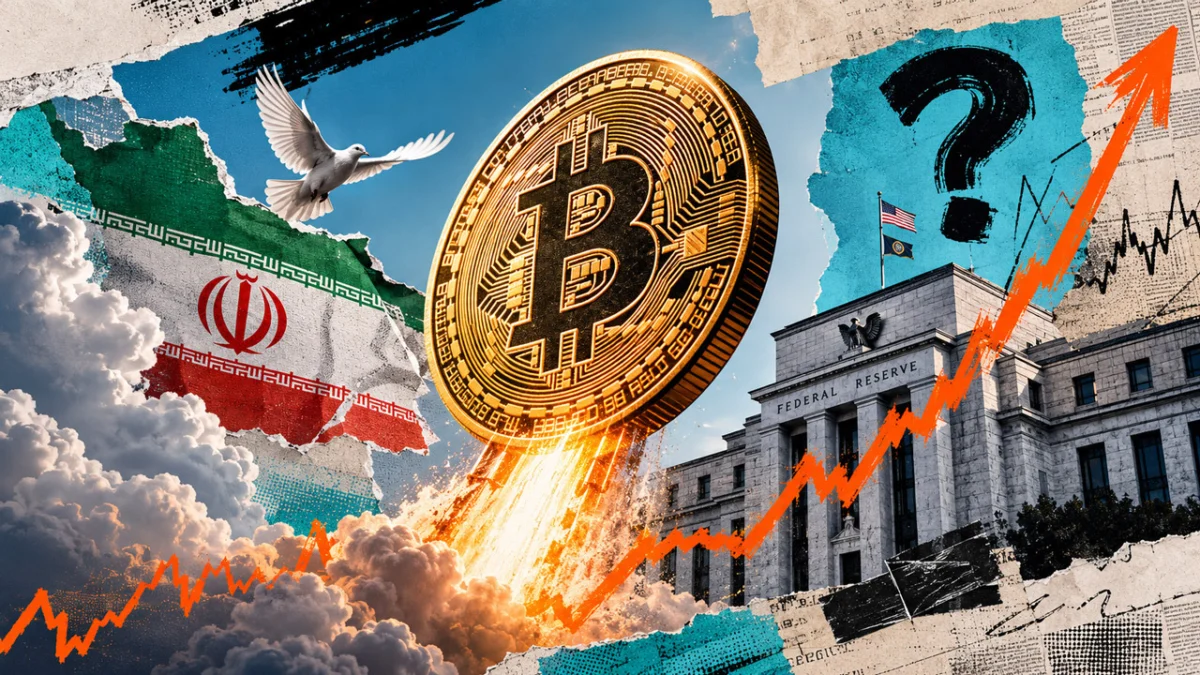
Bitcoin regained the critical $65,000 threshold on Monday as a temporary de-escalation in Middle Eastern geopolitical tensions revitalized investor appetite for risk-on assets. This recovery comes at a precarious moment for global finance, occurring just days before a highly anticipated Federal Reserve policy meeting that is expected to provide clarity on the trajectory of U.S. interest rates. The digital asset market, which had been battered by rising energy costs and the threat of widening conflict, saw a broad-based relief rally as the "geopolitical risk premium" began to evaporate from energy and commodity markets.
Data from market aggregators and CryptoSlate indicates that Bitcoin (BTC) rose approximately 1% to trade at $65,155 during the Monday session. Ethereum (ETH), the second-largest cryptocurrency by market capitalization, outperformed the broader market with a 4% surge, reaching $1,964—its highest valuation since early June. The recovery in crypto prices mirrored a stabilization in traditional equities and a sharp correction in the energy sector, where Brent crude futures dropped 6.5% to settle near $90.45 per barrel. This shift followed a period of intense volatility where oil prices had briefly breached the $100 mark, stoking fears of a renewed inflationary spiral.
Geopolitical De-escalation and the Energy Market Correction
The primary catalyst for the Monday rebound was a discernible pause in the cycle of retaliatory strikes between the United States and Iran. Following a week of heightened military activity that threatened to disrupt global shipping lanes and energy infrastructure, Washington announced a temporary halt to its operations. In a reciprocal move, Tehran signaled its intention to suspend attacks provided the United States maintained its current stance.
This diplomatic respite provided immediate relief to energy markets. Last week, the surge in crude oil to over $100 per barrel had fundamentally altered the macroeconomic outlook, as investors feared that high energy costs would filter through to consumer prices, forcing central banks to remain hawkish for longer. The subsequent 6.5% decline in Brent crude on Monday suggests that traders are pricing in a lower probability of a full-scale regional conflict. However, analysts warn that this stability remains fragile and contingent on continued diplomatic restraint.
The cooling of energy prices is particularly significant for Bitcoin, which has increasingly traded as a "macro asset" sensitive to liquidity conditions and inflation expectations. When energy prices rise, they typically drive up Treasury yields and the U.S. Dollar Index (DXY), both of which historically exert downward pressure on non-yielding assets like cryptocurrencies. The retreat in oil has, for the moment, removed one of the most significant headwinds facing the crypto market.
The Federal Reserve and the "Hawkish Overhang"
While geopolitical concerns have moved to the background, the focus of the market has shifted squarely toward the Federal Reserve’s two-day policy meeting, set to conclude this Wednesday. The recent volatility in energy prices has complicated the Fed’s mission, leading to a notable shift in market expectations regarding interest rate hikes.
According to Fed funds futures data, the probability of a 25-basis-point interest rate increase on Wednesday has climbed to approximately 33%. Only one week ago, that same probability stood at a mere 16%. This doubling of the perceived likelihood of a hike underscores how quickly the "energy shock" of the previous week permeated the consciousness of institutional investors. While the majority of the market—roughly two-thirds—still expects the Fed to maintain the current target range of 3.50% to 3.75%, the prospect of an immediate tightening of monetary policy is no longer a fringe theory.
The Federal Reserve enters this meeting in a difficult position. On one hand, recent inflation data provided a glimmer of hope. The Consumer Price Index (CPI) for June showed a 0.4% monthly decline—the most significant drop since the height of the pandemic in April 2020. On an annual basis, inflation slowed to 3.5% from 4.2% in May, while core inflation (which excludes volatile food and energy costs) eased to 2.6%.
However, much of this disinflationary progress was driven by the energy sector. In June, the energy index fell 5.7%, and gasoline prices saw a sharp contraction. The recent spike in oil back toward $100 threatens to reverse these gains, potentially leading to a "re-acceleration" of inflation in the coming months. This is the "hawkish overhang" that currently weighs on Bitcoin; even if the Fed chooses to hold rates steady this week, the rhetoric from Chair Kevin Warsh is expected to be stern.
Analyzing the "Warsh" Factor and Forward Guidance
Federal Reserve Chair Kevin Warsh has established a reputation for prioritizing data-dependent decision-making over the long-term forward guidance favored by his predecessors. This approach has introduced a higher degree of uncertainty into market sessions, as investors are forced to parse every sentence of the Fed’s official statements for clues regarding future policy.
At the June meeting, the Fed held rates steady but explicitly noted that supply-side shocks, particularly in the energy sector, were contributing to "elevated inflation." The accompanying "dot plot" of economic projections revealed that nine out of 18 officials believed at least one more rate hike would be appropriate before the end of the year. The median projection for the federal funds rate at the end of 2026 was placed at 3.8%, which is above the current midpoint of the target range.
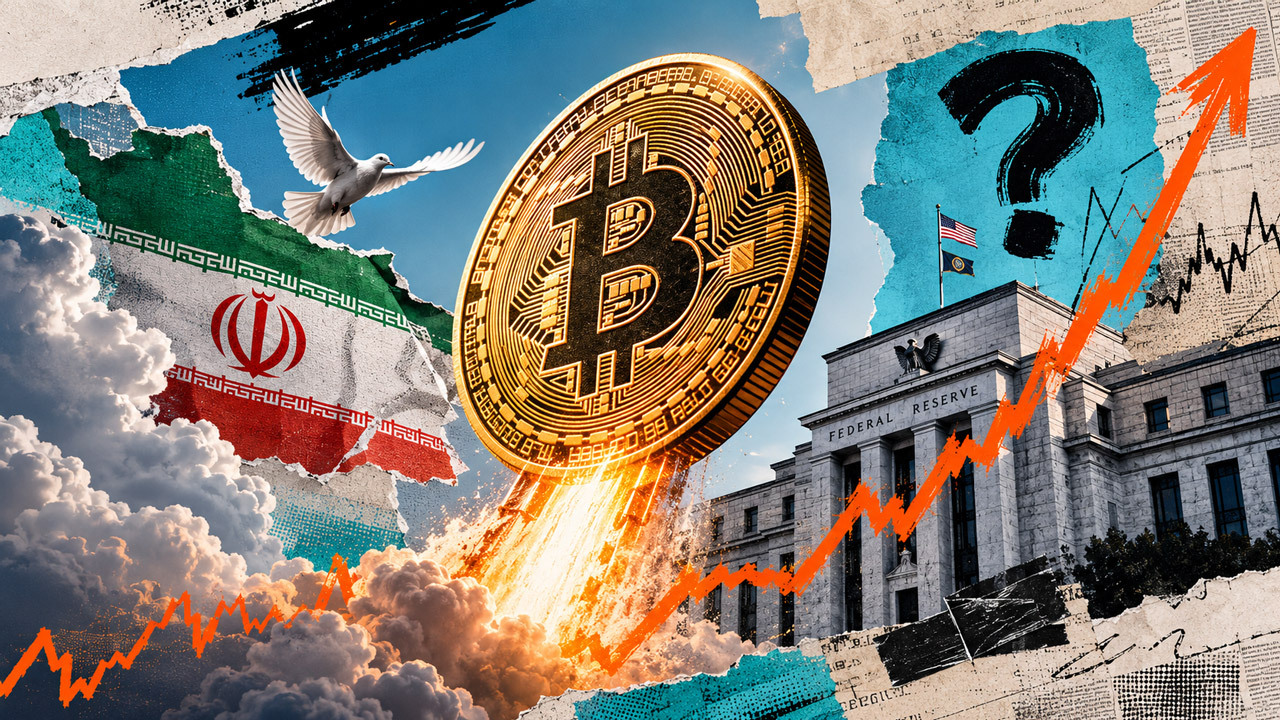
For Bitcoin traders, the Wednesday press conference carries immense weight. A "hawkish hold"—where rates remain unchanged but the Chair signals that a hike in September is highly likely—could stifle the current relief rally. Conversely, if Warsh characterizes the recent oil spike as a "transitory supply shock" and expresses confidence in the long-term disinflationary trend, Bitcoin could see a sustained push toward its previous all-time highs. Markets are currently pricing in a 77% probability of a rate increase by the September meeting, suggesting that the "higher for longer" narrative remains the dominant market thesis.
Economic Growth and the Thursday Data Reset
The market’s reaction to the Federal Reserve’s decision will be almost immediately tested by a fresh batch of economic data. On Thursday, the U.S. Commerce Department is scheduled to release its first estimate of second-quarter Gross Domestic Product (GDP), alongside personal income and spending data for June. This release includes the Personal Consumption Expenditures (PCE) price index, which is the Federal Reserve’s preferred metric for measuring inflation.
The U.S. economy has shown remarkable resilience in the face of restrictive monetary policy. GDP expanded at an annualized rate of 2.1% in the first quarter, a significant acceleration from the 0.5% growth recorded in the final quarter of 2025. If the second-quarter data continues to show robust growth alongside firm inflation, it will provide the Fed with the "green light" to maintain or even increase interest rates without the immediate fear of causing a recession.
For Bitcoin, the ideal scenario would be a "Goldilocks" reading: growth that is moderate enough to prevent overheating, combined with PCE data that confirms inflation is continuing to cool. A "stagflationary" print—characterized by slowing growth and rising prices—would be the most detrimental outcome for risk assets. In such a scenario, the Fed would have limited room to support the economy through rate cuts, as doing so could further fuel inflation.
Derivatives Market: Traders Unwind Defensive Positions
Despite the looming macro risks, technical data from the derivatives market suggests that Bitcoin traders are becoming more optimistic in the short term. Data from Glassnode shows that the Bitcoin options open-interest put-to-call ratio has plummeted to 0.52, down from 0.76 in late June. A lower ratio indicates that there are significantly more "call" options (bets on price increases) than "put" options (bets on price decreases) currently open in the market.
This shift suggests that the defensive positioning that characterized the market during last week’s oil-driven selloff is being unwound. Traders are no longer paying a high premium for protection against a sudden crash. This is further evidenced by the "volatility curve" for Bitcoin options. One-week at-the-money implied volatility is currently sitting at 34.3%, while six-month options are priced at 40.8%. This upward-sloping curve indicates that while traders are comfortable with the immediate outlook for the next few days, they remain wary of significant uncertainty and potential "black swan" events in the months ahead.
The 25-delta skew, a measure of the relative cost of puts versus calls, also reflects this short-term confidence. The one-week skew has dropped to 4%, signaling low demand for immediate downside protection. However, the three-to-six-month skew remains elevated at 11% to 12%, suggesting that institutional players are still hedging their portfolios against long-term macro instability.
Broader Implications and Market Outlook
The recovery of Bitcoin to the $65,000 level represents a successful "retest" of a key psychological and technical support zone. By reclaiming the ground lost during the peak of the geopolitical tensions last week, Bitcoin has demonstrated its resilience as a liquidity barometer. However, the path forward remains cluttered with obstacles.
The relationship between Bitcoin and the broader macroeconomic environment has never been more intertwined. The "crypto-native" catalysts, such as spot ETF inflows and the long-term effects of the halving, are currently being overshadowed by the "macro-trade." The interplay between energy prices, Federal Reserve policy, and Treasury yields is the primary engine driving price action in the current regime.
If the pause in US-Iran hostilities evolves into a more durable diplomatic settlement, the "geopolitical premium" will continue to drain from the market, providing a tailwind for Bitcoin. However, if the Federal Reserve chooses to adopt an aggressively hawkish stance on Wednesday to combat the potential inflationary effects of the earlier oil surge, the relief rally could be short-lived.
In conclusion, Monday’s price action signals a market that is eager to move past the fear of conflict but remains deeply respectful of the Federal Reserve’s power to dictate market liquidity. Bitcoin has recovered its footing, but its ability to launch a sustained bull run toward the $70,000 mark will depend on whether the upcoming economic data and policy signals validate the current "relief" narrative or revive the "tightening" fears that dominated the previous week. For now, the digital asset market sits in a state of watchful waiting, balanced between the receding threat of war and the looming reality of a central bank that is not yet ready to declare victory over inflation.