James Watt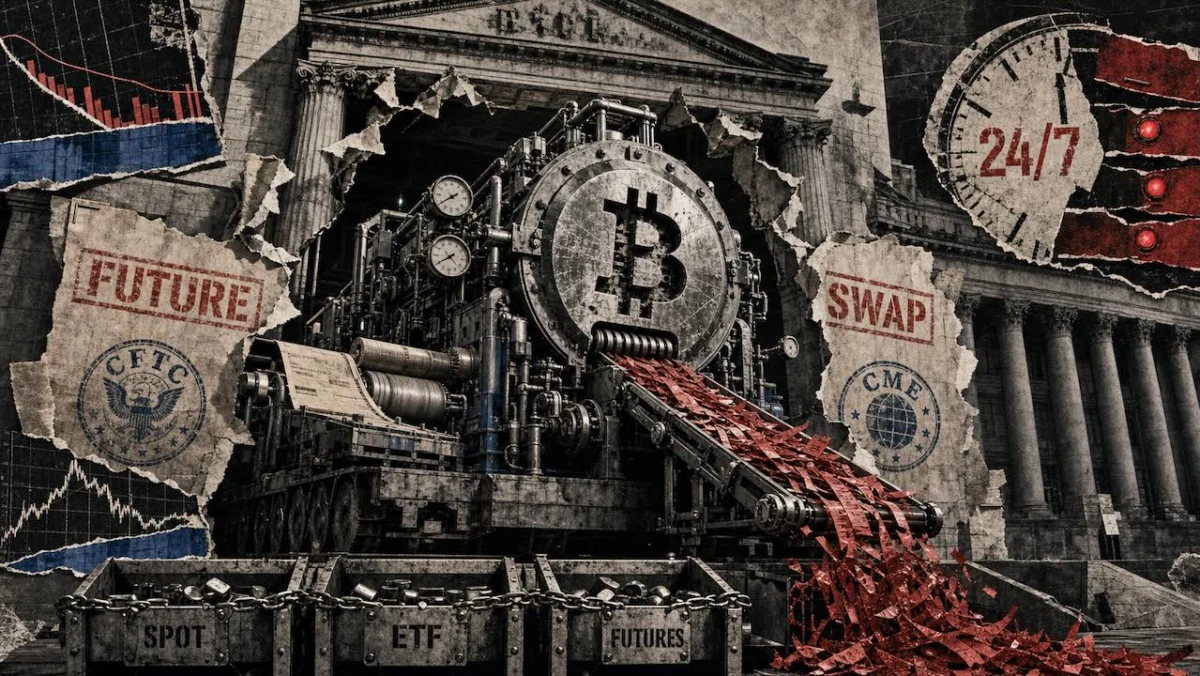
Coinbase has officially launched US perpetual-style futures on its Commodity Futures Trading Commission (CFTC) regulated derivatives exchange, signaling a transformative shift in the American digital asset landscape. By introducing nano Bitcoin and Ethereum contracts that track spot prices through embedded leverage and 24/7 trading, the exchange is bringing a financial instrument that has historically dominated offshore markets directly into the domestic regulatory perimeter. This move represents more than a product expansion; it signifies the importation of the primary machinery responsible for global crypto price discovery—a system characterized by continuous funding payments, perpetual leverage, and automated liquidation engines.
For years, perpetual futures have served as the bedrock of the cryptocurrency market. According to data cited by Coinbase and various industry analysts, perpetuals account for upwards of 90% of all crypto derivatives volume. When considering the broader market, derivatives themselves constitute approximately 80% of all cryptocurrency trading activity. Until recently, this massive volume was almost exclusively the domain of offshore platforms such as Binance, Bybit, and OKX. US-based traders seeking access to these instruments were frequently forced to navigate a "grey market," often utilizing Virtual Private Networks (VPNs) to bypass geographic restrictions and access unregulated international venues.
The transition of this activity to US soil was accelerated by a series of pivotal regulatory decisions in mid-2024. The institutional barrier was effectively breached on May 29, when the CFTC approved KalshiEX’s BTCPERP as a futures contract referencing Bitcoin’s spot price. Simultaneously, the agency issued a policy statement that invited other exchanges to introduce similar contracts through the same regulatory gateway. Shortly thereafter, on June 12, the CFTC provided a conditional pathway for designated contract markets to remove expiration dates from existing perpetual-style futures, allowing them to be converted into genuine, no-expiry contracts.
A Chronology of the Shift Toward US-Regulated Perpetuals
The timeline of this market evolution reflects a rapid convergence of regulatory policy and commercial ambition. On May 29, 2024, the landscape changed overnight. Not only did Kalshi receive its landmark approval, but Coinbase also opened a regulated channel for US clients to access global perpetual and options liquidity via its Deribit affiliate. Deribit, widely recognized as the world’s largest crypto options venue, held more than $31 billion in Bitcoin options open interest at that time. On the same day, the Chicago Mercantile Exchange (CME Group) transitioned its dated crypto futures and options to a 24/7 trading schedule, effectively eliminating the "weekend gap" that had long separated traditional finance from the round-the-clock nature of spot crypto markets.
By June 12, the CFTC’s conversion framework offered a bridge for exchanges like Coinbase to transition their "long-dated" products into true perpetuals. However, this regulatory momentum was met with immediate resistance from incumbent financial institutions. On June 18, CME filed a lawsuit against the CFTC and its Chairman, Michael Selig, in the District of Columbia. The complaint seeks to vacate the Kalshi order and the accompanying policy statement, alleging that the agency overstepped its authority.
The legal battle centers on the statutory definition of financial instruments. CME argues that perpetuals meet the legal definition of "swaps" under the Commodity Exchange Act. If classified as swaps, these products would be subject to a significantly more rigorous regulatory regime, including mandatory dealer registration, stringent capital requirements, and comprehensive reporting obligations. Such a classification would also likely favor incumbents like CME by reinforcing existing benchmark licensing structures. The CFTC, conversely, has characterized the lawsuit as "lawfare" intended to stifle competition and protect market dominance, promising a vigorous defense of its pro-innovation agenda.
The Mechanics of Perpetual Futures in the American Context
To understand the impact of this rollout, one must distinguish between traditional futures and the perpetual model now entering the US. A conventional futures contract has a predetermined expiration date. As that date approaches, the contract price naturally converges toward the spot price. Traders wishing to maintain their positions must "roll" their exposure into a subsequent contract month, a process that incurs transaction costs and management overhead.
Perpetual futures eliminate the expiration date entirely, allowing for indefinite holding periods. To ensure the contract price remains tethered to the underlying spot market without a settlement date, the system utilizes a "funding rate." This mechanism involves periodic payments between long and short position holders. When the perpetual price exceeds the spot price, longs pay shorts, incentivizing selling and bringing the price down. Conversely, when the perpetual trades below spot, shorts pay longs, encouraging buying.
In the current US market, two distinct structures are operating under the "perpetual" label. Kalshi’s BTCPERP is a true no-expiry perpetual. Coinbase’s current offerings are structured as long-dated futures with five-year expirations, featuring hourly funding rates settled twice daily. While legally distinct, the Coinbase model is designed to mirror the price behavior of a perpetual while remaining within the established rules for futures. The CFTC’s June conversion route is intended to eventually allow these long-dated proxies to drop their expiration dates and become true perpetuals.
Market Implications: Liquidity, Reflexivity, and Price Discovery
The arrival of domestic perpetuals is expected to fundamentally alter how price discovery occurs in the United States. Traditionally, US price discovery was driven by spot markets and ETFs. With the introduction of liquid, regulated perpetuals, a new "funding curve" will emerge. This curve will serve as a real-time gauge of leveraged demand within the US regulatory perimeter.
If a significant gap persists between US funding rates and offshore rates, it will reveal critical insights into differences in customer bases, leverage limits, and capital mobility. Furthermore, because perpetuals consolidate liquidity into a single instrument rather than spreading it across multiple expiration months, they tend to offer deeper liquidity. However, this concentration also introduces risks. A sharp imbalance in positioning can move through a perpetual market faster than through a ladder of dated contracts, potentially leading to increased "reflexivity."
Reflexivity in this context refers to a feedback loop where price movements are driven by mechanical position adjustments rather than changes in fundamental value. Because perpetuals involve high leverage, even modest price drops can trigger automatic liquidations. A liquidated long position becomes a market sell order, which can push prices lower, triggering further liquidations. In a 24/7 market with fragmented liquidity, these cascades can be highly visible and volatile. While regulated venues provide safeguards such as segregated customer funds and rule-based liquidation procedures, they do not eliminate the inherent risks of leverage or the volatility of the underlying asset.
The Battle for Capital Efficiency and the Role of Stablecoins
As the technical and legal battles unfold, the ultimate winner in the US derivatives market may be determined by capital efficiency. Currently, the US crypto ecosystem is fragmented. Capital is often trapped in separate "silos"—spot accounts, brokerage accounts for ETFs, futures commission merchants (FCMs) for traditional futures, and offshore exchanges for international trading. Each separation increases the cost of trading, as collateral in one pool cannot be used to offset a hedge in another.
To address this, industry leaders are pushing for the integration of crypto-native collateral. Coinbase Derivatives and the clearinghouse Nodal Clear (part of Deutsche Börse’s EEX Group) are currently seeking CFTC approval to accept Circle’s USDC stablecoin as collateral for US futures. If approved, this would mark the first time a stablecoin is used as regulated margin in the American futures system. Such a development would allow traders to post cash-equivalent collateral without the friction of converting to fiat currency, significantly lowering the barrier to entry for sophisticated arbitrage and hedging strategies.
The ability to use a single pool of collateral across spot, ETFs, and perpetuals represents the "holy grail" of market structure. It allows for the closing of price gaps between platforms more efficiently and reduces the overall systemic risk associated with fragmented margin requirements.
Conclusion: The Path Ahead for US Crypto Derivatives
The expansion of perpetual futures into the US market is a watershed moment that brings the world’s most popular crypto trading instrument under the watchful eye of federal regulators. However, the foundation of this new market remains contested. The outcome of the CME vs. CFTC litigation will determine whether these products continue to proliferate as futures or are forced into the more restrictive "swap" framework.
Beyond the courtroom, the real test of this infrastructure will occur during the next period of extreme market volatility. The industry will be watching to see if US-regulated perpetuals act as a stabilizing force by absorbing shocks through deeper liquidity, or if they amplify moves through automated liquidation cascades. As Coinbase, Kalshi, and CME vie for dominance, the integration of 24/7 trading, perpetual leverage, and crypto-native collateral suggests that the US is no longer just a consumer of crypto price discovery—it is positioning itself to be its primary engine. The transition from offshore VPNs to onshore regulated exchanges is nearly complete, but the final form of the American crypto derivatives market is still being written in the halls of the judiciary and the code of liquidation engines.