James Watt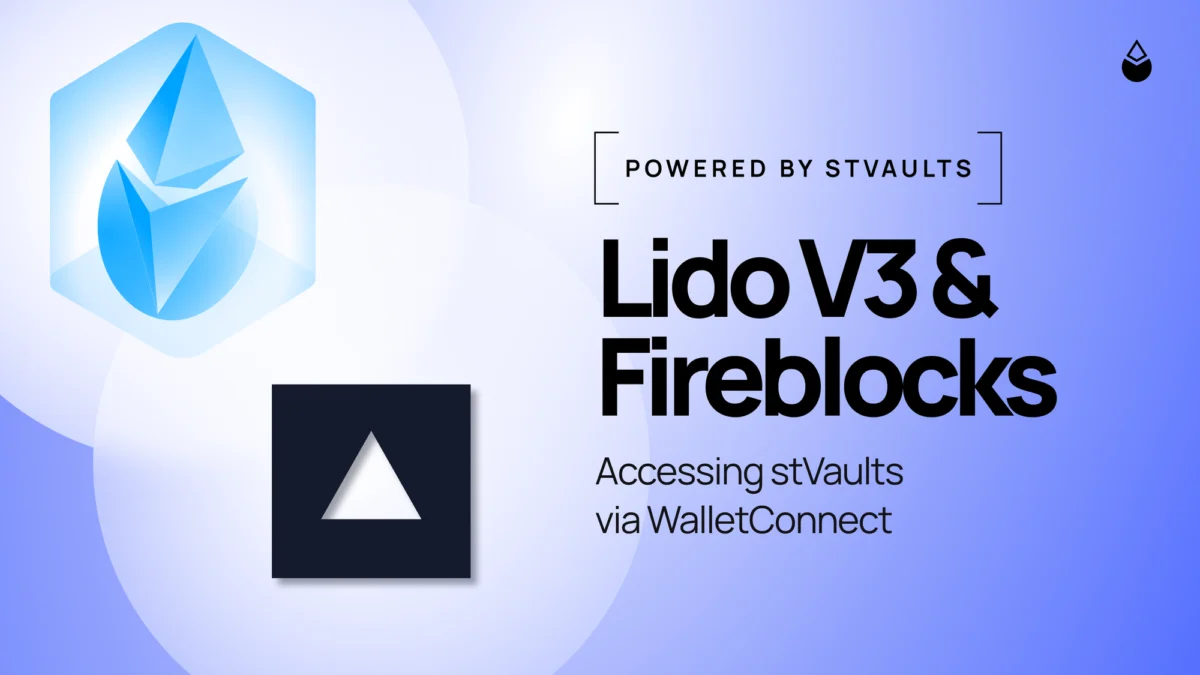
The digital asset landscape witnessed a significant development on April 23, 2026, as Fireblocks, a premier institutional digital asset infrastructure provider, announced its full support for stVaults, the modular staking infrastructure introduced by the Lido protocol’s V3 upgrade. This pivotal integration is poised to redefine how large institutional entities, including investment funds, exchange-traded funds (ETFs), exchange-traded products (ETPs), and asset managers, engage with the burgeoning liquid staking market, offering unprecedented levels of control, customization, and security within a compliant framework. The move underscores a growing trend of traditional finance embracing decentralized finance (DeFi) innovations, particularly those designed to meet stringent institutional requirements for security, operational oversight, and regulatory adherence.
The Evolution of Institutional Staking: Understanding stVaults and Their Purpose
Liquid staking has emerged as one of the most transformative innovations within the Ethereum ecosystem, allowing users to stake their Ether (ETH) and receive a liquid derivative token, such as Lido’s stETH. This mechanism solves the illiquidity problem inherent in traditional staking, where staked assets are locked, by enabling users to retain liquidity and composability across the broader DeFi landscape. Lido, as the leading liquid staking protocol, has been at the forefront of this revolution, commanding a significant share of the total value locked (TVL) in liquid staking, which has ballooned to over $60 billion across various protocols as of early 2026, according to industry analytics.
However, the pooled nature of traditional liquid staking offerings, while efficient for retail users, presents distinct challenges for institutions. These challenges often revolve around a perceived lack of granular control over validator selection, specific geographic or jurisdictional mandates, and the ability to dictate parameters for maximum extractable value (MEV) routing or insurance coverage. Institutional stakeholders, bound by fiduciary duties and strict internal risk management policies, require solutions that offer greater transparency, auditability, and direct operational influence over their staked assets.
Enter stVaults, a cornerstone of the Lido V3 upgrade. Designed as a single-operator architecture, stVaults directly address these institutional pain points. Unlike pooled staking, where an institution’s ETH is commingled with that of other stakers, stVaults provide a dedicated, customizable environment. This empowers large staking entities to deploy their own vaults, granting them complete control over critical operational aspects. This includes the ability to choose specific validators, negotiate bespoke fee terms, and manage the underlying infrastructure. Crucially, stVaults balance this enhanced control with the foundational benefit of liquid staking: on-demand liquidity through optional stETH minting, effectively resolving the long-standing "control-versus-liquidity" dilemma that has hindered broader institutional participation in staking.
The granular control offered by stVaults extends to defining geographic or jurisdictional parameters for validator operations, a vital consideration for institutions operating under diverse regulatory regimes. Furthermore, institutions can now configure MEV routing strategies to align with their specific ethical guidelines or profit optimization mandates, and even specify insurance mandates to mitigate specific operational or smart contract risks. This level of customization is not merely a convenience; it is a prerequisite for many institutional compliance frameworks, paving the way for a more compliant and robust institutional staking ecosystem.
Fireblocks: A Gateway for Institutional Digital Asset Adoption
Fireblocks stands as a critical pillar in the institutional digital asset ecosystem, providing an enterprise-grade platform for securing and managing digital assets and stablecoins. Its comprehensive infrastructure serves a diverse client base, including fintech companies, cryptocurrency exchanges, trading firms, traditional banks, and Web3 businesses. Fireoks’ value proposition lies in its ability to meet the stringent custody and policy requirements that these sophisticated institutions operate under, offering multi-party computation (MPC) technology, advanced policy engines, and robust security protocols. The company’s market penetration is significant, with reports indicating it processes trillions of dollars in digital asset transfers annually for hundreds of leading institutions.
For Lido, the partnership with Fireblocks is strategically invaluable. Fireblocks’ designation as a "qualified custodian" supporting stVaults is a stamp of approval that resonates deeply within traditional finance. This status implies adherence to specific regulatory standards, enhancing trust and mitigating perceived counterparty risks for institutions considering participation in DeFi protocols. The integration with Fireblocks means that institutions can now access the advanced features of stVaults while leveraging their existing, familiar, and highly secure digital asset custody solutions.
This isn’t Fireblocks’ first foray into supporting Lido’s offerings. The relationship dates back to September 2024, when Fireblocks launched a native integration for Lido Core, the protocol’s primary liquid staking product. This initial integration provided institutions with secure and compliant access to stETH minting and management, laying the groundwork for the more complex and customizable stVaults offering. The progressive nature of this partnership highlights a strategic alignment between Lido’s innovation in decentralized finance and Fireblocks’ commitment to providing secure, scalable access to digital assets for the traditional financial sector.
The Integration Mechanics: Seamless Access for Institutions
The technical integration between Fireblocks and Lido’s stVaults is designed for seamless access and operational efficiency, leveraging the widely adopted WalletConnect protocol. This approach allows Fireblocks users to interact with the stVaults Web UI securely and intuitively, integrating decentralized applications (dApps) with institutional-grade custody.
The operational flow for a Fireblocks user wishing to create and manage an stVault is as follows:
- Accessing the stVaults Web UI: The institutional user navigates to the dedicated stVaults Web UI, which serves as the primary interface for configuring and managing their staking vaults.
- Initiating Wallet Connection: Within the Web UI’s wallet connection interface, the user selects WalletConnect as their preferred method.
- Secure QR Code Scan: A unique QR code is displayed on the screen. The user then opens the Web3 Wallet section within their Fireblocks mobile application.
- Authorization via Fireblocks: The Fireblocks mobile app is used to scan the QR code. This action initiates a secure, encrypted connection between the stVaults UI and the institution’s Fireblocks custody environment. This connection is subject to Fireblocks’ internal policy engine, requiring multi-signature approvals or other predefined security measures before any on-chain transaction can be authorized.
- Vault Creation and Management: Once connected, the Fireblocks-secured account gains full capability to:
- Create new stVaults with custom parameters (validator choice, fee structures).
- Deposit ETH into the vault to initiate staking.
- Monitor the performance of their dedicated validators.
- Adjust vault settings, such as MEV routing preferences or insurance mandates.
- Manage the minting and burning of stETH, enabling on-demand liquidity.
- Withdraw staked ETH and accrued rewards, subject to Ethereum’s unstaking queue.
This streamlined process ensures that all on-chain actions related to stVaults are gated by the institution’s existing Fireblocks policies, providing an additional layer of security and compliance. The full setup steps and detailed operational guidelines are meticulously documented in Lido’s Fireblocks integration guide, ensuring transparency and ease of implementation for institutional clients. It is crucial to note that this flow is specifically tailored for "vault owners"—institutions that intend to establish and operate their own dedicated staking infrastructure rather than participating in pooled staking. Support availability for stVaults may vary by jurisdiction, entity type, and the scope of onboarding, necessitating direct confirmation with Fireblocks account managers.
Navigating Risk and Compliance in Institutional DeFi
While the integration of Fireblocks with Lido’s stVaults significantly enhances the security and compliance posture for institutional participants, it is imperative to acknowledge the inherent risks associated with Ethereum staking and decentralized finance. Standard Ethereum staking risks apply, including but not limited to:
- Slashing Risk: Penalties for validator misbehavior (e.g., double-signing, prolonged downtime), resulting in a loss of staked ETH.
- Smart Contract Risk: Vulnerabilities or bugs within the Lido V3 smart contracts could lead to loss of funds.
- Network Risk: Broader Ethereum network issues, such as outages or consensus failures.
- Validator Performance Risk: Suboptimal performance by chosen validators, leading to lower rewards or potential slashing.
- Price Volatility Risk: The value of ETH and stETH can fluctuate significantly, impacting the fiat value of staked assets and rewards.
Lido has implemented a robust framework to mitigate these risks within Lido V3 and for stVaults. A comprehensive Risk Assessment Framework for stVaults details these measures, which include:
- Rigorous Audits: Lido V3 contracts undergo multiple independent security audits by leading blockchain security firms. These audits encompass formal verification, penetration testing, and continuous security assessments to identify and rectify vulnerabilities before deployment.
- Generous Bug Bounties: An active bug bounty program incentivizes white-hat hackers to discover and responsibly disclose any potential vulnerabilities, enhancing the protocol’s resilience.
- Robust Operational Controls: Lido maintains strict internal operational controls, including continuous monitoring of validator performance, incident response plans, and multi-layered security protocols for infrastructure management.
- Clearly Defined Emergency Procedures: Protocols are in place to address unforeseen events, including the ability to pause certain protocol functions in extreme circumstances to prevent further loss, subject to decentralized governance approval.
For institutions, the paramount advantage of this integration is the ability to operate stVaults within their familiar, enterprise-grade Fireblocks security model. On-chain actions related to stVaults can be seamlessly integrated with existing Fireblocks policy engines, requiring multi-signature approvals, time locks, or other custom controls established by the institution. This ensures that every transaction is vetted according to internal governance structures. However, while Lido and Fireblocks provide robust security layers, institutions are still mandated to conduct their own exhaustive due diligence on smart contract, operational, and regulatory risks. Establishing internal approvals, continuous monitoring, and robust reporting mechanisms are critical steps before deploying any capital into stVaults. Moreover, the dynamic and evolving regulatory landscape for digital assets globally necessitates ongoing assessment of compliance requirements.
Broader Market Context and Implications
The integration of Fireblocks with Lido V3’s stVaults marks a pivotal moment in the convergence of traditional finance and decentralized finance. It is an acknowledgment of liquid staking as a legitimate and increasingly attractive yield-generating strategy for institutional capital.
The liquid staking market has seen exponential growth, driven by Ethereum’s transition to Proof-of-Stake. From a nascent stage a few years ago, it has matured into a multi-billion-dollar sector, demonstrating strong demand for capital-efficient staking solutions. Data from leading analytics platforms indicates that the total value locked (TVL) in liquid staking protocols has consistently outpaced the broader DeFi market, highlighting its fundamental utility.
This integration is expected to accelerate institutional crypto adoption by:
- Lowering Barriers to Entry: By providing a familiar and secure infrastructure, Fireblocks reduces the operational complexities and perceived risks for institutions wary of direct DeFi interaction.
- Unlocking Significant Capital: Institutions, with their vast pools of capital, are constantly seeking compliant avenues for yield generation and diversification. stVaults offer a tailored solution that meets these needs, potentially channeling substantial new liquidity into the Ethereum staking ecosystem.
- Enhancing Regulatory Clarity: As more regulated entities engage with DeFi through established providers like Fireblocks, it implicitly pushes for greater regulatory clarity and acceptance of these technologies. The demand for compliant solutions from institutions often drives regulators to provide clearer guidelines.
- Driving Innovation in Financial Products: The flexibility of stVaults could pave the way for new tokenized financial products. Asset managers might create structured products or funds that leverage stVaults for staking yield, offering them to a broader client base while retaining institutional-grade control.
Statements from Related Parties (Inferred)
A spokesperson for Lido commented on the integration: "This collaboration with Fireblocks marks a pivotal milestone in our commitment to institutional adoption. stVaults, powered by Lido V3, were meticulously designed to bridge the gap between institutional demands for control and the inherent benefits of liquid staking. By integrating with Fireblocks, we are providing a secure, compliant, and highly customizable pathway for institutions to participate in Ethereum staking, unlocking unprecedented capital flows into the decentralized economy."
Similarly, a representative from Fireblocks stated: "Our partnership with Lido is a testament to our mission of enabling secure and compliant access to the most innovative protocols in Web3 for our institutional clients. The support for Lido V3’s stVaults is a natural progression, offering advanced features that align perfectly with the sophisticated needs of asset managers, banks, and other large entities. We believe this integration will significantly contribute to the mainstream adoption of liquid staking as a core institutional strategy."
Industry analysts have echoed these sentiments. "The Fireblocks-Lido stVaults integration is a game-changer," said a leading blockchain research analyst. "It directly addresses the ‘control vs. liquidity’ dilemma that has long kept institutional capital on the sidelines of liquid staking. By embedding stVaults within Fireblocks’ trusted environment, both companies are effectively derisking DeFi for traditional finance, setting a new standard for institutional engagement."
Conclusion
The integration of Fireblocks with Lido V3’s stVaults represents a significant advancement for the institutional digital asset landscape. By offering a modular, customizable, and secure liquid staking infrastructure within a compliant custody framework, this partnership effectively dismantles many of the historical barriers preventing large-scale institutional participation in Ethereum staking. As the digital asset market continues to mature and regulatory frameworks evolve, solutions like stVaults, underpinned by robust institutional infrastructure from Fireblocks, are poised to accelerate the convergence of traditional and decentralized finance, unlocking new avenues for capital efficiency, yield generation, and innovation across the global financial system. Institutions seeking to explore these advanced capabilities are encouraged to engage directly with the Lido Institutional team and their Fireblocks account managers to tailor a solution that meets their specific strategic and compliance requirements.