Lina Irawan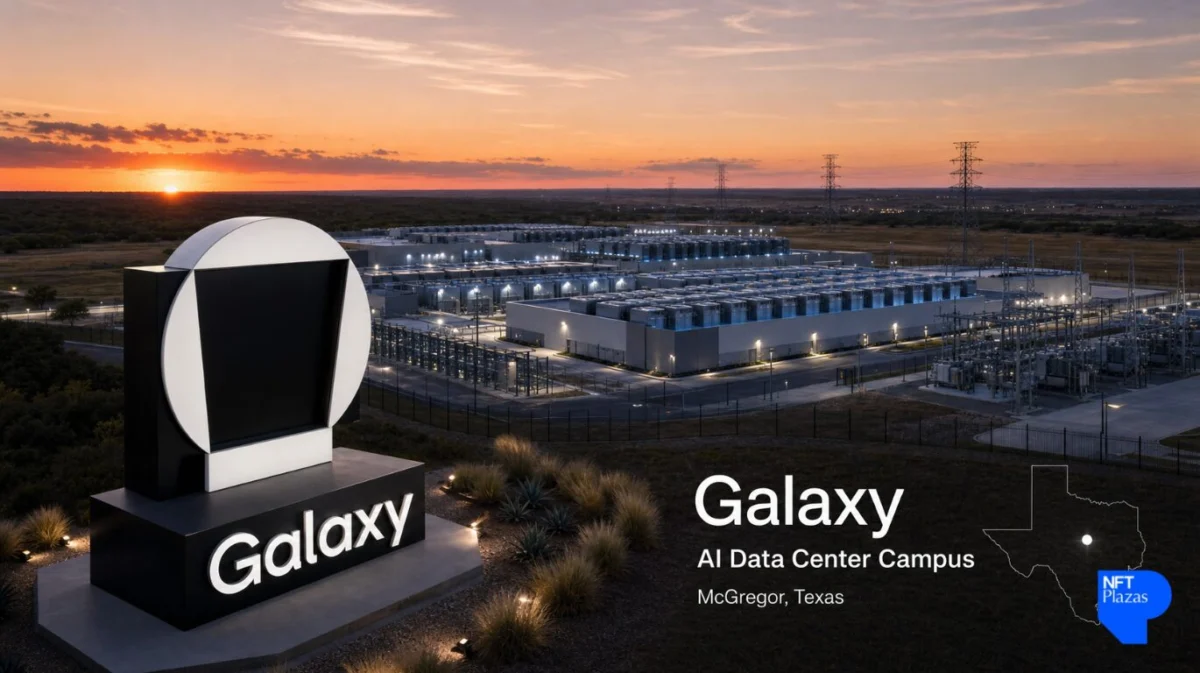
Galaxy has announced a significant expansion of its data center footprint with the acquisition of approximately 500 acres of land in McGregor, McLennan County, Texas. This strategic move, formalized through a development agreement with the City of McGregor, signals the company’s deepening commitment to building and operating a large-scale data center campus specifically designed to serve the burgeoning demands of artificial intelligence (AI) and high-performance computing (HPC). The new facility will be situated within the McGregor Industrial Park, a location chosen for its potential to support expansive industrial development.
This acquisition marks Galaxy’s second major data center investment in the Lone Star State, following its existing Helios campus located in West Texas. The McGregor project underscores the company’s aggressive push into AI infrastructure, a sector experiencing exponential growth driven by unprecedented compute demands. This expansion comes at a time of intense competition among data center developers, who are vying for crucial resources such as land, power, and expedited deployment timelines. The rapid evolution of AI technologies necessitates substantial, dedicated computing power, prompting companies like Galaxy to secure prime locations and invest heavily in the underlying infrastructure.
The McGregor campus is envisioned as a multi-phase development, with the initial phase projected to deliver a substantial 74 megawatts (MW) of power. This initial capacity is designed to lay the groundwork for significant future expansion, contingent upon the completion of additional transmission infrastructure. Galaxy has been actively collaborating with local entities to facilitate this ambitious project. The company has entered into development agreements with the McGregor Economic Development Corporation and has secured service agreements with Heart of Texas Electric Cooperative. These partnerships are critical for addressing the complex interconnection requirements necessary to bring the data center online and ensure reliable power delivery.
A Phased Approach to Scalable AI Infrastructure
The projected timeline for the McGregor campus indicates that the first phase is expected to commence receiving power in 2028. Galaxy has indicated that if the planned infrastructure development progresses as anticipated, the 500-acre site has the potential to scale into a multi-hundred-megawatt facility by 2030. This ambitious growth trajectory would elevate McGregor from its initial 74 MW phase to become a significant, large-scale data center asset within Galaxy’s expanding portfolio.
Galaxy has emphasized that the McGregor campus will be privately funded. This approach includes a commitment to constructing its own substation on the site. Furthermore, the company will provide financial assurances to the electric utility, as mandated, to support necessary upgrades to the regional power grid. For AI data center projects, the intricacies of power acquisition, interconnection processes, and commissioning procedures are often as critical to operational readiness and speed as the physical construction of the facility itself. Delays or complications in these areas can significantly impact deployment timelines and overall project success.
A key aspect of Galaxy’s strategy for the McGregor project is its commitment to mitigating the cost impact on local electricity consumers. By undertaking private infrastructure investment and providing financial assurances, Galaxy aims to ensure that the costs associated with serving the new data center campus are not passed on to regional ratepayers. This approach is crucial for fostering positive community relations and ensuring that the economic benefits of the development are widely shared.
Economic and Community Impact on McGregor
The land acquisition itself represents a substantial economic infusion for the City of McGregor. The sale of the 500-acre parcel is expected to generate approximately $7.5 million in revenue for the city. Beyond the land sale, Galaxy projects that the new data center campus will contribute an estimated $130 million to the local real estate tax base over time. This significant increase in assessed property value will provide a vital source of ongoing revenue for municipal services and infrastructure improvements.
During the construction phase, the project is anticipated to be a significant job creator, requiring the services of several hundred construction workers and engineering partners. These jobs will provide a boost to the local economy and offer employment opportunities for skilled labor. Once the campus becomes operational, it will necessitate a permanent workforce dedicated to managing the complex operations of a state-of-the-art data center. This permanent staff will be responsible for critical functions including data center operations, power infrastructure maintenance, cooling system management, security protocols, and the upkeep of the physical facilities.
In line with its commitment to sustainable operations, the McGregor campus will implement a closed-loop cooling system, mirroring the technology employed at its Helios facility. This advanced cooling method is designed to recirculate water internally, significantly reducing overall water consumption compared to more traditional, water-intensive cooling models. This is a particularly important consideration in water-scarce regions like Texas. Furthermore, Galaxy has committed to funding additional water infrastructure improvements as part of the development agreement, further underscoring its dedication to responsible resource management.
For McGregor, the long-term success of the project will be measured by several key indicators in the coming years. These will include the actual realization of projected tax revenues, the creation and retention of long-term jobs, the actual water usage of the facility, and the timely progress of accompanying infrastructure upgrades, particularly in the power transmission sector.
Galaxy’s Strategic Pivot Towards AI Infrastructure
Galaxy, historically recognized for its activities in the digital assets sector, has in recent years undertaken an aggressive strategic pivot towards AI and HPC infrastructure. This transformation has been largely driven by the development and expansion of its Helios campus in Dickens County, West Texas. Galaxy acquired the Helios facility in 2022, undertaking a significant conversion from its original purpose tied to bitcoin mining to its current role as a large-scale AI/HPC campus.
The Helios campus is a testament to Galaxy’s vision and execution capabilities. It currently boasts over 1.6 gigawatts (GW) of ERCOT-approved power capacity, a critical component for large-scale data center operations. Furthermore, Helios has secured a long-term lease agreement with CoreWeave, a prominent player in the AI cloud services market, highlighting the demand for such specialized infrastructure. In a significant milestone announced on July 6, Galaxy completed Phase I at Helios, successfully delivering 133 MW of critical IT load to CoreWeave. This successful delivery demonstrates the company’s ability to bring substantial computing capacity online for its clients.
The scale of Galaxy’s ambition in the data center sector is further underscored by its recent financial maneuvers. The company announced the pricing of a $3.507 billion offering of senior secured notes. A significant portion of these proceeds is earmarked for the development of Helios II, a new expansion at the West Texas site comprising two buildings with a total of eight data halls. This substantial capital raise illustrates the immense financial resources required to simultaneously expand its data center segment alongside its established digital assets business.
The addition of the McGregor campus represents a crucial step in diversifying Galaxy’s data center presence beyond its anchor asset, Helios. This expansion into a new geographical area within Texas positions Galaxy to move towards a multi-site AI/HPC infrastructure model, reducing reliance on a single location and enhancing its resilience and market reach.
Navigating the Complexities of Execution and Industry Risks
Galaxy has openly acknowledged the inherent execution risks associated with such large-scale development projects. The company has noted that numerous project milestones remain contingent upon a variety of development conditions. These include, but are not limited to, successful permitting processes, securing regulatory approvals, consistent construction progress, timely power interconnection, successful commissioning of systems, potential regulatory changes, and the dynamic nature of AI/HPC market conditions.
For the McGregor project, the timeline for energizing the first phase by 2028 stands as the most critical milestone. Any delays in securing interconnection agreements or in the development of necessary transmission infrastructure could lead to a cascading effect, potentially impacting the campus’s overall ramp-up timeline. This challenge is not unique to Galaxy but represents an industry-wide risk for data center development. The exponential growth in power demand driven by AI applications is frequently outpacing the expansion of grid infrastructure and the supply chains for essential electrical equipment.
The demand for compute resources, while currently robust, can also be subject to fluctuations influenced by the investment cycles of hyperscalers, AI cloud providers, and major technology enterprises. While Galaxy characterizes the current demand as a structural shift, the financial viability of multi-hundred-megawatt projects inherently relies on securing long-term contracts with stable tenants and managing capital costs effectively to achieve optimal financial efficiency.
Future Outlook and Strategic Implications
In the immediate future, Galaxy’s focus will be on meticulously executing the critical steps required to bring the McGregor campus online. This includes completing all necessary permitting, finalizing interconnection agreements with the utility, and overseeing the construction of the private substation. The company’s expectation of the first phase receiving power in 2028 hinges on the successful and timely completion of these foundational elements. Subsequent expansions will be directly tied to the progress made in upgrading and expanding the regional transmission infrastructure.
If the development proceeds according to plan, the McGregor campus will represent Galaxy’s next significant expansion phase, building upon the success and foundational work at Helios. This project will serve as a key proving ground for the company’s ability to translate its multi-site AI/HPC data center strategy into a large-scale, diversified business segment. The successful execution of the McGregor project will be a strong indicator of Galaxy’s capacity to navigate the complex landscape of large-scale data center development and capitalize on the sustained growth in AI and HPC computing demand. The project’s outcome will also be closely watched for its broader implications on the development of critical digital infrastructure and its contribution to the economic landscape of Central Texas.