Lina Irawan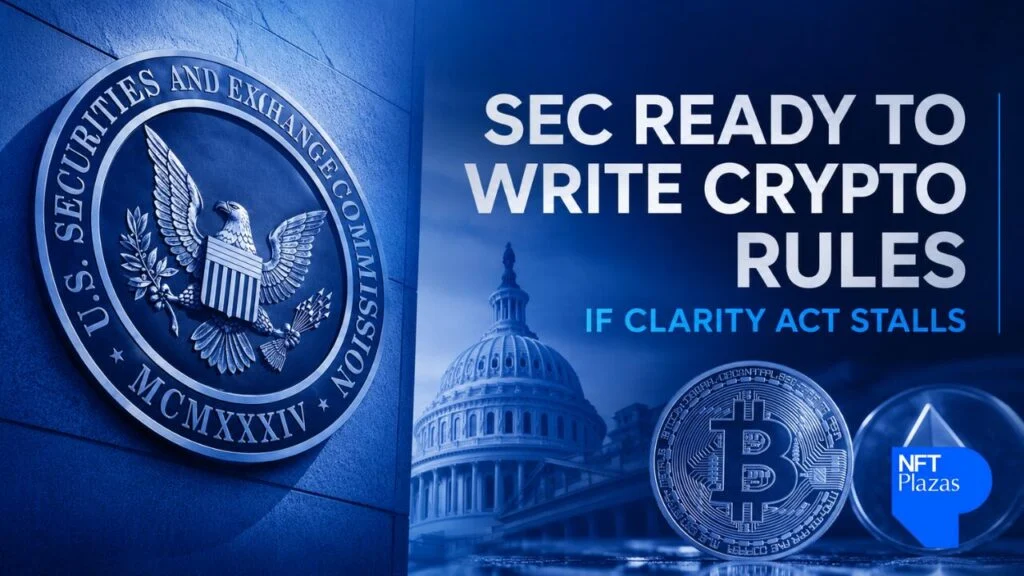
U.S. Securities and Exchange Commission (SEC) Chair Paul Atkins has declared the agency’s preparedness to establish its own comprehensive cryptocurrency regulatory framework, should Congress fail to pass the pivotal Digital Asset Market Clarity (CLARITY) Act. Speaking in an interview with CNBC, Atkins conveyed that the SEC is "ready, willing, and able" to issue rules that address many of the critical issues currently being considered by the landmark crypto market structure bill. While emphasizing that legislative action remains the most desirable outcome for the burgeoning digital asset industry, Atkins indicated that the SEC has already undertaken significant preparatory work, positioning it to move forward with regulatory rulemaking as a fallback plan.
SEC Prepares a Regulatory Contingency Plan
Chair Atkins underscored the enduring stability that congressional legislation offers compared to agency rulemaking. He articulated that a statute, once enacted, provides a far more robust and less susceptible foundation for the digital asset industry, mitigating the risk of policy reversals that can occur with administrative pronouncements. "Statute is the way to future-proof something," Atkins stated, arguing that the crypto industry requires "the certainty of a statute" to foster long-term growth and innovation, rather than a framework that could be subject to frequent shifts with changes in presidential administrations.
Despite expressing a degree of optimism regarding Congress’s capacity to pass the CLARITY Act, Atkins confirmed that the SEC is actively engaged in providing technical guidance to lawmakers. His commitment to facilitating the advancement of comprehensive crypto legislation was further reiterated on the social media platform X, underscoring the Commission’s dedication to this legislative effort. These remarks highlight an increasingly probable scenario where U.S. crypto regulation may initially materialize through SEC rulemaking rather than through immediate congressional action, particularly if political negotiations remain at an impasse.
The CLARITY Act: A Legislative Journey Marked by Progress and Obstacles
The CLARITY Act, a comprehensive piece of legislation aimed at defining the regulatory landscape for digital assets, has navigated a significant path over the past year, though its journey has encountered considerable headwinds, particularly in the Senate. The bill initially garnered substantial bipartisan support in the U.S. House of Representatives, passing with a decisive vote of 294-134 in July 2025. It subsequently advanced through the Senate Banking Committee in May 2026, securing approval with a 15-9 vote. However, the legislation’s progression has stalled at this juncture, requiring the affirmative vote of the full Senate to proceed. Supporters anticipate needing at least 60 votes to overcome potential procedural objections and bring the bill to a floor vote.
Recent weeks have seen a weakening of momentum for the CLARITY Act, primarily due to concerns raised by Senate Democrats concerning the bill’s ethics provisions. These provisions aim to govern the involvement of public officials in cryptocurrency assets. While revised language, reportedly with the backing of President Donald Trump, proposes to prohibit the president, vice president, members of Congress, senior federal officials, and their spouses from issuing or sponsoring digital assets for profit until January 20, 2029, critics contend that these measures still leave significant loopholes unaddressed. Opponents have pointed out that the restrictions do not mandate the divestment of existing crypto holdings and do not extend to the children of these officials. Furthermore, a contentious issue remains unresolved regarding whether stablecoin issuers should be permitted to offer yield to token holders, a debate that continues to divide lawmakers.
Adding to the legislative challenges, Senate Majority Leader John Thune indicated last week that a floor vote on the CLARITY Act is unlikely before Congress commences its August recess. The Senate has since prioritized other legislative matters, including a package of sanctions against Russia, consequently pushing crypto market structure legislation further down the legislative agenda.
The Significance of the CLARITY Act for the Digital Asset Ecosystem
The CLARITY Act represents a potentially transformative overhaul of U.S. cryptocurrency regulation. At its core, the legislation seeks to establish a clearer division of authority between the SEC and the Commodity Futures Trading Commission (CFTC). Under the proposed framework, the CFTC would be granted exclusive jurisdiction over the spot markets for digital commodities, effectively moving a substantial portion of cryptocurrencies outside the SEC’s direct oversight. Concurrently, the SEC would retain its supervisory authority over tokenized securities and investment contracts, ensuring a bifurcated regulatory approach based on the nature of the digital asset.

Proponents of the CLARITY Act argue that its passage would usher in an era of much-needed regulatory certainty for the digital asset industry. By providing a consistent set of rules that clearly define which federal agency is responsible for overseeing different categories of digital assets, the legislation is expected to significantly reduce compliance risks for exchanges, issuers, brokers, and institutional investors. This clarity is anticipated to foster greater market stability, encourage institutional adoption, and promote innovation within the U.S. crypto sector. The current environment, characterized by overlapping jurisdictions and evolving interpretations, has been a source of significant legal and operational challenges for market participants.
Project Crypto: The SEC’s Strategic Fallback Initiative
Even in the event of continued delays or inaction on the CLARITY Act, the SEC is not standing idle. The agency has already begun to implement many of the core concepts envisioned by the CLARITY Act through "Project Crypto," an broader regulatory initiative spearheaded by Chair Atkins. This proactive approach demonstrates the SEC’s commitment to addressing the regulatory vacuum in the digital asset space.
The SEC’s "Regulation Crypto" agenda for 2026 includes a series of proposals designed to bring greater clarity and structure to the market. While the specific details of these proposals were not fully elaborated in the original announcement, the initiative signals a concerted effort by the SEC to utilize its existing rulemaking authority to provide guidance and establish boundaries for digital asset activities. This includes areas such as investor protection, market integrity, and the classification of digital assets.
In a significant development earlier this year, the SEC and CFTC collaborated to introduce a new framework for categorizing crypto assets. This joint initiative established a multi-tiered classification system, grouping digital assets into categories such as digital commodities, digital collectibles, digital tools, payment stablecoins, and digital securities. This categorization aims to provide a more nuanced understanding of digital assets, moving away from a one-size-fits-all approach.
Crucially, this guidance clarifies that a digital asset is not automatically classified as a security solely by virtue of its existence on a blockchain. Instead, the applicability of securities laws is determined by how the asset is offered and sold, particularly in instances where investors rely on managerial efforts, aligning with the established Howey investment contract test. The framework further suggests that once these managerial obligations have been fulfilled, a token may no longer fall under the purview of securities regulation. This nuanced approach acknowledges the diverse nature of digital assets and aims to apply regulatory oversight appropriately.
The Inherent Limitations of Rulemaking vs. Legislation
Despite the SEC’s evident readiness to proceed with its own regulatory framework, Chair Atkins has consistently acknowledged the inherent limitations of agency rulemaking when compared to legislative action. Unlike statutes enacted by Congress, SEC regulations and joint agency guidance are susceptible to revision or outright withdrawal by subsequent administrations. This means that any regulatory certainty achieved through the SEC’s rulemaking process could prove to be temporary, contingent on the political priorities and policy shifts that may occur following future elections.
For this reason, Atkins continues to characterize the SEC’s regulatory agenda as a crucial "bridge" toward the ultimate goal of comprehensive market structure legislation. It serves as an interim measure to provide some level of guidance and stability, rather than a permanent substitute for a statutory framework. This perspective underscores the SEC’s dual strategy: to proactively address immediate regulatory needs while actively advocating for the passage of the CLARITY Act to ensure long-term stability and clarity.
The Road Ahead: A Decisive Period for U.S. Digital Asset Regulation
The coming months are poised to be a decisive period for the future of digital asset regulation in the United States. Whether Congress ultimately revives the CLARITY Act following the August recess or the SEC proceeds with its own rulemaking initiatives, the outcome will significantly shape the landscape. The decisions made will not only determine which federal agencies hold oversight responsibilities for the crypto industry but also profoundly influence how issuers, exchanges, developers, and institutional investors operate within the world’s largest financial market. The potential for either legislative clarity or regulatory evolution through agency action presents distinct pathways, each with its own implications for innovation, investor protection, and market stability. The ongoing dialogue and legislative maneuvering underscore the complex interplay between technological advancement, market development, and the imperative for robust regulatory oversight in the dynamic realm of digital assets.