Lina Irawan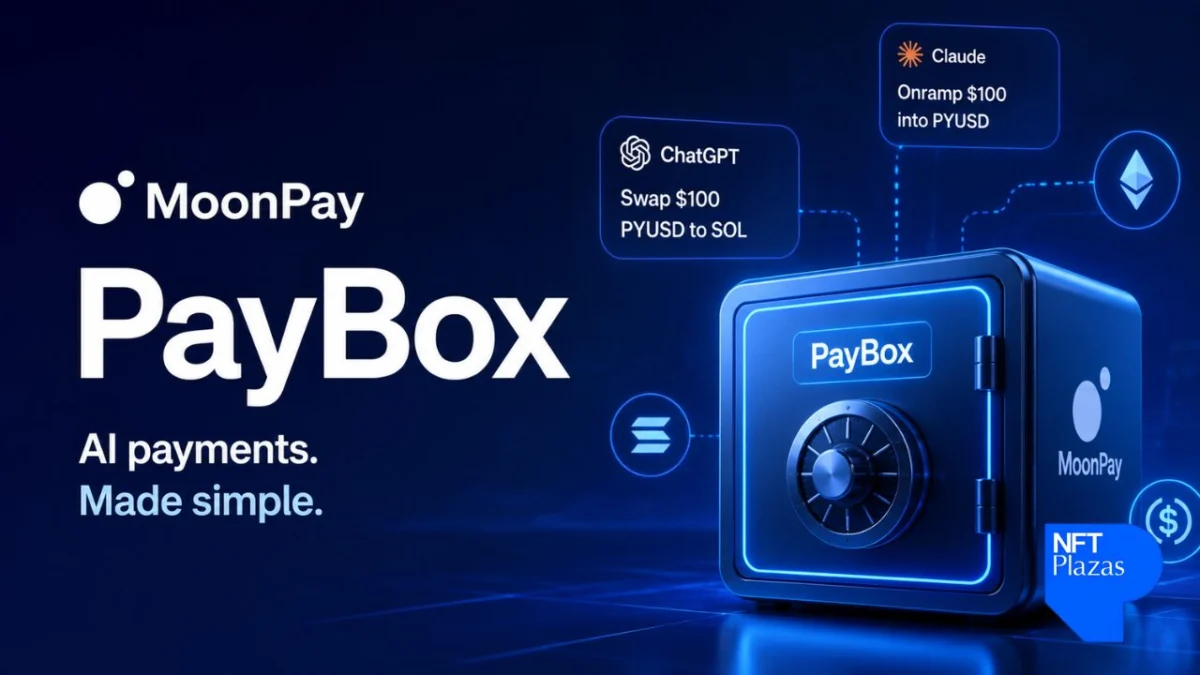
In a significant leap forward for the integration of artificial intelligence into financial transactions, MoonPay, a leading gateway for cryptocurrency on-ramps and off-ramps, has officially unveiled PayBox. This innovative AI-native payment vault is designed to empower users of advanced conversational AI models like ChatGPT and Claude, enabling them to securely execute cryptocurrency transactions, engage with decentralized finance (DeFi) protocols, and even facilitate real-world purchases directly within their AI interactions. The company posits that PayBox is set to redefine the role of AI assistants, transforming them from mere information providers into capable agents that can execute financial actions, all while maintaining user control over their digital assets.
This groundbreaking launch signifies a pivotal moment in the burgeoning "agentic commerce" movement, a paradigm shift where AI systems are empowered to perform tasks autonomously on behalf of users, moving beyond simple question-and-answer functionalities. By integrating PayBox with platforms like ChatGPT or Claude via a custom connector, users can now issue commands in natural language, such as "Onramp $100 into PYUSD," "Swap $100 of PYUSD to SOL," "Bridge funds to Robinhood Chain," or "Maximize yield using Aave." The AI, upon receiving such a command, will meticulously prepare the transaction. Subsequently, the user will provide final authorization through a secure passkey before any funds are transferred, ensuring a crucial layer of human oversight in every financial operation.
Beyond the realm of cryptocurrency, PayBox’s capabilities extend to facilitating everyday commerce. Through integrations built on x402, an open standard designed for agent-initiated internet payments, AI assistants will be able to perform tasks such as booking flights, reserving restaurant tables, and completing online shopping. MoonPay has indicated that a continuous expansion of merchant and service integrations is planned for the future, further broadening the utility of PayBox.
The Seamless Integration of Payments into AI Conversations
Historically, conversational AI platforms, including industry leaders like ChatGPT and Claude, have excelled at tasks such as market analysis, comparison of investment opportunities, and the explanation of complex blockchain protocols. However, users have consistently faced a friction point: the necessity to manually switch between their AI interface and external platforms such as exchanges, wallets, or dedicated payment services to finalize any financial transaction. This fragmented user experience has been a significant barrier to the widespread adoption of AI for financial management.
PayBox is engineered to eliminate this cumbersome step by embedding robust payment functionality directly within the AI conversational interface. This innovation allows users to engage in a fluid and intuitive manner, trading cryptocurrencies, bridging digital assets across different blockchains, interacting with sophisticated DeFi protocols, and making payments without ever leaving the AI chat window. Crucially, this seamless integration does not come at the expense of user control, as the user retains the ultimate authority to approve every transaction.

At its inception, PayBox offers support for the Solana blockchain and a selection of Ethereum Virtual Machine (EVM)-compatible networks. These include Ethereum, Base, Arbitrum, Polygon, Hyperliquid, Robinhood Chain, and Tempo. The company has stated its commitment to expanding blockchain support in subsequent releases, ensuring compatibility with an ever-growing digital asset ecosystem.
Security Architecture: Prioritizing User Control and Asset Protection
Security has been identified as the paramount consideration in the design and development of PayBox. MoonPay has implemented a sophisticated security architecture that moves away from traditional methods of storing private keys in a singular, centralized location. Instead, PayBox leverages advanced technologies such as multi-party computation (MPC) and trusted execution environments (TEEs). These technologies work in tandem to securely split wallet credentials across a distributed network of secure environments. This distributed approach ensures that neither MoonPay nor the AI assistant itself possesses the independent capability to access a user’s wallet or unilaterally authorize transactions.
The underlying infrastructure powering PayBox is provided by Sodot, an Israeli key management company that MoonPay acquired earlier this year. Sodot’s technology is a proven guardian of digital assets, currently securing over $50 billion in value across more than 10 million cryptocurrency wallets. The integration of Sodot’s robust security framework into every PayBox vault underscores MoonPay’s unwavering commitment to safeguarding user funds.
For traditional card payments, PayBox integrates with Visa’s agentic commerce protocol. This integration allows AI systems to complete purchases without the need to expose or store sensitive raw card details, thereby enhancing privacy and security for users. Furthermore, each passkey authorization is designed to be transaction-specific, meaning it is valid for a single operation only. This prevents any potential reuse or replay of compromised authorization credentials, adding another critical layer of security.
The Delicate Balance: Automation Meets Human Oversight
PayBox offers users a flexible approach to managing their transactions through two distinct permission models. The "Always Ask" model mandates passkey approval before every single transaction, ensuring that users are actively and manually authorizing each payment or crypto transfer. This provides the highest level of granular control.
Alternatively, the "Autonomous" mode introduces a higher degree of automation. In this mode, AI can execute transactions automatically, but only within predefined limits set by the user. These limits can include spending caps, specific transaction types, or approved counterparties. This allows for efficiency in routine transactions while still maintaining user-defined boundaries.

MoonPay emphasizes that users have the complete ability to modify or revoke permissions at any time. However, any such changes to the permission settings require fresh human authentication, reinforcing the principle of user control. The company highlights that this approach effectively addresses a common trade-off found in many existing AI payment solutions. Often, users are required to surrender custody of their assets to a centralized platform before automation becomes a viable option. PayBox, in contrast, aims to enable automation without compromising user custody or control.
MoonPay’s Expanding Vision in the AI Landscape
The introduction of PayBox represents the latest and perhaps most significant development in MoonPay’s overarching AI strategy. Earlier this year, the company took a substantial step by introducing an open AI wallet standard, a crucial initiative that garnered support from prominent organizations such as PayPal, the Ethereum Foundation, and the Solana Foundation. This was followed by the release of tools that facilitated cryptocurrency purchases and wallet interactions through AI assistants. PayBox builds upon these foundational capabilities by enabling the entire payment workflow to be seamlessly managed within the conversational AI experience.
To further accelerate the adoption of its innovative solutions, MoonPay has also released a Software Development Kit (SDK). This SDK empowers developers to integrate PayBox directly into their own AI applications, fostering a vibrant ecosystem of AI-powered financial tools. The company has also announced plans to extend support to additional AI platforms and introduce more advanced DeFi features, including capabilities for perpetual futures trading and sophisticated liquidity management.
Ivan Soto-Wright, the CEO of MoonPay, has articulated a clear vision for the future of digital finance, describing conversational payments as the next evolutionary stage. He stated, "The card hid the cash. The phone hid the card. This is the era where money disappears into conversation." Soto-Wright further emphasized the critical need for secure infrastructure to support the billions of AI agents that will emerge, enabling them to hold, move, and spend money safely and efficiently.
To incentivize early adoption and encourage experimentation with PayBox, MoonPay is currently offering a USDC airdrop to eligible early users. Rewards of up to 500 USDC per account are available, contingent upon meeting specific campaign requirements and account eligibility criteria.
As AI assistants continue their rapid evolution from sophisticated chatbots to fully autonomous digital agents, products like PayBox are poised to redefine the very concept of digital interaction. This innovation underscores how conversational interfaces are emerging as the next crucial gateway for cryptocurrency trading, decentralized finance, and the everyday fabric of online commerce, promising a future where financial transactions are as natural and intuitive as having a conversation.