James Watt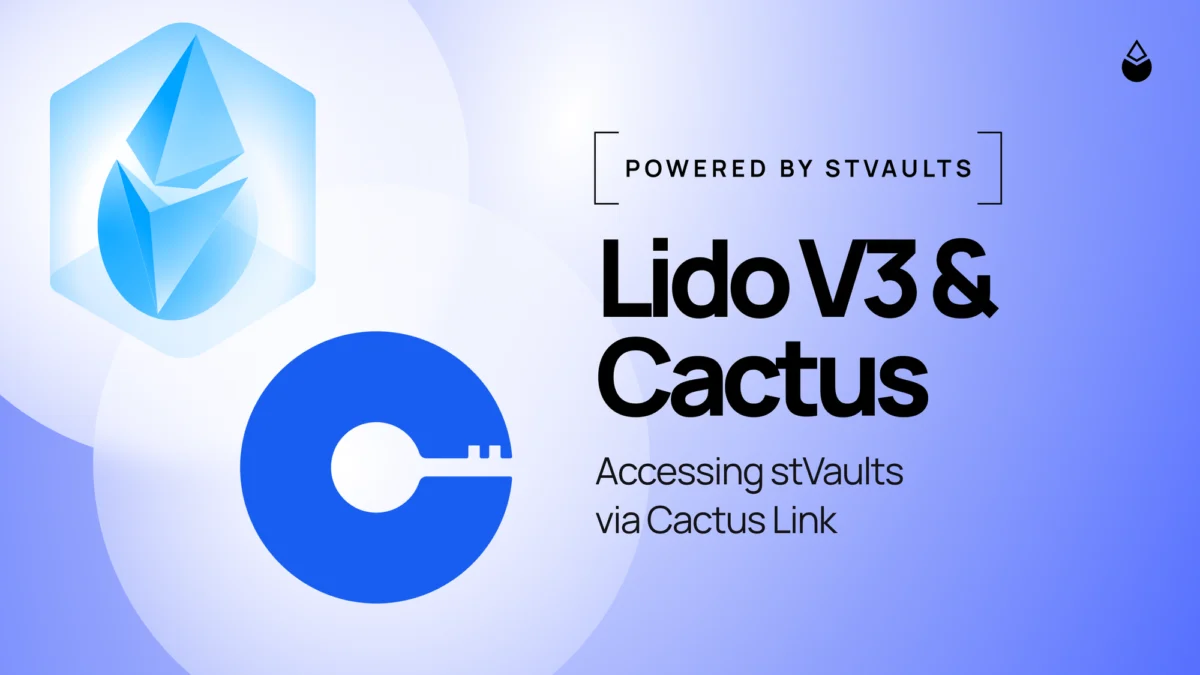
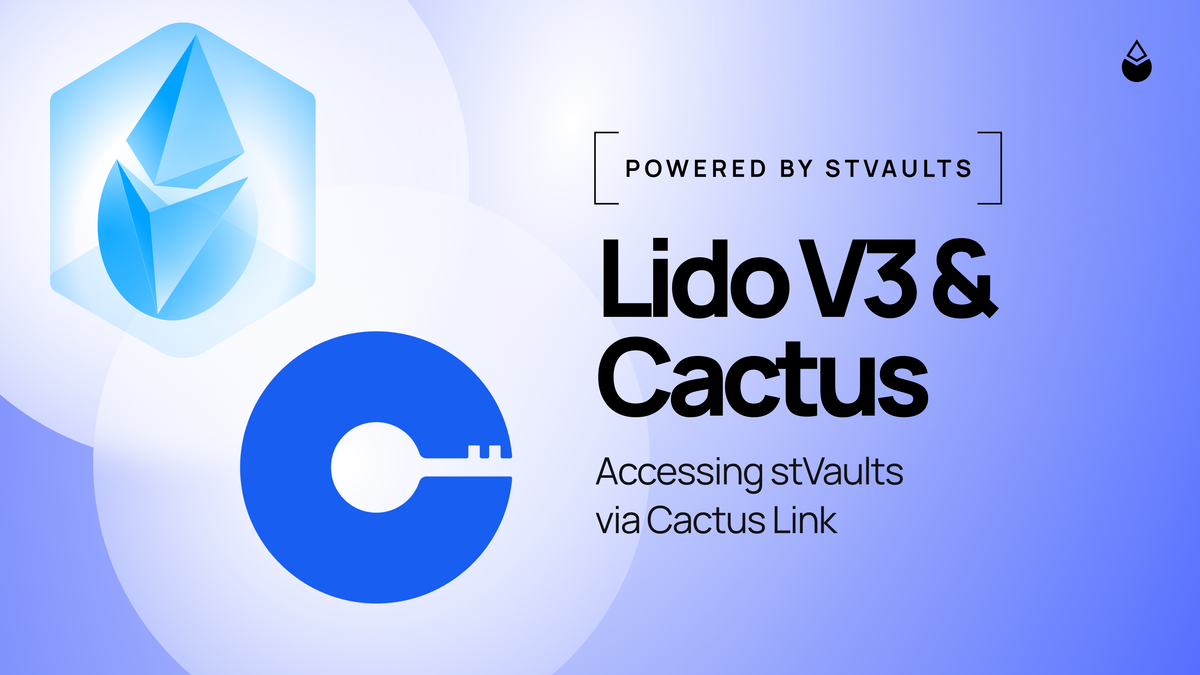
Cactus Custody, a prominent institutional digital asset custodian, has officially announced its support for Lido V3 stVaults through Cactus Link, its dedicated DeFi connector. This pivotal integration empowers Cactus Custody’s extensive client base to seamlessly create and manage stVaults directly from their existing custody accounts, marking a significant advancement in institutional participation within the decentralized finance (DeFi) ecosystem. The collaboration is poised to bridge the gap between traditional financial institutions and the burgeoning world of blockchain-based staking, offering enhanced control, security, and liquidity.
A New Era for Institutional Staking: The Cactus Custody and Lido Partnership
The integration of Lido V3 stVaults into Cactus Custody’s platform represents a strategic move to cater to the increasingly sophisticated demands of institutional investors seeking exposure to staking rewards. Lido, a leading liquid staking protocol, introduced stVaults as a modular staking infrastructure designed specifically for large staking entities, including investment funds, asset managers, ETFs, and ETPs. This innovative architecture moves beyond traditional pooled staking, offering a single-operator model that provides unparalleled customization.
Through Cactus Link, institutional clients can now leverage their secure custody accounts to deploy dedicated, customizable vaults. This means they gain direct control over crucial parameters such as validator choice, fee structures, and underlying infrastructure. Furthermore, stVaults retain the crucial advantage of on-demand liquidity through optional stETH minting, addressing a key concern for institutions that require flexibility and capital efficiency. This development is particularly timely as institutional interest in staking continues to surge, driven by attractive yields and the maturation of underlying blockchain technologies.
Deep Dive into Lido V3 stVaults: Customization Meets Liquidity
The core innovation of Lido V3 stVaults lies in its ability to resolve the long-standing control-versus-liquidity tradeoff inherent in many staking models. Historically, institutions faced a dilemma: either participate in pooled staking, which offers liquidity but limited control, or engage in solo staking, which provides maximum control but locks up capital. stVaults offer a compelling middle ground, enabling stakers to run validators with their preferred counterparties, define specific geographic or jurisdictional parameters, and configure advanced features like Maximal Extractable Value (MEV) routing and insurance mandates to align with their internal risk and policy requirements.
This level of granularity is critical for institutions operating under stringent regulatory frameworks and internal governance policies. By allowing clients to tailor their staking operations, stVaults empower them to meet specific compliance needs, manage counterparty risk more effectively, and optimize their staking strategy in a highly personalized manner. The ability to choose validators, for instance, allows institutions to align with operators that meet their environmental, social, and governance (ESG) criteria or jurisdictional preferences, an increasingly important consideration in modern investment mandates.
Cactus Custody: A Pillar of Institutional Digital Asset Security
Cactus Custody, founded in February 2019, operates as the institutional digital asset custody solution of BIT (formerly Matrixport), a prominent name in the crypto financial services sector. Over the years, Cactus Custody has established itself as a trusted custodian, safeguarding digital assets across more than 60 blockchain ecosystems for a diverse clientele exceeding 400 institutional clients. This includes a broad spectrum of entities such as investment funds, asset managers, exchanges, over-the-counter (OTC) providers, payment platforms, mining pools, and institutional DeFi participants.
The platform’s robust security framework is underpinned by a combination of Hardware Security Module (HSM)-backed cold storage and an institutional-grade Multi-Party Computation (MPC) offering. This hybrid architecture provides clients with the flexibility to choose between qualified-custodian and self-custody-style configurations, catering to varying levels of internal control and risk appetite. Cactus Custody’s commitment to security and compliance is further evidenced by its impressive array of regulatory licenses and attestations. It holds a Hong Kong Trust or Company Service Provider (TCSP) license and a Bhutan Gelephu Mindfulness City Authority (GMCA) Financial Services Licence (FSL). Moreover, its custody operations are subject to rigorous independent audits, having achieved SOC 1 Type II and SOC 2 Type II attestations from Deloitte, underscoring its adherence to international standards for internal controls and information security.
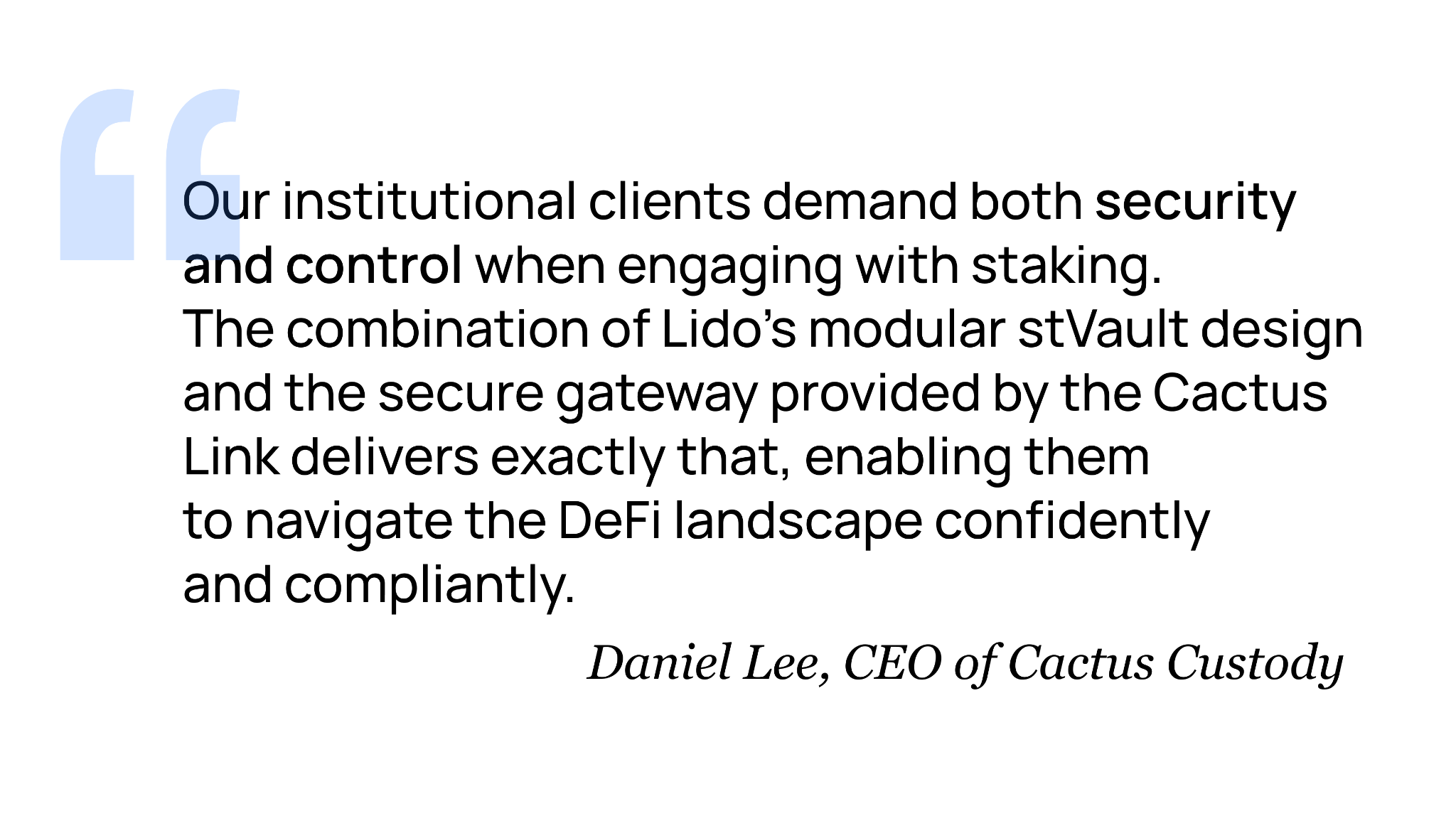
A spokesperson for Cactus Custody commented on the integration, stating, "Our collaboration with Lido to support V3 stVaults through Cactus Link is a testament to our ongoing commitment to providing institutional clients with secure, compliant, and innovative access to the evolving DeFi landscape. We recognize the growing demand for highly customizable and capital-efficient staking solutions, and this integration directly addresses that need, allowing our clients to participate in liquid staking with unprecedented control and peace of mind."
The Evolution of Staking and the Role of Custodians
The landscape of digital asset staking has undergone a significant transformation, particularly since Ethereum’s transition to a Proof-of-Stake (PoS) consensus mechanism in September 2022. This shift not only reduced Ethereum’s energy consumption but also opened up new avenues for earning yield on ETH holdings. The total value locked (TVL) in liquid staking protocols has surged dramatically, reflecting both retail and institutional appetite for this new form of yield generation. As of early 2024, the liquid staking market represents tens of billions of dollars in locked assets, with Lido consistently holding a dominant market share.
For institutions, however, participating in direct staking or even pooled liquid staking has presented unique challenges related to security, operational complexity, and regulatory uncertainty. Qualified custodians play a vital role in mitigating these risks by providing secure asset storage, robust internal controls, and often, a clear regulatory framework. Cactus Custody’s existing support for stETH and wstETH, Lido’s liquid staking tokens, laid the groundwork for this deeper integration. Now, institutions holding these tokens in custody can seamlessly combine them with stVault operations and interact with other DeFi protocols accessible through Cactus Link, creating a more cohesive and efficient operational environment.
How the Integration Works: A Seamless Institutional Gateway
The technical connection between Cactus Custody and Lido V3 stVaults is facilitated via Cactus Link, a browser extension designed to operate akin to a standard hot wallet, yet backed by the institutional-grade security of the custody account. The setup process is streamlined, typically involving two main steps: linking the Cactus Custody account to Cactus Link and then authorizing transactions. Once connected, vault owners gain the ability to perform a comprehensive suite of operations, including creating new stVaults, supplying or withdrawing ETH, minting or repaying stETH, monitoring vault health, triggering rebalancing or closure procedures, and executing emergency protocols.
For enhanced security and compliance, administrators are required to whitelist the stVaults smart contract addresses prior to any interaction. This measure ensures that all on-chain actions are pre-approved and aligned with the institution’s security policies. Detailed setup instructions and a comprehensive user guide are available through Cactus Custody’s documentation, providing institutional clients with all the necessary resources to navigate the system confidently. It is important to note that support may vary by jurisdiction, entity type, and specific onboarding scope, necessitating confirmation with a Cactus account manager before vault creation.
Security and Risk Management: A Paramount Concern
While the integration offers significant benefits, both Cactus Custody and Lido emphasize the importance of understanding and managing associated risks. Standard Ethereum staking risks, such as slashing (penalties for validator misbehavior), smart contract vulnerabilities, and market volatility, inherently apply. Lido has developed a comprehensive "Risk Assessment Framework for stVaults" to provide a detailed breakdown of these risks, encouraging institutional clients to conduct their own thorough due diligence.
To bolster the security of Lido V3 stVaults, several measures have been implemented. The Lido protocol undergoes regular, rigorous security audits by independent third parties, and operates an active bug bounty program to identify and address potential vulnerabilities. Furthermore, clearly defined emergency procedures are in place to respond to unforeseen events. For institutional clients, a critical advantage of this integration is the ability to operate stVaults within a familiar security model: on-chain actions can be gated by their existing Cactus Custody policies, providing an additional layer of control and authorization. However, institutions are still advised to conduct their independent assessments of smart-contract risk, operational risks, and regulatory implications, ensuring that robust internal approvals and monitoring systems are in place before going live.
Broader Implications: Driving Institutional DeFi Adoption
This collaboration between Cactus Custody and Lido marks a pivotal moment for the broader institutional adoption of decentralized finance. By combining Lido’s innovative liquid staking infrastructure with Cactus Custody’s regulated and secure environment, the partnership significantly lowers the barrier to entry for traditional financial entities looking to engage with DeFi yields. It provides a blueprint for how institutional-grade security, compliance, and operational efficiency can be integrated with the dynamic and yield-generating capabilities of blockchain protocols.
The trend towards customized institutional staking solutions is expected to accelerate. As more institutions seek to diversify their portfolios and explore new revenue streams, the demand for platforms that offer control, transparency, and liquidity will only grow. This integration not only validates the maturation of the DeFi space but also sets a new standard for how custodians can act as enablers, rather than gatekeepers, for institutional participation. It also highlights the increasing sophistication of the digital asset market, where bespoke solutions are becoming essential for meeting the diverse needs of large-scale investors.
Looking ahead, such partnerships are likely to influence regulatory discussions globally. As more regulated entities participate in DeFi through secure and compliant channels, regulators may gain a clearer understanding of the operational models and risk mitigation strategies in place, potentially fostering a more favorable regulatory environment for digital assets. The ability to define jurisdictional parameters and meet specific compliance mandates within stVaults could prove instrumental in navigating the complex and evolving global regulatory landscape.
In conclusion, the integration of Lido V3 stVaults by Cactus Custody through Cactus Link is more than just a technical update; it represents a significant leap forward in making sophisticated liquid staking accessible and manageable for institutional investors. By prioritizing security, customization, and operational efficiency, this partnership is poised to accelerate the convergence of traditional finance and decentralized finance, unlocking new opportunities for growth and innovation in the digital asset economy. Institutions keen to explore these opportunities further are encouraged to engage with the Lido Institutional team for detailed discussions.