Lina Irawan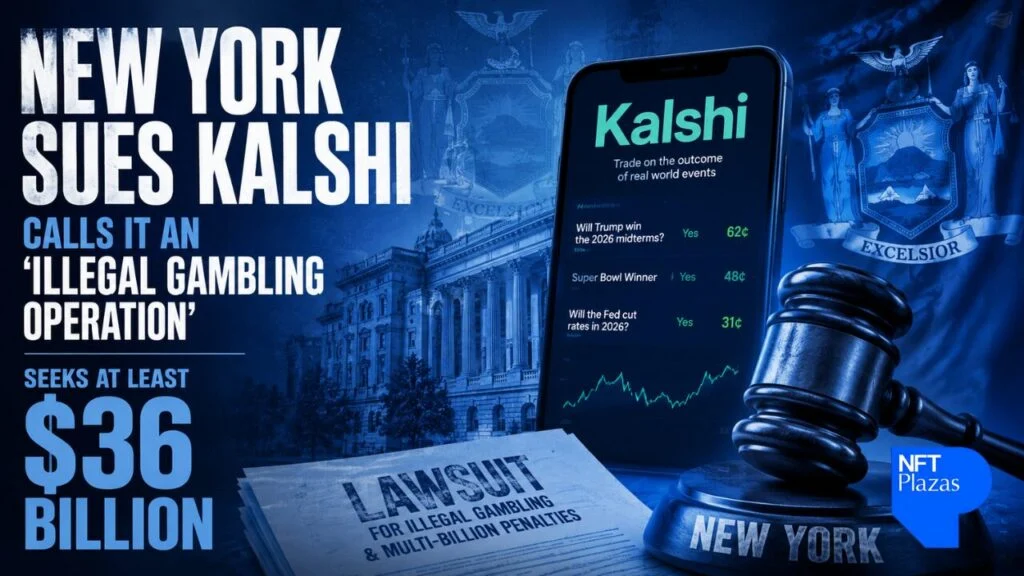
New York has launched a sweeping legal offensive against the prediction market platform Kalshi, accusing the company of operating an illegal gambling business within the state and seeking penalties that could reach an astonishing minimum of $36 billion. The lawsuit, formally filed on July 31st by New York Attorney General Letitia James and with the backing of Governor Kathy Hochul, asserts that Kalshi has been offering event contracts that fundamentally violate the state’s stringent gambling laws. Officials are now petitioning the court for a permanent injunction to halt Kalshi’s operations in New York, compel the return of funds to its users, necessitate the surrender of alleged unlawful profits, and impose billions of dollars in civil penalties. This legal action marks a significant escalation in the contentious battle over the regulatory status of prediction markets across the United States, where a deep division persists between states and federal regulators regarding whether these platforms should be classified and regulated as gambling enterprises or as federally supervised financial exchanges.
The core of New York’s contention, as detailed in the 107-page petition filed with the Supreme Court of New York County, is that Kalshi facilitates the trading of contracts tied to uncertain future events, encompassing a wide array of outcomes from sports results and political elections to cultural milestones. The state argues that Kalshi operates these markets without possessing the requisite licenses from the New York State Gaming Commission, thereby sidestepping the established regulatory framework designed to oversee and control gambling activities.
The State’s Allegations: Gambling by Another Name
According to the complaint, Kalshi’s business model allows users to wager money on the likelihood of specific events occurring. State officials maintain that regardless of how Kalshi markets or presents its products, they unequivocally satisfy New York’s legal definition of gambling. This definition, they argue, hinges on the act of wagering money on events that are beyond the direct control of the participants.
Attorney General Letitia James articulated this stance forcefully, asserting that the company’s branding does not alter the intrinsic nature of its operations. "No matter what they call themselves, prediction markets like Kalshi are gambling platforms, plain and simple," James stated in a press release accompanying the lawsuit’s announcement. She emphasized that the state’s gambling laws are in place to safeguard consumers, combat the pervasive issue of gambling addiction, generate essential tax revenue for public services, and ensure a level playing field for all operators within the state.
Governor Kathy Hochul echoed this sentiment, reinforcing the state’s commitment to its regulatory architecture. The lawsuit further alleges that Kalshi has systematically avoided the tax obligations that are levied upon licensed casinos and sportsbooks operating legally within New York. This alleged evasion of taxes, the state contends, deprives New York of significant revenue streams that could otherwise be allocated to vital public programs.
A particularly critical point raised in the legal filing concerns age restrictions. New York asserts that Kalshi permits individuals as young as 18 to participate on its platform. This stands in stark contrast to the state’s regulations for online sports betting, which mandate an age minimum of 21. Officials argue that allowing younger individuals to engage in such activities exposes them to substantial financial risks and exacerbates the potential for developing gambling addiction, further highlighting the perceived societal harm caused by Kalshi’s operations.
A Staggering Financial Reckoning: The $36 Billion Demand

Beyond the request for a permanent injunction to cease operations, New York is pursuing a formidable financial penalty against Kalshi. The state is seeking restitution for users who have traded on the platform, demanding that the company forfeit all profits allegedly earned through its unlicensed and illegal operations. Furthermore, New York is seeking civil penalties equivalent to three times the amount of these unlawful profits. Adding to the financial pressure, the state is also seeking an additional fine of $100,000 for every event contract that Kalshi has offered in violation of New York law.
Based on preliminary estimations, New York’s legal team projects that these combined penalties could exceed a staggering $36 billion. This figure, while subject to adjustment following a comprehensive audit of Kalshi’s financial activities, underscores the aggressive stance the state intends to take against prediction markets operating outside its established gaming regulatory framework. The sheer magnitude of this potential penalty signals New York’s determination to make a definitive statement regarding its jurisdiction and its commitment to enforcing its laws.
Kalshi’s Defense: Federal License vs. State Authority
Kalshi has vehemently rejected the allegations made by New York, maintaining that it operates as a federally regulated financial exchange, a classification it argues exempts it from state gambling laws. A spokesperson for the company characterized the lawsuit as "political theater" and asserted that states lack the authority to shut down a federally licensed exchange.
The company’s defense hinges on its registration with the U.S. Commodity Futures Trading Commission (CFTC). Kalshi contends that its event contracts are financial derivatives, subject to federal oversight under commodity law, and therefore cannot be unilaterally classified as illegal gambling by individual states. This position frames the dispute as a jurisdictional battle over regulatory authority, with Kalshi arguing that federal regulations preempt state-level prohibitions.
Brian Quintenz, a member of Kalshi’s board, has publicly stated that the lawsuit represents an unprecedented attempt to eliminate prediction markets entirely, rather than addressing any genuine regulatory concerns. He suggests that the state’s actions are driven by a desire to stifle innovation and maintain the status quo of traditional gaming industries.
A Jurisdictional Tug-of-War: Federal Regulators Intervene
The lawsuit filed by New York is unfolding against a backdrop of an intensifying jurisdictional conflict between state authorities and federal regulators, particularly the CFTC. In a move that appears to be a coordinated effort to preempt state actions, the CFTC, just prior to New York’s announcement, petitioned a federal court to block New York from pursuing civil or criminal enforcement actions against Kalshi and other prediction market platforms registered with the agency.
The CFTC’s argument aligns with Kalshi’s defense: that event contracts fall squarely within the purview of federal commodities regulation and should not be subjected to separate state gambling laws. Earlier in the year, the CFTC itself filed a lawsuit against New York, seeking a permanent injunction to prevent the state from enforcing its gambling laws against exchanges that are regulated by the commission. This federal intervention highlights the deep-seated disagreement over which regulatory body holds sway over these burgeoning markets.

However, Kalshi has faced setbacks in its legal battles. A federal judge in New York recently denied the company’s request for a preliminary injunction that would have halted the New York State Gaming Commission’s cease-and-desist order. The judge subsequently rejected another request for an injunction pending appeal, allowing New York’s enforcement efforts to proceed while the broader legal challenges continue. These judicial decisions suggest that the courts are grappling with the complex legal questions surrounding the classification and regulation of prediction markets.
Mounting Pressure and a Nationwide Debate
New York’s aggressive legal action is not an isolated incident; it is part of a growing trend of states challenging the operations of prediction markets. As these platforms continue to expand their reach across the United States, regulatory scrutiny is intensifying.
In Michigan, a judge issued a temporary order blocking Kalshi from offering sports-related event contracts, citing concerns that the products constituted illegal gambling. Similarly, Washington state has taken similar action, arguing that Kalshi’s offerings violate its state laws against gambling.
Minnesota, however, has adopted a more cautious approach. A judge in Minnesota has temporarily allowed both Kalshi and its rival, Polymarket, to continue operating while ongoing litigation is resolved. This divergence in judicial responses underscores the lack of a clear consensus on how these markets should be regulated.
The debate over the regulatory authority of prediction markets is also gaining significant traction at the national level. In a notable development just prior to New York’s lawsuit, attorneys general from 44 U.S. states submitted comments to federal regulators, arguing that the CFTC lacks the authority to regulate sports-related event contracts. These state officials insisted that such products should remain under the purview of state gambling oversight, further complicating the jurisdictional landscape.
Traditional gaming operators, such as the American Gaming Association, have publicly supported New York’s lawsuit. The association stated that the action is crucial for protecting consumers, preserving jobs within the regulated gaming industry, and upholding existing gambling laws. This alignment of interests between established gaming entities and state regulators suggests a united front against the expansion of unregulated prediction markets.
Despite these mounting legal challenges and the significant regulatory uncertainty, Kalshi has maintained its position as the world’s largest prediction market platform by trading volume. In June 2026, the exchange reportedly recorded approximately $33 billion in trading volume, more than double that of its closest competitor, Polymarket, which registered $13.95 billion in the same period. This substantial trading volume highlights the significant market presence and economic activity generated by these platforms, making the outcome of these legal battles critically important for the future of the prediction market industry.
With multiple lawsuits now progressing through the courts across the country and federal and state regulators locked in a dispute over regulatory authority, New York’s case against Kalshi is poised to become one of the most consequential legal tests yet for the future of prediction markets in the United States. The ultimate resolution of these intertwined legal and regulatory battles will undoubtedly shape the landscape of financial innovation, consumer protection, and the definition of gambling in the digital age.