Lina Irawan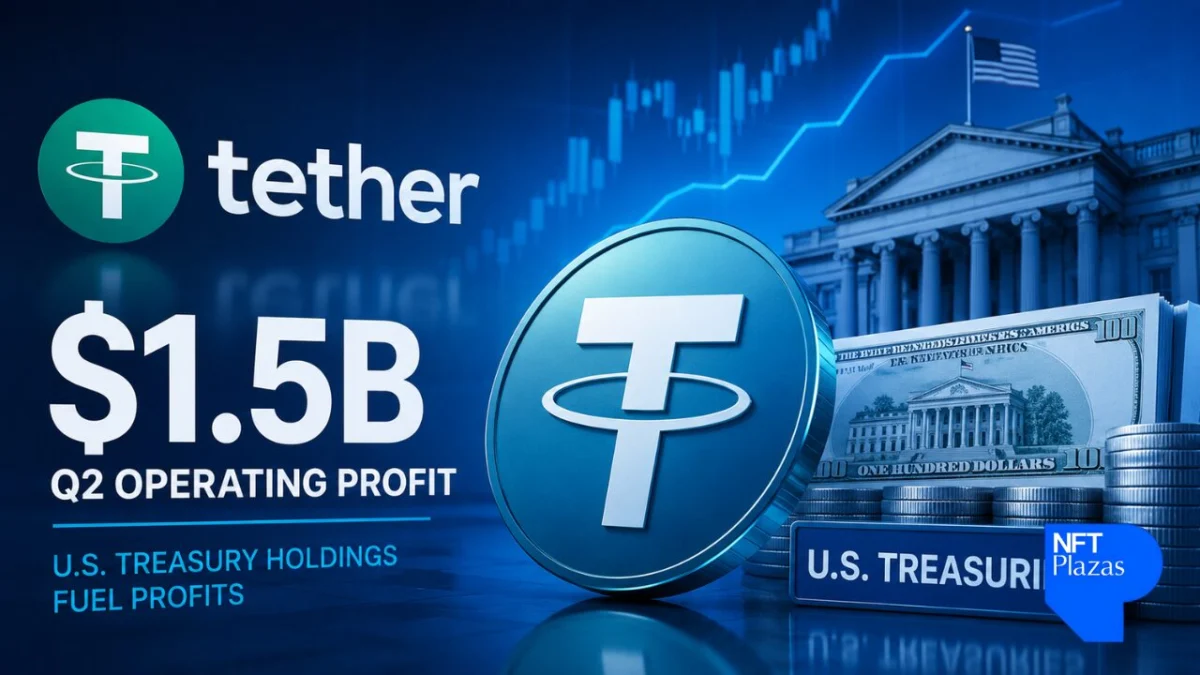
Tether, the prominent issuer of the world’s largest stablecoin, USDT, has announced a substantial net operating profit of $1.5 billion for the second quarter of 2026. This impressive financial performance was primarily fueled by consistent returns from its significant holdings in U.S. Treasury instruments, even as the valuation of its Bitcoin and gold reserves experienced declines. The latest quarterly attestation, independently verified by BDO, reveals a robust financial position for the stablecoin giant, though a notable reduction in its excess reserves has drawn attention from industry observers and market participants.
As of June 30, 2026, Tether reported total assets amounting to $187.75 billion, against total liabilities of $183.64 billion. This leaves Tether with $4.11 billion in excess reserves backing the USDT stablecoin. This figure represents a significant contraction from the more than $8.23 billion in excess reserves reported just three months prior, indicating a decrease of over $4 billion in this crucial buffer. This shrinkage in excess reserves, coupled with Tether’s strategic decision to report "net operating profit" instead of "net profit," has initiated a dialogue regarding the company’s financial transparency and the underlying drivers of its profitability.
Treasury Income: The Bedrock of Tether’s Profitability
The overwhelming driver of Tether’s profitability in the second quarter was the income generated from its substantial investments in U.S. Treasury bills and repurchase agreements (repos). This strategic allocation of capital has firmly established Tether as one of the largest private holders of U.S. government debt globally. The current elevated short-term interest rate environment has proven exceptionally beneficial, allowing Tether to generate strong and consistent recurring income from these low-risk assets. This consistent yield generation from its Treasury portfolio underscores the foundational element of Tether’s reserve strategy, providing a stable income stream irrespective of volatile digital asset markets.
Paolo Ardoino, Chief Executive Officer of Tether, commented on the quarter’s performance, stating that it served as a critical test for Tether’s reserve strategy amidst challenging market conditions. He acknowledged that certain reserve assets experienced negative valuation impacts during the period. However, Ardoino reiterated Tether’s commitment to ensuring USDT remains fully backed, highlighting the substantial excess reserves exceeding $4 billion. He further detailed Tether’s ongoing commitment to acquiring U.S. Treasuries, a reduction in its secured lending exposure to $2.38 billion, and a strategic increase in its physical gold holdings as key initiatives undertaken during the quarter.

A Shift in Reporting: "Net Operating Profit" Takes Center Stage
A significant development in Tether’s Q2 2026 report was the introduction of the "net operating profit" metric, a departure from the "net profit" figure previously disclosed. This change is material as operating profit inherently excludes unrealized gains and losses stemming from assets held by the company, such as Bitcoin and gold. In the second quarter, both of these asset classes experienced notable depreciation in value. Consequently, the reported net operating profit does not fully encapsulate the market’s impact on the total value of Tether’s assets.
This reporting shift has ignited considerable discussion within the financial and cryptocurrency communities. Some industry analysts posit that the focus on operating profit offers a more transparent view of Tether’s core business operations and its ability to generate income from its primary reserve assets. Conversely, other observers argue that this new methodology complicates direct comparisons with previous quarterly reports, potentially obscuring the overall financial health of the company when viewed in isolation from unrealized asset depreciation. The move necessitates a deeper dive into the nuances of Tether’s financial disclosures for a comprehensive understanding.
Expanding Physical Reserves: Gold and Bitcoin Holdings
Despite the prevailing market conditions that saw the valuation of its digital and physical commodities decrease, Tether continued to strategically increase its holdings of both gold and Bitcoin during the second quarter. The company expanded its physical gold reserves by approximately 14 metric tons, bringing its total gold holdings to around 146.2 metric tons. This marks an increase from the 132.2 metric tons reported in the preceding quarter. However, the market value of these expanded gold reserves saw a decline, falling to $18.84 billion from $19.84 billion, primarily attributed to a roughly 15% decrease in gold prices during the reporting period.
In parallel, Tether also augmented its Bitcoin holdings, acquiring approximately 1,796 BTC. This acquisition brings its total Bitcoin reserves to 98,933 BTC. Despite the increased quantity, the reported valuation of its Bitcoin reserves decreased to $5.80 billion from $6.62 billion. This reduction in reported value is a direct consequence of the valuation price used in the report, which fell to approximately $58,600 per BTC, down from $68,200 in Q1 2026. These lower valuations reflect the prevailing market prices rather than any disposition of assets by Tether, underscoring the company’s strategy of accumulating these assets even during periods of price depreciation.
Sustained Demand for USDT: Circulating Supply Growth
In a testament to the enduring demand for stable digital assets, the circulating supply of USDT experienced consistent growth throughout the second quarter, despite a general cooling across the broader cryptocurrency market. Tether reported an increase in its circulating supply by approximately $446 million, reaching a total of $184.6 billion. This expansion reinforces Tether’s dominant position as the world’s largest stablecoin issuer, commanding over 60% of the global stablecoin market share.

The persistent growth in USDT’s supply signals continued robust demand across various facets of the cryptocurrency ecosystem, including digital asset trading, cross-border payments, and the rapidly evolving landscape of decentralized finance (DeFi). This sustained adoption highlights the critical role USDT plays as a digital representation of the U.S. dollar, providing stability and liquidity for market participants.
Scrutiny on Shrinking Reserve Buffer
While Tether’s profitability remains a strong indicator of its operational success, the substantial reduction in its excess reserves has become a focal point of discussion and analysis. The company’s reserve surplus contracted significantly, from over $8.2 billion at the close of the first quarter to $4.1 billion by June 30, 2026. Tether has not provided a specific explanation for this considerable decrease, leading to speculation and questions regarding the deployment of capital during the quarter.
This notable decline in the reserve buffer occurred concurrently with the aforementioned drops in the market value of Bitcoin and gold, both of which experienced declines exceeding 10% during the reporting period. The reporting of operating profit, which excludes unrealized losses, means that these market-driven depreciations were not directly factored into the headline earnings figure. Nevertheless, Tether has consistently emphasized that its total assets continue to surpass its liabilities by a considerable margin, ensuring that every USDT in circulation is adequately backed.
Analysis and Implications: A Balancing Act
Tether’s Q2 2026 financial results offer a nuanced picture of its operational strengths and ongoing strategic considerations. The company’s reliance on U.S. Treasury income has proven to be a remarkably effective strategy, generating substantial profits even during periods of cryptocurrency market downturns. This robust income stream provides a crucial foundation for its operations and the backing of USDT.
However, the shrinking excess reserves, coupled with the shift to reporting operating profit, introduce elements that warrant continued scrutiny. For investors and regulators alike, these developments necessitate a deeper examination of Tether’s capital allocation strategies and the overall composition and valuation of its reserves. The lack of a detailed explanation for the reduction in the reserve buffer, while not indicative of insolvency given the substantial remaining surplus, does raise questions about the company’s financial transparency and its approach to managing capital.

The increasing holdings of physical gold and Bitcoin, despite their recent valuation dips, suggest a long-term strategy of diversification and asset accumulation. This approach, while potentially beneficial in the long run, introduces market volatility into the reserve portfolio. The impact of these fluctuations on the overall health of the reserves, especially when viewed in conjunction with the reduced excess buffer, will undoubtedly remain a key area of focus.
The continued expansion of USDT’s circulating supply, driven by sustained demand, underscores its integral role in the digital asset ecosystem. This growth, while positive for Tether’s market position, also amplifies the importance of maintaining the stability and integrity of its reserves. As the largest stablecoin issuer, Tether’s financial health and operational transparency are paramount to the broader stability of the cryptocurrency markets.
In conclusion, Tether’s Q2 2026 performance showcases a highly profitable enterprise driven by a sound Treasury-focused business model. Yet, the shrinking reserve surplus and the evolving reporting methodology present a complex narrative that will continue to be closely monitored by all stakeholders involved in the rapidly evolving digital asset landscape. The company’s ability to navigate market volatilities while maintaining robust reserves and clear communication will be crucial for its sustained growth and the continued trust it holds within the global financial community.