admin
admin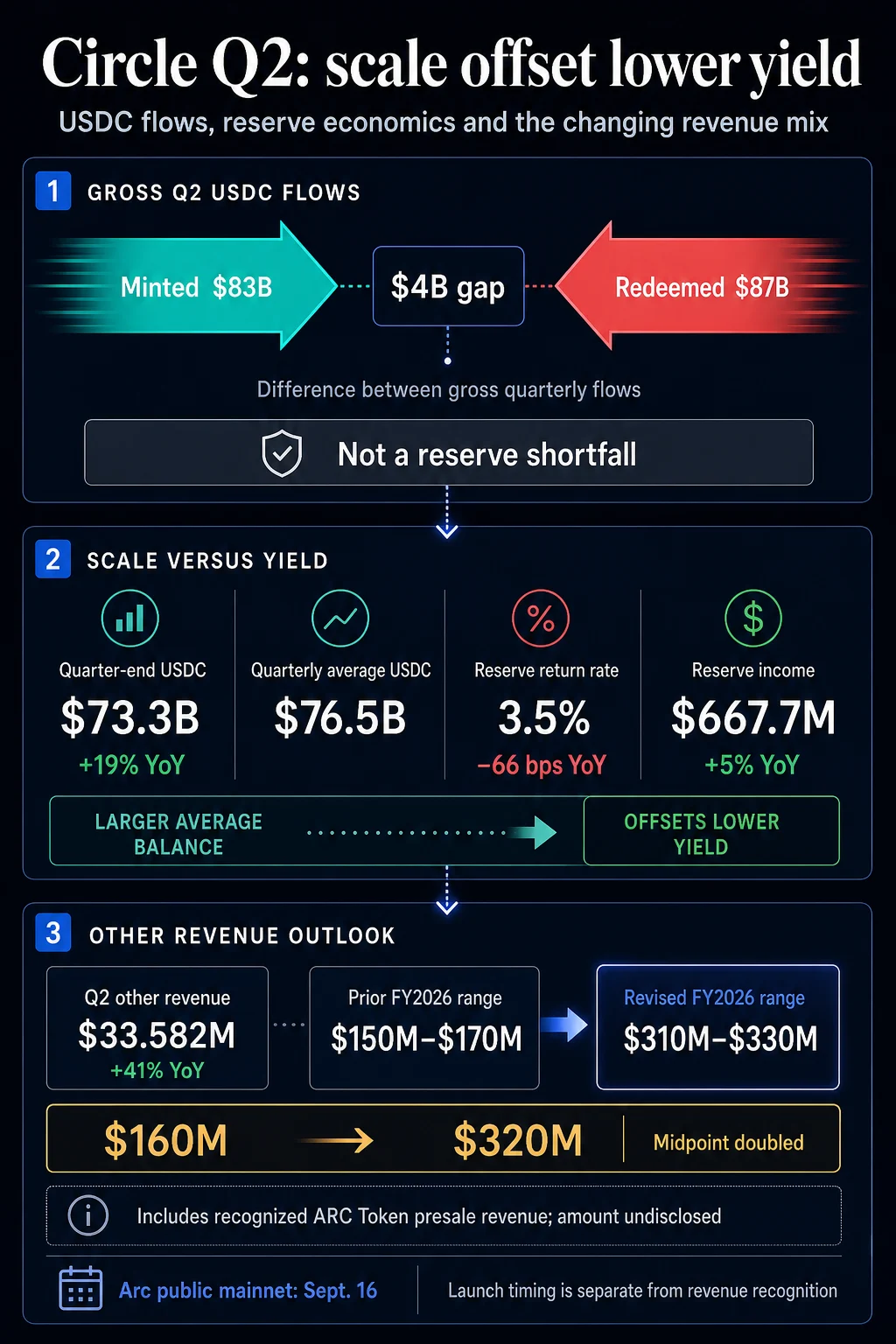
Circle’s financial performance in the second quarter of 2026 presented a complex picture, with a notable increase in USDC redemptions over mints, a slight dip in reserve yield, and a dramatic upward revision of its non-reserve revenue projections. While gross redemptions of its stablecoin, USD Coin (USDC), surpassed new issuances by approximately $4 billion, the company’s overall financial outlook has been significantly bolstered by an undisclosed contribution from the ARC Token presale, a move that has effectively doubled its anticipated other revenue for the full fiscal year.
Second Quarter Financial Overview: Redemptions and Reserve Yield Dynamics
According to Circle’s earnings release on August 5, 2026, the company processed $87 billion in USDC redemptions and $83 billion in new USDC mints during the second quarter. This divergence signifies a net outflow of $4 billion from the USDC ecosystem, as more users converted their stablecoins back into fiat currency than vice versa. This metric, distinct from reserve adequacy, reflects customer-driven transactional activity.
Despite this net redemption figure, the total circulation of USDC remained robust, standing at $73.3 billion at the close of the quarter. This represents a substantial 19% increase compared to the same period in the previous year, indicating continued widespread adoption and usage of the stablecoin. The quarterly average circulation also remained high, at $76.5 billion.
The yield generated from Circle’s reserves, which are held to back the USDC stablecoin, experienced a year-over-year decline. The reserve return rate fell by 66 basis points, settling at 3.5%. This reduction in yield is likely influenced by broader macroeconomic conditions, including interest rate environments. The U.S. Federal Reserve maintained its target range for the federal funds rate between 3.50% and 3.75% throughout both April and June of 2026, a period that encompasses the second quarter. Circle’s reported 3.5% return rate reflects the actual yield earned on its reserve portfolio, which is typically invested in short-term U.S. government obligations and other highly liquid, investment-grade instruments.
However, Circle managed to offset the impact of the lower yield rate through an increase in its average USDC balance. This growth in the overall amount of USDC in circulation meant that total reserve income still saw a modest increase of 5%, reaching $667.7 million for the quarter. This demonstrates the company’s ability to maintain and even grow its core revenue stream from reserves, even amidst a contracting yield environment.
The ARC Token Presale: A Significant Revenue Catalyst
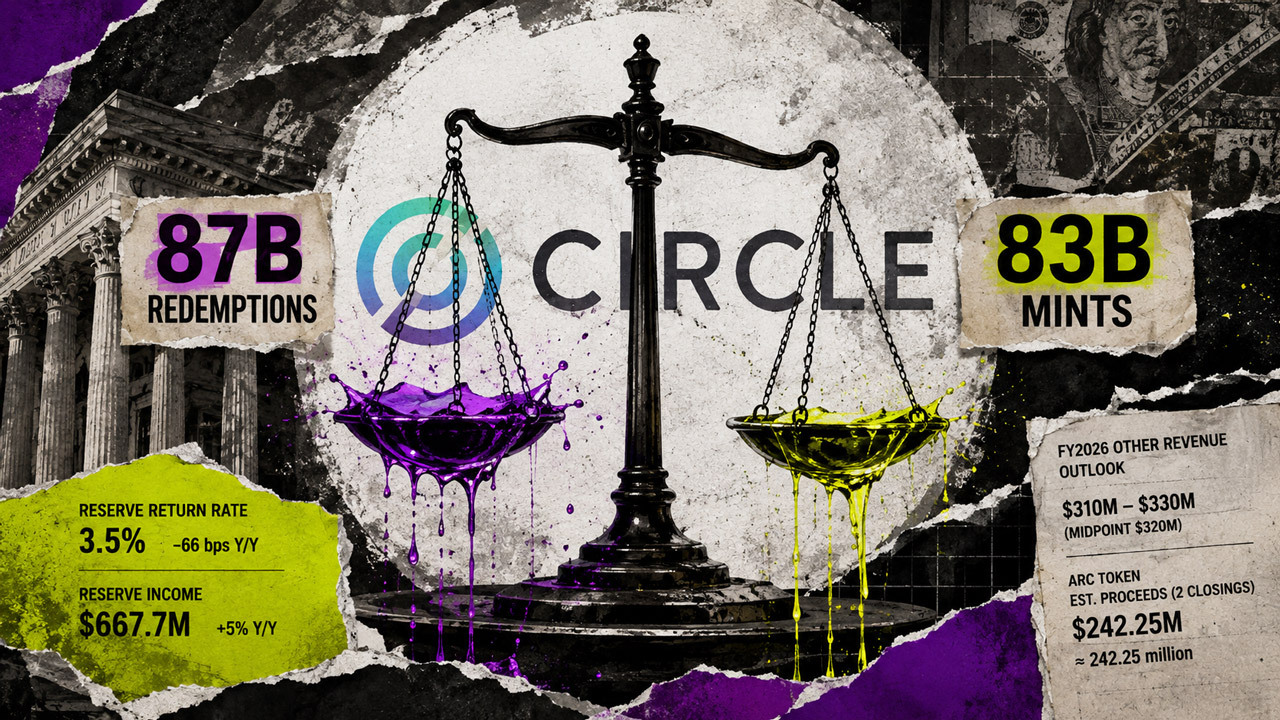
The most striking development in Circle’s Q2 earnings report was the dramatic upward revision of its full-year guidance for "other revenue." This category, which encompasses revenue streams beyond those generated from its USDC reserves, saw its midpoint outlook more than double. Circle now projects other revenue to fall within the range of $310 million to $330 million for fiscal year 2026. This is a substantial leap from the previously issued guidance of $150 million to $170 million in May.
Circle explicitly stated that this revised outlook includes a significant, though undisclosed, contribution from the ARC Token presale. While the specific amount attributed to the presale was not broken down, its impact is undeniably substantial, bridging the gap between the previous and the newly projected revenue figures. The midpoint of the revised guidance, $320 million, represents a direct doubling from the previous midpoint of $160 million.
This surge in projected other revenue underscores the strategic importance of Circle’s initiatives beyond its stablecoin operations. The ARC Token is a key component of Circle’s broader ecosystem development, particularly its blockchain network, also named Arc. The company had previously disclosed an estimated $222 million in gross proceeds from the initial closing of the ARC Token presale, followed by an additional $20.25 million from a second closing. These two closings collectively brought in approximately $242.25 million in estimated proceeds. It is crucial to note that these proceeds differ from recognized revenue, as purchase agreements often contain provisions for repayment under specific circumstances.
The timing of the ARC Token presale revenue recognition within Circle’s financial reporting remains a point of interest. The earnings release presented the planned public mainnet launch of the Arc blockchain for September 16, 2026, as a separate event from the revenue recognition related to the token presale. This suggests that Circle is recognizing revenue from the presale in accordance with accounting principles that may differ from the physical launch of the network itself. The lack of a specific breakdown for the ARC Token contribution leaves investors and analysts to infer its precise impact on the company’s bottom line.
Historical Context and Broader Implications
Circle’s journey in the stablecoin market has been marked by consistent growth and a commitment to regulatory compliance. Since its inception, USDC has aimed to provide a transparent, regulated, and reliable digital dollar. The company’s adherence to rigorous reserve management practices and its regular disclosures to regulatory bodies have been central to building trust within the cryptocurrency ecosystem and with traditional financial institutions.
The Q2 2026 report arrives at a time when the stablecoin market is under increasing scrutiny and experiencing dynamic shifts. While redemptions exceeding mints can sometimes signal a cooling of demand, in this instance, it appears to be overshadowed by the significant boost from the ARC Token presale. This highlights a diversification strategy by Circle, aiming to capture value not only from its stablecoin operations but also from its ventures into blockchain infrastructure and token economics.
The substantial increase in other revenue guidance suggests a successful execution of Circle’s strategic expansion plans. The ARC Token, as a foundational element of the Arc blockchain, is intended to power the network’s operations, facilitate transactions, and potentially offer staking or governance benefits. The strong uptake in its presale indicates investor confidence in the long-term vision and potential of the Arc ecosystem.

Analysis of Financial Performance and Future Outlook
The dichotomy between the modest net outflow of USDC and the significant surge in other revenue presents a nuanced financial picture for Circle. While the $4 billion net redemption figure may raise initial questions about USDC’s ongoing demand, the overall circulation growth and the robust reserve income suggest that the stablecoin remains a cornerstone of digital finance. The slight dip in reserve yield is a predictable consequence of the prevailing interest rate environment and does not appear to be a cause for concern given the accompanying growth in reserve income.
The real story of this quarter’s report lies in the amplified outlook for other revenue, driven by the ARC Token presale. This strategic move by Circle signals an ambition to transcend its identity as solely a stablecoin issuer and to become a more comprehensive player in the blockchain and digital asset space. The doubling of its other revenue forecast is a strong indicator of the perceived success of the ARC Token launch and its potential to generate substantial returns.
However, the lack of transparency regarding the exact contribution of the ARC Token presale to the revised revenue guidance leaves room for further analysis. Investors and market observers will be keen to understand how this revenue is recognized and its sustainability beyond the initial presale phase. The upcoming launch of the Arc mainnet in September will be a critical milestone, offering insights into the actual utility and adoption of the ARC Token and the broader Arc network.
The implications of this financial performance extend beyond Circle. A successful expansion into new revenue streams, particularly through token presales, could serve as a blueprint for other blockchain companies looking to diversify their income and fund ecosystem development. It also underscores the growing importance of native tokenomics in the growth and sustainability of blockchain networks.
Circle’s ability to navigate both the stablecoin market’s inherent dynamics and the burgeoning opportunities in the decentralized technology sector will be key to its continued success. The Q2 2026 earnings report suggests that the company is strategically positioning itself for multifaceted growth, with the ARC Token playing a pivotal role in its future financial trajectory. The coming months, marked by the Arc mainnet launch and continued financial reporting, will provide a clearer picture of Circle’s long-term vision and its capacity to execute on its ambitious plans.