
 admin
admin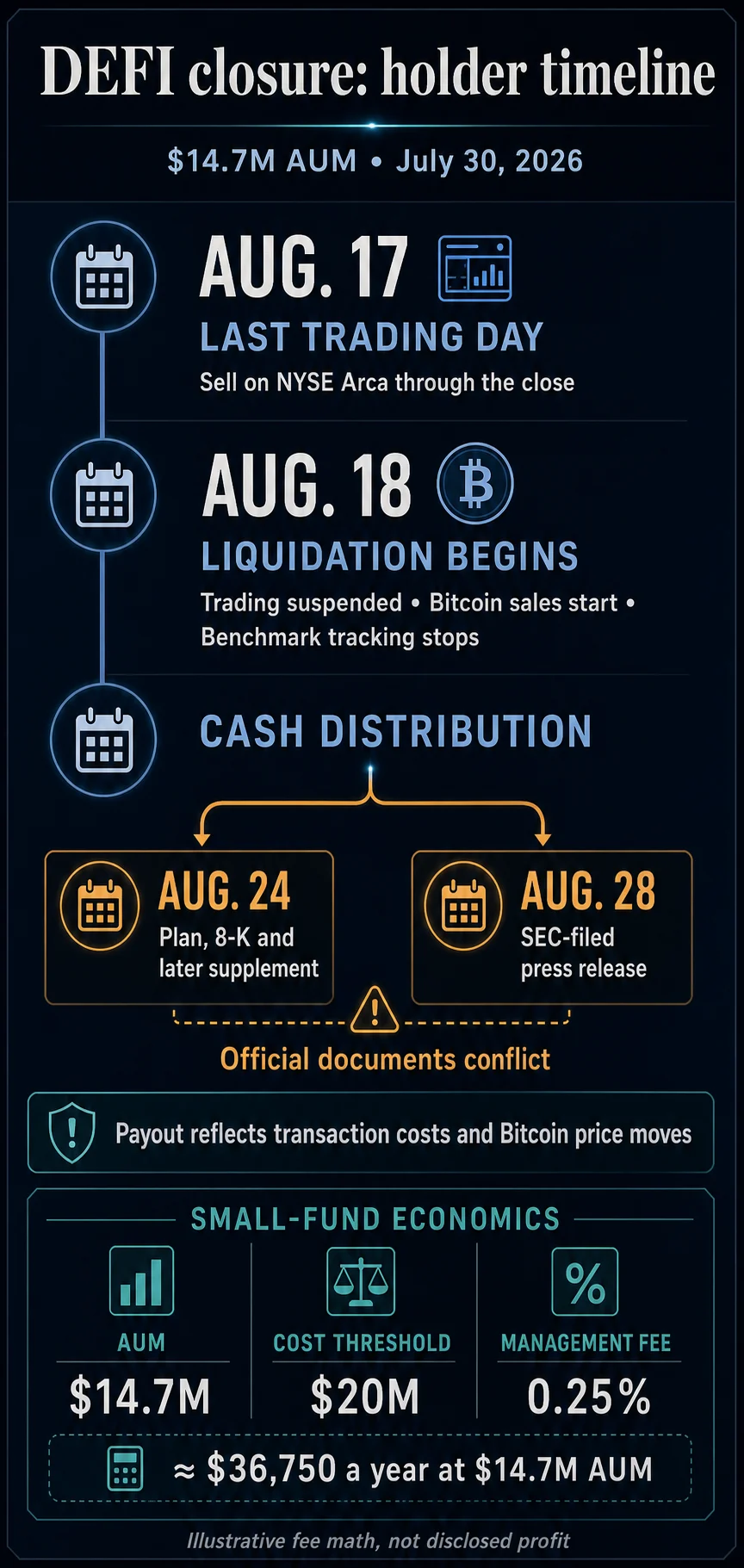
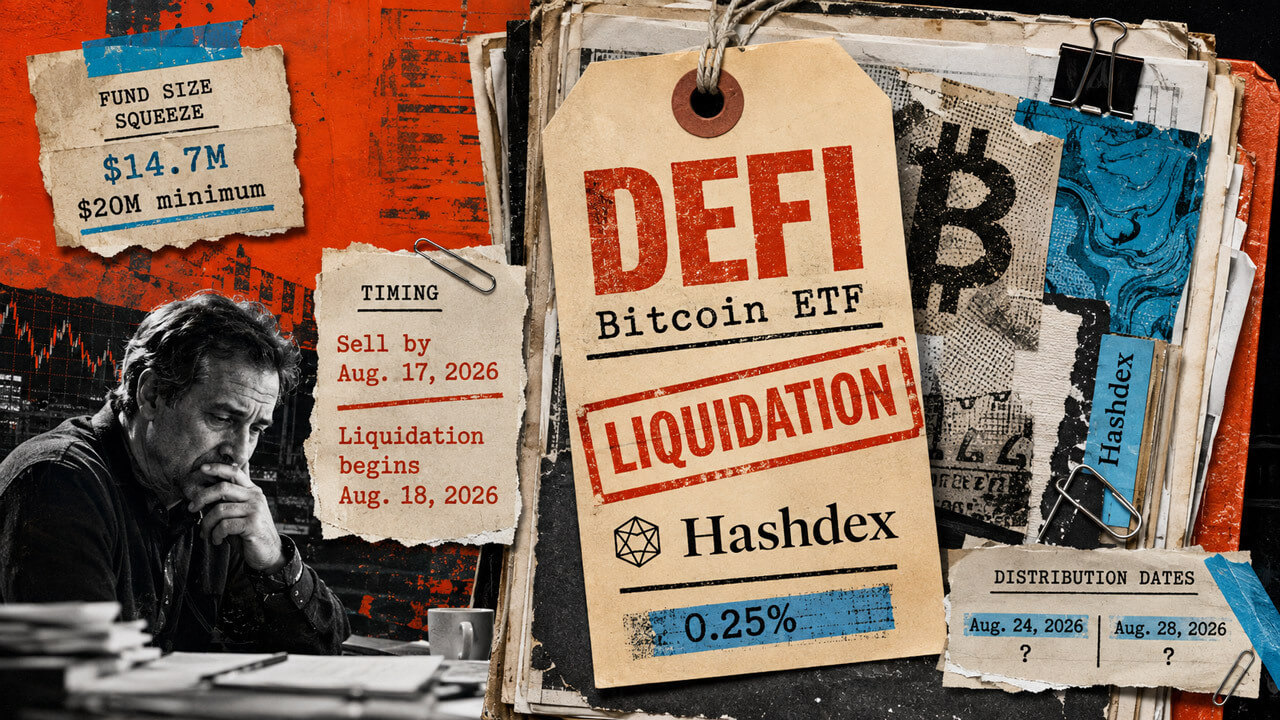
One of the pioneering Bitcoin futures Exchange-Traded Funds (ETFs) that transitioned to a spot Bitcoin fund following the highly anticipated launch of the "Newborn Nine" in 2024 is set to cease operations. The Hashdex Bitcoin ETF, managing approximately $14.7 million in assets, will begin its liquidation process on August 18, presenting a narrow window for its investors to divest their holdings. Holders of the DEFI ticker are advised to sell their shares on NYSE Arca before the market close on August 17. Those who fail to exit by this deadline will find their investment entering a cash wind-down phase, with the final payout contingent upon the sale price of the ETF’s Bitcoin holdings and associated liquidation costs. Adding a layer of uncertainty, Hashdex’s filings from August 3 present conflicting information regarding the precise date when investors can expect to receive their distributed cash.
The Countdown to Liquidation: Key Dates and Investor Actions
The Hashdex Bitcoin ETF’s liquidation plan, meticulously detailed in filings submitted to the U.S. Securities and Exchange Commission (SEC), outlines a clear trajectory for the fund’s closure. A critical aspect of this plan is the cessation of creation and redemption basket orders, which will be halted after August 17. This move effectively closes the primary mechanism for large-scale investors to enter or exit the fund, shifting the focus to the secondary market for individual share trading.
Trading on NYSE Arca is scheduled to conclude prior to the market open on August 18. This marks the official commencement of the liquidation process, during which the DEFI ETF will begin selling its underlying Bitcoin assets. As the fund liquidates its cryptocurrency holdings, its portfolio will progressively transition to cash. Concurrently, the ETF will cease to track its benchmark index, meaning its performance will no longer be correlated with the price movements of Bitcoin. The availability and liquidity of a secondary market for DEFI shares after the trading suspension remains an uncertain prospect, further underscoring the urgency for current holders to sell before the August 17 deadline.
Payout Timelines: A Conflicting Calendar for Investors
While the trading deadline for Hashdex Bitcoin ETF holders is relatively unambiguous, the timeline for the actual cash distribution remains a source of confusion. Regulatory filings present a fragmented picture of when investors can anticipate receiving their proceeds. Hashdex’s Form 8-K, filed on August 3, initially indicated a payout date on or about August 24. However, a subsequent prospectus supplement, also filed with the SEC, suggested a slightly later distribution, around August 28. This discrepancy between the initial 8-K filing and the later prospectus supplement, coupled with the explicit statement in the August 3 8-K that these dates are subject to change, leaves the official payout timetable unsettled and potentially fluid. This ambiguity could lead to further anxiety among investors who are already facing a shrinking window to liquidate their holdings.
The final cash amount distributed to each shareholder will be determined after all outstanding liabilities and transaction costs associated with the liquidation have been settled or adequately reserved for. This includes the expenses incurred in selling the ETF’s Bitcoin holdings. The price of Bitcoin can experience significant volatility, and Hashdex has cautioned that price fluctuations during this liquidation window could be substantial, potentially impacting the final per-share payout. The ETF sponsor has committed to covering any remaining liquidation expenses beyond what can be recouped from the fund’s assets. Consequently, the precise per-share payout remains undisclosed at this juncture, pending the completion of the liquidation process.
For U.S. federal income tax purposes, the liquidation plan treats the cash distribution as a liquidating distribution from a partnership. The tax implications of such a distribution are highly dependent on each individual investor’s specific financial circumstances. Hashdex has strongly advised all investors to consult with their personal tax advisors to understand and navigate these complexities.
The Driving Force Behind the Closure: Cost Pressures Mount
The impending closure of the Hashdex Bitcoin ETF is intrinsically linked to the mounting cost pressures that have rendered its continued operation unsustainable. The fund’s net assets have fallen below a critical threshold where operating expenses have become disproportionately high. Prior to Hashdex’s August 3 filing announcing the closure, the ETF’s standing prospectus had already flagged a potential issue: operating costs could become unreasonable if the fund’s assets under management (AUM) dipped below $20 million.
As of July 30, the DEFI ETF reported AUM of approximately $14.7 million. This figure falls significantly below the $20 million threshold, creating a scenario where the expenses associated with managing the fund began to outweigh the benefits of its scale. The liquidation plan explicitly states that continuing operations would be "unreasonable or imprudent" under these financial conditions. While the specific operating results of the fund leading up to this decision have not been fully disclosed, the management fee structure provides some insight into the cost dynamics.
The Hashdex Bitcoin ETF’s prospectus lists an annual management fee of 0.25%. Based on the July 30 asset base of $14.7 million, this translates to approximately $36,750 in gross management fees annually, assuming the asset level remained constant. It is crucial to note that this figure represents the gross management fees before accounting for other operational expenses, such as administrative costs, custody fees, and compliance expenditures, which would further reduce the net profitability of the fund, especially at lower AUM levels.
The decision to close the Hashdex Bitcoin ETF is a fund-specific strategic move dictated by its unique asset base and cost structure. This situation is distinct from the operational realities of other spot Bitcoin ETFs currently trading in the market. These other ETFs operate at significantly different scales of assets under management and often benefit from economies of scale and varied cost structures that allow for sustained profitability even with modest asset bases. The closure of DEFI serves as a stark reminder of the financial challenges inherent in managing smaller-cap ETFs in a competitive landscape.

Broader Context: The Evolving Landscape of Bitcoin ETFs
The closure of the Hashdex Bitcoin ETF occurs against the backdrop of a rapidly evolving and increasingly competitive Bitcoin ETF market. Launched in January 2024, the initial wave of nine spot Bitcoin ETFs, often referred to as the "Newborn Nine," experienced a significant surge in investor interest and inflows. These products offered investors a regulated and accessible way to gain exposure to Bitcoin without the complexities of direct cryptocurrency ownership.
However, the market has since seen the introduction of additional ETF products, including the Hashdex Bitcoin ETF, which initially operated as a futures-based ETF before converting to a spot structure. This conversion was a strategic move to align with the growing demand for spot Bitcoin exposure following the SEC’s approval. Despite this adaptation, the fund struggled to gain significant market share and attract substantial inflows, leading to its current predicament.
The performance of Bitcoin itself also plays a crucial role in the success of these ETFs. Periods of strong price appreciation tend to correlate with increased investor appetite for Bitcoin-related products, leading to higher AUM and greater fee revenue for ETF issuers. Conversely, periods of price stagnation or decline can put pressure on AUM and, consequently, on the profitability of ETFs, particularly those with lower asset bases.
The Hashdex Bitcoin ETF’s closure highlights the significant challenges that smaller or less established ETFs face in the current market. The high costs associated with launching and maintaining an ETF, combined with the need to attract and retain a substantial investor base, create a high bar for success. As the Bitcoin ETF market matures, it is likely that we will see further consolidation and a clearer differentiation between the leading products and those that struggle to gain traction. The lessons learned from the closure of DEFI could inform future product development and strategic decisions by other ETF issuers in the digital asset space. Investors in this nascent market are increasingly discerning, favoring ETFs with lower fees, robust liquidity, and a proven track record of operational stability. The success of the initial "Newborn Nine" has set a high standard, and any new entrant or existing product must demonstrate compelling value propositions to thrive.








