admin
admin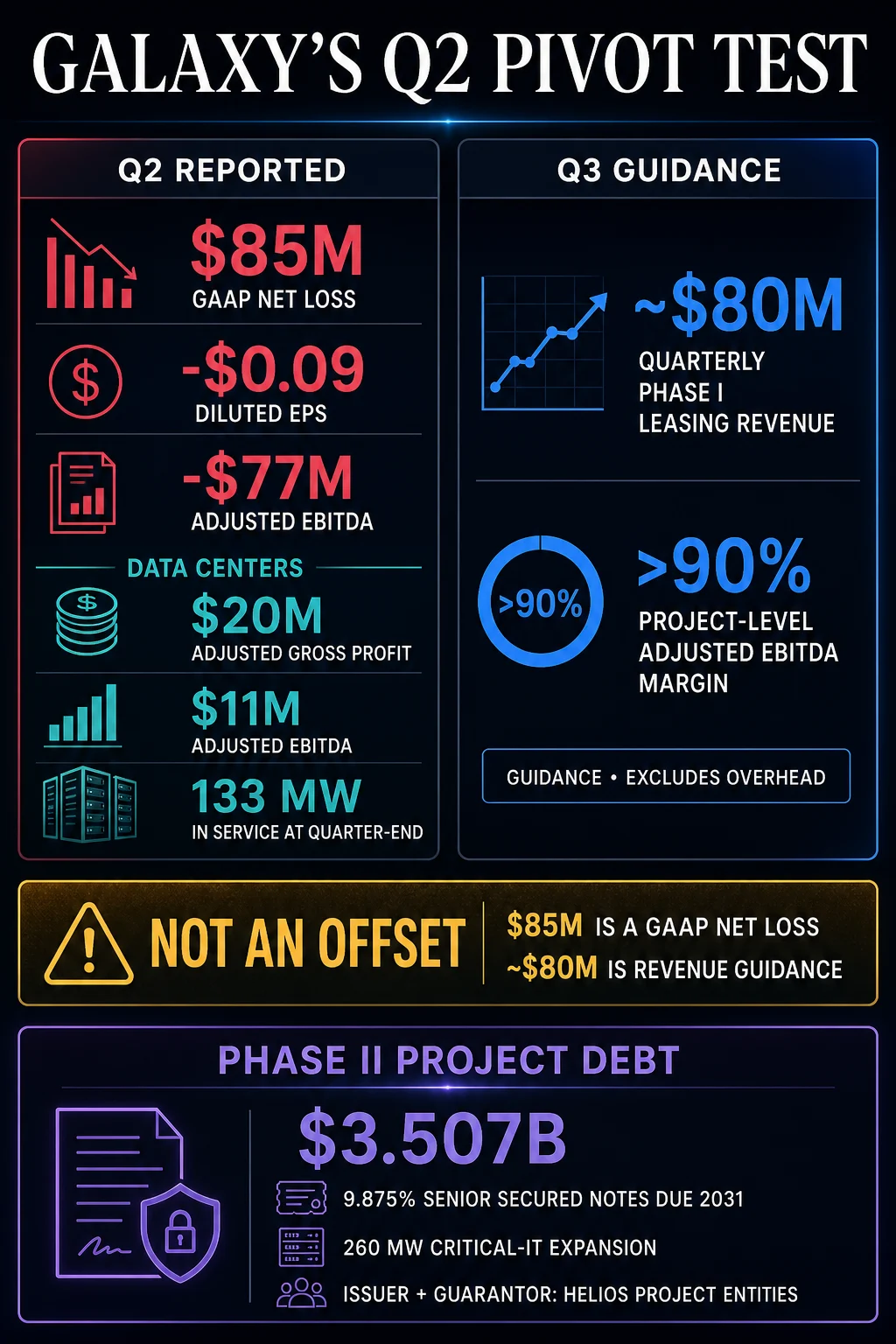
Galaxy Digital concluded the second quarter of 2026 with a significant net loss of $85 million, a period marked by the full activation of its 133 MW AI infrastructure capacity through a crucial lease agreement with CoreWeave. While this operational milestone signifies a key step in the company’s strategic pivot towards artificial intelligence infrastructure, the reported revenue figures for the third quarter are still projections and have not yet fully offset the substantial losses incurred in the preceding quarter. This financial performance highlights the ongoing challenges in balancing the volatile earnings of the digital asset market with the substantial capital investments required for its burgeoning AI data center operations.
Financial Performance and Segment Breakdown
The company’s SEC-filed results for Q2 2026 directly attributed the $85 million net loss primarily to the downturn in digital-asset prices. This translated into diluted earnings per share of -$0.09, a figure mirrored in its adjusted EPS, a non-GAAP measure. Despite these losses, Galaxy Digital reported an adjusted gross profit of $43 million, indicating operational revenue streams that were overshadowed by other financial factors. However, an adjusted EBITDA loss of $77 million underscores the significant operating expenses and potential impairments during the period.
The company’s operational segments exhibited divergent performance trends. The strategic AI infrastructure division emerged as a bright spot, generating an adjusted gross profit of $20 million and an adjusted EBITDA of $11 million. This performance was driven by the ongoing ramp-up of its data center capacity, a testament to the early traction of its pivot. Conversely, the Treasury and Corporate segment bore the brunt of the losses, recording a substantial adjusted gross loss of $42 million and an adjusted EBITDA loss of $78 million. This disparity is largely attributed to unrealized losses stemming from the company’s digital asset holdings and other investment positions, reflecting the inherent volatility of the cryptocurrency market.
CoreWeave Lease: A Turning Point for Data Center Revenue
A pivotal development in Q2 2026 was the completion of Phase I of its CoreWeave lease, bringing the entirety of the contracted 133 MW of critical IT load into service. This 15-year agreement with CoreWeave, a prominent player in AI and GPU cloud computing, represents a significant contractual revenue stream for Galaxy Digital, designed to provide stability and predictability in its earnings.
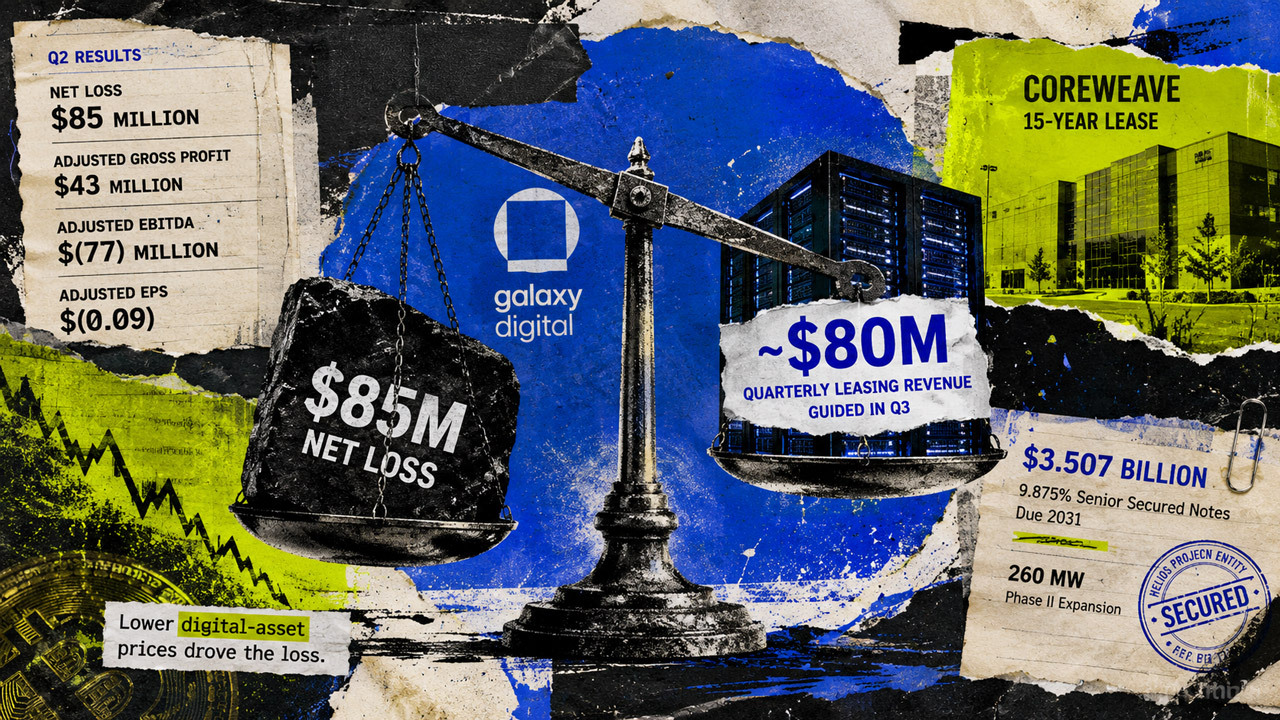
For the third quarter of 2026, Galaxy Digital has guided for approximately $80 million in quarterly leasing revenue from this facility. The company projects a project-level adjusted EBITDA margin exceeding 90% for this segment, a figure that excludes corporate overhead and other operational costs. While these Q3 figures remain guidance, they offer a clearer picture of the potential of the data center operations to contribute meaningfully to the company’s financial health. It is crucial to note that the $85 million GAAP net loss is recognized at the consolidated corporate level, while the $80 million represents projected top-line revenue from the data center operations. The $11 million in adjusted EBITDA generated by the Data Centers segment during the Q2 ramp-up period demonstrates the early stages of realizing the full lease economics.
Phase II Expansion and Substantial Debt Financing
Beyond the immediate operational capacity, Galaxy Digital is concurrently advancing its Phase II expansion, which will add an additional 260 MW of capacity. This ambitious growth plan is being financed through a significant debt issuance. A subsidiary of the Helios project, Galaxy Helios Data Centers II LLC, successfully priced a $3.507 billion offering of 9.875% senior secured notes due in 2031. Another project entity, Galaxy Helios II LLC, serves as a guarantor for these notes.
The collateral backing these notes comprises the project assets and pledged equity in the issuer. The financing structure, with Helios project entities acting as both issuer and guarantor, strategically confines the disclosed credit support to the project level. This approach aims to ring-fence the debt and its associated risks, potentially shielding the broader Galaxy Digital balance sheet. The success of this expansion hinges on several critical factors, including the pace of construction, the ability to secure future tenants, and the overall performance of the underlying project assets.
CoreWeave’s Central Role and the Future of Galaxy Digital
The success of Galaxy Digital’s AI infrastructure pivot is intrinsically linked to the performance and continued demand from its anchor tenant, CoreWeave. The company’s Q1 2026 quarterly filing underscored the segment’s initial heavy reliance on this AI infrastructure customer. Phase I of the data center operations is now live and generating contracted revenue from clients outside the traditional cryptocurrency sector. This diversification is a key strategic objective, aiming to mitigate the inherent volatility associated with digital asset markets.
The critical question moving forward is whether the projected steady stream of leasing revenue from the CoreWeave agreement will materialize as expected, thereby cushioning Galaxy Digital’s earnings against the cyclical nature of its digital asset business. The company’s execution on the Phase II expansion and its ability to attract and retain a diverse tenant base will be paramount in realizing its long-term vision of becoming a leading provider of AI infrastructure.

Broader Implications and Market Context
Galaxy Digital’s strategic shift reflects a broader trend within the cryptocurrency and blockchain industry, where established players are increasingly diversifying their business models to mitigate risks and tap into new, high-growth markets. The immense demand for computing power driven by artificial intelligence and machine learning applications presents a significant opportunity for companies with expertise in managing large-scale data center operations.
The substantial debt financing for Phase II also highlights the capital-intensive nature of building out massive AI infrastructure. While the secured notes offer a structured financing solution, they also introduce significant leverage and future interest payment obligations. The company’s ability to manage this debt, coupled with its operational performance, will be closely watched by investors and analysts.
The market is keenly observing whether Galaxy Digital can successfully transition from a digital asset-focused entity to a diversified technology infrastructure provider. The Q2 2026 results serve as a stark reminder of the challenges inherent in this transition, particularly the immediate financial impact of crypto market fluctuations. However, the operational progress in the AI infrastructure segment, particularly the full activation of the CoreWeave lease, provides a tangible pathway toward more stable and predictable revenue streams. The coming quarters will be a crucial test of Galaxy Digital’s strategic execution and its ability to navigate the complex interplay between volatile digital asset markets and the burgeoning opportunities in the AI infrastructure space. The successful integration of the data center segment’s revenue into the company’s overall financial performance will be a key determinant of its future valuation and long-term sustainability.