James Watt
July 09, 2026 – Lido V3, a cornerstone in the liquid staking ecosystem, has announced a series of significant updates to its stVaults primitive, introducing advanced features designed to enhance modularity, security, and operational efficiency for institutional stakers on the Ethereum network. These developments, unveiled today, underscore Lido’s commitment to facilitating robust and compliant participation in decentralized finance for a broad spectrum of entities, from large enterprises to sophisticated individual investors. The enhancements span the stVaults Web UI, product integration, and comprehensive documentation, alongside strategic incentives aimed at optimizing the staking experience amidst evolving network conditions.
At its core, stVaults represent Lido V3’s innovative approach to modular staking infrastructure, providing an unparalleled degree of control and flexibility, crucially including optional stETH minting capabilities. This design caters specifically to professional stakers and institutions seeking a customizable environment for their Ethereum assets, moving beyond the traditional pooled staking models to offer isolated, configurable staking positions. The strategic introduction of stVaults was a direct response to the growing demand for tailored solutions that address specific operational, security, and regulatory requirements of institutional players engaging with the Ethereum Proof-of-Stake mechanism.
Navigating Ethereum’s Staking Landscape: The Entry Queue Challenge
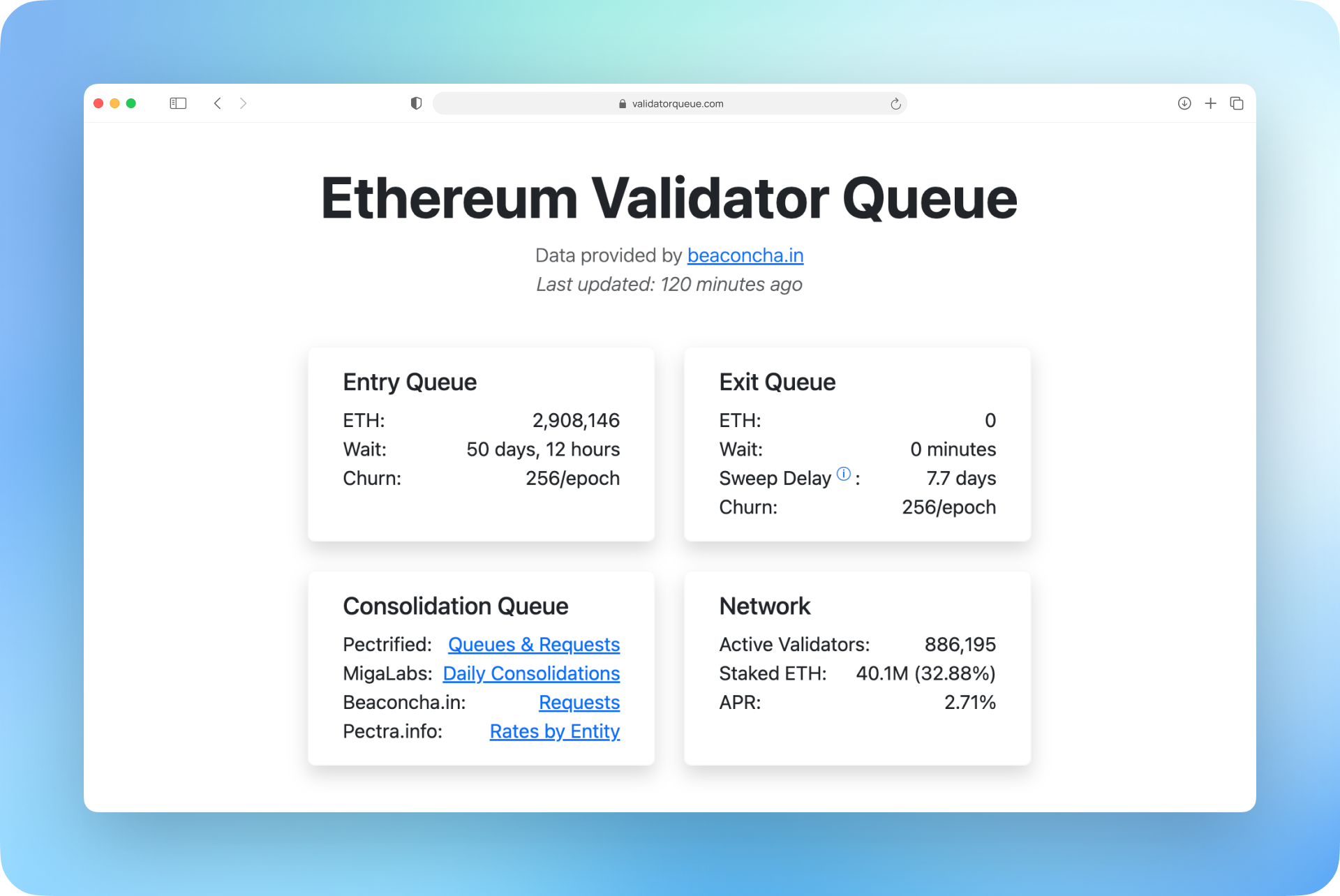
The operational dynamics of the Ethereum network continue to evolve, particularly concerning validator lifecycle management. A notable challenge for new stakers remains the Ethereum validator entry queue, which dictates the waiting period before a newly deposited 32 ETH can activate a validator and begin earning rewards. Throughout May 2026, this queue experienced considerable growth, at one point exceeding 60 days, reflecting sustained interest and capital inflow into Ethereum staking. While this trend speaks to the network’s health and investment appeal, it simultaneously presents a hurdle for entities seeking immediate staking activation and yield generation. By June, the queue saw a slight easing, averaging around 50 days, but still represented a significant waiting period.
This phenomenon is a direct consequence of Ethereum’s architecture, where a finite number of validators can enter or exit the network at any given time to maintain network stability and security. Post-Shapella upgrade in April 2023, which enabled withdrawals, the network witnessed both entries and exits, but overall growth in staked ETH has often outpaced the activation rate. For institutional participants, such prolonged waiting times can impact capital efficiency and investment strategy, making the ability to bypass or mitigate these delays a critical factor in their decision-making process.
Validator Consolidation: A Strategic Bypass
To address the challenges posed by the validator entry queue, Lido V3’s stVaults platform promotes a highly capital-efficient migration strategy: validator consolidation. This innovative mechanism allows existing validators, often those operating independently or through legacy setups, to transition their positions into the stVaults framework without re-entering the lengthy queue. The process ensures that source validators continue to accrue rewards seamlessly throughout the migration period. Upon successful consolidation, stakers gain immediate access to stETH (staked ETH), Lido’s highly liquid and composable liquid staking token.
The benefits of consolidation are multifaceted. Beyond avoiding the queue, stETH unlocks a vast array of DeFi composability opportunities, allowing stakers to leverage their staked assets across various decentralized applications for enhanced rewards, liquidity provision, or collateralization. This flexibility is particularly attractive for large staking positions, where maintaining liquidity and capital efficiency are paramount. Industry analysts suggest that such features are crucial for accelerating institutional adoption, as they provide both the security of direct staking and the flexibility demanded by sophisticated financial operations.
Financial Incentives: The Fee Waiver Extension
Further incentivizing the adoption of stVaults, Lido has announced the extension of its infrastructure fee waiver through the end of August 2026. This strategic decision provides a compelling financial advantage for new and migrating stakers, allowing them to benefit from the advanced features of stVaults without incurring certain operational costs for an extended period. Such waivers often serve as a catalyst for new technology adoption, reducing initial friction and demonstrating a commitment to fostering a vibrant and competitive staking ecosystem. For institutions managing significant capital, even marginal fee reductions can translate into substantial savings, directly impacting their net staking yield and overall profitability. This extension signals Lido’s confidence in the value proposition of stVaults and its desire to facilitate broad-based participation.
Enhancing the User Experience: stVaults Web UI Advancements
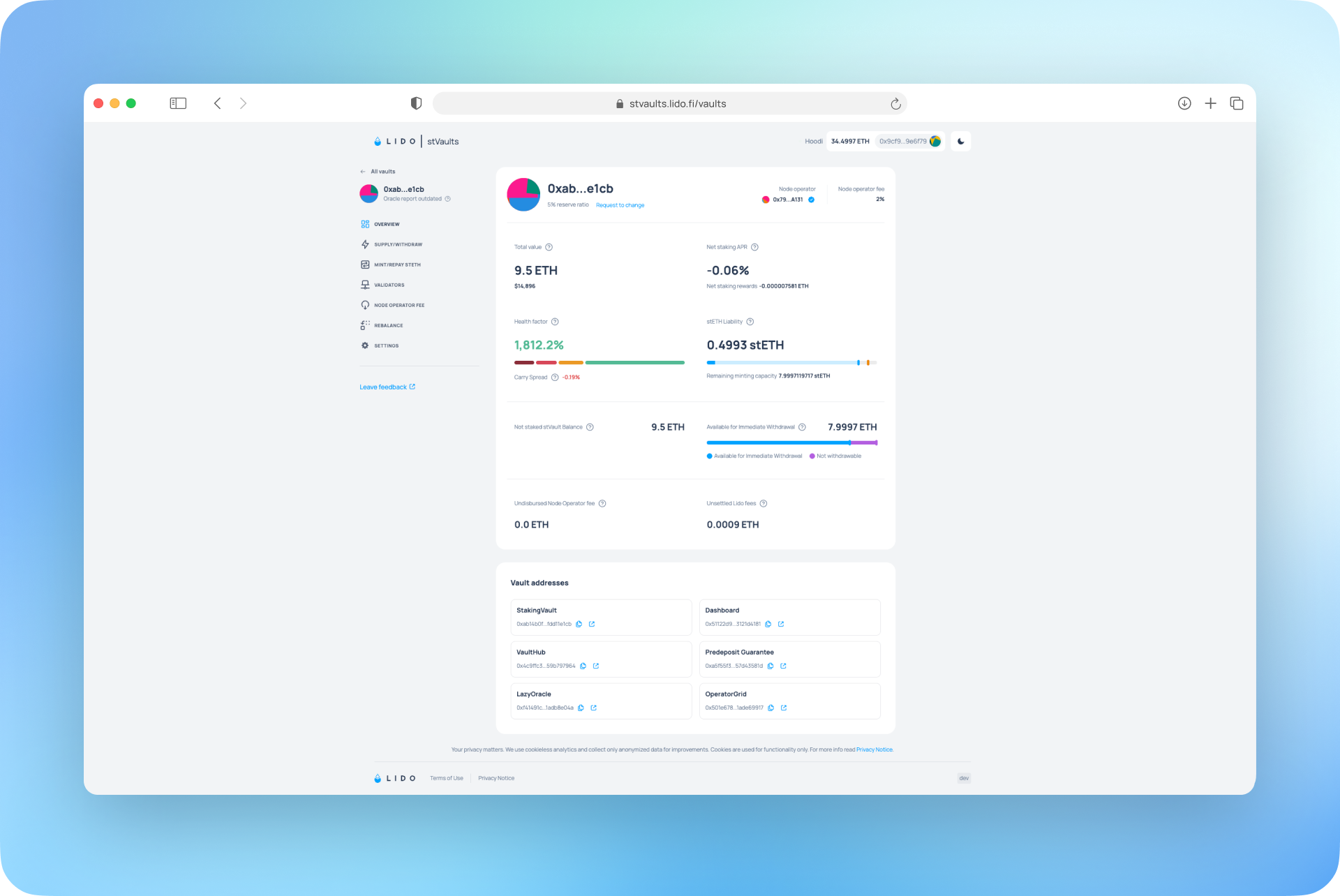
The stVaults Web User Interface (UI) serves as the primary portal for vault builders and owners, offering a streamlined, instrumented interface for setting up, monitoring, and managing their staking positions. Recognizing the critical need for robust security and intuitive operation, the stVaults team has recently rolled out several significant additions to the Web UI, directly addressing feedback from its growing user base.
Fortifying Security: Anti-Scam Protections
A paramount concern in the decentralized space is user security and protection against malicious actors. The updated stVaults Web UI now integrates sophisticated anti-scam protections. This feature actively warns stakers about potentially risky transactions and, critically, blocks certain operations if the stVault’s configuration is deemed to allow third-party actors to exploit or defraud stakers. This proactive security layer is vital for institutional users who operate under stringent compliance and risk management protocols. By embedding these safeguards directly into the UI, Lido aims to minimize human error and provide an additional layer of defense against phishing attempts or misconfigurations that could lead to asset loss. A spokesperson for Lido emphasized, "Our focus remains on building an enterprise-grade platform, and robust anti-scam measures are non-negotiable for fostering trust and ensuring the long-term security of our users’ assets."
Streamlining Operations: Fee Settlement and Rebalancing
Operational efficiency is another key differentiator for institutional adoption. Lido fees, integral to the protocol’s sustainability, must be settled before certain actions can be performed with an stVault. Previously, this might have required command-line interface (CLI) interactions or direct smart contract engagement, potentially complicating workflows for non-technical or multi-signature environments. The updated Web UI now empowers Vault Owners and Node Operators to review and settle fees directly within the interface. This permissionless settlement capability significantly streamlines operational processes, reducing the reliance on technical teams and enabling faster execution of staking-related actions.
Furthermore, the stVaults Web UI now fully supports rebalancing – the process of repaying stETH liability using ETH from the vault’s own balance. For institutions engaged in complex redemption fulfillment processes, this feature is transformative. After a redemption request is fulfilled by minting stETH from the stVault and subsequently swapping it for ETH, the resulting stETH liability can now be efficiently covered by rebalancing the position through the intuitive web interface. This capability eliminates the need for manual CLI operations or direct smart contract interactions, allowing vault owners to perform these critical financial operations within their existing approval and custody setups. This significantly reduces operational overhead and enhances the overall management of institutional staking portfolios, reflecting a clear understanding of the sophisticated needs of large-scale participants.
Expanding the Ecosystem: The stVaults Products Overview Hub
The growth of the stVaults ecosystem is further highlighted by the expanding "stVaults Products Overview" hub. This dedicated section on the Lido website showcases a diverse and growing array of new products and innovative use-cases being built on top of the stVaults platform. This hub serves as a testament to the modularity and composability of stVaults, demonstrating how various developers and institutions are leveraging its infrastructure to create tailored staking solutions, financial products, and integrated services. The continuous addition of featured products underscores the platform’s utility and potential to become a foundational layer for a new generation of institutional-grade DeFi applications. For projects seeking to integrate with or build upon stVaults, the hub also serves as a critical resource for inspiration and partnership opportunities, with Lido actively inviting new integrations to be showcased.
Institutional Adoption and Operational Clarity: Doc Center Updates
In parallel with UI enhancements, Lido has significantly bolstered its stVaults Doc Center with additional custodian guides. These guides are essential resources for institutions, particularly those operating under regulatory mandates that necessitate the use of qualified custodians. The new documentation provides clear, step-by-step instructions and best practices for integrating stVaults with various institutional custody solutions, ensuring secure and compliant asset management.
A crucial update within the Qualified Custodians overview is the consolidated listing of all stVaults smart-contract addresses that require whitelisting. This single-source reference simplifies the often complex process of security configuration for custodians, ensuring that all necessary smart contracts are approved for interaction within their secure environments. This meticulous attention to detail in documentation reflects Lido’s commitment to facilitating seamless integration for regulated entities, removing potential roadblocks to broader institutional engagement with liquid staking. These guides are instrumental in bridging the gap between traditional finance operational requirements and the innovative capabilities of decentralized protocols.
Strategic Implications and Future Outlook
The comprehensive updates to Lido V3’s stVaults mark a pivotal moment in the evolution of institutional Ethereum staking. By focusing on modularity, security, and operational efficiency, Lido is strategically positioning stVaults as the premier solution for large-scale participants. The continuous refinement of the Web UI, coupled with robust security features and streamlined operational tools like fee settlement and rebalancing, directly addresses the sophisticated demands of professional asset managers, funds, and corporations.
The extension of the infrastructure fee waiver and the emphasis on validator consolidation further demonstrate Lido’s proactive approach to fostering adoption and ensuring a positive return on investment for stakers. As the Ethereum network matures and institutional interest continues to grow, platforms like stVaults will play an increasingly critical role in scaling participation responsibly. The expansion of the products hub and the detailed custodian documentation highlight a thriving ecosystem and a clear pathway for compliant institutional entry into the liquid staking market.
These developments not only reinforce Lido’s leadership in the liquid staking space but also contribute significantly to the broader maturation of the DeFi landscape, bridging the gap between decentralized innovation and the stringent requirements of traditional finance. The modular design of stVaults, coupled with these recent enhancements, ensures that institutions can engage with Ethereum staking with unprecedented control, security, and efficiency, setting a new standard for enterprise-grade decentralized finance solutions.
For institutions, products, or roadmap discussions concerning stVaults, interested parties are encouraged to reach out to the Lido team for detailed consultation.