James Watt
The Lido DAO, a leading liquid staking protocol, has officially adopted Chainlink’s Cross-Chain Interoperability Protocol (CCIP) as the sole official cross-chain infrastructure for its Wrapped Staked Ether (wstETH) token. This strategic decision, formalized in November 2025 by the Network Expansion Committee (NEC) acting on behalf of the DAO, marks a significant pivot towards a unified, highly secure, and decentralized solution for managing wstETH’s expansion across multiple blockchain networks. The move comes as the decentralized finance (DeFi) ecosystem grapples with an alarming rise in cross-chain bridge exploits, which have collectively resulted in nearly $3 billion in hacked funds, underscoring the critical need for robust security in multi-chain environments.
The Cross-Chain Security Imperative: A Multi-Billion Dollar Problem
The digital asset landscape has witnessed an unprecedented surge in liquidity and innovation across various blockchain networks, driving the demand for seamless cross-chain interoperability. However, this expansion has inadvertently exposed a significant vulnerability: cross-chain bridges. These vital pieces of infrastructure, designed to facilitate asset transfers between disparate blockchains, have become prime targets for sophisticated attackers, leading to catastrophic financial losses and eroding user confidence. The staggering figure of nearly $3 billion in hacked funds from bridge exploits paints a grim picture, highlighting the inherent complexities and security challenges associated with moving assets across decentralized ecosystems.
Prominent incidents serve as stark reminders of these vulnerabilities. The Ronin Bridge, a sidechain for the popular game Axie Infinity, suffered a devastating loss of over $625 million in March 2022 due due to compromised private keys. Just a month prior, the Wormhole bridge, connecting Solana with other chains, was exploited for $325 million through a smart contract vulnerability. August 2022 saw the Nomad bridge drained of nearly $190 million in a "free-for-all" exploit, where a vulnerability allowed numerous users to siphon funds. Even earlier, in August 2021, the Poly Network experienced a $610 million hack, one of the largest in DeFi history, though most funds were eventually returned. More recently, the Kelp / LayerZero exploit further underscored the persistent threat, prompting renewed scrutiny of bridge security, operational safeguards, and issuer controls. These events collectively demonstrate that the design, implementation, and ongoing monitoring of cross-chain infrastructure are paramount, especially for high-value assets like wstETH.
Lido’s Strategic Shift: Addressing the Limitations of Fragmented Interoperability
Lido DAO stands as the preeminent liquid staking protocol, enabling users to stake their Ethereum (ETH) and receive stETH, a liquid token representing their staked position. wstETH, or Wrapped Staked Ether, is a non-rebasing version of stETH, designed for easier integration across various DeFi applications and L2 networks due to its stable balance. As wstETH gained traction and expanded its reach across numerous chains, Lido contributors, guided by the Network Expansion Committee (NEC), recognized the growing need for a more secure and standardized cross-chain strategy.
Historically, most cross-chain deployments of wstETH have relied on canonical bridges. These are often protocol-specific or chain-specific solutions, each with its own unique security model, operational setup, and set of trust assumptions. While the NEC diligently reviewed and formally recognized these deployments to ensure adherence to security standards and maintain DAO ownership, this fragmented approach presented several practical challenges. Each deployment required bespoke monitoring, creating a complex web of systems to oversee rather than a single, unified technical solution.
Furthermore, a significant proportion of these recognized canonical bridges are optimistic in nature. While optimistic bridges offer certain benefits, they introduce a substantial drawback: long withdrawal periods, often exceeding seven days, for assets to move back to the Ethereum mainnet. This inherent delay significantly reduces the efficiency of wstETH liquidity and hinders rapid arbitrage opportunities, impacting the overall user experience and market dynamics. The fragmentation of liquidity across different bridge implementations also presented operational overheads for the DAO and its community.
Recognizing these limitations and the escalating risks in the broader cross-chain landscape, the NEC initiated a comprehensive evaluation of available cross-chain solutions. Their primary objective was to identify an architecture that prioritized security, decentralization, and long-term sovereignty for wstETH holders and the Lido DAO itself. This rigorous process culminated in the pivotal decision in November 2025 to officially adopt Chainlink CCIP.
Chainlink CCIP: A New Paradigm for Cross-Chain Security and Interoperability
The selection of Chainlink CCIP as the official cross-chain infrastructure for wstETH represents a significant endorsement of its "secure-by-default" design principles. This integration will standardize all cross-chain transfers of wstETH by leveraging Chainlink’s Cross-Chain Token (CCT) standard, aiming to provide an unparalleled level of security and efficiency.
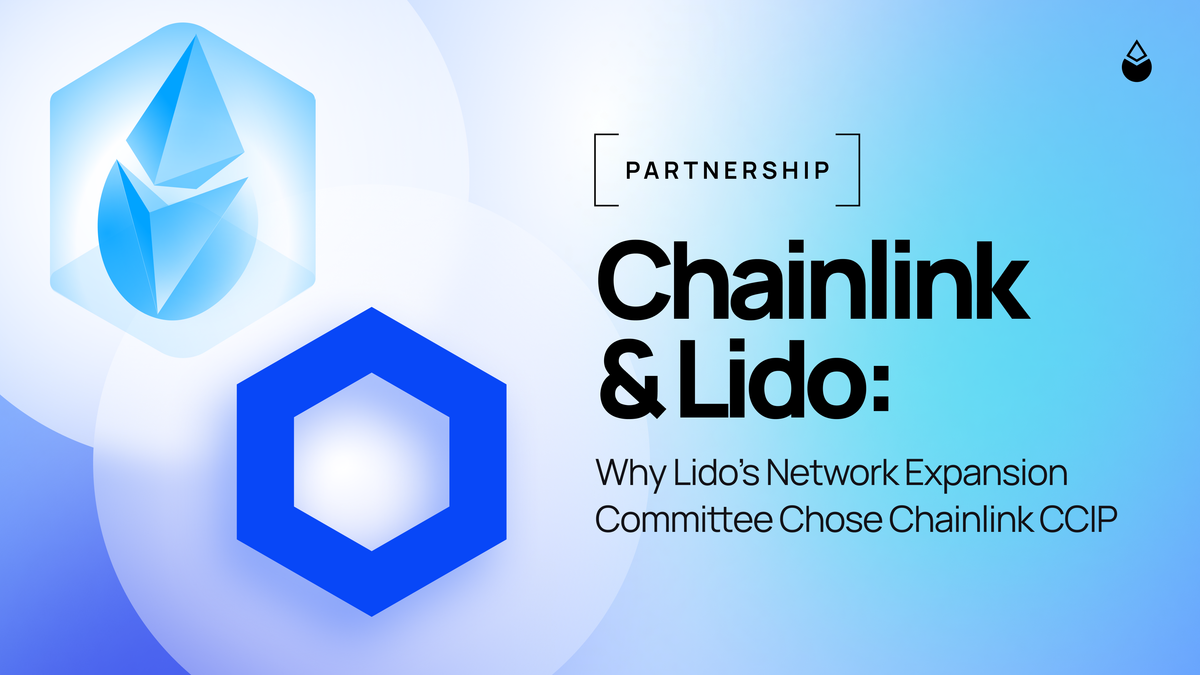
Chainlink CCIP is a generalized messaging and token transfer protocol designed to provide a secure and reliable way for smart contracts on different blockchains to communicate and transfer value. It aims to solve the "interoperability trilemma" – achieving decentralization, security, and scalability simultaneously – by introducing a robust architecture that leverages Chainlink’s proven decentralized oracle network infrastructure.
Lido contributors highlighted three critical pillars that drove their decision to choose CCIP, directly addressing the core security considerations for wstETH’s multi-chain expansion:
-
Decentralized by Default, Secure by Default:
A cornerstone of Lido’s security-first stance is its unwavering commitment to decentralization. CCIP aligns perfectly with this ethos by eschewing reliance on a single verifier, machine, or infrastructure provider. Instead, every CCIP bridge lane is secured by a minimum of 16 independent node operators. These operators achieve decentralized consensus on every cross-chain interaction, significantly mitigating single points of failure.
The infrastructure diversity of these node operators is paramount. They deploy infrastructure across various geographical regions, utilizing both on-premise bare-metal servers and multi-region cloud deployments. This robust setup includes operating highly resilient RPC infrastructure with multiple layers of redundancies and verification checks. This "defense-in-depth" model is foundational to CCIP’s protocol design, directly addressing the types of centralized vulnerabilities that have plagued many past cross-chain systems.
A testament to this resilience was observed during the widespread AWS outage on October 20, 2025. While major web services and several other cross-chain providers experienced significant downtime, CCIP remained fully operational, experiencing no disruption thanks to its distributed and diversified infrastructure. The Chainlink ecosystem comprises global enterprises, leading Web3 DevOps teams, and experienced Chainlink ecosystem projects, many of whom also operate critical infrastructure for the Lido protocol, such as P2P, Stakefish, StakingFacilities, and Everstake. This shared operational expertise further strengthens the symbiotic relationship and enhances overall network reliability. -
Availability of Built-in Safeguards:
Beyond decentralization, the presence of native, protocol-level safeguards was a crucial factor in Lido’s selection of CCIP. The protocol offers issuer-managed rate limits, which act as essential "circuit breakers." These rate limits can intentionally restrict the flow of wstETH across chains during periods of extreme market volatility, systemic stress, or operational disruptions, preventing potential cascading failures or malicious draining of funds. CCIP’s rate limits are defined on a per-chain lane basis, encompassing both a maximum amount per transaction (rate limit capacity) and the speed at which available capacity is replenished (rate limit refill rate). The specific configuration for each wstETH CCIP bridge lane is transparently available on the CCIP Directory, providing public oversight and accountability.
Another significant safeguard is CCIP’s architecture of "siloed deployments." Unlike "meshed" bridging networks where all lanes interact with each other, each CCIP bridge lane for wstETH interacts solely between the Ethereum Mainnet and its specific destination chain. This design ensures that if an issue were to arise on a single destination chain, it would be contained to that particular lane, preventing a systemic failure across the entire bridging setup. This isolation principle is a critical component of risk management.
Furthermore, CCIP benefits from extensive off-chain monitoring and alerting infrastructure. This system is designed to detect and react instantaneously to any abnormal activity within the underlying blockchain networks, such as unexpected finality violations, chain re-organizations, or other network abnormalities that could indicate an attack or compromise. In an ongoing effort to further enhance security, Lido contributors are actively collaborating with Chainlink to implement secondary confirmations for large wstETH transactions. This additional attestation requirement would introduce an extra layer of scrutiny for significant value transfers, providing another robust defense mechanism. -
Issuer Sovereignty Without Vendor Lock-in:
A paramount concern for the NEC was to ensure Lido’s long-term sovereignty over the wstETH token and its multi-chain expansion strategy. The chosen cross-chain infrastructure needed to avoid any form of vendor lock-in that could limit future flexibility or complicate potential migrations to alternative solutions.
Chainlink’s Cross-Chain Token (CCT) standard, adopted for wstETH, addresses this directly. It preserves the issuer’s (Lido DAO’s) full control over all token contracts. Crucially, the CCT standard eliminates the requirement to embed any CCIP-specific logic within wstETH token deployments. This separation of concerns ensures that the core wstETH contract remains clean and independent of the bridging mechanism. This design choice guarantees flexibility for future upgrades, governance-led adjustments, and even potential shifts in cross-chain architecture should the ecosystem evolve. By preventing structural lock-in, Lido maintains complete long-term control over its wstETH multi-chain strategy, a critical factor for a decentralized autonomous organization. This contrasts sharply with some other cross-chain solutions, such as LayerZero’s OFT (Omnichain Fungible Token) standard, which tightly couples the ERC20 token to the LayerZero infrastructure, potentially creating technical vendor lock-in and making future migrations more challenging.
Implementation Timeline and Broader Reach
The integration of Chainlink CCIP for wstETH is not merely a future plan but an active deployment. CCIP is already securing wstETH transactions between Ethereum, MegaETH, and Monad, demonstrating its immediate applicability and robustness. The Lido DAO has outlined a progressive, multi-stage implementation plan for the coming months, systematically rolling out CCIP for wstETH bridges on the remaining supported chains listed on lido.fi/lido-multichain. Each stage will involve thorough execution and rigorous testing to ensure seamless and secure transitions.
Beyond securing cross-chain wstETH transfers, Chainlink CCIP has also been instrumental in powering Lido’s innovative Direct Staking rails. This functionality enables users to stake ETH directly from various Layer 2 (L2) networks, such as Arbitrum, Base, and Optimism, and receive wstETH in return. This capability significantly enhances accessibility and user convenience, integrating liquid staking more deeply into the broader L2 ecosystem, all while leveraging CCIP’s foundational security.
Broader Implications for DeFi and Multi-Chain Assets
Lido DAO’s decision to adopt Chainlink CCIP for its flagship asset, wstETH, carries significant implications for the wider DeFi ecosystem. As one of the largest and most influential protocols in decentralized finance, Lido’s choices often set precedents and influence industry standards. This move signals a clear imperative: multi-chain expansion, particularly for high-value assets, must be treated as a mission-critical infrastructure decision, demanding the same rigorous security evaluations applied to custody, governance, and smart contract security.
The selection of interoperability infrastructure can no longer be driven solely by considerations of convenience, speed, or ecosystem reach. Instead, asset issuers are increasingly compelled to evaluate their cross-chain strategies based on the most stringent security and architectural standards. This includes deeply scrutinizing the decentralization of the underlying bridge, the presence and effectiveness of built-in safeguards, and the degree to which issuer sovereignty is maintained.
Lido’s adoption of CCIP is poised to elevate the discussion around cross-chain security, potentially influencing other major protocols and asset issuers to reassess their own interoperability solutions. It underscores the growing consensus that as more value migrates across chains, the underlying infrastructure must be inherently secure by default, operationally resilient, and explicitly aligned with the issuer’s long-term sovereignty goals. This strategic move by Lido, driven by Chainlink’s defense-in-depth model, offers a compelling blueprint for sustainable and secure multi-chain expansion in an increasingly interconnected, yet vulnerable, decentralized financial landscape. The quest for robust and trustworthy cross-chain interoperability is paramount, and Lido’s latest decision marks a significant step forward in building a more secure and resilient DeFi ecosystem for all participants.