Lina Irawan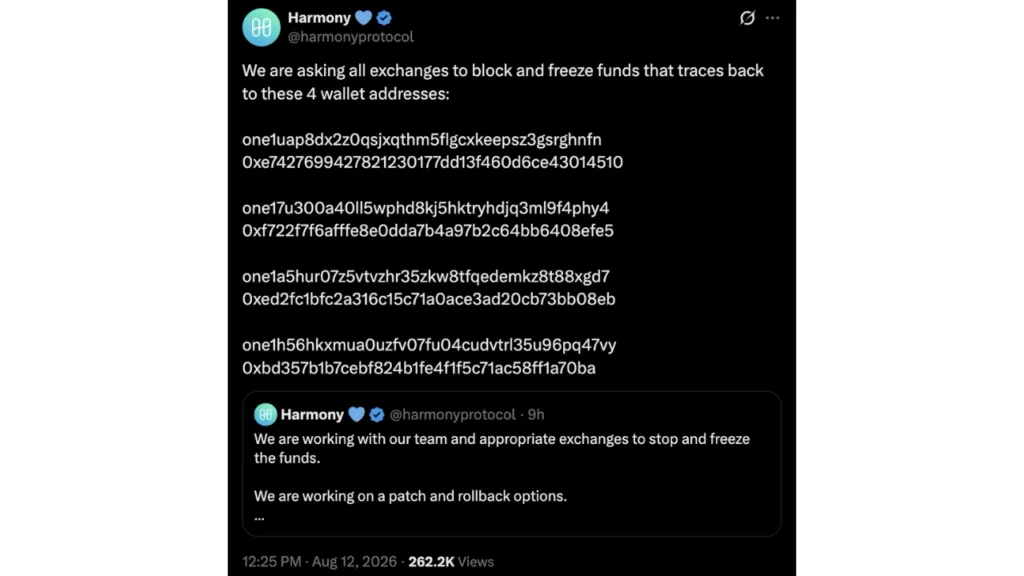
The Layer-1 blockchain network Harmony experienced a significant disruption on August 12th when its native token, ONE, suffered a precipitous decline following reports of a sophisticated exploit. The incident, which remains under investigation, allegedly allowed an attacker to mint approximately 4 billion ONE tokens without authorization. This massive influx of newly created tokens, representing a staggering 26% increase to the blockchain’s previously circulating supply of roughly 15 billion ONE, immediately triggered widespread concerns about supply inflation and ignited intense selling pressure across the market. Harmony has officially confirmed the security breach and is actively working on an emergency patch to prevent further unauthorized minting, while simultaneously evaluating potential rollback options to address the compromised state of the network.
Unprecedented Token Inflation Rocks Harmony Network
The gravity of the situation became apparent as on-chain analysts began to piece together the events of August 12th. Independent analyst Juiceberg was among the first to highlight the anomaly, reporting that an estimated 4 billion ONE tokens were generated through a process involving "empty blocks" on the Harmony network. If these figures are corroborated, this unauthorized issuance would represent a substantial dilution of the token’s existing value and supply. Harmony, while acknowledging the security incident, has yet to independently verify the 4 billion token figure or disclose the specific vulnerability that facilitated this unprecedented minting. Their immediate focus has been on halting any further unauthorized token creation and strategizing on how to manage the tokens that have already been generated.
The situation escalated rapidly as reports emerged of substantial quantities of these newly minted ONE tokens being transferred to cryptocurrency exchanges. Juiceberg’s analysis suggested that approximately 2.8 billion ONE found their way to exchanges, with an additional 115 million tokens reportedly available for sale on-chain at one point. The lack of official confirmation from Harmony on these figures means they remain analyst estimates. However, if accurate, the swift movement of such a large volume of tokens to centralized trading platforms significantly complicates recovery efforts. While funds that remain identifiable on-chain can potentially be frozen, tokens that have already been sold or moved to various wallets present a more formidable challenge for tracing and reclamation.

Harmony’s Rapid Response: Containment and Mitigation Efforts
In the immediate aftermath of identifying the breach, Harmony initiated a multi-pronged approach to contain the damage and prevent further exploitation. The project quickly identified four specific wallet addresses believed to be linked to the incident. In a swift move, Harmony reached out to cryptocurrency exchanges, requesting that they block and freeze any funds originating from these identified addresses. This collaborative effort with exchanges is a critical step in preventing the attacker from liquidating the illicitly acquired tokens and realizing their gains.
Concurrently, Harmony took decisive action to secure its interoperability infrastructure by pausing its token bridge. This measure aims to prevent any potential contagion or further exploitation through cross-chain mechanisms. Network operators were also instructed to implement an emergency software update designed to close the vulnerability and prevent any recurrence of unauthorized minting. The Harmony team has publicly stated their commitment to developing a comprehensive patch and is actively exploring the feasibility and implications of a network-wide rollback.
The Dilemma of a Blockchain Rollback
The potential for a blockchain rollback presents Harmony with a complex and ethically charged decision. A rollback, in essence, would involve reverting the blockchain’s state to a point prior to the exploit, effectively erasing all subsequent transactions from the network’s immutable history. While this could be a powerful tool for eliminating the unauthorized tokens and restoring the network to its intended state, it carries significant risks. Reversing legitimate transactions that occurred during the affected period could disenfranchise innocent users and undermine the fundamental principle of blockchain immutability, which is a cornerstone of decentralized networks. Such a move could generate considerable controversy within the Harmony community and among developers, potentially eroding trust in the network’s transaction finality. Harmony has not yet indicated whether it intends to proceed with a rollback or specified the precise block range that would be subject to such an action.
ONE Token Price Suffers Sharp Contraction Amidst Uncertainty
The market’s reaction to the news of the suspected exploit was swift and severe. The ONE token experienced a dramatic price decline, reflecting the immediate concern over the substantial increase in supply and the inherent uncertainty surrounding the incident. At one point, ONE’s price reportedly fell by over 39%, plummeting to approximately $0.000747. This sharp contraction underscores the market’s acute sensitivity to unauthorized token issuance, particularly when the scale of the alleged creation is so significant relative to the existing circulating supply.

The potential ramifications extend beyond the tokens directly controlled by the alleged attacker. Even if a portion of the newly minted ONE tokens can be successfully frozen or recovered, the lingering uncertainty about the final, legitimate token supply can continue to weigh heavily on investor confidence and fuel market volatility. The absence of an official, confirmed figure for the total number of ONE tokens created leaves a crucial question unanswered: precisely how many tokens were subject to this unauthorized minting? Until Harmony provides a definitive accounting, the reported 4 billion figure will likely remain an on-chain analyst estimate, rather than a confirmed total.
A Troubled History: Past Incidents on the Harmony Network
This latest security incident is not the first time Harmony has grappled with unintended token creation or significant security breaches. In 2023, a vulnerability within Harmony’s staking logic led to the unauthorized minting of approximately 146.3 million ONE tokens across 74 different delegator addresses. According to a technical report released by Harmony at the time, the issue stemmed from undelegation records that were not properly cleared following validator commission adjustments. This resulted in certain matured undelegations receiving repeated payouts across multiple epochs, effectively creating tokens outside the intended issuance process. Harmony addressed this past incident through an emergency hard fork and deployed a fix at block 51,118,080.
Furthermore, Harmony’s infrastructure has previously been targeted by a major security breach involving its Horizon Bridge. In June 2022, attackers managed to steal approximately $100 million worth of cryptocurrency after compromising private keys that controlled the bridge’s operations. The Federal Bureau of Investigation (FBI) later attributed this sophisticated attack to actors linked to North Korea’s Lazarus Group. It is important to distinguish the current incident from the Horizon Bridge hack; the current situation involves the direct creation of new ONE tokens on Harmony’s Layer-1 network, rather than the illicit transfer of assets held by a bridge.
Navigating the Path Forward: Critical Questions and Future Outlook
As Harmony continues to navigate the fallout from this security breach, several critical questions loom large. The primary focus remains on identifying the specific vulnerability that enabled the unauthorized minting. Simultaneously, the project must establish an accurate accounting of the total number of ONE tokens created, determine how many remain under the attacker’s control, and ascertain the extent to which exchanges can successfully freeze these illicit funds.

The decision regarding a potential rollback is perhaps the most significant and complex challenge facing Harmony. While reverting the chain could effectively neutralize the unauthorized transactions, it carries the substantial risk of negatively impacting legitimate users and further eroding confidence in the network’s transaction finality.
Harmony’s immediate priorities are clear: halt any further unauthorized issuance, meticulously identify the root cause of the exploit, and establish a precise and transparent accounting of all affected tokens. The cooperation of cryptocurrency exchanges will also be paramount, especially if significant quantities of the newly minted ONE have already entered centralized trading platforms.
As of August 12th, Harmony had confirmed the security incident but had not yet publicly disclosed the reported 4 billion ONE figure or detailed the underlying vulnerability. The project has committed to providing further updates as its investigation and response efforts progress. This latest incident represents another significant test for Harmony’s security infrastructure and its ability to restore trust and confidence within its community following a serious breach that directly impacted its native token supply. The long-term implications for the Harmony ecosystem will hinge on the effectiveness of its response and its capacity to learn from this experience and strengthen its defenses against future attacks.