Lina Irawan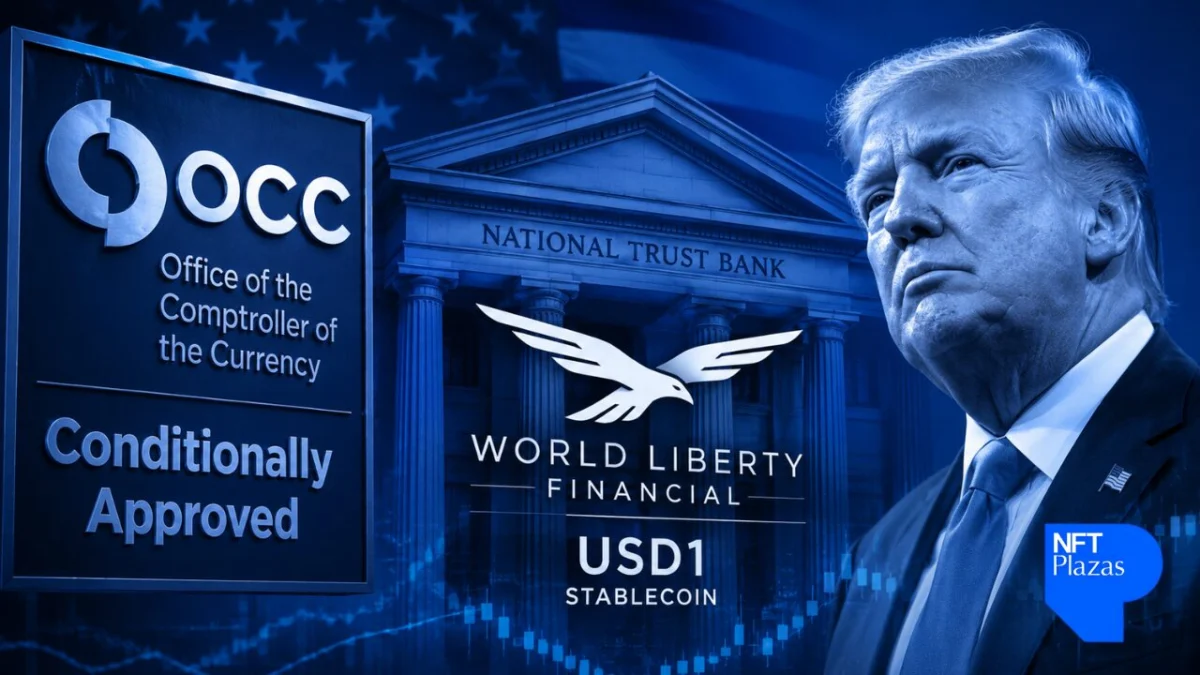
World Liberty Financial, a cryptocurrency firm with significant backing from President Donald Trump and members of his family, has been granted conditional approval by the Office of the Comptroller of the Currency (OCC) to establish a federally chartered national trust bank. This pivotal decision marks a substantial advancement for the Trump family’s burgeoning digital asset enterprise and could grant World Liberty enhanced control over the operational infrastructure underpinning its USD1 stablecoin. However, this approval is preliminary, requiring the company to fulfill a stringent set of additional regulatory prerequisites and successfully pass a final examination before its banking operations can commence.
The OCC officially conveyed its conditional approval on Friday to World Liberty Trust Company, the designated trust bank entity sponsored by World Liberty Financial. The authorization is contingent upon the company successfully completing several critical milestones, including the substantial raising of capital, the establishment of robust governance structures, and the implementation of comprehensive internal controls that meet federal standards. This phased approach underscores the OCC’s commitment to ensuring that newly chartered financial institutions possess both the financial wherewithal and the operational integrity necessary to function within the regulated banking sector.
A Dedicated Financial Hub for USD1 Stablecoin Operations
The proposed World Liberty Trust Company is not envisioned to function as a traditional commercial bank. National trust banks, by their nature, are generally prohibited from accepting customer deposits or originating loans. Instead, their operational scope typically encompasses specialized financial services such as the safekeeping of assets (custody), the facilitation of payment settlements, and a range of other financial services, all conducted under the watchful eye of federal regulatory bodies.
For World Liberty Financial, the most significant strategic advantage conferred by this charter is the potential to bring its USD1 stablecoin operations entirely in-house. USD1 is a stablecoin designed to maintain a stable, one-to-one peg with the U.S. dollar, with its value purportedly backed by a reserve of assets that includes U.S. Treasury instruments. Since its launch in March 2025, the USD1 stablecoin has experienced remarkable growth, achieving a current market capitalization estimated to be around $4 billion.
Presently, World Liberty Financial relies on third-party service providers, such as BitGo, for certain critical stablecoin-related services. The establishment of a national trust bank would empower World Liberty Trust to directly manage the issuance and redemption of USD1 tokens, as well as assume direct custody of the assets that serve as collateral for the token. This vertical integration promises to grant the company a far greater degree of control over its stablecoin infrastructure, simultaneously opening avenues for new revenue generation streams derived from these enhanced services. This move aligns with a broader trend within the cryptocurrency industry to seek greater regulatory certainty and operational independence through traditional financial structures.
Navigating the Labyrinth of Regulatory Conditions

Despite this significant preliminary approval, World Liberty Trust is not yet a fully operational bank. The OCC has stipulated a clear set of conditions that must be met. These include maintaining a minimum capital reserve of $20 million, appointing a qualified individual to manage internal audits, and providing prompt notification to regulators regarding any substantial modifications to the company’s business plan. Furthermore, once operational, the bank will remain subject to continuous federal supervision and periodic examinations by the OCC.
Zach Witkoff, president and chairman of World Liberty Trust, expressed his enthusiasm for the OCC’s decision, characterizing the federal charter as a landmark achievement for the company. He emphasized that the proposed structure would centralize the issuance, custody, and reserve management of USD1 under the direct supervision of the OCC. Witkoff also underscored World Liberty’s commitment to embracing and adhering to ongoing regulatory oversight, signaling a proactive stance towards compliance.
In addressing potential concerns regarding non-U.S. investors within World Liberty Financial’s broader ownership structure, the OCC’s approval letter indicates that several international investors have entered into "passivity agreements." These agreements legally bind the investors to refrain from seeking control or exerting influence over the bank’s operational decisions. Notably, Eric Trump, a key figure in the Trump family’s involvement, signed such an agreement through an investment vehicle affiliated with the Trump family. This measure is designed to mitigate concerns about foreign influence and ensure that the bank’s governance remains aligned with U.S. regulatory objectives.
Heightened Political Scrutiny and Potential Conflicts of Interest
The OCC’s conditional approval is anticipated to reignite criticism from political figures, particularly Democrats, who have voiced significant concerns regarding potential conflicts of interest. These concerns stem from the involvement of President Trump, his administration, and his family members in World Liberty Financial’s cryptocurrency ventures. World Liberty Financial has disclosed that approximately 38% of the company’s ownership is held by an entity associated with Donald Trump and certain members of his family. President Trump, along with his sons Donald Trump Jr. and Eric Trump, played a role in the venture’s establishment in 2024.
Earlier, Senator Elizabeth Warren had publicly urged the OCC to reject the bank charter application unless President Trump divested his interests in World Liberty. Following the recent approval, Senator Warren reiterated her strong opposition, labeling the decision an "unprecedented conflict of interest." She indicated that she, along with other lawmakers, would pursue legislative measures aimed at preventing sitting presidents and senior government officials from owning or controlling financial institutions.
World Liberty has consistently defended its application process, asserting that its submission underwent a thorough and rigorous review. Witkoff reiterated that the company’s willingness to accept federal supervision demonstrates its commitment to operating within a strictly regulated environment. The OCC, in its public statements, has maintained that the application was reviewed by career staff members and that the future bank will be subject to oversight by non-political examiners, aiming to assure the public of an impartial regulatory process.
A Wave of Crypto Firms Seeking Banking Integration

The conditional approval for World Liberty Financial arrives at a time when a growing number of cryptocurrency companies are actively pursuing direct integration into the U.S. banking system. Since 2025, the OCC has reportedly received approximately 40 applications for bank charters, a notable increase compared to previous administrations, with a significant portion of these applications linked to digital asset projects. Prominent digital asset companies, including Ripple and Circle, have also received preliminary approvals for national trust bank charters, signaling a broader trend of established crypto entities seeking to legitimize and stabilize their operations within traditional financial frameworks.
For cryptocurrency firms, obtaining a federal trust bank charter offers a clear and recognized regulatory pathway for providing services such as custody, settlement, and other financial functions across the United States. This framework can also significantly streamline interactions with institutional clients who prioritize operating with regulated financial entities.
For World Liberty, the strategic implications are particularly pronounced, given the rapid expansion of its USD1 stablecoin. Consolidating the issuance, custody, and reserve management functions under a single, federally supervised entity could substantially fortify the stablecoin’s underlying infrastructure. This move is also expected to reduce the company’s reliance on external service providers, thereby enhancing operational efficiency and potentially improving risk management.
A Critical Juncture, Not the Final Destination
The OCC’s decision represents a significant regulatory milestone for World Liberty Financial, but it is crucial to understand that the bank chartering process is not yet complete. The company must rigorously satisfy all remaining conditions stipulated by the OCC, maintain the requisite capital levels, and successfully pass a final examination before World Liberty Trust can officially commence its banking operations.
Should World Liberty Financial successfully navigate these final hurdles, the Trump-linked venture will join an expanding cohort of cryptocurrency companies that are increasingly embedding themselves within the regulated financial services sector. This development also places World Liberty at the nexus of a wider public discourse concerning stablecoins, the evolving landscape of cryptocurrency regulation, and the intricate relationship between political influence and private digital asset businesses. For World Liberty, however, the immediate and primary objective remains clear: to transform this preliminary approval into a fully operational national trust bank, thereby bringing one of its most rapidly growing crypto products, USD1, under direct federal oversight and regulation. This strategic move is poised to shape the future of stablecoin operations and their integration into the broader financial ecosystem.