Layla Zulfa
The global cryptocurrency market experienced a seismic shift this week as Bitcoin surged past the $72,000 threshold, reclaiming price levels not seen since June. This aggressive price action, which saw the premier digital asset gain nearly 15% since the start of the week, triggered a massive "short squeeze" that decimated bearish bets. According to market data, more than $3 billion in crypto short positions were liquidated during the rally, marking the largest single-day liquidation event for Bitcoin bears since at least 2021. While the price surge has revitalized investor sentiment, a growing chorus of market analysts warns that the move was heavily driven by forced liquidations rather than organic spot demand, suggesting that fresh capital must enter the fray to sustain the current trajectory.
The rally reached its crescendo on Thursday, bolstered by a confluence of macroeconomic shifts and political developments in the United States. In tandem with the price spike, institutional interest appears to have returned in force. Spot Bitcoin ETFs recorded $517 million in net inflows on Wednesday alone, the highest single-day total since May. This influx of institutional capital, combined with the clearing of billions in leveraged short positions, has created a volatile but technically improved landscape for the world’s largest cryptocurrency.
The Mechanics of the Short Squeeze
The primary engine behind Wednesday’s rapid price appreciation was a classic short squeeze. In a short squeeze, traders who have bet on a price decline are forced to buy back the asset at higher prices to cover their losses or meet margin calls, which in turn drives the price even higher. Adam McCarthy, a researcher at crypto trading firm Lo:Tech, observed that more than half of Wednesday’s gains occurred within a single one-hour window. This suggests a "cascade" effect where automated liquidations on centralized exchanges fueled a vertical move.
"The short base is largely cleared and nothing has replaced it, so the move that got us here can’t repeat," McCarthy noted. He warned that the "fuel" provided by trapped bears has been exhausted. For Bitcoin to embark on its next leg up, the market will require "actual buying"—investors taking new long positions based on conviction rather than forced covering. Furthermore, McCarthy highlighted a technical risk involving market makers. If dealers are "short gamma" at the $70,000 level, their need to hedge their positions could exaggerate price swings in either direction, potentially leading to a sharp reversal if the $70,000 support level fails to hold.
Macroeconomic Catalysts: Treasury Liquidity and the Trump Factor
While technical liquidations provided the momentum, the initial spark for the rally was rooted in shifts in U.S. fiscal and monetary expectations. Julio Moreno, Head of Research at CryptoQuant, pointed to two specific drivers: the U.S. Treasury’s management of government debt and the evolving political narrative surrounding digital assets.
The U.S. Treasury recently expanded its buyback program for long-dated government bonds. In traditional finance, such moves are often interpreted as a method of injecting liquidity into the financial system, as the government swaps cash for illiquid bonds. This "liquidity injection" narrative is historically a strong tailwind for risk assets like Bitcoin. Simultaneously, the "Trump Trade" has gained renewed traction. Former President Donald Trump has increasingly positioned himself as a pro-crypto candidate, recently suggesting that the U.S. government could establish a strategic Bitcoin reserve. The prospect of a sovereign entity purchasing Bitcoin has provided a powerful narrative floor for the market, encouraging traders to reprice the asset’s long-term value.

However, Moreno remains cautious. Despite the rally, CryptoQuant’s internal metrics, such as the profit-and-loss (P&L) index and the "bull score," have not yet flipped into definitive bullish territory. "To confirm that a bull market has started, I’m watching CryptoQuant’s P&L Index, specifically if it crosses its 365-day moving average to the upside," Moreno stated. Currently, Bitcoin’s 365-day moving average sits around $83,000, representing a significant hurdle for the market to clear before a multi-year bull trend can be declared "official."
Technical Indicators: SMA, MACD, and the 200-Day Line
From a technical analysis perspective, Bitcoin’s chart has seen its most significant improvement in months. Nicolai Sondergaard, a Senior Research Analyst at Nansen, highlighted the importance of Bitcoin reclaiming its 200-day simple moving average (SMA), which currently hovers around $69,000. Reclaiming this level is often seen by institutional desks as a transition from a bearish to a neutral or bullish regime.
Currently, Bitcoin is trading approximately 8% above its 20-day and 50-day moving averages. The Moving Average Convergence Divergence (MACD), a momentum oscillator, has also flashed a bullish signal. "The key line is the 200-day SMA near $69,000," Sondergaard explained. "Holding above it keeps the breakout valid, while a close back below would signal a failed move." He identified the recent high of approximately $72,824 as the immediate resistance level that bulls must overcome to target new all-time highs.
Despite these improvements, Sondergaard echoed concerns about the quality of the rally. He noted that while "whales" on platforms like Hyperliquid remain net long by tens of millions of dollars, the broader retail and institutional positioning remains mixed. The risk of a "risk-off" move in broader equities or a reversal in the liquidity narrative could stall the rally quickly.
Institutional and Regulatory Tailwinds
Beyond the immediate price action, the broader crypto ecosystem is reacting to a series of regulatory and institutional milestones. Ishmael Asad, a Research Analyst at Bitwise, characterized the rally as the strongest signal yet that the market has found its bottom. He cited several "hidden" catalysts, including the SEC’s proposed Regulation Crypto Assets framework and a high-profile White House crypto summit held earlier this week.
"After this steep leg up, I wouldn’t expect the rally to continue at the same pace from here," Asad said. "But I would take this move as the strongest confirmation we’ve seen yet that the bottom is in." Asad suggested that the market has already "priced in" many of the year’s potential negatives, such as the legislative gridlock surrounding the Clarity for Payment Stablecoins Act (the Clarity Act). With the downside risks largely accounted for, the path of least resistance may be sideways or higher as the market awaits the next major regulatory milestone, such as a potential Senate vote in September.
This sentiment is supported by the sheer volume of capital entering the space. Digital asset investment products, led by Bitcoin, have attracted approximately $1.3 billion in inflows this week alone. This suggests that while the "squeeze" provided the speed, institutional accumulation is providing the underlying support.
The Road Ahead: Range-Bound or Breakout?
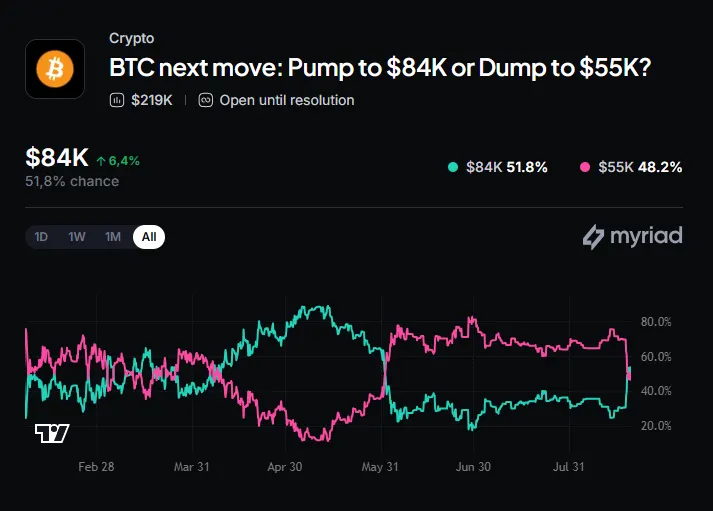
James Butterfill, Head of Research at CoinShares, offers a more tempered outlook. While he acknowledges the constructive backdrop, he believes Bitcoin is more likely to remain range-bound between $60,000 and $80,000 rather than entering a sustained, vertical breakout.
"The rally is primarily a macro story rather than a crypto-specific one," Butterfill explained. He noted that recent U.S. inflation and employment data have weakened the case for further aggressive Federal Reserve tightening, which has eased pressure on Bitcoin. However, he emphasized that for a true breakout to occur, the Federal Reserve must provide a clearer signal that policy risks have shifted away from "higher for longer" interest rates.
Butterfill also pointed out that while "whales" have stopped selling and started accumulating, the scale of this accumulation is not yet sufficient to underpin a durable, long-term breakout. "With accumulation by large holders still modest in scale, the market lacks the depth of conviction that typically underpins a durable breakout," he added. The $80,000 mark remains the psychological and technical boundary that would require a significant shift in Fed policy to breach.
Summary of Market Implications
The events of the past 72 hours have fundamentally altered the short-term outlook for the cryptocurrency market. The liquidation of $3 billion in short positions has cleared the "overhead" of bearish leverage, but it has also removed the immediate fuel for further rapid gains. The focus now shifts to the following key factors:
- Spot Demand: Will the $500 million+ daily ETF inflows continue, or was Wednesday an anomaly?
- Support Levels: Can Bitcoin maintain a daily close above the 200-day SMA ($69,000)?
- Macro Environment: Will the U.S. Treasury continue its liquidity-friendly buyback program, and will inflation data allow the Fed to maintain a neutral-to-dovish stance?
- Political Momentum: Will the "crypto-friendly" political narrative continue to gain steam as the U.S. election approaches?
While the suddenness of the move has left many analysts wary of a potential pullback, the technical and fundamental "bottom" appears more secure than it has since the June downturn. For now, the market remains in a high-stakes tug-of-war between macro-induced optimism and the reality of a market that is still searching for its next generation of buyers. As Bitcoin continues to dance around the $70,000 mark, the coming weeks will determine whether this was a temporary relief spike or the foundation of the next major bull cycle.