Layla Zulfa
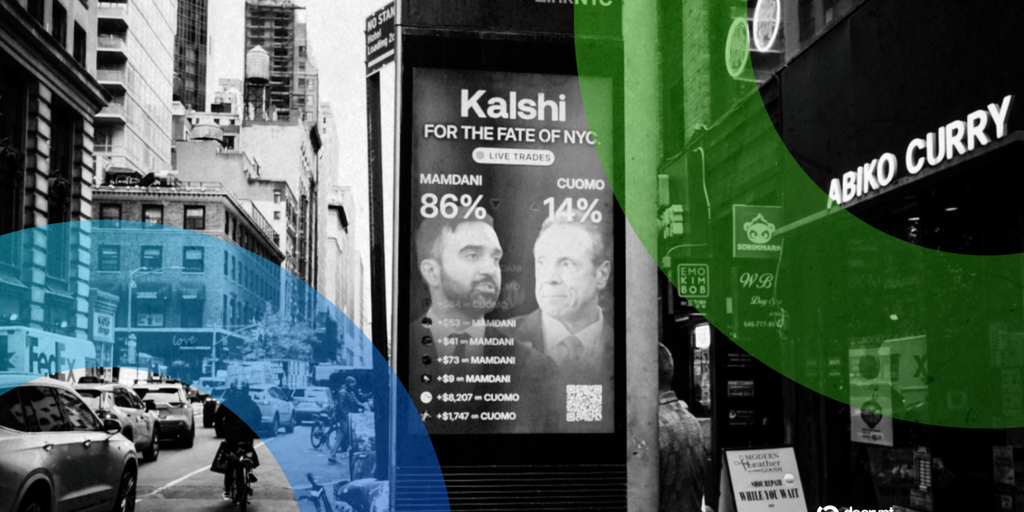
The Commodity Futures Trading Commission (CFTC) roundtable on prediction markets in Washington, D.C., descended into a heated exchange on Thursday as industry titans from traditional finance and emerging fintech platforms clashed over the future of event contracts. The confrontation, centered on issues of market manipulation, regulatory oversight, and the definition of economic utility, featured a direct and often personal debate between Terry Duffy, Chairman and CEO of CME Group, and Luana Lopes Lara, co-founder of the prediction market platform Kalshi. The meeting highlighted the deep ideological and competitive fissures within the American financial regulatory landscape as the commission grapples with how to categorize and oversee markets that allow participants to trade on the outcomes of real-world events.
A Confrontation of Market Philosophies
The tension reached a boiling point when Terry Duffy, who leads the world’s largest futures exchange, expressed profound skepticism regarding the integrity of nascent prediction markets. Duffy argued that many of the contracts currently offered by platforms like Kalshi lack genuine economic purpose and are uniquely susceptible to manipulation. His remarks were framed by a defense of the traditional U.S. exchange model, which he characterized as the global gold standard for stability and oversight.
"We’re not a bunch of carnival barkers at a circus," Duffy stated, contrasting the rigorous regulatory framework of the CME Group with the newer, more experimental platforms. "We are running the most envious markets in the world in the United States of America."
Duffy specifically targeted the nature of Kalshi’s offerings, using the Nathan’s Famous International Hot Dog Eating Contest as a point of ridicule. He sarcastically questioned the "massive importance" of such contracts to the American economy. Furthermore, Duffy raised a competitive grievance, questioning why Kalshi had been permitted to list compute-related prediction markets while similar proposals from the CME Group remained under a prolonged regulatory review process.
The response from Kalshi was immediate and pointed. Luana Lopes Lara challenged Duffy’s assertion of moral and regulatory high ground by referencing the historical record of traditional exchanges. Lara asked Duffy directly if the CME had ever experienced issues with market manipulation or regulatory failures in its long history. When Duffy attempted to pivot the conversation toward a broader debate, Lara pressed for a simple answer.
The exchange grew increasingly personal when Duffy cited the scale of his organization’s compliance infrastructure. "I have more people in my regulatory department than you have in your whole company," Duffy said, implying that Kalshi’s smaller footprint equated to inferior oversight. Lara countered by suggesting that CME’s large headcount might be a sign of inefficiency rather than superior quality, asserting that every market, whether traditional or nascent, carries inherent risks that must be managed through evolving regulation rather than outright dismissal.
The Mechanics and Growth of Prediction Markets
Prediction markets, or event contract markets, function by allowing users to buy and sell contracts based on the probability of a specific outcome. These contracts typically settle at $1 if the event occurs and $0 if it does not. The trading price of the contract serves as a real-time proxy for the perceived probability of the event. For example, a contract priced at $0.60 indicates a 60% market-implied probability of the outcome.
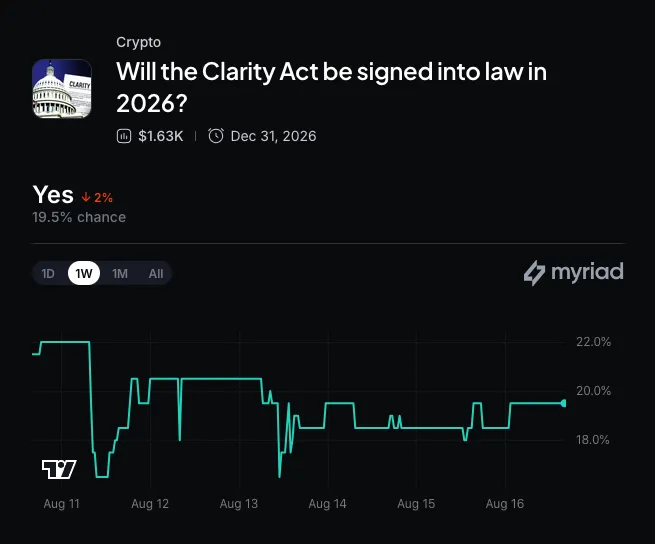
While the CME Group focuses on traditional commodities, interest rates, and equity indices, prediction markets like Kalshi and the crypto-based Polymarket have expanded into "prop bets" on culture, politics, and science. Platforms like Myriad, operated by Dastan, offer contracts on cryptocurrency milestones, such as whether Bitcoin will reach specific price targets within a calendar month.
The growth of these markets has been explosive. In 2024, the volume of trades on election-related outcomes and macroeconomic data has reached record highs, drawing both retail interest and institutional scrutiny. Proponents argue these markets provide valuable "wisdom of the crowds" data that is often more accurate than traditional polling or expert forecasting. Critics, however, view them as a thin veil for illegal gambling that could incentivize bad actors to influence the outcomes they have bet upon.
A Chronology of Regulatory Friction
The roundtable occurs against a backdrop of intensifying legal and legislative battles. The CFTC has been locked in a jurisdictional struggle with both state regulators and the platforms themselves for several years.
- February 2024: CFTC Chair Selig (Rostin Behnam) issued a stern warning to state regulators attempting to assert control over event contracts, stating that the commission would defend its sole authority over federally regulated derivatives in court.
- May 2024: The CFTC faced significant pressure from federal lawmakers to clarify its stance on political betting, which remains a primary point of contention.
- June 2024: The CFTC proposed a new rule that would explicitly ban certain types of event contracts. The proposal targeted contracts involving "gaming" and those that are "contrary to the public interest," specifically mentioning wagers on war, assassinations, and certain sports-related propositions.
- August 2024: The legal landscape shifted rapidly. A judge in Washington state ordered Kalshi to cease offering contracts on sports and elections within the state, ruling that they likely violated local gambling laws. Simultaneously, the CFTC used emergency powers to allow Kalshi to continue trading in other jurisdictions despite a legal challenge from New York State.
Congressional and Industry Reactions
The debate has not stayed within the walls of the CFTC. Earlier this month, a group of nine Democratic senators, led by prominent figures in financial oversight, sent a formal letter to the commission urging a ban on wildfire-related contracts. The senators argued that allowing people to bet on natural disasters creates a "perverse incentive" for arson and disaster profiteering, while also providing a venue for insider trading by those with access to non-public meteorological or emergency response data.
During the roundtable, Jason Robins, CEO of the sports betting giant DraftKings, attempted to act as a peacemaker. Robins, whose company operates in a strictly regulated but different gambling framework, urged the participants to focus on constructive policy rather than attacking one another’s business models. "I would just ask everybody… to try to refrain from taking shots at each other’s business models or decisions you may not 100% agree with," Robins said. "That doesn’t advance the discussion."
Implications for the Future of U.S. Markets
The clash between CME and Kalshi represents more than just a corporate rivalry; it is a fundamental disagreement over the evolution of the American financial system. If the CFTC adopts a restrictive stance, it could push prediction market activity to offshore, unregulated platforms, potentially depriving U.S. regulators of oversight and U.S. consumers of protections. Conversely, a permissive stance could open the door to a "gamification" of finance that traditionalists like Duffy fear will undermine the credibility of the broader market.
The outcome of these deliberations will likely set a precedent for how the U.S. handles other emerging asset classes, including various cryptocurrency derivatives. The CFTC must now weigh the innovation and price discovery benefits of prediction markets against the very real risks of manipulation and the moral hazards associated with betting on sensitive real-world events.
As the 2024 election cycle nears its peak, the pressure on the CFTC to finalize its rules is mounting. The commission finds itself in a difficult position: it must assert its authority over state regulators who view these markets as gambling, while simultaneously convincing traditional exchanges and skeptical lawmakers that it can maintain the integrity of the U.S. financial system in the face of rapid technological change. For now, the "carnival" that Terry Duffy warned of remains a central fixture of the regulatory debate, with no clear consensus on when—or if—the tent will be folded.