admin
admin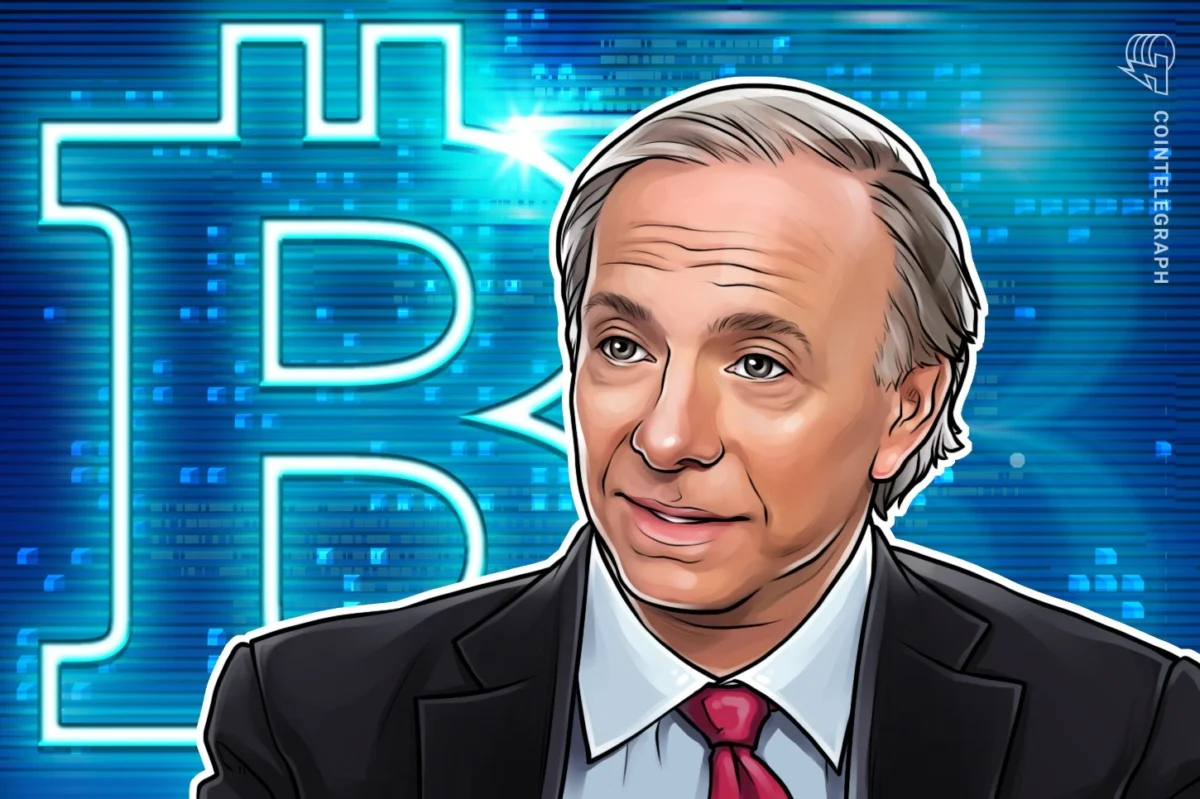
Ray Dalio, the billionaire founder of Bridgewater Associates, the world’s largest hedge fund, has issued a stark warning regarding the trajectory of the United States’ fiscal health, urging investors to pivot toward "hard" assets like gold and a strategic allocation of Bitcoin. In a detailed analysis shared via LinkedIn, Dalio expressed deep concerns over a looming debt crisis that he believes could materialize within the next few years. To mitigate the risks associated with a potential collapse in debt-based assets, Dalio recommended that investors consider holding between 10% and 15% of their portfolios in gold and a smaller, yet significant, portion in Bitcoin.
Dalio’s assessment stems from a historical and mechanical view of the "Big Cycle," a framework he has popularized to explain the rise and fall of empires and their currencies. According to Dalio, the United States is currently navigating the late stages of a long-term debt cycle, characterized by high levels of debt, internal political polarization, and rising external geopolitical tensions. He specifically advocated for an "overweight" position in gold and Bitcoin (BTC) relative to traditional debt instruments, such as government bonds, which he views as increasingly risky in an environment of monetary debasement.
The Mechanics of a Looming Debt Crisis
The core of Dalio’s warning centers on the sustainability of the U.S. national debt. "My guess, which I suppose will be a bad one, is that [a US debt crisis] will come in three years, give or take two, if the course we’re on is not changed," Dalio stated. This timeline suggests a critical window between 2026 and 2030, a period during which many economists expect the fiscal burden of interest payments on the national debt to reach record highs.
As of early 2024, the U.S. national debt has surpassed $34 trillion, with interest payments alone now rivaling the annual budget for national defense. Dalio argues that when a government’s debt grows faster than its economy (GDP), and the cost of servicing that debt requires the issuance of even more debt, a "debt spiral" becomes likely. In such a scenario, the central bank is often forced to print money to buy the debt that the private sector is unwilling to absorb, leading to a devaluation of the currency and a loss of purchasing power for bondholders.
Dalio’s preference for gold and Bitcoin is a direct response to this "devaluation risk." He suggests that debt assets, which are essentially promises to deliver currency in the future, are unattractive when that currency is being systematically debased. By recommending a 10% to 15% allocation to gold and Bitcoin, Dalio is proposing a departure from the traditional 60/40 portfolio (60% stocks, 40% bonds), which has historically relied on bonds to provide stability during market downturns.
A Chronology of Dalio’s Shifting Stance on Bitcoin
Ray Dalio’s relationship with Bitcoin has evolved significantly over the past several years, reflecting a broader trend of institutional acceptance of digital assets. While he remains a staunch proponent of gold, his willingness to include Bitcoin in his diversification strategy marks a notable shift in his investment philosophy.
In 2020 and early 2021, Dalio was largely skeptical of Bitcoin, citing its volatility and the potential for government intervention. He famously warned that if Bitcoin became too successful, regulators would "kill it." However, by May 2021, Dalio revealed that he personally held some Bitcoin, describing it as a "hell of an invention" and a potential digital alternative to gold.
By early 2022, months before the "crypto winter" saw the collapse of major platforms like FTX and Celsius, Dalio adopted a more cautious but constructive tone. He suggested that holding between 1% and 2% of one’s portfolio in Bitcoin was "reasonable" for those looking to diversify against the risks of a fiat currency crisis. At that time, he emphasized that Bitcoin should be viewed as a "speculative" store of value rather than a primary one.
His most recent comments represent his most aggressive endorsement of the asset to date. By grouping Bitcoin with gold and suggesting a combined allocation of up to 15%, Dalio has elevated Bitcoin from a fringe speculative asset to a core component of a defensive strategy against sovereign debt failure. This evolution mirrors the actions of other major financial figures, such as BlackRock CEO Larry Fink, who has transitioned from a Bitcoin skeptic to a proponent of its role as "digital gold."
Supporting Data: The Fiscal Reality of the United States
The data supporting Dalio’s "debt crisis" thesis is found in the non-partisan reports from the Congressional Budget Office (CBO) and the Department of the Treasury. The U.S. debt-to-GDP ratio currently sits at approximately 120%, a level historically associated with economic stagnation or restructuring in other developed nations.
Furthermore, the "interest expense" on federal debt is the fastest-growing part of the U.S. budget. According to Treasury data, the net interest costs rose by nearly 40% in the last fiscal year due to higher interest rates set by the Federal Reserve to combat inflation. Dalio argues that the Fed is in a "no-win" situation: if they keep rates high to fight inflation, they accelerate the debt crisis by increasing borrowing costs; if they lower rates to ease the debt burden, they risk reigniting inflation and further devaluing the dollar.
This macroeconomic backdrop explains why gold has recently hit all-time highs, exceeding $2,400 per ounce in 2024. Similarly, Bitcoin has seen a resurgence, driven by the approval of spot Bitcoin Exchange-Traded Funds (ETFs) in the United States, which have facilitated billions of dollars in institutional inflows. The market appears to be pricing in the very "monetary debasement" that Dalio has been warning about for years.
Geopolitical Tensions and Internal Conflict
Dalio’s recommendation is not solely based on balance sheets; it is also rooted in his analysis of "internal political and external geopolitical conflicts." He has frequently noted that the United States is currently experiencing its highest level of political polarization since the late 19th century. This internal strife, he argues, makes it difficult for the government to implement the necessary fiscal reforms—such as spending cuts or tax increases—required to avert a debt crisis.
On the global stage, the shift toward a multipolar world has led to "de-dollarization" efforts by countries like China, Russia, and the BRICS nations. These countries are increasingly seeking to settle trade in their own currencies or increase their gold reserves to reduce their reliance on the U.S. dollar. Dalio notes that if foreign central banks reduce their holdings of U.S. Treasuries, the U.S. will find it even harder to fund its deficits, necessitating the "money printing" that leads to inflation.
In this context, gold and Bitcoin serve as "neutral" assets. Gold has no counterparty risk and has been a recognized store of value for thousands of years. Bitcoin, while much younger, operates on a decentralized network that is not controlled by any single government, making it an attractive "exit ramp" for those worried about the stability of the traditional financial system.
Technical Concerns: Privacy and Quantum Computing
Despite his recommendation to hold "a bit of Bitcoin," Dalio remains vocal about the risks inherent in the digital asset space. He has previously stated that Bitcoin could not fully replace gold as a store of value due to several fundamental concerns.
First among these is the issue of privacy. Dalio has warned that as governments move toward Central Bank Digital Currencies (CBDCs), the era of financial privacy may be coming to an end. He argues that CBDCs will provide governments with unprecedented surveillance capabilities over how citizens spend and save their money. While Bitcoin offers a degree of pseudonymity, Dalio fears that future regulations could make it difficult to move funds between the crypto ecosystem and the traditional banking system.
Second, Dalio has pointed to the theoretical threat of quantum computing. If quantum computers become powerful enough to break the cryptographic protocols that secure the Bitcoin network, the asset’s value could vanish overnight. While the Bitcoin community argues that the network can be upgraded with "quantum-resistant" algorithms, Dalio views this as a long-term technical risk that gold—a physical element—simply does not face.
Broader Implications for the Investment Landscape
The implications of Dalio’s shift are significant for both retail and institutional investors. For decades, the "risk-free" rate of return was defined by U.S. Treasury bonds. If one of the world’s most successful hedge fund managers is now characterizing these bonds as high-risk "debt assets," it signals a fundamental change in the global financial architecture.
Other financial leaders have echoed parts of Dalio’s sentiment. Paul Tudor Jones, another legendary hedge fund manager, has also called Bitcoin a "great diversifier" and an "inflation hedge." Conversely, figures like Jamie Dimon of JPMorgan Chase remain skeptical of Bitcoin’s intrinsic value while simultaneously warning about the dangers of the U.S. fiscal deficit.
Dalio’s "15% recommendation" suggests a strategy of "aggressive diversification." By moving out of debt-heavy assets and into commodities and decentralized digital assets, investors are essentially betting against the ability of central planners to manage the current debt load without devaluing the currency.
Conclusion: Preparing for a Changing World Order
Ray Dalio’s latest advice serves as a call to action for investors to re-evaluate their exposure to sovereign risk. By setting a timeline of roughly three to five years for a potential debt crisis, Dalio is urging a proactive rather than reactive approach to portfolio management.
The shift from a 1% "reasonable" allocation to a potential 15% combined allocation in gold and Bitcoin reflects the mounting pressure on the global financial system. Whether Dalio’s prediction of a 2027-2029 crisis comes to fruition or not, his analysis highlights a critical reality: the traditional safe havens of the 20th century may no longer be sufficient to protect wealth in the 21st century. As the "Big Cycle" continues to turn, the move toward "hard" and "decentralized" assets appears to be gaining momentum among the world’s most influential financial minds.