admin
admin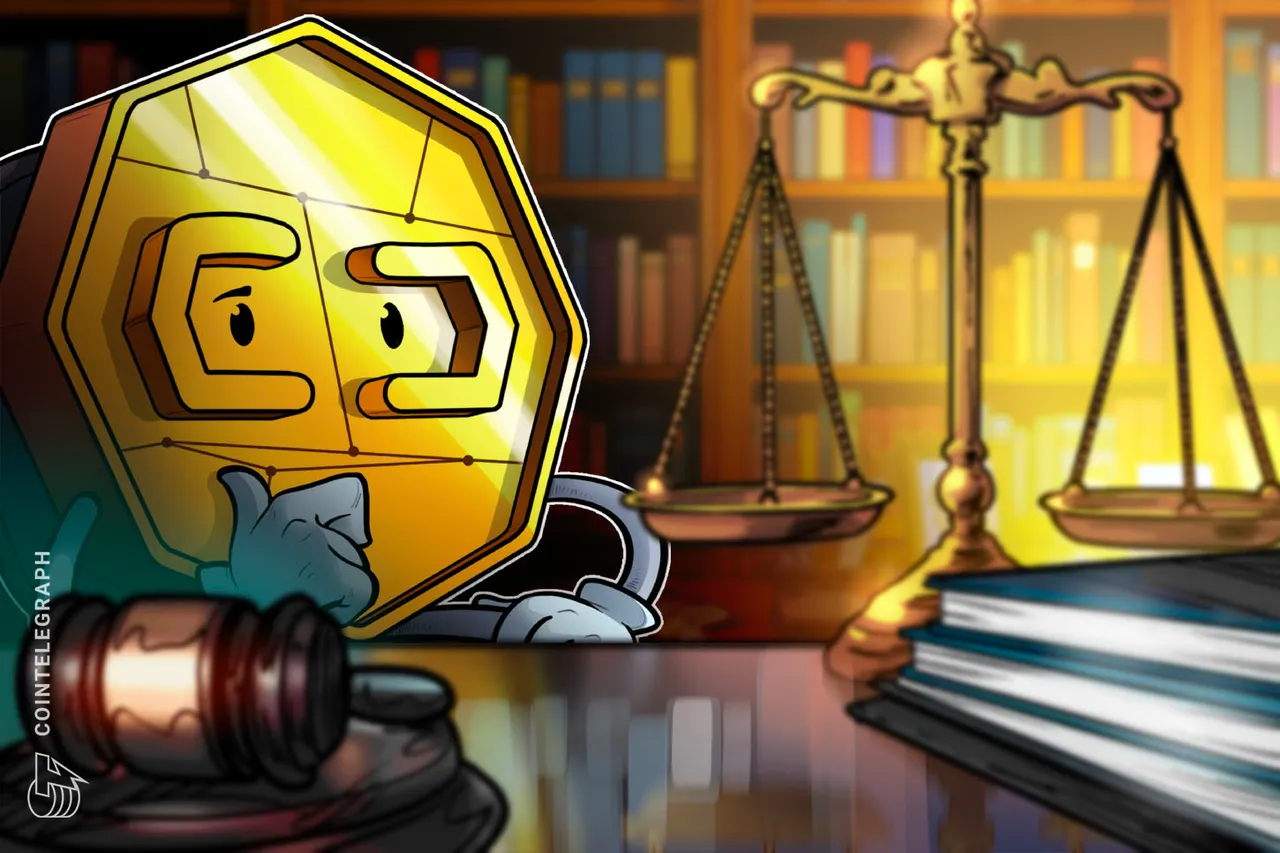
The United States District Court for the Southern District of New York has finalized consent orders against two central figures in the collapse of the FTX cryptocurrency exchange, marking a significant milestone in the federal government’s multi-year effort to hold the platform’s leadership accountable. On Tuesday, the court entered judgments against Caroline Ellison, the former CEO of the quantitative trading firm Alameda Research, and Zixiao “Gary” Wang, the co-founder of FTX. These orders, initiated by the U.S. Commodity Futures Trading Commission (CFTC), impose rigorous permanent injunctions and long-term prohibitions on their participation in regulated financial markets.
The enforcement actions serve as a civil counterpart to the high-profile criminal proceedings that have dominated headlines since FTX’s spectacular implosion in November 2022. Under the terms of the consent orders, both Ellison and Wang are subject to five-year trading bans, effectively barring them from trading any commodity interests or participating in any markets overseen by the CFTC. Furthermore, the court imposed a 10-year registration ban on Ellison and an eight-year registration ban on Wang, preventing them from serving as registered entities or associates within the commodities industry.
The Legal Framework and Regulatory Enforcement
The CFTC’s pursuit of Ellison and Wang stems from their admitted roles in a massive scheme to defraud customers and investors of FTX.com. According to David Miller, the CFTC’s enforcement director, the severity of the bans and the structure of the consent orders were influenced by the defendants’ "material assistance" in the Commission’s broader investigations into the FTX ecosystem. This cooperation was instrumental in building the government’s case against Sam Bankman-Fried, the disgraced founder of FTX, who was subsequently sentenced to 25 years in prison.
The civil penalties highlights the bifurcated nature of U.S. financial regulation. While the Department of Justice (DOJ) focuses on the criminal aspects of wire fraud and money laundering, the CFTC and the Securities and Exchange Commission (SEC) target the integrity of the markets. By securing these bans, the CFTC ensures that even after Ellison and Wang complete their respective criminal sentences, they will remain excluded from the professional financial infrastructure for nearly a decade.
In the criminal sphere, Ellison recently received a two-year prison sentence, a term that reflected her extensive cooperation with prosecutors despite the gravity of her involvement in the misappropriation of billions of dollars in customer funds. Gary Wang, who provided the technical "backdoor" that allowed Alameda Research to siphon liquidity from FTX, was sentenced to time served, a reflection of his immediate and comprehensive assistance to investigators from the moment the exchange collapsed.
Insider Trading Allegations in the Prediction Market
As the FTX saga enters its final chapters, a new legal frontier is opening regarding prediction markets and the use of nonpublic information. In a separate case within the Southern District of New York, federal prosecutors filed a formal opposition on Wednesday against a motion to dismiss brought by Gannon Ken Van Dyke. Van Dyke, a U.S. soldier, is accused of leveraging classified or nonpublic information to generate over $400,000 in profits on Polymarket, a decentralized prediction platform.
The case centers on "event contracts" related to the political stability of Venezuela. Specifically, Van Dyke allegedly placed substantial bets on the outcome of military operations and political movements intended to remove Venezuelan President Nicolás Maduro from power in January. The government contends that Van Dyke’s actions constitute a violation of the Commodity Exchange Act (CEA) and amount to wire fraud.
Van Dyke’s legal team filed a motion to dismiss on July 31, arguing that the government’s application of the CEA is "ambiguous." The defense posits that event contracts—which allow users to bet on the outcome of real-world events—should not be classified as "swaps" under the CFTC’s jurisdiction. They argue that the current regulatory framework does not provide clear notice that such activities are subject to the same insider trading prohibitions as traditional financial instruments.
However, Deputy U.S. Attorney Sean Buckley pushed back in the government’s latest filing. Buckley argued that Van Dyke’s motion relies on "speculative assertions" and "hypotheticals" that are inappropriate for a motion-to-dismiss stage. The prosecution maintains that the information used by Van Dyke constitutes "property" under the law and that the misuse of such property for financial gain via a regulated or semi-regulated platform falls squarely within federal purview. The court’s eventual ruling on this motion could set a major precedent for how prediction markets like Polymarket and Kalshi are regulated in the United States.
The Unsealing of the $165 Million Zimbardi Indictment
In a third major development for the crypto legal landscape, a 25-count indictment was unsealed on Monday in the Northern District of Georgia, targeting Edward Zimbardi, the alleged mastermind behind a massive cryptocurrency Ponzi scheme. Zimbardi is accused of orchestrating a fraudulent enterprise known as "The Crypto Program," which allegedly defrauded thousands of investors out of approximately $165 million between 2022 and 2023.
Zimbardi’s legal troubles escalated following his deportation from Fiji, where he had reportedly fled to escape U.S. authorities. Upon his return to the United States, Magistrate Judge Anna Howard ordered the unsealing of the indictment, which details a sophisticated operation of wire fraud and money laundering. Prosecutors allege that Zimbardi promised investors "enormous returns" through proprietary trading algorithms and crypto-asset management, while in reality, he was using new investor funds to pay out previous participants—the hallmark of a Ponzi scheme.
The indictment breaks down the charges as follows:
- 12 counts of wire fraud: Related to the electronic transfer of funds based on false pretenses.
- 1 count of money laundering conspiracy: Alleging a coordinated effort to hide the origins of the illicit funds.
- 11 counts of transactional money laundering: Involving specific financial transactions exceeding $10,000 using proceeds from the fraud.
The scale of the alleged fraud is further evidenced by the assets seized by Dutch authorities in early 2024, which the U.S. government is now seeking to forfeit. The list of seized digital assets provides a snapshot of the diversified "haul" Zimbardi allegedly accumulated:
- 11.87 Bitcoin (BTC)
- 2.15 Ether (ETH)
- 3.3 million XRP
- Over 713 million Shiba Inu (SHIB)
- 10.2 million Osaka Protocol (OSAK)
- Various stablecoins, including 47,110 USDT and 12,095 USDT0.
- Minor holdings in Dogecoin (DOGE) and Polygon (POL).
At current market rates, the seized cryptocurrency is valued at approximately $6 million, representing only a fraction of the $165 million allegedly funneled through the scheme. Prosecutors are expected to pursue further assets to provide restitution to the victims of the "Crypto Program."
Analysis of the Broader Regulatory Environment
These three distinct cases—FTX, the Polymarket insider trading case, and the Zimbardi Ponzi scheme—illustrate a concerted effort by U.S. federal agencies to impose order on the digital asset space. The common thread across these enforcement actions is the use of traditional financial statutes (the Commodity Exchange Act and wire fraud statutes) to address novel technological applications.
The bans imposed on Ellison and Wang signal to the industry that cooperation with regulators is the only viable path for executives involved in platform failures. By stripping these individuals of their ability to trade or register for nearly a decade, the CFTC is effectively "cleaning house" and preventing recidivism among the former elite of the crypto world.
In the case of Van Dyke and Polymarket, the legal community is watching closely to see if the courts will expand the definition of "insider trading" to encompass political events and prediction markets. If the government succeeds, it would mean that anyone with "nonpublic information"—including government employees or military personnel—could face criminal charges for participating in prediction markets, even if the "market" in question is decentralized and operates on a blockchain.
Finally, the Zimbardi case highlights the ongoing challenge of international enforcement. The fact that Zimbardi was apprehended in Fiji and that assets were seized in the Netherlands demonstrates an increasing level of global cooperation among law enforcement agencies. This "no-safe-haven" approach is intended to deter fraudsters who believe they can evade U.S. justice by operating across borders.
Timeline of Key Events
- November 2022: FTX and Alameda Research collapse; CFTC and DOJ begin investigations.
- December 2022: Caroline Ellison and Gary Wang plead guilty to multiple counts of fraud and begin cooperating with the government.
- January 2024: Dutch authorities seize approximately $6 million in crypto assets linked to Edward Zimbardi.
- July 31, 2024: Gannon Ken Van Dyke files a motion to dismiss his insider trading case, citing regulatory ambiguity.
- August 19, 2024: Judge unseals the 25-count indictment against Edward Zimbardi following his deportation from Fiji.
- August 20, 2024: SDNY enters consent orders for 5-year trading bans against Ellison and Wang.
- August 21, 2024: US prosecutors file a formal opposition to Van Dyke’s motion to dismiss.
As these cases move toward their respective conclusions, the cryptocurrency industry remains at a crossroads. The aggressive posture of the SDNY and the CFTC suggests that the "regulatory clarity" many in the industry have asked for is being delivered not through new legislation, but through the rigorous application of existing laws in the courtroom. For investors and market participants, these developments underscore the necessity of due diligence and the reality that the "Wild West" era of digital finance is rapidly coming to an end.