admin
admin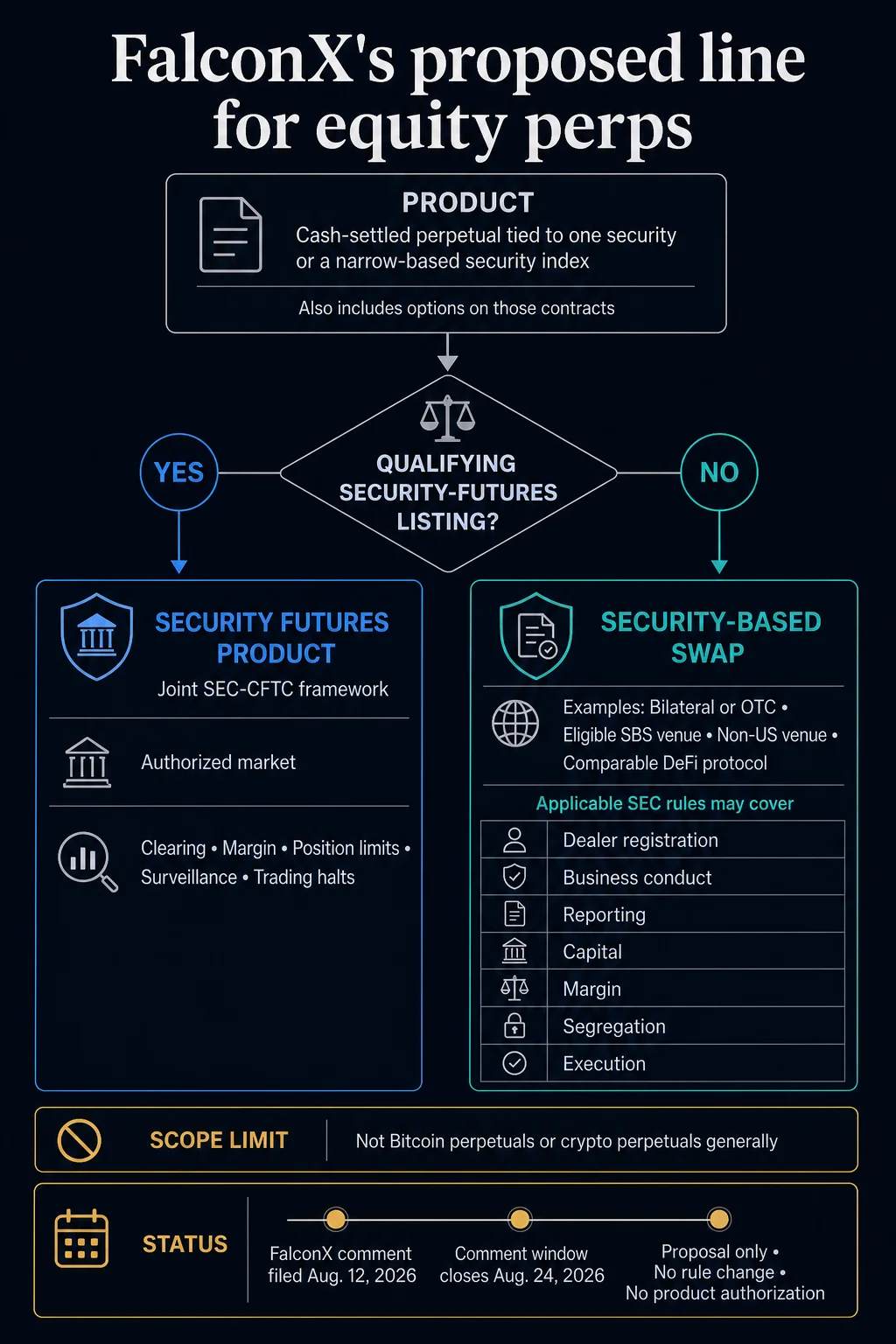
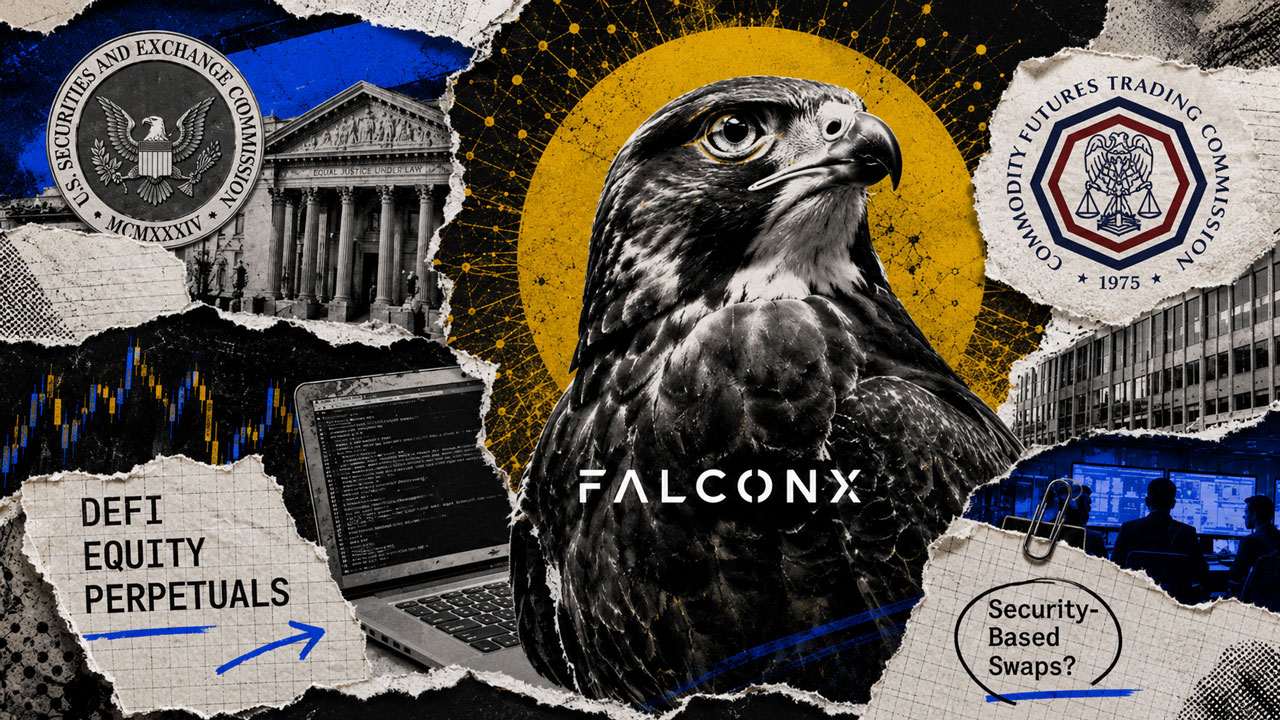
FalconX Bravo has formally requested that U.S. regulators classify cash-settled perpetual contracts tied to a single security or a narrow-based security index as security-based swaps under the Securities and Exchange Commission’s (SEC) purview, particularly when these instruments operate outside the existing joint SEC-Commodity Futures Trading Commission (CFTC) security-futures framework. This significant proposal, submitted on August 12th to both regulatory bodies, specifically includes comparable contracts that are currently being offered through decentralized finance (DeFi) protocols. The move signals a proactive approach by a prominent digital asset market participant to clarify and potentially expand regulatory oversight in a rapidly evolving financial landscape.
The Regulatory Crossroads for Equity Perpetuals
At the heart of FalconX Bravo’s submission is the desire to ensure a consistent and robust regulatory approach for financial instruments that derive their value from underlying equities. The company, which is registered as a swap dealer with the CFTC and focuses its business on digital assets, has outlined a specific definition for these contracts. Their proposal targets cash-settled perpetuals and options on these perpetuals. Crucially, it explicitly states that this definition does not extend to Bitcoin perpetuals or other cryptocurrency-based perpetuals, which fall under different regulatory considerations.
The current regulatory landscape for such products is complex. Contracts that qualify as security futures products and are listed on markets authorized by both the SEC and CFTC remain under a joint regulatory regime. This established framework offers a suite of market safeguards, including oversight of the underlying security or index, clearinghouse requirements, margin rules, position limits, market surveillance, and the ability to implement trading halts when necessary. These protections are designed to foster market integrity and investor confidence.
FalconX Bravo’s proposal aims to bring instruments that fall outside this joint regime into the SEC’s jurisdiction as security-based swaps. This would encompass a range of transactions, including bilateral and over-the-counter (OTC) deals, contracts offered by eligible venues or platforms that are already authorized for security-based swaps, offerings on non-U.S. venues, and, significantly, comparable products found within DeFi protocols. The inclusion of DeFi is particularly noteworthy, as it suggests an acknowledgment of the growing importance and potential systemic impact of these decentralized platforms on traditional financial markets.
Implications of Security-Based Swap Classification
Should the SEC adopt FalconX Bravo’s recommendation, firms dealing in these equity-linked perpetuals would face a new set of regulatory obligations. For affected dealers, classification as security-based swaps can trigger requirements related to registration, business conduct standards, transaction reporting, capital adequacy, margin requirements, and the segregation of customer assets. Furthermore, depending on the specific structure of a platform, it might also fall under the security-based swap execution framework, which could mandate specific trading protocols or clearing requirements.
It is important to note that this classification would not automatically impose registration or dealer status on every protocol developer or trader. The specific duties and requirements would hinge on the participant’s role and the nature of the transactions undertaken. This nuanced approach suggests an understanding that regulatory burdens should be tailored to the risks and activities involved.
FalconX’s Detailed Proposal and Existing Framework
FalconX Bravo’s submission includes a detailed analysis and proposed decision flow, visually represented in a diagram. This diagram illustrates the distinct regulatory paths for cash-settled equity perpetuals: either through the existing security-futures product framework or the proposed security-based swap route. The firm’s submission also addresses the potential for duplicated regulatory requirements for firms already overseen by the CFTC. To mitigate this, FalconX has proposed an amendment to Rule 18a-10, suggesting an increase in the combined-notional threshold for alternative compliance from 10% to 49%. This would provide some relief for entities operating under both regulatory umbrellas, while still maintaining the fixed-dollar cap, SEC registration and oversight, and any requirements not covered by the proposed relief.
The CFTC itself has recently signaled its engagement with the evolving derivatives market. In a policy statement issued in June, the commission reserved other asset classes for separate review while identifying equity and narrow-index products as distinct regulatory questions requiring specific consideration. This aligns with FalconX Bravo’s focus on equity-linked derivatives and suggests a broader regulatory awareness of these instruments.
A Broader Industry Dialogue and the Public Comment Window
The call for clarity on equity perpetuals is not solely coming from FalconX Bravo. Independent researcher Amadeus Brandes also filed a comment on August 21st, recommending the continuation of the existing mixed-swap process. Brandes’s submission emphasized the importance of incorporating protections that specifically address risks inherent in these products, such as insider information, market manipulation, leverage, and funding-rate volatility.

The public comment window for these proposals closed on August 24th. Both the SEC and CFTC are now reviewing the submissions, including FalconX’s “listed versus unlisted” test and Brandes’s mixed-swap alternative. It is crucial to understand that the closing of the comment docket does not automatically translate into agency policy. It does not authorize any new products, alter jurisdictional rules, or commit either regulator to specific rulemaking. However, it signifies a critical stage in the regulatory process, where industry input is formally considered.
The Evolving Landscape of Digital Asset Regulation
The proactive stance taken by FalconX Bravo underscores a growing trend within the digital asset industry: the desire for regulatory clarity and the development of frameworks that can accommodate innovative financial products. As DeFi continues to mature and its integration with traditional finance deepens, regulators are increasingly tasked with understanding and overseeing these novel instruments.
The classification of single-security perpetuals as security-based swaps would have significant implications. It would bring a greater degree of transparency and investor protection to markets that have, in some instances, operated in regulatory grey areas. For market participants, it offers the potential for a more stable and predictable operating environment. For regulators, it represents an opportunity to adapt existing frameworks to new financial realities, balancing innovation with the imperative of financial stability and consumer protection.
The outcome of this regulatory consideration will undoubtedly shape the future of equity-linked derivatives traded on both traditional and decentralized platforms. It reflects a crucial moment where the intersection of digital assets and established financial markets demands a thoughtful and comprehensive regulatory response. The industry, through participants like FalconX Bravo, is actively contributing to this dialogue, seeking to build a more robust and secure financial ecosystem for the future.