admin
admin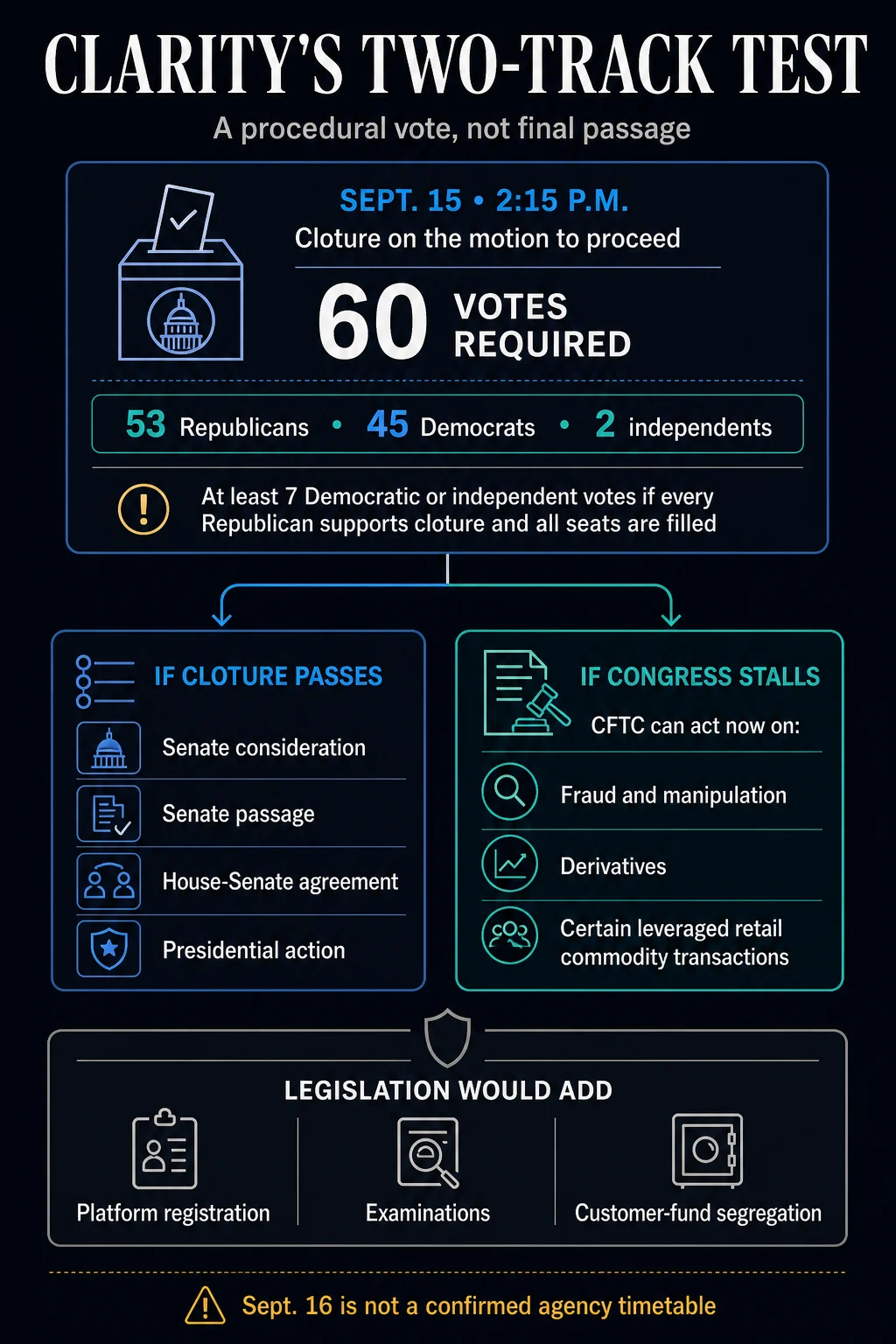
The U.S. Senate is poised to hold a critical procedural vote on September 15th to determine whether the Digital Asset Market Clarity Act, H.R. 3633, will proceed to a full floor debate. This vote, requiring a supermajority of 60 senators, represents a significant hurdle for the bill, which aims to establish a comprehensive federal regulatory framework for digital asset markets. The outcome of this vote will not only dictate the immediate legislative future of the act but also underscore the ongoing tension between legislative efforts to create new regulatory structures and the existing powers of agencies like the Commodity Futures Trading Commission (CFTC) to act under current statutes.
The Crucial Cloture Vote: A Test of Bipartisan Support
The scheduled cloture vote on the motion to proceed to H.R. 3633 is slated for 2:15 p.m. on September 15th. This procedural step is designed to overcome any potential filibuster and allow the Senate to formally begin considering the bill. However, invoking cloture in the Senate is a demanding requirement, necessitating the support of three-fifths of senators present and sworn, which translates to 60 votes in a fully constituted chamber. With the Senate currently comprising 53 Republicans, 45 Democrats, and two independents, achieving this threshold presents a substantial challenge. Even in the most optimistic scenario where all 53 Republican senators vote in favor of cloture, proponents would still need to secure at least seven votes from Democratic or independent senators to advance the bill.
While the bill previously advanced from the Senate Banking Committee with bipartisan backing in a 15-9 vote in May, this committee tally does not guarantee similar support on the Senate floor. A significant number of Democratic senators, including Angela Alsobrooks, Cory Booker, Catherine Cortez Masto, Ruben Gallego, John Hickenlooper, Mark Warner, and Raphael Warnock, expressed reservations in July. They articulated concerns that the current text of the CLARITY Act falls short in critical areas such as ethics, consumer protection, combating illicit finance, addressing conflicts of interest, and ensuring market integrity. This indicates a potential division within the Democratic caucus regarding the bill’s provisions, making the 60-vote requirement a formidable obstacle.
Conversely, Republican Senator Jim Risch has publicly supported advancing the bill, characterizing September 15th as the "start of the Senate process." However, a comprehensive whip count detailing the exact level of support for cloture across both parties has not been made public, leaving the ultimate outcome uncertain.
The CFTC’s Existing Authority: A Limited Fallback
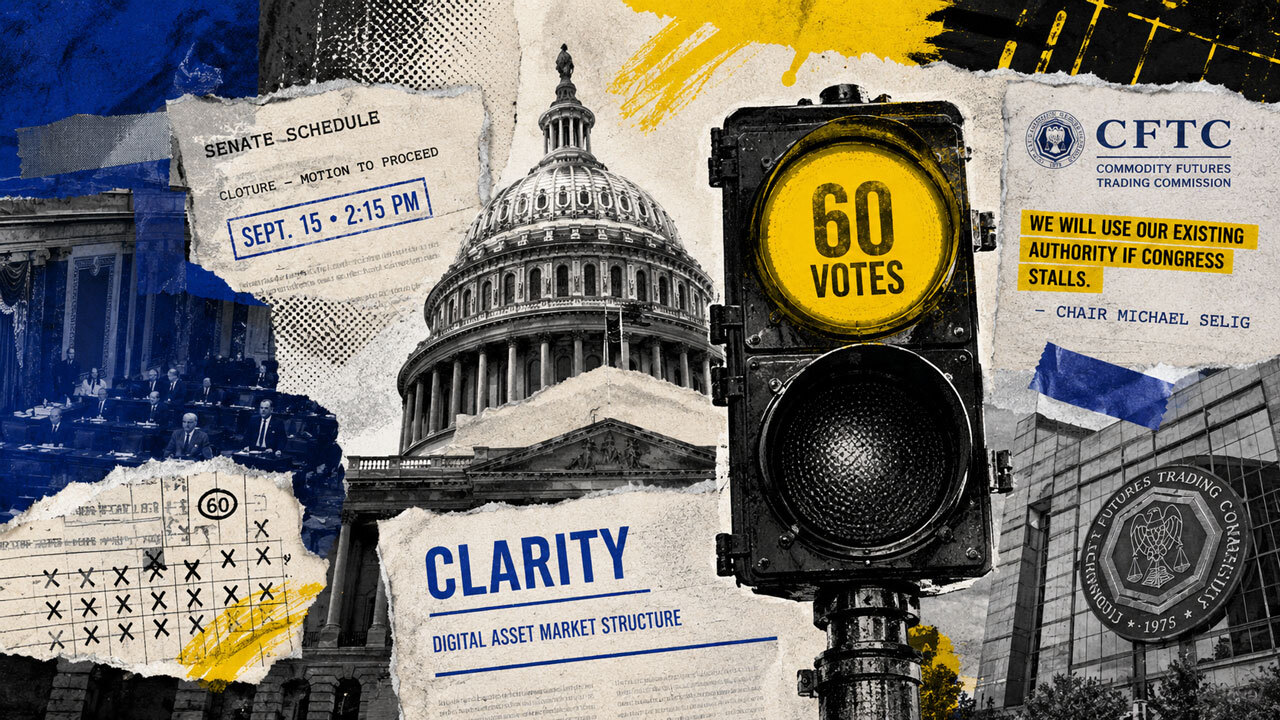
In parallel to the legislative efforts, the potential stalling of the CLARITY Act has prompted discussions about the actions regulators can take under their existing authority. CFTC Chair Michael Selig indicated on August 20th that the agency would initiate crypto-market-related actions utilizing its current powers if the CLARITY Act continued to face legislative headwinds, attributing potential delays to "Democratic obstruction." This statement suggests a proactive stance by the CFTC to address perceived gaps in digital asset regulation, even in the absence of new congressional legislation.
Chair Selig’s January agenda highlighted several key areas where the CFTC intended to focus its efforts. These included collaborative work with the Securities and Exchange Commission (SEC) to delineate the jurisdictional boundaries for crypto assets within each agency’s purview. The agenda also encompassed the development of rules for tokenized collateral and leveraged retail transactions, the establishment of pathways for perpetual derivatives, and the exploration of potential exemptions or safe harbors for certain digital asset activities. These initiatives, if pursued, could significantly shape aspects of the digital asset market without requiring new legislation from Congress.
However, these regulatory actions, while potentially impactful, would not replicate the comprehensive framework envisioned by the CLARITY Act. The CFTC’s current authority allows it to police fraud and manipulation within spot digital commodity markets. It also enables the regulation of derivatives falling under its jurisdiction, including certain retail commodity transactions that are leveraged, margined, or financed. During testimony before senators, Chair Selig emphasized that new legislation would be instrumental in establishing a more robust regime for trading-platform registration, oversight, and the segregation of customer funds, elements that are largely absent or less developed under existing rules.
Historical Context and Potential Implications
The CLARITY Act, formally H.R. 3633, has been a subject of intense debate within the financial and regulatory communities. Its introduction signaled a growing recognition among lawmakers of the need for a clear and consistent regulatory approach to the rapidly evolving digital asset landscape. Proponents argue that a well-defined framework will foster innovation, attract institutional investment, and provide greater certainty for market participants. They point to the fragmented nature of current regulations, which often leave digital asset activities in a legal gray area, potentially hindering legitimate business growth and increasing risks for consumers.
The bill’s journey through Congress reflects the broader challenges of crafting effective digital asset legislation in a complex and politically charged environment. The bipartisan nature of its advancement through the Senate Banking Committee, despite subsequent reservations from some Democrats, suggests a foundational consensus on the need for regulatory clarity. However, the differing views on specific provisions highlight the ongoing policy debates surrounding investor protection, market stability, and the prevention of illicit activities.
The potential implications of the September 15th vote are multifaceted. A successful cloture vote would inject momentum into the CLARITY Act, signaling a stronger likelihood of its eventual passage and moving the Senate closer to a substantive debate on its merits. This could lead to the creation of a more defined regulatory structure, potentially influencing the trajectory of digital asset innovation and investment in the United States. It could also lead to greater clarity for businesses operating in the sector, reducing compliance uncertainty.

Conversely, a failure to reach the 60-vote threshold would represent a significant setback for the bill. It would underscore the persistent divisions within Congress regarding digital asset regulation and potentially extend the period of regulatory ambiguity. In such a scenario, the focus would likely shift back to the CFTC and other agencies to exercise their existing authorities, which, as noted, offer a more limited scope than comprehensive legislative reform. This could result in a patchwork of regulations that may not fully address the systemic risks or market development needs of the digital asset ecosystem.
The Path Forward: Beyond the Senate Floor
It is crucial to note that even if the CLARITY Act successfully clears the procedural hurdle of cloture, its legislative journey would be far from over. Following a successful cloture vote, the Senate would still need to engage in a full debate and ultimately vote on the passage of the bill itself. Should it pass the Senate, any differences between the Senate-approved version and the version passed by the House of Representatives would need to be reconciled through a conference committee. Only identical legislation, agreed upon by both chambers, would then be sent to the President for signature into law.
The statement from CFTC Chair Selig, suggesting that the agency would take action under existing authority if legislative progress faltered, also warrants careful consideration. This approach, while potentially providing some immediate regulatory structure, may not offer the same level of comprehensive oversight and market certainty that a legislative framework could provide. The effectiveness and scope of these agency-led actions will be closely watched by industry participants and policymakers alike.
The upcoming vote on September 15th is therefore a pivotal moment, not just for the CLARITY Act, but for the broader trajectory of digital asset regulation in the United States. It will serve as a key indicator of Congress’s ability to forge consensus on this complex and rapidly evolving sector, and it will shape the landscape of regulatory oversight for years to come, whether through new legislation or the continued application of existing agency powers. The industry, investors, and the public will be keenly observing the outcome, which could significantly influence the future of digital finance in the nation.